

Gilt geek. UK based investor looking for undervalued opportunities UK stocks. I'm apolitical and only care about what's good for my portfolio.
London, England
Joined June 2025
- Tweets1.2K
- Following181
- Followers2.6K
- Likes1.3K





Pinned Tweet
Hot CPI prints used to send yields and expected BoE rates sharply higher in 2023 but the US Treasury yield and rate path seem to be in the driver's seat now.
Today's hiking cycle is hence different to that of the 2022/23 because 👇

Square Mile Strat (formerly REIT Strategist) retweeted
Over the past month, BoE Chief Economist Huw Pill has flipped from being "skeptical" about market pricing to saying a ~5% terminal rate priced by the market is "not outrageous"
I think we're going to see multiple MPC members vote for a 50bp hike in December 😶


Over the past month, BoE Chief Economist Huw Pill has flipped from being "skeptical" about market pricing to saying a ~5% terminal rate priced by the market is "not outrageous"
I think we're going to see multiple MPC members vote for a 50bp hike in December 😶
FT article publishing Pill's thoughts about 5% not looking outrageous from the weekend - ft.com/content/806b0158-41c5…
BBG article from a month ago when he was more skeptical of mkt pricing - bloomberg.com/news/articles/…
191
The FTSE 100/250 are uncorrelated to the volatile AI trade but Gilt yields have a significant impact on returns during a hiking cycle
The 22/23 hike cycle post the '22 mini-budget shows the volatility of the FTSE 100/250 - stock/sector selection will be key in the coming months


269
Strong growth data today makes a Dec hike more likely
Looking back at the BoE's 22/23 meetings highlights how the market consistently undershot the 12M peak base rate
While market pricing today seems excessive, it could actually be underpricing the number of hikes we might see


Square Mile Strat (formerly REIT Strategist) retweeted

If you are interested in commentary on UK interest rates, this is one of the best.
I would highly recommend following…
The Bank of England (who always met shortly after the Fed) look like they were trying to "out-hawk" the Fed in the 2022-23 hike cycle
With the Fed sounding hawkish and signalling a 50bp hike in December, could that influence the Bank of England to raise by 50bps too?


Central bankers have a hammer. Inflation — regardless of the cause — is the nail. Resisting the desire to use the hammer is cognitively and politically harder than just hitting the nail. That’s why they hit the nail. bloomberg.com/news/newslette…


Guys, are we blaming Microsoft's decision to pull back Nscale's capacity in Texas on power and grid connectivity issues too?
bloomberg.com/news/articles/…


Microsoft has pulled out of a UK data center deal with British neocloud Nscale at a critical time for the startup’s initial public offering hopes, the Telegraph reported. bloomberg.com/news/articles/…

519
Don't forget - The BoE tracks inflation expectations based on Google searches amongst other things which are understandably elevated compared to historic levels
Perhaps if we stop googling inflation, they won't raise rates 🙃


Worth remembering re the BoE move, that it's mostly about oil/energy costs, and the last two days have seen those change rapidly. Note too though that it highlights UK's ridiculous energy fragility - your mortgage is rising because our MPs refuse to prioritise energy security.
3
513
While firms at an aggregate level aren't signalling price hikes (and hence reducing the chance of second-round inflation effects), firms with higher energy intensity are signalling more of a pass-through of higher energy costs
(Chart from the Mon Pol Report from today)

Paging @julianHjessop and @ukhpinfo
And so it begins 😄

Christmas mortgage misery as BoE poised to hike interest rates today - wiping out Labour's cost of living help - despite oil price tumbling after Trump midterms meltdown trib.al/iSMkqXd
313
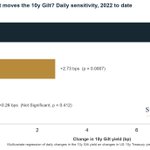
In May I wrote about Gilts' falling energy price sensitivity on the basis of improving global supply outlook but I factored in zero domestic energy policy/supply improvements which have materially improved since
These developments reinforce that view
Original post in replies 👇
Really good summary of how energy contracts at upcoming UK auctions should be judged (in the round) as lowering bills. Getting this right would make the (welcome) rhetoric at the Budget meaningful.
1
2
429
Original post from May 👇
Gilt yields are elevated because of energy price sensitivity
The UK CPI basket has shifted since 2023 when that argument was more valid. Also a wave of LNG supply is about to come online regardless of what happens in the Strait of Hormuz
Gilts look mispriced
Link in reply 👇

188
Rates rise. Yields fall. Stocks rise. The BoE looks set to hike today, and I think Gilts rally from here. Why I'm long Gilts and yield-sensitive UK equities 👇

I've had a busy morning dreaming up ideas of what the government could switch the default option for auto-allocation to (should they ever do it)
Here's a thread of all of them so far 🧵


In case you're wondering why #SAGA has more than tripled over the last year 🙃👇

This is also a tacit acknowledgement that pension freedoms is rather too free for the governments’ long term liking. Near term the drawdown has been a boom for tax receipts, and the lump sum for consumption. But at £91bn/year (more than doubling in three years!) - and likely to smash through £100bn this year - it throws up some moral hazard of rapid early-retirement divestment, and reliance on means tested transfers later in life. Speculation that this policy (including the tax free lump sum) will change has amplified this pace of drawdown.
