

Probably the UK's best equipped Networking labs in a University. Now a Juniper academy as well as a Cisco Networking Academy (CA, ITC, AC).
Stoke-on-Trent, England
Joined May 2015
- Tweets3.1K
- Following434
- Followers568
- Likes12.8K







Pinned Tweet
Fantastic results as voted for by our students in the National Student Survey (NSS) this year, the department of computing ranked out of 113 UK universities @LizbarnesStaffs @RussellCampion2 @StaffsComputing @SpatialityJones @David427189

Staffs Networking retweeted

THIS IS A PURE F*CKING GOLDMINE
Anthropic just documented how Claude Code actually remembers your entire codebase across sessions
The idea: stop dumping 500 lines into CLAUDE.md and let the new Haiku 5.5 manage an auto-indexing memory tree while Opus 5.5 audits your rules
Zero context bloat, path-scoped rules that load only when touched, and persistent learnings that survive across Git worktrees
You just inspect and steer it in Claude Code like this:
/memory
here's how it splits:
→ Opus 5.5 audits rule integrity: runs /doctor prompt-audit to catch stale instructions, contradictions, and obsolete configs
→ Sonnet 5.5 writes path-scoped rules: drafts modular .claude/rules/ with frontmatter globs so rules only load for matching files
→ Haiku 5.5 maintains auto-memory: indexes MEMORY.md at 340 tok/s and moves deep context into dedicated topic files
→ you stop burning Opus context on static prompt bloat and keep your session token count razor thin
The memory architecture runs through three proven layers:
→ path-scoped rules: .claude/rules/*.md load strictly when touched files match, saving up to 80% context
→ auto-memory index: MEMORY.md caps at 200 lines / 25KB, keeping startup instant across all worktrees
→ on-demand topic files: detailed architectural notes live in ~/.claude/projects/<repo>/memory/ without polluting the turn
Opus audits, Haiku indexes, Sonnet scopes
JEV engineering is the same move one layer down: the forks that need no thinker (which rule file matches, auto-memory threshold, stale timestamp drop) resolve in code in 15ms, and the frontier models only see the ones that split
the full tree
> Opus 5.5 audits rule consistency and runs /doctor prompt-audit
> Haiku 5.5 prunes and indexes MEMORY.md at 340 tok/s (1M context)
> Sonnet 5.5 writes path-scoped rules in .claude/rules/ with frontmatter globs
> on-demand topic files capture edge cases without burning startup tokens
> ~/.claude/projects/<repo>/memory/ shares learnings across all Git worktrees
> Opus 5.5 enforces zero-regression architecture standards
> JEV routes path matching in milliseconds
paste the tree and this prompt into Claude Code ↓
"Reconfigure my Claude Code memory architecture around this tree:
1. Audit my current CLAUDE.md with /doctor prompt-audit and strip out stale or conflicting rules
2. Move file-specific instructions into .claude/rules/*.md with YAML frontmatter path globs
3. Delegate MEMORY.md indexing and 200-line threshold management to Haiku 5.5 at 340 tok/s
4. Route detailed architectural learnings and edge cases to Sonnet 5.5 as on-demand topic files
5. Reserve Opus 5.5 for high-level rule consistency and cross-worktree memory verification
Show me every change as a diff first. No edits until I say go"
↳ code.claude.com/docs/en/memo…
save it, it'll come in handy

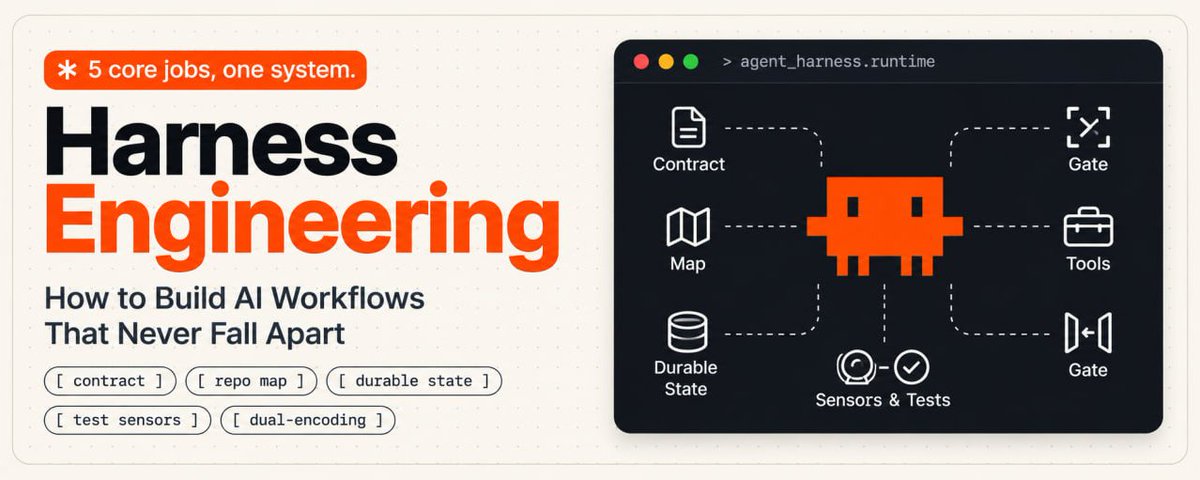
Staffs Networking retweeted

Security called me at 6:12 AM today.
"Patch every PHP server immediately."
I asked what happened.
"Two critical vulnerabilities. Remote code execution. No authentication required."
Cool.
How many PHP servers do we have?
According to inventory: 12
According to reality:
Nobody knows.
We found one running WordPress.
Three running old internal tools.
One under someone's desk.
Two inside vendor appliances.
A forgotten employee directory from 2016.
And a server named:
PHP-OLD-DO-NOT-TOUCH
Naturally, that one runs payroll exports.
Then we found a PHP 5.6 box.
I asked who owned it.
The documentation said:
BRIAN.
Brian left in 2019.
We called Brian.
He said:
"Oh wow, that's still running?"
Excellent.
By 8 AM, leadership joined the incident call.
CEO:
"Can hackers actually get in?"
Security:
"Potentially yes."
CEO:
"Without a password?"
Security:
"Yes."
CEO:
"Then why do WE need passwords?"
Not the lesson.
Finance asked if we could wait until the weekend to patch because downtime affects revenue.
Security explained that the alternative was letting strangers execute code on our servers.
Finance asked for a cost comparison.
At 9:17, someone suggested temporarily taking the vulnerable websites offline.
Marketing refused.
"Our campaign is live."
So for the next hour, the company officially decided maintaining a landing page for 20% off webinar registration was more important than preventing remote server takeover.
We finally patched everything we could find.
Then our scanner discovered another PHP server.
Hostname:
TEMP-PHP-2014
Uptime:
4,512 days.
Nobody knows what it does.
Nobody owns it.
Nobody can shut it down.
But every time we block network access, the warehouse stops printing shipping labels.
Security has classified it as critical infrastructure.
It is running PHP 5.4.
The vulnerability has existed longer than half our employees.
The emergency patch took four hours.
Finding out what PHP actually runs took eleven.
The internet isn't held together with code.
It's held together with servers everyone is afraid to turn off.
Staffs Networking retweeted

Are you looking for a fresh outlook on your 9-to-5?
Whether you're starting your career, or looking to develop new skills, we're always looking for new talent to contribute to our missions 🔎
Discover your career next steps 👣
➡️ gchq.gov.uk/working-at-gchq

Staffs Networking retweeted

50 legendary internet rabbit holes you can spend hours exploring👇
1. zoom.earth — Watch the world via live satellite imagery
2. flightradar24.com — See every plane currently in the sky
3. marinetraffic.com — Track all ships at sea in real time
4. windy.com — Live map of winds and storms
5. lightningmaps.org — Watch lightning strikes hitting Earth in real time
6. earthquake.usgs.gov — Live list of recent earthquakes
7. submarinecablemap.com — Ocean cables carrying the internet
8. globalforestwatch.org — Watch forests disappear from space
9. worldometers.info — The world's statistics, second by second
10. internetlivestats.com — Current number of tweets and searches being posted
11. thetruesize.com — Compare the true sizes of countries
12. oldmapsonline.org — Maps from centuries ago
13. davidrumsey.com — Archive of 150,000 historical maps
14. openstreetmap.org — World map drawn by volunteers
15. window-swap.com — Look out the window of a random person around the world
16. virtualvacation.us — Virtual walks through cities
17. mapcrunch.com — Teleport to a random spot on Earth
18. atlasobscura.com — Catalog of the world's strangest places
19. neal.fun — Interactive knowledge experiences
20. htwins.net/scale2 — Scale journey from atom to universe (Updated HTML5 link)
21. eyes.nasa.gov — Explore the solar system in 3D
22. stellarium-web.org — Real sky map in your browser
23. apod.nasa.gov — NASA's astronomy picture of the day
24. images.nasa.gov — NASA's entire visual archive, free
25. pudding.cool — Visual articles told through data
26. ourworldindata.org — The state of the world with real data
27. gapminder.org — What we mistakenly think we know about the world
28. informationisbeautiful.net — Visualizing complex data
29. data.worldbank.org — World Bank's open data
30. data.tuik.gov.tr — Turkey's official statistics database
31. archive.org — Archive of millions of books, films, and software
32. gutenberg.org — 70,000 free books whose copyrights have expired
33. openlibrary.org — Record of every book in the world
34. loc.gov — U.S. Library of Congress digital archive
35. europeana.eu — Europe's cultural heritage archive
36. dp.la — America's digital library collection
37. artsandculture.google.com — Tour museums from home
38. rijksmuseum.nl — Download artworks in high resolution
39. wikiart.org — Archive of 250,000 artworks
40. publicdomainreview.org — Forgotten visual treasures of history
41. openculture.com — Free archive of culture and education
42. metmuseum.org — Met Museum's open collection
43. musicmap.info — Family tree of music genres
44. radiooooo.com — Pick a country and decade to listen to that era
45. listen.hatnote.com — Turn Wikipedia edits into audio
46. wikipedia.org — Random knowledge well
47. timeanddate.com — Time, sunrises, and sky events
48. sciencedaily.com — Live stream of science news
49. arxiv.org — Free preprints of scientific papers
50. observablehq.com — Visualize data with live code
Save this. You’ll definitely need some of these later. 🔖
Follow @justinbrave21 for more useful websites, AI tools & tech resources.
Staffs Networking retweeted

AI infrastructure is scaling fast, but compute is only part of the challenge.
We cover 10 developments shaping the industry in our latest round-up.
👉🏼 bit.ly/3Tu17Nh
#AI #DataCentres #Networking #hamiltonbarnes

Staffs Networking retweeted

I rented some of the biggest network-optimized EC2 instances AWS has, including the 600 Gbps c8gn.48xlarge, and pointed a DPDK packet generator at them. Then did the same for the rest of the c8gn family.
Some interesting findings 🤓 learnings and link in the thread 🧵
Staffs Networking retweeted

I just published a manifesto for all the developers out there who use an AI coding tool, but feel like they're not shipping much faster
I wrote 10 principles for changing how you build software with AI, based on what I've seen work for teams across Amazon
kiro.dev/topics/frontier-eng…

Staffs Networking retweeted

Master’s thesis vs. PhD thesis — they are not the same thing.
A Master’s thesis usually shows that you can conduct focused research using established methods.
A PhD thesis is expected to make an original contribution to knowledge through deeper, independent research.
The exact requirements vary by university and field.



Staffs Networking retweeted

10 Algorithms used in industry
1. Linear Regression
Predicts continuous values by finding the best-fit linear relationship between features and the target variable.
2. Logistic Regression
Used for binary and multi-class classification by estimating the probability of each class.
3. Decision Tree
Makes predictions using a tree-like structure of decision rules, making it easy to understand and interpret.
4. Support Vector Machine (SVM)
Finds the optimal boundary that separates different classes, especially effective for high-dimensional data.
5. K-Means Clustering
Groups similar data points into clusters without labeled data, commonly used for customer segmentation.
6. Random Forest
Combines multiple decision trees to improve prediction accuracy and reduce overfitting.
7. XGBoost
A powerful gradient boosting algorithm known for high accuracy, speed, and winning many ML competitions.
8. Neural Networks
Mimic the human brain to learn complex patterns, powering applications like computer vision, NLP, and speech recognition.
9. LSTM (Long Short-Term Memory)
A specialized recurrent neural network designed to learn long-term dependencies in sequential data.
10. Isolation Forest
Detects anomalies by isolating unusual data points, making it ideal for fraud detection and outlier analysis.


Staffs Networking retweeted

How exciting to watch some of @UniofStaffs’s old student accommodation being demolished and to see the new skyline of the 1,000-bedroom student village and hub emerge. Not long to wait now until the official opening in September.

Staffs Networking retweeted

📢 As part of our transition into H.E. series, read Lizzie’s journey from making meaningful steps to move into psychology and the Professional Diploma in Psychotherapeutic Counselling after completing the Step Up to HE course @UniofStaffs here 👉shorturl.at/6VJ7K

Staffs Networking retweeted
Would you like to work with me at @UniofStaffs? This is a permanent, full time role 👇
jobs.staffs.ac.uk/Vacancy.as…

Staffs Networking retweeted

With our Five Eyes partners, we have published a joint statement warning organisations they have months - not years - to protect their systems from the accelerating cyber threat driven by frontier AI.🧵
To read the full statement⬇️
ncsc.gov.uk/news/the-ai-shif…

Anthropic’s new AI tool has implications for us all – whether we can use it or not | Shakeel Hashim | The Guardian share.google/nRCM5vpwcekHhsF…

Staffs Networking retweeted

Learn Coding by playing games
1. Kubernetes k8sgames.com
2. DevOps devops.games
3. Linux overthewire.org
4. Git ohmygit.org
5. Python codecombat.com
6. CSS & HTML codepip.com

Staffs Networking retweeted

If you want to become a world-class software engineer, learn these 19 system design case studies:
1 How Stock Exchange Works:
↳ newsletter.systemdesign.one/…
2 How Payment System Works:
↳ newsletter.systemdesign.one/…
3 How YouTube Works:
↳ newsletter.systemdesign.one/…
4 How Google Docs Works:
↳ newsletter.systemdesign.one/…
5 How Kafka Works:
↳ newsletter.systemdesign.one/…
6 How Pastebin Works:
↳ systemdesign.one/system-desi…
7 How WhatsApp Works:
↳ newsletter.systemdesign.one/…
8 How Airbnb Works:
↳ newsletter.systemdesign.one/…
9 How Spotify Works:
↳ newsletter.systemdesign.one/…
10 How Slack Works:
↳ systemdesign.one/slack-archi…
11 How Reddit Works:
↳ newsletter.systemdesign.one/…
12 How Google Search Works:
↳ newsletter.systemdesign.one/…
13 How Real-Time Leaderboard Works:
↳ systemdesign.one/leaderboard…
14 How Twitter Works:
↳ newsletter.systemdesign.one/…
15 How Uber Computes ETA:
↳ newsletter.systemdesign.one/…
16 How Amazon Lambda Works:
↳ newsletter.systemdesign.one/…
17 How Amazon S3 Works:
↳ newsletter.systemdesign.one/…
18 How Do AirTags Work:
↳ newsletter.systemdesign.one/…
19 How ChatGPT Works:
↳ newsletter.systemdesign.one/…
What else should make this list?
——
👋 PS - Want my System Design Playbook (for FREE)?
Join my newsletter with 200K+ software engineers right now:
→ newsletter.systemdesign.one/…
———
💾 Save this for later & RT to help others become good at system design.
👤 Follow @systemdesignone + turn on notifications.

Staffs Networking retweeted

How better to show off laser cutting than by wearing a laser cut necklace ! @UniofStaffs
