

An official page for news, researches, entertainment and campaign coordination. Created and run by Valkyries. #StandWithValko
Joined November 2026
- Tweets27
- Following0
- Followers76
- Likes5




[Wlof Fact Pack 🐺]
'Wolves live and hunt in groups called packs, and each pack has a rigid hierarchy.
In a wolf pack, the dominant male and female, also called the breeding pair, hold the highest rank.
They are responsible for guiding the pack while hunting, providing food, and defending the safety of the more vulnerable members and the territory of the pack.
Researchers found that the dominant male and female of the group were very attuned to the pack’s needs. For the most part, the alpha pair perform parental duties – caring for the other weaker wolves in their pack and for the newborn pups.'
Valko's is huge family of wolf pack. Meet grandma, auntie, cousin 🐺
#ValkoIsLoved
#Under5Mill4Valko
#NoLoginNoSpending

[Wolf Fact Pack 🐺]
A wolf has a reflective layer behind the retina of its eye called the tapetum lucidum. This allows it to see and navigate the darkness of the night.
Does that mean Valko can see MC even in darkness? 🐺
#ValkoIsLoved
#Under5Mill4Valko
#NoLoginNoSpending
𝟓. 𝐖𝐡𝐚𝐭 𝐓𝐡𝐢𝐬 𝐌𝐞𝐚𝐧𝐬 𝐟𝐨𝐫 𝐭𝐡𝐞 𝐁𝐨𝐲𝐜𝐨𝐭𝐭?
Taken together, cognitive dissonance, moral licensing, social identity, sunk costs, and gacha mechanics explain why partial participation is so persistent. Players claim the boycott label while redefining its rules, separating saved resources from spending, and attacking critics of their inconsistency.
While not necessarily bad faith, this creates a measurable gap between boycott identity and the collective action required to pressure a company. Relying on definitional loopholes and moral credentials means public participation claims systematically exaggerate the support actually being withheld. Ultimately, what matters isn't whether players consider themselves boycotters, but whether their actions generate real financial and metric pressure.
If partial participation lets players keep game access while still receiving the social identity and moral recognition of being a boycotter, what incentive do they have to change? And in the end: if the public performance of opposition can continue alongside the private behavior that sustains revenue and activity metrics, how seriously should this faction’s boycott claims be taken?
𝟒. 𝐒𝐮𝐧𝐤 𝐂𝐨𝐬𝐭𝐬 𝐚𝐧𝐝 𝐭𝐡𝐞 𝐃𝐞𝐬𝐢𝐠𝐧 𝐨𝐟 𝐆𝐚𝐜𝐡𝐚 𝐆𝐚𝐦𝐞𝐬
Sunk costs make walking away difficult. Having invested money, time, progress, and emotional attachment into Love and Deepspace, quitting means forfeiting years of effort, incentivizing a compromise where “boycotting” simply means not spending or playing occasionally.
Gacha architecture exploits this reluctance. Limited-time banners, dailies, and variable-ratio intermittent rewards encourage players to log in “just for a moment,” making occasional play psychologically effortless to maintain despite public boycott pledges. Meanwhile, vocal rhetoric still delivers the interpersonal rewards of moral licensing even as private habits remain unchanged.
When the game itself is designed to make intermittent engagement feel cheap, easy, and potentially rewarding, how durable can a boycott that allows “just checking” or “using saved resources” realistically be?
𝟑. 𝐒𝐨𝐜𝐢𝐚𝐥 𝐈𝐝𝐞𝐧𝐭𝐢𝐭𝐲: “𝐑𝐞𝐚𝐥 𝐁𝐨𝐲𝐜𝐨𝐭𝐭𝐞𝐫𝐬” 𝐯𝐬. “𝐅𝐚𝐤𝐞 𝐁𝐨𝐲𝐜𝐨𝐭𝐭𝐞𝐫𝐬”
Social identity dynamics deepen the rift, splitting the movement into strict abstainers and partial participants. Strict abstainers police the movement’s credibility by attacking casual players, arguing that playing during a boycott makes claims like “Valko is loved” a “fucking mockery.” Conversely, partial participants dismiss demands for full abstinence as harassment, labeling strict boycotters “antis” to defend their own engagement as legitimate.
Per social identity theory, people become defensive when their group image is threatened. However, loudly policing others can also confer status and belonging, allowing players to earn social credit as “good” group members while privately playing. Coupled with fan-loyalty research showing that strong brand attachment encourages rationalizing value violations, the community becomes consumed by hypocrisy accusations while partial play continues.
If most of the energy is spent arguing over who qualifies as a “real” boycotter instead of maximizing the withdrawal of spending and activity, whose interests does the campaign ultimately serve?
𝟐. 𝐌𝐨𝐫𝐚𝐥 𝐋𝐢𝐜𝐞𝐧𝐬𝐢𝐧𝐠: “𝐈’𝐦 𝐁𝐨𝐲𝐜𝐨𝐭𝐭𝐢𝐧𝐠, 𝐒𝐨 𝐓𝐡𝐢𝐬 𝐎𝐧𝐞 𝐏𝐮𝐥𝐥 𝐈𝐬 𝐅𝐢𝐧𝐞”
Moral licensing occurs when a perceived virtuous act makes someone feel justified in subsequently acting against those values, an effect confirmed across 91 studies by Blanken et al. (2015) and shown by Rotella et al. (2025/2026) to be significantly stronger when the initial moral act is publicly visible.
Public boycott declarations, posting solidarity hashtags or announcing “I haven’t spent money since June” serve as visible moral credentials. Once established, selective engagement becomes easier to rationalize, as seen in @.p**********n using non-spending to excuse pulling with saved resources. Strict abstainers note that some of the loudest boycott supporters still generate engagement metrics or showcase new content. This raises an uncomfortable question: is the public boycott identity becoming a social credential while actual behavior remains only partially restricted?
Research also shows people proactively build moral credentials ahead of anticipated temptation, and limited-time gacha banners are engineered for temptation.
If publicly declaring “I don’t spend” becomes the moral credential, doesn’t pulling with “saved” resources become the exact licensed indulgence this research predicts? And if the credential is mainly performed for others, what happens to the boycott once observers notice the gap between claim and behavior?
𝟏. 𝐂𝐨𝐠𝐧𝐢𝐭𝐢𝐯𝐞 𝐃𝐢𝐬𝐬𝐨𝐧𝐚𝐧𝐜𝐞: 𝐂𝐡𝐚𝐧𝐠𝐢𝐧𝐠 𝐭𝐡𝐞 𝐃𝐞𝐟𝐢𝐧𝐢𝐭𝐢𝐨𝐧 𝐈𝐧𝐬𝐭𝐞𝐚𝐝 𝐨𝐟 𝐭𝐡𝐞 𝐁𝐞𝐡𝐚𝐯𝐢𝐨𝐫
Leon Festinger’s (1957) cognitive dissonance theory explains the discomfort people feel when their actions contradict their stated beliefs, the discomfort which they resolve by altering either their behavior or how they interpret it (Festinger & Carlsmith, 1959).
Here, players claim to boycott Papergames/Infold while continuing to play and pull on banners.
Responding to accusations of hypocrisy on 10 November 2026, X user @.p**********n wrote:
• “(1) still participating in the boycott cause I ain’t spending money
• (2) pulled with diamonds that I had in game
• (3) still want Valko back.”
An earlier post from the same account (6 November 2026) stated:
• “I’m still boycotting and I haven’t spent money on lads since early June… I want Valko back but I play the game from time to time.”
Rather than quitting, players reduce dissonance by redefining “boycott” to mean “no spending,” allowing two conflicting ideas to coexist: opposing the company while actively playing its game.
Community replies immediately pushed back, noting that some rewards were tied to recent purchases and that ongoing activity still boosts the company’s engagement metrics.
If cognitive dissonance is handled this way, are these definitional changes resolving the contradiction, or simply making it easier to live with? When redefining “boycott” to allow residual play is the easier option, how much pressure is the company actually experiencing?
“𝐁𝐨𝐲𝐜𝐨𝐭𝐭𝐢𝐧𝐠” 𝐟𝐨𝐫 𝐕𝐚𝐥𝐤𝐨 - 𝐀 𝐭𝐫𝐮𝐞 𝐚𝐜𝐭𝐢𝐯𝐢𝐬𝐦 𝐟𝐨𝐫 𝐬𝐨𝐦𝐞, 𝐚 𝐦𝐨𝐫𝐚𝐥 𝐜𝐞𝐫𝐭𝐢𝐟𝐢𝐜𝐚𝐭𝐞 𝐟𝐨𝐫 𝐨𝐭𝐡𝐞𝐫𝐬.
------------------------------------
𝐈𝐧𝐭𝐫𝐨𝐝𝐮𝐜𝐭𝐢𝐨𝐧:
The late-June 2026 cancellation of the planned sixth love interest, Valko, in Love and Deepspace sparked a global boycott against Papergames/Infold.
Yet a vocal faction publicly champions the boycott, using hashtags like #NoValkoNoMoney and #BringBackValko while still logging in, pulling on banners with saved resources, and attacking stricter boycotters as “radicals” or “antis.”
If these public claims are meant to show they are withholding support from the company, what exactly is being withheld when they continue to log in and engage with the game?
[In-depth article below]
---
#NoLoginNoSpending #Under5Mill4Valko #StandWithValko
#ValkoIsLoved


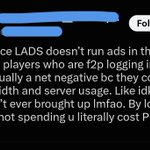
Yes, servers cost money and free actions consume resources. No, that does not make the free daily player a net loss in a game generating hundreds of millions from the freemium funnel that those players help sustain. The actual economics are the opposite of the claim.
8
107
Framing free logins as “costing the company money” and dismissing DAU value as irrelevant until ads appear is a petty, incomplete view of backend reality.
1
7
117
The “limited saves/actions per day” are primarily progression pacing and monetization pressure tools, not a desperate attempt to stop server bankruptcy. Games like GI, HSR, and many titles run the same model at enormous scale without relying on in-game ads and still print money.
1
5
127
Analytics from a large active base improve balancing and content decisions.
This is why Paper Games (and every other successful pure-IAP gacha/live-service studio) actively designs for daily logins, dailies, events, and retention instead of treating f2p as a problem to minimize.
1
5
137