

Advancing safe & trustworthy AI.
Stanford, CA
Joined October 2026
- Tweets20
- Following57
- Followers49
- Likes12


A new tutorial by SAFE-affiliated researchers Hao Wang, Zeyuan Feng, and Prof. Somil Bansal offers a unified overview of two foundational approaches to safety certification: Hamilton-Jacobi reachability and control barrier functions.
📄 Read the paper: arxiv.org/abs/2611.07537

1
87
Recent New York Times article explores the growing potential of AI-powered formal verification, featuring @andTruthPBC co-founded by SAFE co-director @ClarkBarrett7 🛡️
Read the full article: nytimes.com/2026/10/29/scien…

1
133
Stanford Center for AI Safety retweeted
New this week from the MIT Press. Happy publication day to our authors! 📖

ALT A stack of eight MIT Press books.
📣 New textbook by @aiprof_mykel, @Sydney_Katz, Anthony Corso, and @mossrj, "Algorithms for Validation" offers a broad, rigorous introduction to algorithms for validating safety-critical systems: mitpress.mit.edu/97802620560…

Exciting news! Stanford SAFE co-director @aiprof_mykel is joining @StanfordCISAC 🚀

Please join us in welcoming @aiprof_mykel to CISAC! Kochenderfer, an associate professor of aeronautics and astronautics at Stanford School of Engineering, will serve as CISAC's natural science co-director beginning January 1, 2027.
cisac.fsi.stanford.edu/news/…

Congratulations to our co-director @ClarkBarrett7
on the launch of @andTruthPBC! 🚀
Emerging from stealth with $70 million in seed funding, &Truth aims to make software provably safe, secure, and correct at scale through formal verification and AI.
andtruth.com

Earlier this week, SAFE Co-Director Prof. @aiprof_mykel joined @StanfordHAI's 'Confronting Our AI Future' conference for a discussion on “The State of AI Measurement: Performance and Safety.”
🔗 Conference details: lnkd.in/gx8hUrTa
#AISafety #AIEvaluation #StanfordSAFE


3
128
SAFE Executive Director Dr. @kianajafarim joined Senator @JoshBeckerSV and fellow panelists for a town hall on emerging AI risks, safety research, and AI policy in California.
🎥 Watch the discussion: sd13.senate.ca.gov/videos
#AISafety #AIPolicy #StanfordSAFE
3
100
Stanford Center for AI Safety retweeted

Now online! Recording of Marc Schlichting’s PhD defense (Nov 15, 2025) on generative models for safety in autonomous systems, from failure discovery in a 1200-dim F-16 system to an LLM decision-support tool for aviation emergencies tested in real flights.
youtube.com/watch?v=nCtkqVG7…

What can aviation safety and formal verification teach us about AI?
SAFE co-directors Clark Barrett and Mykel Kochenderfer joined @ycombinator to discuss rigorous approaches to building safer, more reliable AI systems.
Great conversation!
m.youtube.com/watch?v=X7oI4U…

Stanford Center for AI Safety retweeted

This week’s Paper Club is all about AI safety. Not the headlines, but the science.
AI safety has been a research field for decades, with its own conferences, methods, and a track record in systems like aircraft collision avoidance, where the standard is one catastrophic failure per billion flight hours.
We'll hear from @ClarkBarrett7 and Mykel Kochenderfer (@aiprof_mykel), Stanford professors and co-directors of the Stanford Center for AI Safety.
Together with @FrancoisChauba1, they break down the OpenAI–Hugging Face incident, how formal verification can mathematically prove properties of code, how aircraft safety techniques are being adapted to language models, and why AI may need its own NTSB.
00:00 - Science fiction vs. science fact
04:32 - Engineering problem, or P(doom)
06:04 - What actually happened at Hugging Face
07:53 - Where "10% in 10 years" comes from
11:21 - The real risk: open weights in the wrong hands
17:25 - Clark Barrett: when AI met automated reasoning
20:35 - CSLib: proving code correct in Lean
24:32 - From English spec to verified code in one click
27:55 - Mykel Kochenderfer: how do we know a system is safe
32:11 - Adaptive stress testing, from aircraft to LLMs
36:57 - Verifying neural networks
40:30 - Runtime monitoring and BetterBench
43:53 - Panel: reacting to the past three weeks
45:55 - An NTSB for AI
52:18 - Is cybersecurity solvable in five years
55:00 - If you were CISO of Bank of America
1:03:06 - The Swiss cheese model
1:05:43 - Audience Q&A
📄 New research from SAFE-affiliated faculty Somil Bansal and collaborators!
Introducing TRUST, a framework for detecting and correcting flawed reasoning in vision-language-action models: arxiv.org/pdf/2610.00601.

🗞️ SAFE featured in @Forbes!
Thank you to Lance Eliot for covering our 2026 Annual Meeting and highlighting discussions on AI agents, risks, and safeguards – read the full article here:
forbes.com/sites/lanceeliot/…


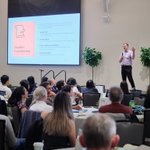
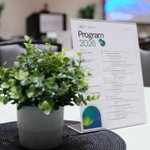
Yesterday, @StanfordSAFE hosted our 2026 Annual Meeting: Trust, Verified! 🤝
Researchers, industry leaders, and students came together to explore what it takes to build AI systems we can rely on.
🧵


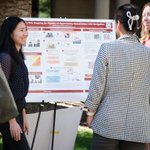
One of our favorite parts of the was the student research! 🎓
Through lightning talks and a poster session, Stanford graduate students shared their incredible work across AI safety, reliability, robustness, verification, human-AI interaction, and trustworthy autonomy.


1
1
26