

Music Alliance Management Corportation (Founder & President) - Managing Music Artists throughout the World with Tailor-Made Career Strategies for Success.
California
Joined February 2024
- Tweets21.6K
- Following482
- Followers7.6K
- Likes97.1K





One of the most common mistakes artists make with their royalties
tiktok.com/@encoreready/vide…
"Authenticity" is a fascinating word in entertainment these days.
Many artists have shared with me that authenticity means “does this feel real to me right now?” That is only surface authenticity, but it remains a true form of authenticity.
Did you know that there is a deeper and rarer kind: "Structural authenticity" — consistency with a clearly defined identity over time that allows for evolution.
Years ago, we called this "character" - or "building/having character."
What's a clear-cut way to know the difference?
Surface authenticity changes with mood, trends, and whatever successful artist you just saw.
Structural authenticity stays steady. It filters every decision through a consistent Artist World created by the artist for long-term success, so the work remains coherent, recognizable, and true — even when inspiration comes from outside.
One version feels honest in the moment.
The other builds the kind of artist that listeners eventually claim as their own.
Algorithms and playlists often get the first play. But if you never speak to the listener’s internal world, the attention stays shallow.
People stream once and move on.
No save. No follow. No real connection.
You remain just another song in the feed — still invisible, still wondering why it’s not clicking. What's going on?! Why aren't they listening?!
When you learn to speak clearly to what your listeners are quietly carrying, everything shifts. You start seeing saves and follows from people who feel understood.
Listeners begin returning on their own.
Your releases feel less like shouting into the void and more like conversations with people who already care.
You stop chasing and start attracting the kind of fans who say “this is my artist.”
That is what it looks like when you become the Standout.
Become the Standout.
Are you Encore Ready?
We can help.
NEW EPISODE - Karmic Woof Podcast Ep. 31: The Power of Personal Responsibility
What if the freedom you long for is waiting on the other side of the very responsibility you’ve been avoiding?
youtu.be/jDaW0K8LXPw?si=E7rh… via @YouTube
In this week’s Karmic Woof Podcast (Episode 31), Starbuck Jones & Jason Lancaster take an honest, in-depth look at a question that hits close to home: What does real personal responsibility actually look like—and why do we so often trade it for the illusion of freedom?
Drawing from their experiences as Bon students, they explore the habits of responsibility (both the ones that free us and the ones that bind us), what genuine ownership of our lives feels like, how avoidance shows up in the pursuit of what we call “freedom,” and the subtle ways we step away from power while believing we’re claiming it.
You’ll hear real, personal stories about the moments they chose responsibility over the seductive promise of freedom, the patterns that keep us circling in avoidance, and the surprising shift that becomes possible when we stop outsourcing our power and start meeting life as it is.
It’s a raw and insightful conversation about the difference between true freedom and its clever counterfeit and about reclaiming the habits that let us create the lives we actually want.
If you’re ready for a clearer understanding of responsibility and a more honest relationship with your own experience, this episode offers clarity, courage, and the quiet strength that comes from full ownership.
Just a passing thought for today:
All music artists are ultimately selling an emotional experience.
- They help their fans either thrive — feel alive, connected, understood, inspired, empowered, joyful, or seen —
- OR survive — escape stress, feel less alone, release pent-up emotions, or find temporary relief from daily life.
If an artist’s posts, music, and branding don’t clearly speak to these needs, fans have little reason to pay attention, stream, attend shows, or engage (beyond a low-effort 'like' in passing).
Something I think about a lot while helping artists build their visual branding story.
What do you think — does your music clearly speak to what your fans need to thrive or survive?
If you’re an artist and want help making your visuals match the emotional power of your music, I’d be happy to talk.
NEW EPISODE - Karmic Woof Podcast Ep. 29: Small Decisions, Massive Life Change
What if the next small decision you make today could quietly begin rewriting your entire future?
youtu.be/sks4zvdGxAc?si=DgAH… via @YouTube
In this week’s Karmic Woof Podcast (Episode 29), Starbuck Jones & Jason Lancaster get real about creating better habits through making better decisions — sharing their personal experiences of how they deliberately chose better habits and better decisions for better outcomes, and how it dramatically improved every aspect of their lives over just the past week.
You’ll hear honest, relatable stories about real turning points, the surprising ripple effects of tiny choices, and the powerful difference between staying on autopilot versus intentionally choosing better.
They also take you along on their current adventures searching for property as they move closer to building a space dedicated to serving humanity’s health and prosperity needs during Penno.
If you’re ready for genuine inspiration and proof that real change is possible, this episode is packed with hope, honesty, and motivation that sticks with you.
One better decision at a time… your better life is waiting.
Thoughts: Fanbase Building
Real growth isn’t about chasing virality early.
It’s about going deep first.
The deeper your roots in your niche, the stronger the push into wider circles.
That’s the snowball effect.
This is one of the strongest and most reliable approaches for building a sustainable music career (or any creative project). Focus on cultivating a loyal core audience in the first 1–3 years. Turn them into passionate evangelists.
Once you have real momentum, they’ll help you expand organically into adjacent audiences — all while keeping your music authentic.
Sustainable fanbase building beats short-term hype almost every time.

Today's Thought - Some songs aren’t meant to be background music.
They’re meant to sit with you when everything feels too loud and too quiet at the same time.
Ever notice how sometimes the best mood repair starts with deliberately choosing the saddest or angriest music possible?
There’s actually a name for this: Delayed Hedonic Gratification.
Instead of forcing fake positivity, you just instinctively reach for that “sad girl/boy hours” playlist that best aligns with your current pain when triggered by an emotional cue.
Most of the time this happens on a subconscious level as part of self-mood regulation. You let the music amplify the feeling, validate it, pull it out of the shadows. It might sting more at first… but that’s the delay.
Then comes the payoff: real catharsis, emotional release, and a deeper sense of relief than happy music could ever deliver - neurochemical release here.
It’s advanced emotional self-therapy akin to deep self-reflection, although most don't know that's what's going on consciously. You’re not avoiding the darkness — you’re using it as raw material for a better emotional ending.
So next time someone side-eyes your “depressing” playlist… just smile and say you’re doing 'advanced emotional self-therapy', and you'd be right.
Believe it or not, there's an actual reason why we're attracted to the music and the artists we like best, over all the others. It's why we build playlists.

Today's thought: Desperation mode is dangerous for decision-making.
Desperation increases the likelihood that you’ll copy the same behaviors you dislike in others. The goal isn’t to never feel pressure — it’s to notice when it’s influencing your decisions.
Late at night and I’m sitting with her vision spread across the table, quietly pulling threads of meaning from the clothes she’s already chosen to wear.
Not building something new on top of her but helping shape the Artist World she’s already creating — listening closely for the story already living in her choices.
I follow what resonates and what fades, then gently adjust the light around those same pieces. It’s slow, deliberate work. A quiet translation between what she feels and what others might finally feel when they see her.
Sometimes an accessory doesn’t just rest on the body. It quietly carries weight — a signal of strength, softness, or truth — long before she ever opens her mouth.
It’s strange how much of this work — the quiet, deliberate shaping of an artist’s world — happens in the hours when most people have already gone to sleep.
Every artist possesses a unique core frequency—a natural resonance that deeply connects with fans who align with the same energy. This is why finding YOUR audience, instead of aimlessly chasing any crowd, is absolutely essential to success.
It’s this distinct frequency set, your personal "muse" I'll call it, that makes your music unforgettable and magnetically draws listeners to your sound.
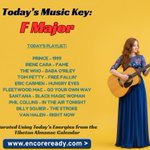
Take The Beatles, for instance—their collective core resonance harmonized seamlessly with the key of F Major. When they wrote songs in this key, it appeared to unlock their full creative potential, dramatically enhancing their chances of crafting chart-topping hits.
Similarly, Queen, Phil Collins, Hall & Oates, and Fleetwood Mac produced hit after hit in this particular key, as it naturally aligns with their core frequencies, amplifying their musical impact on their core audience.

My favorite quote of the day:
"The internet — which is supposed to be the greatest tool for democratizing knowledge and opportunity has become an 'attention casino' where the house (the platforms) wins by keeping people distracted, not smarter."

A Simple Post-Show Practice That Builds Real Artist Careers
After a strong 350-cap show, most artists pack up and head out.
The ones who consistently grow their careers do one extra thing: they send personalized handwritten thank-you cards within 48 hours.
A short note to the promoter referencing a specific moment from the night.
Cards to fans who signed up at merch or lingered after the set.
Low cost. High impact.
We’ve seen it lead to better future slots, stronger fan loyalty, and relationships that actually last in an increasingly digital industry.
In 2026, a physical card in the mail still stands out, and so will you.

Every artist possesses a unique core frequency—a natural resonance that deeply connects with fans who align with the same energy. This is why finding YOUR audience, instead of aimlessly chasing any crowd, is absolutely essential to success.
It’s this distinct frequency set, your personal "muse" I'll call it, that makes your music unforgettable and magnetically draws listeners to your sound.
Take Diana Ross, for instance—her core frequency naturally resonates with the key of Db Major (along with a secondary key). When she created music in this key, her chances of producing chart-topping hits soared. It’s not just raw talent at play; it’s a captivating fusion of artistry and science.
Olivia Newton John thrived by leveraging the frequencies of Db Major, even though it served as her secondary key. Her most iconic hits, however, are rooted in her primary key, which resonates more closely with her core frequency.

NEW EPISODE - Karmic Woof Podcast Ep. 27: Virtue Signaling My Way into the Wrong Thing
Have you ever passionately supported a trending word, phrase, or movement — convinced you knew exactly what it stood for — only to later realize the meaning had quietly been changed behind the scenes?
youtu.be/hc2GCmmFLBU?si=cNpg… via @YouTube
In this week’s edition of the Karmic Woof Podcast (Episode 27), join hosts Starbuck Jones & Jason Lancaster for a thought-provoking Habit Chat as we explore the everyday habits we build around popular language and social movements in today’s world.
We dive into how easily we latch onto appealing ideas — people latch onto appealing words, slogans, or causes, assume they understand the "true" meaning, and then discover (or never notice) that the goalposts have been quietly moved — while rarely pausing to question, research, or verify. Instead, we often ride the wave of what’s popular in the moment, chasing external validation.
You’ll hear real-world examples of how this plays out, the subtle ways language and intentions get co-opted, and the eye-opening realization that what we think we’re backing is sometimes the exact opposite of what we actually want.
From there, we examine how these unconscious habits shape our beliefs, actions, and sense of self — and what it truly takes to step back, reclaim our awareness, and realign with what matters most.
What we uncover is both practical and profound: the power of pausing before jumping on the bandwagon, the importance of staying curious and questioning popular narratives, and how reclaiming our own discernment can free us from paths that don’t actually serve us.

- Free Artist Branding Resource -
Are you feeling scattered, inconsistent, or like your Artist World (brand) isn’t quite matching the music and story you want to tell?
You’re not alone.
It’s easy to get caught up in making music, touring, posting content, chasing opportunities, and doing all the things — while your overall artist identity stays unclear or inconsistent.
That’s why I created a quick free self-assessment quiz:
“How Strong Is Your Artist World Right Now?”
It only takes a couple of minutes and helps you see where your branding, story, vision, and direction currently stand — and where a little extra attention could make a huge difference.
No sign-up required to see your results.
Just an offering for anyone who wants it.
Take the Free Artist World Clarity Assessment here:
encoreready.com/artist-world…
I hope it provides some helpful clarity.

Every artist possesses a unique core frequency—a natural resonance that deeply connects with fans who align with the same energy. This is why finding YOUR audience, instead of aimlessly chasing any crowd, is absolutely essential to success.
It’s this distinct frequency set, your personal "muse" I'll call it, that makes your music unforgettable and magnetically draws listeners to your sound.
Take Pink Floyd, for example—a band whose music thrives in keys like D Major, where their creativity and sound truly shine. Whenever they release songs in this particular key, the likelihood of success skyrockets because it aligns perfectly with both their core identity and core fanbase. This is where the magic truly comes to life.
The same holds true for The Eagles, who built an iconic career by mastering and consistently utilizing this key as a cornerstone of their sound. Why? Because their core audience connects with this key on an extraordinary level, creating a bond that has fueled countless hits and timeless appeal.
Madonna’s core frequency resonates not only with the key of D but also with a second key—talk about being a “Lucky Star”! This dual alignment is reflected in her songs, amplifying her ability to connect with audiences on a profound level.
