

We're on a mission to make AI truly personal. https://teapaw.org/t.co/FEWPwyEWul
Joined July 2026
- Tweets44
- Following12
- Followers85
- Likes30






How do a few full attention layers shape activations in hybrid LLMs?
Our new research reveals:
• Where they spike
• How far they persist across layers
• How full attention placement shapes both
Five linear attention architectures. Two recurring patterns: spikes and plateaus.
Paper: arxiv.org/abs/2608.12149

Our analysis supports a shared write–sink–cancel lifecycle.
• Write: an extreme activation forms before full attention.
• Sink: its token attracts disproportionate attention during full attention.
• Cancel: an opposite-signed update substantially offsets the outlier.
Localized PAS corresponds to outlier writing followed by prompt cancellation; ISP exhibits massive activations persisting through intervening linear attention layers, consistent with delayed cancellation.


1
27
Why does this research matter?
Massive activations offer clues to how models compute internally and are numerical outliers that low-bit quantization must account for.
We find that their spike locations and persistence across layers are closely tied to full attention placement. This helps explain computation in hybrid architectures and offers clues for exploring layer-specific precision choices and model compression strategies.
We are continuing to explore these directions.
· Paper:arxiv.org/abs/2608.12149
· Hugging Face:huggingface.co/papers/2608.1…
· Code:github.com/StartLuxLabs/Mass…
10
When should decision models think?
StartLux-Decision:
• Instant: one-pass probabilities
• AutoThink: reasons when uncertain
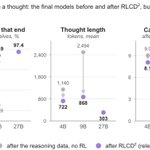
• RLCD²: rewards probability gains; up to 65% shorter reasoning
• DecisionPivot: tests if one key detail flips the answer
Paper: arxiv.org/abs/2610.17309

1
2
180
Does the same “80% confidence” correspond to similar actual accuracy across different decision workflows?
Calibration of individual predictions does not automatically carry over to downstream workflows. We introduce policy-aware calibration, incorporating actual selection and routing policies and related information to better estimate the reliability of final outputs without retraining the underlying model.

1
40
Explore StartLux-Decision:
Paper: arxiv.org/abs/2610.17309
Code: github.com/StartLuxLabs/Star…
Models: huggingface.co/startlux-mode…
1
28
Great to see UnslothAI making browser automation more accessible with local models.
At StartLux, we’re exploring the decisions behind these workflows. In our own mock-store demo, StartLux-Decision-27B selects the next page control and assesses whether the task is complete, while our harness executes the actions.
Watch our demo:
teapaw.org/StartLuxAI/status/2106…

Your local LLM can now take control of a browser and complete tasks autonomously via Unsloth!
Qwen3.8-27B successfully controlled the browser to complete tasks like chess, painting, with no human intervention.
GitHub: github.com/unslothai/unsloth
Guide: unsloth.ai/docs/basics/brows…
1
120
We’ve been shipping. Here’s what’s out.
🛠️ StartLux-27B
A 27B model for tool use and multi-step task execution. In CAICT’s August 2026 MCP evaluation, StartLux-V1.0-27B-Preview scored 39.25% Overall Micro Pass@1, ranking #2 among six tested models.
⚡ StartLux-Decision
Fast decisions when confident. Deeper reasoning when needed. Model weights and inference code for the StartLux-Decision family are available. On October 16, StartLux-Decision-v1.1 27B reached #1 on the Hugging Face Jev Decision Index 0.3.2 text leaderboard.
🔧 StartLux-Prism
To make decision models easier to use and deploy, we released and open-sourced an inference engine built specifically for StartLux-Decision, delivering up to 5.3× speedup on a single GPU. Faster decision responses. More efficient computation.
🧭 DecisionPivot
A benchmark for evaluating decision-making at key points in LLM systems: whether decisions are correct, whether models still make the right decision when a decisive detail changes, and how much work they can automate at a fixed error rate.
🤖 Made with AI

2
8
237
Explore our models, code, research, and benchmarks 👇
🛠️ StartLux-27B
· Results:
startlux.com/benchmark/
⚡ StartLux-Decision
· GitHub:
github.com/StartLuxLabs/Star…
· Hugging Face:
huggingface.co/startlux-mode…
· ModelScope:
modelscope.cn/organization/S…
· Paper:
arxiv.org/abs/2610.17309
· Technical blog:
decision.startlux.com/
🔧 StartLux-Prism
· GitHub:
github.com/StartLuxLabs/Star…
🧭 DecisionPivot
· GitHub:
github.com/StartLuxLabs/Deci…
· Paper:
arxiv.org/abs/2610.28522
🌐 Find us
Website: startlux.com/
X: teapaw.org/StartLuxAI
YouTube: youtube.com/@StartLux-AI
📬 Get in touch
Media & business: [email protected]
Investor relations: [email protected]
Careers: [email protected]

2
110
Thanks for highlighting DecisionPivot, @HuggingPapers!
For practical use, we need to ask how much work a model can handle within an acceptable error rate.
DecisionPivot explores this alongside accuracy and confidence, helping us understand when to rely on a model’s decision and when further review may be needed.

DecisionPivot
A diagnostic benchmark of 48 tasks and 40,033 items that shows how item accuracy alone hides large differences between decision models in LLM systems

2
195
🚀 We’re hiring!
Believe great AI should run on your own devices? So do we. Come build with us! 7 open roles across research, engineering, and product. Find your fit below 👇
📩 Send your CV and work to [email protected]

2
129
Thanks to @thePandaily for sharing Prism! We really appreciate the continued interest in our work.

StartLux open-sourced Prism, an inference engine built for decision models: 19 ms per short question on one H200, 2.8x faster than before, with int8 outputs that stay bit-exact and accuracy within 0.03 points of BF16. @StartLuxAI

1
132
⚡️ Same model. Same GPU. Up to 5.3× the speed.
Today we’re open-sourcing StartLux-Prism, our dedicated inference engine for decision models.
On a single H200, running StartLux-Decision v1.1 27B AutoThink, Prism INT8 delivers 1.2–5.3× the speed of our vLLM 0.31 FP8 setup across four tested workloads.
• Short question (~256 tokens): 53.1 → 19.0 ms — 2.8× speedup.
• Three questions sharing one context: 92.9 → 17.4 ms — 5.3×.
• The same three questions with reasoning: 1,296 → 785 ms — 1.7×.
• Long question (~8,192 tokens): 531.2 → 439.8 ms — 1.2×.
Accuracy with reasoning stays nearly unchanged: 92.94% vs. 92.97% with BF16 across seven benchmarks covering 12,351 decisions.
Results stay reproducible, too. With fixed hardware and weights, output probabilities remain bit-identical across tested batching and caching configurations.
✨ From models to inference, we’re expanding the local AI stack.
Code:
github.com/StartLuxLabs/Star…
Models:
Hugging Face: huggingface.co/startlux-mode…
ModelScope:modelscope.cn/organization/S…
API:
bamboonode.dev

1
5
213
The final answer-scoring step is smaller, too.
For the 27B model, Prism scores just 26 option letters instead of the full vocabulary of roughly 248,000 tokens. Probabilities normalized over the listed options remain mathematically equivalent to computing the full vocabulary scores first and then normalizing over those same options.
Shared context, computed once. Final answers, scored only where needed.

1
1
43