
MD. Biotech investing. SA author. I also post in X and substack
Joined November 2021
- Tweets1.3K
- Following182
- Followers779
- Likes982
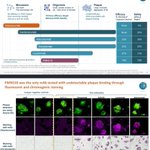


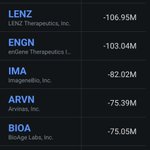
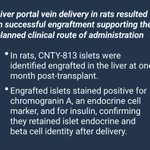


$ALLO getting cheap? Offering was at $2. Good funds participating.
Upcoming early data on autoimmune indication could drive it lower (adding a fludarabine arm in the trial being a red flag). But seems cheap already based on cema-cell (?).
$NRIX $1.1 billion cash. Runway ti 2H 2029. And lost $1.2 billion in market valuation due to Sanofi dropping a ph1 asset (we dont even know why- bad asset? or strategic move by Sanofi?
Good summary on $DRUG

Bright Minds ($DRUG): should we buy the dip after FDA hold? Not yet; we're waiting for FDA's letter
What happened: On Nov 2, 2026, FDA put a partial clinical hold on BMB-101's planned U.S. Phase 2 study in severe childhood epilepsies (DEE), citing toxicity seen in mice and too little pediatric safety and dosing data. The stock fell about 55%, from $54.98 to roughly $24.50. No patients can enroll in that study until the hold lifts. Trials in Australia continue.
What we expect: Holds like this are usually lifted eventually; we estimate about a 65% probability. Fixing it will likely require a new juvenile animal study, which points to a 12–24 month delay. Meanwhile, Lundbeck's competing drug, bexicaserin, reports Phase 3 results around year-end 2026.
How it compares:
Edges: BMB-101 is dosed twice daily, versus three times daily for Lundbeck's bexicaserin (Phase 3). It has no measurable activity at the 5-HT2B receptor linked to the heart-valve risk of UCB's Fintepla (approved; €427M sales in 2025). In lab tests it is "biased," meaning far less β-arrestin recruitment, which may reduce drug tolerance over time. It also has early data in absence seizures, which competitors lack.
Caveats: These edges come from lab work and an 11–17-patient open-label study with no head-to-head data. BMB-101 is now 3+ years behind bexicaserin. Stoke's zorevunersen (Dravet, Phase 3 data mid-2027) adds pressure.
Valuation: The company holds about $215M in net cash, or roughly $21 per share. At today's price the market values the drug pipeline at only about $40M. Our scenario-weighted estimate of fair value is about $20 per share, with a range of $10 to $37. The stock is not clearly cheap at current levels.
Our stance: We are not buying now. FDA's detailed letter (expected around early December) and the bexicaserin results will set the timeline. A pullback toward cash value (about $19–21 per share) or a favorable FDA letter could justify a small, risk-sized position.
No position, not investment advice. #biotech #stocks #investing
$DRUG Hold doesnt look that bad at 1st glance. What am I missing. Prior offering at $90?
$ABOS $PMN ACU193 is more similar to lecanemab in binding spectrum but with less plaque binding + IgG2 (vs IgG1).
Why lecanemab succeeded and ACU193 failed?
(1) Lecanemab (similarly short half life) was dosed q2w vs q4w for acu193
(2) Lecanemab due to its higher binding of plaques + IgG1 function achieves clearance of plaques. On the other hand the partial plaque clearance by acu193 is not sufficient to confer benefit (IgG2)
(3) Rationale of ACU193 was to selectively target toxic oligomers. However, it is still not strictly selective resulting in a sink effect (poor pk + less mAb available in CNS for toxic oligomers). To overcome this ACU193 used much higher dose (albeit inappropriately at Q4W). With this high dose and considering plaque binding using IgG1 would be prohibitive as it would cause severe ARIA (in sharp contrast to $PMN with proven selectivity+lack of ARIA allowing safe use of IgG1 function to remove rather than just bind toxic oligomers)(+ no sink = much better half life and more drug available to bind and remove toxic oligomers).
So with ACU193 (which was returned to ABOS by Merck...) you have a mAb with insufficient plaque clearance, poor pk/pd, and inability to clear toxic oligomers due to lack of IgG1 function.
None of the above is true for $PMN which btw has much better biomarker data (+ long half life, proven no plaque binding and no ARIA, IgG1 function).
The real test for the selective targeting of toxic oligomers is coming from $PMN, not $ABOS
Obviously not without risk but market valuing $PMN below cash is extreme (and hugely asymetric bet for Q1 readout)

$PMN vastly better pk/pd

$NVNO @envvenomedical
I would love to see retail voting against the proposed equity plan
(1) Incredibly slow progress (on purpose until plan gets approved??). Not even one patient enrolled yet (management likely wants the equity plan approved first before pumping the stock...)
(2) No insiders buying (why buy when you can get free cheap options) in sharp contrast to CEO presenting $NVNO as a generational investment opportunity.
(3) >30% dilution from proposed equity plan.
(4) New plan allows management to reprice the options as needed without a vote.
<1% insiders ownership
14.8% institutional ownership
7.5% T Satterfield
77% general retail
Good luck getting a positive vote
$NVNO @enVVenoMedical I hope they get voted down again (unless they announce any decent progress, like 1st patient being enrolled, by the time vote happens):
"The Administrator may, without stockholder approval (i) amend an outstanding option or stock appreciation right to reduce the exercise price of the Award, (ii) cancel, exchange, or surrender an outstanding option or stock appreciation right in exchange for cash or other Awards for the purpose of repricing the Award, or (iii) cancel, exchange, or surrender an outstanding option or stock appreciation right in exchange for an option or stock appreciation right with an exercise price that is less than the exercise price of the original Award"
$NVNO @enVVenoMedical The next question to answer in your "WTF" videos should be: "Is management delaying execution until the new equity planned gets approved?"
Maybe start executing and start buying your own stock before asking for a vote to approve a new, very dilutive, equity plan... Last year investors voted against equitt plan. Lest see what happens this year.
$NVNO @enVVenoMedical could this be why no insiders are buying (despite CEO overemphasizing the potential down here...) ?? Why buy your stock when you can get cheao options for free...
$NVNO @enVVenoMedical The next question to answer in your "WTF" videos should be: "Is management delaying execution until the new equity planned gets approved?"
Maybe start executing and start buying your own stock before asking for a vote to approve a new, very dilutive, equity plan... Last year investors voted against equitt plan. Lest see what happens this year.
$NVNO @enVVenoMedical The next question to answer in your "WTF" videos should be: "Is management delaying execution until the new equity planned gets approved?"
Maybe start executing and start buying your own stock before asking for a vote to approve a new, very dilutive, equity plan... Last year investors voted against equitt plan. Lest see what happens this year.
$NVNO PR for WTF videos but not for the 10Q??...
"We anticipate that our cash burn rate may increase from current levels of approximately $3 million to $4 million per quarter to between $4 million and $5 million per quarter in the first half of 2027. The timing and extent of the anticipated increase in cash burn are subject to management's decisions regarding discretionary spending. This discretion relates to the incremental spending, rather than all operating costs. Even after considering this increase, we should have sufficient cash and investments to fund operations into the fourth quarter of 2027."
$KPRX $KPRX The FDA Gold-Standard Endpoint (3-Line / \ge 15-Letter Gain) Missed in BOTH Analyses (p = 0.582 and p = 0.158).
+ Nearly one-quarter of the placebo arm (8/33) is missing . 9.1% (3 of 33) missing from treatment arm
+ 91% of the trial (50\text{ out of }55\text{ patients}) was ALREADY in the "worse than 20/400" subgroup

$KPRX congrats Kiora management. Stock price already below strike price... How are you funding the deal (let alone a ph3 and ph2 trials)??

$KPRX how do they plan to fund the deal if price falls below Tranche A warrants price?? Lower repricing?...
$KPRX not a great deal... Spending all tranche 1 warrants cash for the acquisition, dropping an asset and in need of cash for the ph3 program
$RAPP
(1) Insiders buying post bipolar mania readout,
(2) Institutions just gave RAPP $380M for the purpose of running pivotal trials in bipolar mania.
To be fair: insiders have mostly been selling last 12 months. + institutions that bought cheaply down here can still benefit from FOS indication even if mania indication fails + no major near-term catalysts (unless they get acquired... pretty good CNS pipeline and platform)
Overall I think bipolar mania justify a ph3 program. Small delta but: consistent benefit across endpoints + overperforming placebo (yes I know, not a great argument, but I see this issue across various indications, an overperforming placebo resulting in lower placebo-adjusted delta vs older trials)(see graph below- by far highest placebo performance in RAPP trial) + drug was underdosed (based on FOS data and no difference between titration regimens going straight to 1.25mg should be safe and more efficaceous) + higher withdrawal of consent in intervention arm (the outlier here being the low withdrawal in placebo arm)(withdrawl reasons being: citing personal decision or personal reasons (7 vs 2), family reasons (6 vs 3), an explicit desire to leave the inpatient psychiatric unit (5 vs 0), or worsening symptoms to seek care elsewhere (3 vs 1)), Agitation (1 vs 1), shingles (1 vs 0), ankle sprain (1 vs 0), suicidal ideation (1, deemed unrelated vs 0).
Higher agitation (albeit NS) in treatment arm vs placebo suggests seems drug-related in my view (maybe subtherapeutic activation< underdosing in 1st week, therefore should not be an issue in ph3 program)
Bullish scenario is the placebo-adjusted delta will be much better in the ph3 (higher dose, no/faster titration, inclusion of European sites, probably lower placebo response). If delta does not improve it is a problem
