





Pinned Tweet
One and a half years ago, I made an edit that is still one of my best. let's revisit: when India defeated Pakistan in 1965, AN ODE TO VICTORY.
#1965WarPakistanShame

Swapnanil retweeted

🇨🇭| The Swiss Got Some Serious Firepower — Meet The COBRA 120mm Mortar
Meet COBRA — the Swiss-developed 120mm smoothbore recoiling mortar system built by RUAG.
Mounted on the Piranha IV 8×8, it serves with the Swiss Army as the 12cm Mörser 16.
💥 What makes it interesting?
• 120mm smoothbore mortar
• Semi-automatic loading
• Automated laying & digital fire control
• Roughly 9 km range with standard ammunition
• Rapid transition into firing position
• Immediate shoot-and-scoot after firing
• Protected operation from inside the armoured vehicle
Switzerland is procuring 48 Mörser 16 systems, combining the COBRA with the highly mobile Piranha IV platform.
⚡ The philosophy is simple:
Arrive → fire a rapid mortar mission → relocate before counter-battery fire arrives.
Not a conventional artillery gun.
But a seriously capable piece of mobile indirect firepower.
#SwissArmy #Mortar #DefenceTechnology #OpGridIndia
Swapnanil retweeted

May the light of righteousness always dispel the shadows of evil, and may truth, courage, and goodness prevail in every heart and every society.
Warm wishes to the people of India on the joyous occasion of #Dussehra. May this festive season bring peace, prosperity, harmony, and happiness to all.

Swapnanil retweeted

They bloom in the stillness of the night, fall with the morning light, and scatter their quiet beauty upon the earth. Some things are beautiful simply because they are fleeting. 🤍
#delhidiaries


Swapnanil retweeted

#China’s export controls exposed India’s dependence on dysprosium and terbium for Tejas and #BrahMos. Mining and magnet plants will improve resilience over time, but immediate security needs a separate defence stockpile: @antaragsingh & Naman Singh or-f.org/40435

Swapnanil retweeted

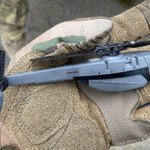
Uninhabited ground vehicles (UGVs) set to play an increasingly important role in the future of land warfare. As advances in AI increase their autonomy, UGVs are becoming capable of navigating complex environments, making operational decisions and continuing missions with minimal human intervention.
➡️ Read the latest GSIS analysis: go.iiss.org/4ivaB4Q
Global Security and Innovation Summit | #GSISHamburg
Hamburg, 9–10 December 2026
go.iiss.org/GSISHamburg


Swapnanil retweeted
🇮🇳 INS Kolkata vs PNS Hunain Moment: Hyundai Exter Crashes Into Army Armado — Armado Unscathed
Pakistan Navy's PNS Hunain recently collided with an Indian Navy warship in the North Arabian Sea.
Now, Sikkim has produced its own miniature version of the same story.
A Hyundai Exter reportedly collided with an Indian Army Mahindra Armado on a busy road in Sikkim. Preliminary inputs indicate that the Exter was allegedly overspeeding and moving in and out of oncoming traffic before the collision.
And the aftermath tells the story rather nicely.
The Mahindra Armado is designed as a military protected mobility platform, not a family hatchback.
So when a small civilian vehicle hits one, the visual aftermath can look rather dramatic.
Preliminary inputs indicate the Exter was overspeeding; the exact circumstances of the collision should await the investigation.
#IndianArmy #MahindraArmado #Sikkim #PNSHunain #Defence #OpGridIndia
Swapnanil retweeted

DRONE TRAINING FOR INFANTRY UNITS - SIMPLIFIED
Units do not need to make drone training unnecessarily complicated or over expensive. Start with the equipment available, select interested soldiers and give them time to learn and practise.
A few suggestions from my experience:
1. START WITH THE BIRD YOU ALREADY HAVE FOR SVL TRG
Switch UAV is an excellent bird for training your svl component of ASHNI. It is already institutionally inducted and widely available in units. The common msn planning software across SWITCH and the Q5/Q6 multirotors also helps soldiers learn a system they can use across different platforms. Train your svl teams on it. Do not reduce training to simply getting the bird airborne. Focus extensively on understanding and using the mission planner. The Infantry School has considerable experience with these birds. Make use of that expertise.
2. KEEP BASIC FPV TRAINING SIMPLE
Do not get carried away by fancy drones. Look at the typical 7inch, 10inch and 15inch FPV platforms. Choose any one, stick to it and train your teams to assemble, fly, and repair them. Excellent branded components (many make in India options) are available in the market. Make your projects carefully and buy items after thorough tech eval. Soldiers can learn assembly and maintenance using YouTube and guidance from indls already having some knowledge. They will not become experts in a few days, but they can certainly get started. Allow for breakages and losses (there will be many) during supervised training. Keep the core team constant. Give the boys time to learn, fly, repair and fly again. Constantly changing the team and starting from scratch will get you nowhere.
3. DO NOT BUY CHEAP DIY ZIP KITS
Zip Kits are a fallacy. I haven’t ever seen a zip kit flying! A worthwhile 7inch drone fit for training will not be cheap even today. But there is enough budget flowing now. Use it well.
4. BASIC SIMULATOR TRAINING NEED NOT BE EXPENSIVE
Do not assume that you need an expensive dedicated sim installation to begin.
Affordable sim software is available (many from teams in Russia and Ukr) for basic flying as well as advanced FPV mission - these go for few thousand bucks per yr. A decent laptop with a graphic card will be able to run most of the off the shelf sims available - you can run multiple sims in one pc but I recommend to stick to any one or two. More importantly, give the boys regular access. Buy 15 good laptops and install off the shelf sim softwares - your sim trg is sorted.
5. FOCUS ON SOUND FLYING, NOT SHOWMANSHIP
Acrobatic flying looks impressive. Not every operator needs to put on an air show. A soldier with FPV needs to be trained on taking off from a point, identifying targets himself or those shown by svl operators and strike them. More often than not he doesn’t have to do acrobatics. Remember FPV Goggles look cool but need a grasp of basic flying first. Keep things simple initially, build confidence and of course then you can go to more challenging stuff
6. WARHEAD - Nothing fancy needed. For infantry and against infantry we have the safe warhead with us ie the Multi Mode Hand Grenade. Available in large numbers, killing area of 8-10m, is safe when properly handled as per est drills. Many mods available to mount them on drones to be used as kamikaze and dropper. Even today Russia Ukr extensively use hand grenades for drone warheads.
7. IMPROVISED WARHEADS - Don’t play with explosives unless you have a qualified team. Understand that wiring a charge on ground for destroying blinds is very different than making an improvised warhead for drones. Never try to modify VOG grenades or 51/81mm Mor Bombs - extremely dangerous. Russia Ukr are in war so they have to take those risks. Don’t do it in trg.
8. Technical Skills - I have a detailed post on that, please train drone teams on those skills. These are integral part of drone training for any unit.
Some of my thoughts - not exhaustive. Hope they are of good use! Enjoy

Swapnanil retweeted
From ‘Dams Khol Diye’ To ‘Choreography’: PAF Officer Makes Stupid Claims About Operation Sindoor
A Pakistan Air Force officer appears to have added another chapter to Islamabad's increasingly creative retelling of Operation Sindoor.
Wg Cdr Bilal Raza claimed that during the operation, Pakistan Air Force “ne India ke dams khol diye” — essentially claiming that Pakistan had opened India's dams.
But the statement gets even more entertaining.
The officer went on to say that Pakistan's Youm-e-Marka-e-Haq was “choreographed” by Pakistan Air Force Chief Air Chief Marshal Zaheer Ahmad Babar Sidhu.
And that word choice deserves its own briefing.
🚨 ‘Choreographed’ By The Air Chief?
According to the Oxford English Dictionary, choreography concerns the arrangement of movements, particularly for a dance or performance.
So unless Pakistan's Air Chief was secretly directing a military-themed dance production, “choreographed” is probably not the word Wing Commander Raza was looking for.
Perhaps planned, directed, coordinated, conceived or orchestrated would have worked better.
Instead, Pakistan's Air Force Chief has apparently been promoted from commanding an air force to choreographing national victory celebrations.
💥 ‘India Ke Dams Khol Diye’
Then comes the claim about India's dams.
If the assertion is that Pakistan actually opened or otherwise manipulated Indian dams during Operation Sindoor, that is an extraordinarily serious claim.
It requires considerably more than a statement from an officer.
Which dams? When? By what mechanism? What was the resulting impact?
Those are basic questions any serious military account would have to answer.
Without supporting evidence, the statement remains exactly that: a claim.
🧠 The Bigger Problem
This is becoming an increasingly familiar feature of post-conflict information warfare.
Military institutions don't merely fight over what happened on the battlefield. They fight over how the battlefield is remembered.
Claims about destroyed aircraft, devastated bases, disrupted infrastructure and spectacular strategic victories can become part of a domestic information campaign long after the guns have fallen silent.
But there is a simple rule: The bigger the claim, the bigger the evidence required.
And saying “ne India ke dams khol diye” doesn't magically turn an extraordinary assertion into an established fact.
Apparently, Pakistan's version also came with a dance director. 💀
#OperationSindoor #PAF #Pakistan #OSINT #OpGridIndia

‘Fizaon Ke Pasban’: Pakistan Air Force Releases CGI Fantasy Instead Of Satellite Evidence
“Propaganda is not the art of lying. It is the art of convincing others of something they do not want to believe.” — Jacques Ellul
Pakistan’s Air Force Day came with a rather unusual after-action report.
Instead of releasing a conventional combat assessment, satellite imagery, battle-damage photographs or authenticated operational footage, the Pakistan Air Force’s Directorate General Public Relations released Fizaon Ke Pasban — an elaborate animated/CGI presentation depicting Pakistan’s version of the May 2025 India-Pakistan conflict.
The production makes extraordinary claims: 32 Indian air bases hit, two S-400 systems destroyed, multiple Indian fighters shot down, satellite capabilities disrupted, fuel infrastructure fractured and even attacks reaching Parliament, Kandla and INS Vikrant.
The problem is not that militaries use CGI to explain operations.
The problem is when CGI becomes the evidence for the operation itself.
#OpGridIndia #OperationSindoor #PAF #IAF #InformationWarfare #OSINT #Pakistan #India #AirPower

Swapnanil retweeted
🚨| One Man, Three Services: Pakistan's New Defence Law Expands Asim Munir's Military Powers
“When command over the battlefield becomes command over the institution, the balance of power inside a military can change fundamentally.”
Pakistan's Parliament has passed new defence legislation that further consolidates the authority of Chief of Defence Forces (CDF) Field Marshal Asim Munir.
Under the new framework, the CDF can reportedly retain, discharge, retire or extend the service of armed forces personnel, including relaxing existing retirement limits.
📍 From Army Chief To Tri-Service Commander
The legislation gives Munir operational command over:
- Pakistan Army
- Pakistan Navy
- Pakistan Air Force
He also assumes a senior advisory role on national security and nuclear matters.
This significantly expands the institutional weight of the office created through Pakistan's 27th Constitutional Amendment.
⚠️ The ‘Hire, Fire & Retire’ Power
The most consequential provision may be personnel control.
The ability to determine who:
Stays in uniform → Leaves service → Gets retained → Receives an extension
gives the military leadership substantial influence over its own command structure.
Military promotions and postings have always been powerful instruments.
But formal authority over retention and retirement can give the CDF another mechanism for shaping the senior leadership pipeline.
🧠 Why This Matters
Pakistan has historically operated with the Army Chief at the centre of the country's military establishment.
The new framework appears to take that concentration of authority further by placing Army, Navy and Air Force operations under a single CDF while simultaneously giving the office expanded institutional powers.
That creates a fundamentally different command equation.
The question is no longer simply: Who commands Pakistan's Army?
It becomes: Who commands Pakistan's military establishment?
#Pakistan #AsimMunir #PakistanArmy #PakistanNavy #PakistanAirForce #OpGridIndia

Swapnanil retweeted
Baloch families cry for their children, who they say have been illegally abducted by Pakistani Army and Rangers personnel. Baloch activists say such abductions are a common practice in Pakistan, with young girls allegedly abducted from Balochistan, sexually assaulted and trafficked to countries including China, Saudi Arabia and Türkiye.
They further allege that boys are subjected to organ harvesting or sold to splinter terror groups seeking to carry out attacks across the globe.
The scene shows Baloch parents protesting against what they describe as the brutality of the Pakistani military and security apparatus. For minorities, the situation is alleged to be even worse in Balochistan.

Swapnanil retweeted
In the high-stakes corridors of India’s Ministry of Defence, a new era of what critics have described as "Crony Patriotism" is emerging, where the line between national security and private profit has become increasingly blurred.

Swapnanil retweeted
🚨| India's Silent Warriors: The Intelligence Chiefs Who Shaped National Security
“Some of the most consequential battles are fought without a battlefield—and some of the people who fight them never appear on the front page.”
India's intelligence story has always had a side most of the country rarely sees.
In 1968, R.N. Kao founded the Research and Analysis Wing (R&AW), creating an institution that would become central to India's external intelligence architecture.
But Kao was only the beginning of a larger tradition of intelligence professionals who operated away from public attention.
⚠️ The Nature Of Intelligence Work
Unlike conventional military heroes, intelligence officers often leave behind no battlefield photograph.
Their work can involve:
- Human intelligence
- Counter-intelligence
- Covert operations
- Strategic assessment
- Source development
- Threat anticipation
- Counter-terrorism
And much of what they actually accomplished may remain classified for decades—or forever.
🧠 The Strategic Lens
A nation's security architecture is not built only by the soldier carrying a rifle at the border. It is also built by the analyst connecting fragments of information.
We may never know every mission.
We may never know every name.
But that is precisely the nature of the profession.
The best intelligence operation can be the one the public never realises happened.
Service to the nation from behind the curtain.
#RAW #RAndAW #Intelligence #NationalSecurity #AjitDoval #RNKao #BRaman #VikramSood #AmarBhushan #IndianIntelligence #OpGridIndia

Swapnanil retweeted
🚨| The Price Of Sovereignty: What 15,106.7 KM Of Border Actually Costs
“Freedom may be a constitutional guarantee. Sovereignty is something a nation has to defend every single day.”
India's security challenge cannot be measured by the size of its armed forces alone.
It begins with geography.
🇮🇳 15,106.7 km of international land border.
🌊 11,098.81 km of coastline.
⚓ 2.04 million sq km of Exclusive Economic Zone.
🌍 Seven land-bordering neighbours.
And between these numbers lie some of the world's most demanding operational environments.
📍 From −50°C To +50°C
At Siachen, troops operate in extreme high-altitude conditions where temperatures can fall below −50°C, with avalanches, crevasses, thin air and isolation turning basic logistics into military operations.
Thousands of kilometres away, troops operating in Rajasthan's Thar Desert face temperatures approaching 50°C, along with dust, dehydration and equipment stress.
Between them lie:
Glaciers. Mountains. Jungles. Deserts. Rivers. Marshes. High-altitude passes.
The Indian soldier does not choose the battlefield.
Geography does.
⚠️ The Weapon Is Only The Visible Part
Every soldier at a remote post requires a supply chain.
Food. Water. Ammunition. Fuel. Medicine. Batteries. Communications equipment. Specialised clothing. Engineering stores.
That is why infrastructure becomes a military capability.
Since 1960, the Border Roads Organisation has constructed more than 64,100 km of roads, 1,179 bridges, seven tunnels and 22 airfields in border areas and friendly countries.
Between FY2020–21 and FY2024–25, around 4,595 km of roads were constructed in forward areas with approximately ₹23,625 crore allocated for General Staff roads.
A road moves troops.
A bridge moves armour.
A tunnel defeats terrain.
An airfield compresses distance.
Logistics is combat power before combat begins.
🌊 Then Comes The Sea
India's coastline was officially reassessed in 2025 from 7,516.6 km to 11,098.81 km using modern GIS and high-resolution High-Water Line data.
Beyond it lies an approximately 2.04-million sq km EEZ.
Protecting this space requires an ecosystem of:
Warships. Submarines. Maritime patrol aircraft. UAVs. Satellites. Radars. Coast Guard vessels. Intelligence networks.
During TROPEX 2025, approximately 65–70 Navy ships, 9–10 submarines and 80+ aircraft participated, alongside Army and Coast Guard elements.
The battlefield does not end at the shoreline.
🛡️ The Invisible Defence Bill
India's 2026–27 Defence allocation stands at approximately ₹7.85 lakh crore.
But the cost of sovereignty isn't simply weapons.
It is:
fighter aircraft + warships + missiles + radars + UAVs + roads + bridges + tunnels + airfields + fuel + maintenance + training + pensions + logistics.
And behind every one of those expenditures is a person.
A soldier standing a night patrol in freezing temperatures.
An engineer keeping a strategic road open.
A helicopter crew flying into high-altitude terrain.
A sailor operating hundreds of kilometres from shore.
A fighter pilot maintaining an alert.
A Coast Guard crew responding to a distress call.
Readiness is repetitive. Until the day it isn't.
🎯 Strategic Lens
India's sovereignty has a visible symbol:
The Tricolour. But sovereignty also has an invisible infrastructure.
15,106.7 km of land borders.
11,098.81 km of coastline.
2.04 million sq km of maritime space.
Thousands of kilometres of strategic infrastructure.
And an entire national-security ecosystem operating continuously to ensure India remains free to decide its own future.
Independence was won in 1947.
Sovereignty has been defended every day since.
🇮🇳 Freedom may be a right. Sovereignty is a responsibility.
#IndependenceDay #IndianArmedForces #IndianArmy #IndianNavy #IndianAirForce #BorderSecurity #NationalSecurity #OpGridIndia

Swapnanil retweeted
🇮🇳 INDIAN ARMY LAUNCHES ‘SHADOWS AND STEEL 2.0’
The Indian Army has launched ‘Shadows and Steel 2.0’, a campaign showcasing the force’s combat readiness, precision and operational capabilities.
The wait is over.
Sighted. Sorted. Released.
#ShadowsAndSteel 2.0 #IndianArmy #mepro #L3Harris

Swapnanil retweeted
Dear ISPR,
Pakistan’s ‘Marka-e-Haq’ is mere 'Manohar Kahani' and cannot rewrite Operation Sindoor
Pakistan’s latest sermon on Operation Sindoor reads less like a military assessment and more like a desperate exercise in self-consolation.
Islamabad can rename the conflict, manufacture victory slogans and celebrate its own version of events. None of that changes the battlefield, the chronology or the fact that Pakistan’s military establishment has repeatedly relied on unverified claims to sell a victory to its domestic audience.
The biggest joke is Pakistan accusing India of rewriting history while presenting its own press releases as historical evidence.
Its claims of shooting down eight Indian aircraft, destroying 26 military targets and achieving a “decisive” victory remain claims from the Pakistani side—not independently established facts. Calling them the “operational record” does not magically make them one.
Pakistan’s argument over Pahalgam is equally hollow. Operation Sindoor and the subsequent elimination of the suspected Pahalgam attackers were separate actions. Islamabad’s attempt to manufacture a contradiction is nothing more than a cheap effort to confuse chronology with causality.
And the much-advertised “Marka-e-Haq”? It is a label, not evidence.
The uncomfortable truth for Pakistan’s military establishment is that no amount of cinematic language, patriotic slogans or carefully packaged propaganda can erase the reason the confrontation began: the Pahalgam terror attack and India’s decision to respond against terror infrastructure.
Pakistan may continue selling a heroic battlefield story to its own audience. India has no obligation to buy it.
History will not be decided by the loudest military spokesperson.
It will be decided by the evidence: the hole at Bholari, the orange flames following BrahMos striking Nur Khan, the crater at Rahim Yar Khan, and BrahMos grazing the Kirana Hills.
And propaganda is not evidence, ask the hundreds u 'awarded' posthumously.
With Love,
OpGrid India


More than a year after Marka-e-Haq, India refuses to face the harsh reality. Instead of conceding defeat in a failed venture, India has decided to colour history in her preferred hues. To achieve this mutilation of history, Indian content creators have produced a highly dramatised, coloured and factually inaccurate account of so-called Operation Sindoor, packaged as a documentary featuring senior political and military leadership of India. For its lack of nuance and seriousness, the documentary can be characterised as a tragedy and a comedy at the same time. Selectively edited interviews, emotional narration and cinematic Bollywood style reconstruction have been used to alter established facts and rewrite the operational outcome.
Tellingly, the documentary’s account contains fundamental contradictions, exposing a belated attempt to manufacture a domestically palatable version of events.
The documentary attempts to establish a deliberate linkage between an address by the Pakistan’s Chief of Army Staff on 16 April 2025 and the Pahalgam incident of 22 April 2025, conjuring a conspiracy theory out of nothing. More significantly, India subsequently claimed that the three alleged perpetrators of Pahalgam were identified and eliminated on 28 July 2025, 82 days after so called Operation Sindoor. Yet the documentary presents so called Operation Sindoor as the punishment for those responsible for Pahalgam. If the alleged perpetrators were eliminated on 28 July, India must explain, who it claims to have punished on 7 May 2025.
The claim of “100 percent mission success” is equally detached from operational record. During Marka-e-Haq, Pakistan’s Armed Forces successfully thwarted Indian aggression and shot down 8 military aircraft. Pakistan subsequently conducted Operation Bunyanum Marsoos, employing Fatah precision-guided rockets & missiles, PAF precision munitions, long-range loitering munitions and precision artillery against 26 military targets, including facilities used to target Pakistani citizens, and entities involved in fomenting terrorism against Pakistan.
The documentary itself further undermines its claim of clear Indian dominance. Indian military leadership acknowledges extensive Pakistani missile, drone and air activity, sustained engagements along the Line of Control and the activation of Indian air-defence systems. Such admissions are difficult to reconcile with its repeated portrayal of Pakistan being decisively defeated.
The documentary’s account of the cessation of hostilities is no less revealing. Its own narration confirms that hostilities ended through communication between the two DGMOs and an agreed cessation of military action. This alone contradicts the attempt to portray Op Sindoor as a unilateral Indian military triumph. A cessation of hostilities, facilitated by US, cannot subsequently be repurposed as evidence of unconditional victory.
The documentary also contradicts itself on escalation dynamics. It repeatedly emphasises surprise, precision, deep strikes and escalation dominance, while simultaneously claiming that India deliberately limited the conflict and provided Pakistan an “exit window”. These competing claims expose the production as a carefully constructed domestic narrative rather than an objective military account.
India has not declassified the truth. It has cobbled together a propaganda video to project a military blunder as a successful endeavour.
No amount of cinematic reconstruction can change the chronology, erase aircraft losses, conceal military casualties, alter the military engagements that actually took place or convert a battlefield defeat into a self-proclaimed victory.
Pakistan has no need to manufacture a narrative around Marka-e-Haq. The operational record, battlefield evidence, diplomatic exchanges and India’s own subsequent statements speak for themselves and are widely acknowledged by international community.
Pakistan remains committed to regional peace and stability. At the same time, the Armed Forces of Pakistan remain fully prepared and capable of defending the country’s sovereignty, territorial integrity and national interests. Any future military misadventure will be met with a firm, decisive and disproportionate response, after which no amount of cinematic perjury will be able to provide any face-saving to India.
Swapnanil retweeted
🚨| LeT vs Pakistan's Establishment? UN-Sanctioned Terror Outfit's Leaders Allege Election Rigging In PoJK
"When even a state's own proxy network begins accusing the establishment of manipulating elections, the façade of democratic legitimacy starts to crack."
An extraordinary political spectacle is unfolding in Pakistan-occupied Jammu & Kashmir (PoJK).
Leaders associated with Pakistan Markazi Muslim League (PMML)—widely identified by Indian authorities as the political front of UN-designated terrorist organisation Lashkar-e-Taiba (LeT)—have publicly accused Pakistan's own establishment of rigging elections.
📍 LeT Leaders Turn Against Their Own Patrons?
Videos circulating online purportedly show Muzammil Hashmi, a senior LeT-linked figure, confronting police personnel over alleged electoral manipulation during the PoJK polls.
Separately, a conversation between a Punjab Police DSP and Hamid Hassan, identified as LeT's Lahore District Head, has also surfaced.
⚠️ An Extraordinary Admission
According to the purported conversation, Hamid Hassan reportedly states:
"Our 10,000 men were killed in Jammu & Kashmir. We didn't kill a single Pakistani."
If authentic, the remark is striking.
It portrays LeT's operational focus as directed almost exclusively beyond Pakistan's borders while simultaneously highlighting the group's participation in Pakistan's domestic political process through PMML.
🧠 From Proxy To Political Actor?
The developments raise a larger question.
For years, Pakistan has maintained before international forums that it has dismantled the infrastructure of proscribed terrorist organisations.
Yet if individuals linked to a UN-sanctioned terrorist ecosystem are openly contesting elections, confronting police over alleged rigging and participating in electoral politics, it points to a far deeper overlap between militancy, politics and the state apparatus.
🎯 Strategic Lens
The irony is difficult to ignore.
An organisation long accused of being nurtured by Pakistan's security establishment is now publicly accusing that very establishment of manipulating elections.
Whether these allegations reflect genuine fractures or competing interests within Pakistan's power structure, they expose the contradictions surrounding the political rehabilitation of groups linked to proscribed terrorist networks.
When a UN-designated terror ecosystem becomes part of an electoral dispute, the issue extends beyond domestic politics—it raises fundamental questions about Pakistan's compliance with its international counter-terror commitments.
#Pakistan #PoJK #LashkarETaiba #PMML #FATF #UNSC #OpGridIndia
