

“Before Alamein we never had a victory. After Alamein we never had a defeat.”
U.K.
Joined January 2011
- Tweets24.4K
- Following846
- Followers538
- Likes29.6K





Gary.🇬🇧 retweeted

Today marks the anniversary of the execution of five Covenanters at Magus Muir, near St Andrews.
Thomas Brown, James Wood, Andrew Sword, John Weddell and John Clyde had been captured after the Battle of Bothwell Bridge in June 1679. They spent five months imprisoned in Greyfriars Kirkyard. On 25 November, they were taken to Magus Muir, hanged and their bodies displayed in chains. The authorities chose the place in revenge for the killing of Archbishop James Sharp. These five men had no part in Sharp’s death.
The words on their memorial remember why they were condemned:
“Cause we at Bothwell did appear
Perjurious oaths refused to swear
Cause we Christ’s cause would not condemn
We were sentenced to death by men
Who raged against us in such fury
Our dead bodies they did not bury
But upon Poles did hing us high
Triumphs of Babel’s victory
Our lives we feared not to the death
But constant prayed to our last breath.”
On the same day, 257 of their fellow Covenanters were spending their 10th day confined aboard the Crown of London at Leith, awaiting transportation to the Barbados. The ship sailed on 27 November. On 10 December, it was wrecked off Deerness in Orkney. Around 50 men escaped, but more than 200 drowned.
We believe these stories should be remembered where they happened. Visiting a remote martyr’s grave can bring you face to face with the courage and faith of those who stood firm under persecution. On a Scottish Reformation Tour, we combine visits to these quiet, lesser-known places with Scotland’s best-known Reformation and Covenanter sites, helping you discover the people and stories behind them.
Scottish Reformation Tours
Christ Centred, Christian Led, Custom Tours.
Find out more at:
reformationtours.org.
#scotland #churchhistory #reformation #covenanters #presbyterian
Gary.🇬🇧 retweeted

🎙️ "Rangers left it late, but late will do!"
Ryan Naderi’s strike is deflected into his own goal by Martin Moorman ⤵️

Meet Coco the British Shorthair, she’ll be mine at the end of December.
I’m soo happy.
#BritishShortHair
@Shirley82829043

2
4
110
Gary.🇬🇧 retweeted

The Rangers family is today mourning the loss of Hall of Fame forward Ralph Brand, at the age of 89.
One of the most prolific goalscorers in the club's history, Mr Brand scored a remarkable 222 goals in 347 appearances for Rangers.
The thoughts of everyone at Rangers are with his family and loved ones at this sad time.

“They shall grow not old, as we that are left grow old:
Age shall not weary them, nor the years condemn.
At the going down of the sun and in the morning, We will remember them.”
#RemembranceDay

1
25

Gary.🇬🇧 retweeted

A minute's silence is called for by the stadium announcer in memory of those Celtic players who served in all conflicts
Had to be cut short after a few seconds due to Celtic fans' disruptions
Shameful
#RemembranceDay
Gary.🇬🇧 retweeted
On Remembrance Sunday, we honour those who made the ultimate sacrifice.
Lest We Forget.

Gary.🇬🇧 retweeted
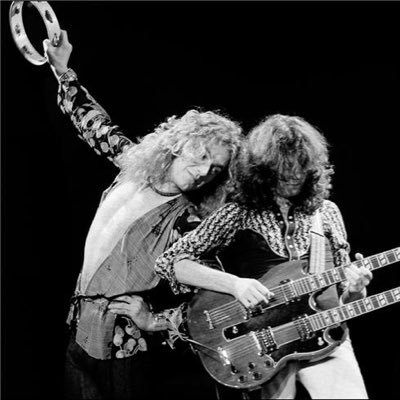
Brian Johnson and Angus Young tearing it up on AC/DC's Stiff Upper Lip World Tour in Madrid in December 2000, with Brian in his flat cap and Angus in the schoolboy uniform. Photo: Carlos Muina/Cover/Getty Images.
The tour backed Stiff Upper Lip, released in February 2000 and produced by George Young, the older brother of Angus and Malcolm who had produced the band's early classics with Harry Vanda. It took AC/DC across North America, Europe, Australia and Japan through 2000 and 2001.
The European arena leg ran from October to December 2000, finishing with three nights at Madrid's Palacio de los Deportes and one at Barcelona's Palau Sant Jordi. The shows mixed the new title track and "Satellite Blues" with "Back in Black," "Thunderstruck" and "Highway to Hell."
⚡ Stiff Upper Lip was produced by George Young, Angus and Malcolm's older brother. What's your favorite song from it? ⚡

ALT AC/DC on stage: Brian Johnson in a black shirt and flat cap sings and points, while Angus Young in his schoolboy uniform plays a Gibson SG under yellow lights.


Gary.🇬🇧 retweeted
🎙️ Ryan Naderi spoke to @RangersTV after scoring the late winner at Hampden to send Rangers into the @PremSportsTV Cup Final.


Gary.🇬🇧 retweeted
On 31 October 1517, a German monk named Martin Luther issued his Ninety-Five Theses, challenging the Church’s teaching and practice concerning indulgences. That date is now remembered as Reformation Day—a reminder of events whose influence would reach far beyond Germany, including Scotland.
Luther’s initial challenge developed into a much wider call for reform.
As these teachings spread through Europe, they reached a young Scotsman whose life would become closely bound up with Scotland’s Reformation: Patrick Hamilton.
Born around 1504 into a family with royal connections, Hamilton travelled to Paris to study while still a teenager. During his education abroad, he encountered the religious debates sweeping across Europe. By 1524, he had joined the Faculty of Arts at St Andrews, where the ideas associated with Luther would soon bring him into conflict with the Church authorities.
For Hamilton, these questions became much more than an academic interest. He grew convinced that the gospel being proclaimed by the Reformers was rooted in Scripture. In 1527, facing suspicion over his beliefs, he left Scotland for Germany. His time there, including study at Marburg, strengthened the convictions he would carry home.
Hamilton expressed his understanding of the gospel in a short work later known in English as Patrick’s Places. He distinguished between the law, which exposes our sin, and the gospel, which directs us to Christ. Good works could never purchase salvation; they were the fruit of faith in the Saviour.
Returning home in 1527, Hamilton began sharing his beliefs. Scotland’s Reformation was still in its early stages, and openly proclaiming these teachings was dangerous. His preaching soon attracted the attention of Archbishop James Beaton, and Hamilton was brought to trial at St Andrews.
On 29 February 1528, he was condemned for heresy and burned outside St Salvator’s College. He was only about twenty-four years old. Remembered as the first martyr of the Scottish Reformation, Hamilton paid with his life for the gospel he had returned to preach.
His execution did not bring the movement to an end. Instead, his death became one of the defining early events of Scotland’s Reformation. Others would continue to question the Church’s teaching, examine the Scriptures and proclaim salvation through Christ.
Scotland’s Reformation would eventually take a distinctly Reformed shape, particularly through the influence of John Knox and the Swiss Reformers. Yet its early story cannot be separated from Luther’s influence or from Hamilton’s willingness to bring those convictions home.
Discover how the Reformation helped shape Scotland on a Scottish Reformation Tour. Join us as we explore the places where these events unfolded and hear the stories of Patrick Hamilton and others who risked everything for their faith. We would love to welcome you and bring this remarkable history to life.
Scottish Reformation Tours.
Christ Centred, Christian Led, Custom Tours.
reformationtours.org