

Iranian | Researching the history, art, and music of Iran and the Persian world. Follow/Repost ≠ Endorsement. Common sense enthusiast. ایران درست میشه
Persia
Joined January 2025
- Tweets1.3K
- Following226
- Followers3.6K
- Likes5.6K






False.
The video that’s being circulated below is the faceoff between Iranian kickboxer Ziba Bahmani versus Rankeen Ibrahim from Iraq.
The Iranian fighter wins that match.

This quoted post is unavailable.
Sassanian coins found in China 🇨🇳
In this 1965 paper, Japanese historian Okazaki Takashi argues that Sassanian silver was effectively the international currency of the Silk Road.
The coins followed the Silk Road through Xinjiang, Qinghai and Shaanxi into Shanxi and Henan.
Three coins of Peroz I even appeared in a Guangdong tomb dated 497, probably arriving by sea.
10 coins in Turfan (4 of Shapur II, 5 of Ardashir II and 1 of Shapur III, found in 1955 inside the ruined city of Gaochang), several in the Astana tombs, 947 in Wuqia, over 100 in Xining, and a Peroz coin plus Byzantine gold in Chang'an's elite tombs.


Iranians react to the return of the Persian Gulf islands following the end of British occupation in 1971.
The people interviewed were primarily from the southern province of Khuzestan, from the cities of Ahvaz, Abadan, and Khorramshahr, and expressed overwhelming joy at the success of Iran’s Imperial Navy in reclaiming Abu Musa and the Greater and Lesser Tunbs.
The local tribes of the south, whose livelihoods were closely tied to Iran’s maritime presence, were especially proud to witness the country’s flag once again raised over the islands in the ever-Persian Gulf.

Arabs of Iran celebrating the liberation of Abu Musa and the Greater and Lesser Tunbs in the Strait of Hormuz by the victorious Imperial Iranian Navy, 1971. 🇮🇷
As the Persian Gulf islands once again trend in the news, amid renewed and extravagant claims from the UAE, it is important to remember the historical context.
Iran retook control of Abu Musa and the Tunb islands in November 1971, following the withdrawal of British forces from the Persian Gulf, and has been fully administering them ever since.
These islands remain an integral part of Iranian territory.
Established in the aftermath of World War I, as famine and disease ravaged Iran, the Pasteur Institute of Iran was founded to produce biopharmaceuticals and conduct research on infectious diseases.
Abdol-Hossein Farmanfarma personally donated the land and oversaw its establishment during his tenure as Iran’s prime minister in 1920.
Over the decades, it grew into one of the leading centers for vaccine research and production in Iran and the Middle East.
Today, the 106-year-old institute was destroyed in Israeli airstrikes.


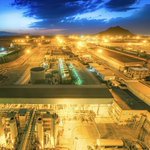
There’s something deeply depressing about the destruction of Mobarakeh Steel Company in Isfahan, and the loss goes far beyond economics.
Iran’s century-long fight to build its own industrial base, but keep getting knocked back, is what makes this attack feel especially personal.
MSC wasn’t just a regular company.
It was the largest steel producer in Iran and across the MENA region, responsible for more than half the country’s total output.
In an economy that runs on oil, a single company pulling roughly 1% of GDP is hard to overstate. Steel is the backbone of Iran’s economy after hydrocarbons, and MSC was its spine.
Iranians didn’t suddenly wake up to a steel industry. We spent the better part of a century trying to build one. Early attempts in the 1920s collapsed due to logistical issues.
A major German-backed project (the Demag-Krupp consortium) was killed by World War II and British pressure on Reza Shah to cut ties with Germany, including demands to expel German nationals from Iran, which he initially refused, but ultimately led to the Anglo-Soviet invasion of Iran.
Decades of Western refusals. The West denied financing, blocked projects, and even seized our machinery after the war, with the remaining equipment left to rust in German storage.
The breakthrough only came in 1965, when Iran turned to the Soviet Union to build its first real steel plant in Isfahan, after being rejected by the West. That plant became the foundation for everything that followed.
What grew from it was built on Iran’s own terms. No coking coal, but plenty of natural gas, so the industry developed around direct reduction and electric arc furnaces rather than the coal-heavy Western model. That “compromise” became something Iran was genuinely good at.
MSC was the fullest expression of Iranian development. Its steel runs through construction, infrastructure, automotive, oil and gas, petrochemicals, machinery, energy systems, transportation, and dozens of downstream industries.
Without it, large parts of the Iranian economy degrade and start depending on imports, which negatively impacts the lives of millions of Iranians.


Related:
xitter.cf/tabantimes/status/2033…
Arabs of Iran celebrating the liberation of Abu Musa and the Greater and Lesser Tunbs in the Strait of Hormuz by the victorious Imperial Iranian Navy, 1971. 🇮🇷
As the Persian Gulf islands once again trend in the news, amid renewed and extravagant claims from the UAE, it is important to remember the historical context.
Iran retook control of Abu Musa and the Tunb islands in November 1971, following the withdrawal of British forces from the Persian Gulf, and has been fully administering them ever since.
These islands remain an integral part of Iranian territory.
Related:
xitter.cf/tabantimes/status/1996…
Taban retweeted
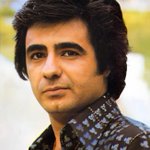
When Iran’s musical giants, Viguen and Hayedeh, came together in 1985, amid the Iran–Iraq War, to create a timeless collaboration about Iran.
Hamkhooneh, literally meaning “home-mate,” is one of those classic songs that resonates differently in times like these.
God save Iran.
When the dust settles, the Islamic Republic’s attempts to rename Iran will be reversed:
Azadi Tower → Shahyad Tower
Eslam-Abad-e Gharb → Shahabad
Bandar Anzali → Bandar Pahlavi
Esteghlal FC → Taaj FC
Helal Ahmar → Shiro Khorshid
Azadi Stadium → Aryamehr Stadium
Shohada Square → Jaleh Square
Motahari → Takht-e Tavus
Shariati Boulevard → Cyrus The Great Boulevard


