





Arctic small mammals made the main stream media!
theatlantic.com/science/arch…

New paper alert! Read up on how tundra herbivores influence canopy structure on carbon flux estimates! iopscience.iop.org/article/1…


Take a look at the newest publication from Team Vole and Friends - a review paper describing how climate change may affect arctic herbivores, and in turn how that is going to affect carbon and nutrient cycling in the tundra.
nyaspubs.onlinelibrary.wiley… – at Alaska, USA
Fresh off the presses, check out this new Team Vole pub from researcher @a_n_roy examining how small mammal structures influence tundra biogeochemical cycling! doi.org/10.1111/1365-2435.14… – at Alaska, USA

The trapping crew is on the ground in Utqiagvik, catching lemmings and prepping the fences for the summer! @ Utqiaġvik instagram.com/p/Cfo7eZkJrfY/… – at Barrow, AK


Team vole measuring early season plant spectral reflectance @toolikfieldstation – at North Dakota, USA


Check out this new pub from Team Vole members, led by grad student @JessSteketee !

New in @ESAEcology:
Small herbivores with big impacts: Tundra voles (Microtus oeconomus) alter post-fire ecosystem dynamics
doi.org/10.1002/ecy.3689
With #OpenData in @EDIgotdata
@JessSteketee @rubyanho @TeamVole @av_rocha @NSF
#Arctic
#Herbivory
#Wildfire
#NSFFunded

ALT Differences in rodent herbivore density and activity at the burned and unburned sites. (a) Tundra vole captures per 100 trap nights over 4 years (spanning 7-12 years post-fire). Differences in abundance between sites were significant. (b) Average rodent sign (activities, e.g., latrines, nests) 12 years post-fire. Differences in activities between sites were significant
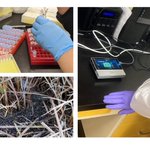
Ever wonder what lemmings eat? Grad student
@a_n_roy and @LavretskyLab are analyzing how lemming diets change seasonally by detecting forage DNA in feces!


Post-doc and PhD student position available in the McLaren Lab studying nutrient cycling in dryland ecosystems, as part of a NSF funded Dryland Critical Zone project. See details about both positions at drylandcz.org/opportunities.… – at El Paso, TX

