

Advocate ⚖️ | Indian Politics & Geopolitics 🇮🇳 Law, National Security & Public Affairs. Facts. Context. Accountability. सत्यमेव जयते
Bharat
Joined March 2021
- Tweets309
- Following60
- Followers69
- Likes985




Pinned Tweet
“ਧਰਮ ਹਮ ਹਿੰਦੂ। ਅਤਿ ਪ੍ਰਿਯ ਕੋ ਕਿਮ ਕਰਹਿ ਨਿਕੰਦੂ।”
“My Dharma is Hindu. How can I abandon that which is exceedingly dear to me?”
These words, recorded in Sri Gur Pratap Suraj Granth, capture the resolve of Guru Tegh Bahadur Ji, the 9th Sikh Guru, who gave his life rather than abandon Dharma.
Today marks two deeply significant occasions in the Dharmic tradition: Guru Nanak Dev Ji’s Jayanti and Guru Tegh Bahadur Ji’s Shaheedi Diwas.
Guru Nanak Dev Ji, born in 1469 at Nankana Sahib, spent his life challenging caste divisions, empty ritualism and religious dogma. He travelled extensively across India and beyond, teaching Ik Onkar, equality, honest living, remembrance of the Divine and service to humanity.
He later settled at Kartarpur, where he established a community centred around kirtan, honest work and langar, where everyone sat together and shared a meal. Before his passing in 1539, he chose Bhai Lehna as his successor, who became Guru Angad Dev Ji.
Nearly 150 years later, Guru Tegh Bahadur Ji gave one of the greatest examples of standing for Dharma and freedom of conscience.
In 1675, Kashmiri Pandits facing pressure to convert to Islam approached Guru Ji at Anandpur Sahib seeking protection. Guru Ji chose to stand with them and defend Dharma.
He was arrested on the orders of Mughal Emperor Aurangzeb and brought to Delhi. Aurangzeb asked him to convert to Islam or die. While imprisoned and subjected to severe mistreatment, three of his companions were executed in front of him to break his resolve:
Bhai Mati Das was sawn in two.
Bhai Dayal Das was placed in a cauldron of boiling liquid.
Bhai Sati Das was burned alive.
Still resolved to not convert, he said “My Dharma is Hindu. How can I abandon that which is exceedingly dear to me?” Guru Ji was beheaded at Chandni Chowk in November 1675. The very place is where the Gurudwara Sisganj Sahib now stands.
Guru Tegh Bahadur Ji came to be remembered as “Hind Ki Chadar”, the Shield of Hind, because he gave his life to protect Dharma and freedom of conscience.
Two Gurus. Two eras. One enduring message:
Stand for Dharma.
Reject oppression.
Serve humanity.
Waheguru Ji Ka Khalsa, Waheguru Ji Ki Fateh. 🙏🏻🪯🚩


"He didn't build Sheesh Mahal for himself, it's an official CM residence!"
Let’s debunk this lazy defense with facts, rules, and basic ethics:
1️⃣ The "No Official Residence" Lie: Previous Delhi CMs lived in standard government bungalows without demolishing heritage structures or merging adjacent staff quarters into a private luxury compound.
2️⃣ Blatant Violation of Rules: A CAG audit revealed the budget exploded by 342%, from ₹7.91 crore to ₹33.66 crore (and over ₹58 crore with full furnishings), while PWD repeatedly split estimates to bypass competitive tendering norms.
3️⃣ Pandemic Priorities: This five-star splurge happened during COVID-19, when Delhi was gasping for oxygen and infrastructure funds.
4️⃣ The "Permanent CM" Hubris: You don't spend taxpayer money on ₹23 lakh chandeliers, ₹5.95 lakh jacuzzis, and ₹5.69 lakh curtains unless you suffer from the arrogance that you'll occupy that chair forever.
5️⃣ Peak Hypocrisy: This came from a man who swore on his children he’d never take a bungalow or live like a VIP.
The ultimate irony? Today, that very #SheeshMahal has been opened to the public with price tags on every luxury item, so taxpayers can see the exact cost of fake simplicity.
A historic constitutional and dharmic victory at Thiruparankundram! 🙏🔥
After the Joseph Vijay-led Tamil Nadu government brazenly defied the Supreme Court's Nov 20 directive, hiding behind state-appointed temple trustees to leave the Deepathoon unlit, the Supreme Court has come down with an iron hand today:
1️⃣ All Devotees Permitted: Every devotee can now light the lamp at Deepathoon tomorrow (Nov 28), maintaining a 50m buffer from the Dargah.
2️⃣ Temple Board Suspended: The state-appointed trustees have been superseded, with two former HC judges appointed as Court Receivers.
3️⃣ CRPF Takes Over: State police stripped of hill security; CRPF deployed to protect the temple and enforce the order.
4️⃣ Contempt Notices: Top bureaucrats, including the Chief Secretary, DGP, and Madurai Collector, summoned to appear in person on Dec 15.
Calling out the "administrative chaos" and rejecting the Collector's apology as "crocodile tears," the SC proved that no political executive is above the rule of law.
Huge gratitude and respect to Senior Advocate @jsaideepak and the entire legal team for exposing the state's gamesmanship and standing resolute for devotees' rights!
Dharma & the Constitution prevail. 🚩

A protector of temples does not drag devotees to the apex court to stop them from lighting a lamp. When an administrative department begins behaving like an opposing party to the very faith it was built to serve, the case for freeing temples from state control writes itself.
The Thiruparankundram Karthigai Deepam dispute highlights a deep institutional debate in Tamil Nadu: the role of the Hindu Religious & Charitable Endowments (HR&CE) Department, a statutory body created to administer and protect Hindu temples, in litigating against devotees seeking to light a ceremonial lamp on the hilltop.
At the heart of the controversy is both historical chronology and constitutional duty:
1. Historical Chronology : Thiruparankundram is revered as the first of Lord Murugan’s six sacred abodes, with Sangam-era literary references and rock-cut temple architecture dating back well over a millennium, centuries before the Hazrat Sultan Sikandar Badusha Auliya Dargah was established near the summit in the medieval period.
Despite the temple's ancient precedence across the hill, the HR&CE Department has aligned its legal posture with the Dargah management's objections rather than championing the temple's traditional claim to the hilltop Deepathoon.
2. Under the Tamil Nadu HR&CE Act, 1959, the department’s core mandate is to safeguard temple endowments and preserve established religious customs.
The irony is that in Commissioner HR&CE v. Rama Ravikumar, the department appealed all the way to the Supreme Court to oppose the Madras High Court’s orders permitting the Deepam at the Deepathoon.
3. During the High Court hearings, a Division Bench observed that temple management has an affirmative duty to protect traditions and held that administrative law-and-order fears cannot be used to curtail religious practices. The bench also rejected the state's contention that the Deepathoon was merely a British-era survey stone, affirming it as part of temple heritage.
4. Article 26 of the Constitution guarantees religious denominations the right to manage their own religious affairs. When a government department meant to act as a fiduciary trustee contests devotees' claims over ancient temple rituals, it raises fundamental questions about administrative overreach in temple governance.
5. On November 20, 2026, the Supreme Court permitted a strictly regulated, one-time lighting of the Deepam at the Deepathoon on November 24 by authorised officials, while staying the High Court’s broader findings on ownership and custom until a final hearing scheduled for January 2027.
However, the stand of the Tamil Nadu govt under Vijay is clear, they are clearly anti-Hindu just like their predecessors. Freeing Hindu temples is the only option.


New face, same old anti-Hindu playbook in Tamil Nadu.
Just to stop devotees from lighting the sacred Karthigai Deepam at the Thiruparankundram Deepathoon, despite explicit Supreme Court permission, CM Joseph Vijay’s TVK government turned Madurai into a fortress:
▪️ ~6,000 cops, 70+ facial-recognition cameras & drone bans deployed against devotees
▪️ BNSS Sec 163 imposed & ~750 BJP/Hindu Munnani leaders placed under house arrest
▪️ Deepathoon left in the dark in open defiance of the Supreme Court, risking contempt of court just to appease muslims & coalition allies (Congress, VCK, IUML & Left)
Changing the party flag from DMK to TVK hasn't changed the mindset. Treating Hindu traditions as a law-and-order threat while trampling court orders exposes the hollowness of this regime.
Free Hindu temples from political clutches! 🚩

Jagpravesh Lohia retweeted

“ਧਰਮ ਹਮ ਹਿੰਦੂ। ਅਤਿ ਪ੍ਰਿਯ ਕੋ ਕਿਮ ਕਰਹਿ ਨਿਕੰਦੂ।”
“My Dharma is Hindu. How can I abandon that which is exceedingly dear to me?”
These words, recorded in Sri Gur Pratap Suraj Granth, capture the resolve of Guru Tegh Bahadur Ji, the 9th Sikh Guru, who gave his life rather than abandon Dharma.
Today marks two deeply significant occasions in the Dharmic tradition: Guru Nanak Dev Ji’s Jayanti and Guru Tegh Bahadur Ji’s Shaheedi Diwas.
Guru Nanak Dev Ji, born in 1469 at Nankana Sahib, spent his life challenging caste divisions, empty ritualism and religious dogma. He travelled extensively across India and beyond, teaching Ik Onkar, equality, honest living, remembrance of the Divine and service to humanity.
He later settled at Kartarpur, where he established a community centred around kirtan, honest work and langar, where everyone sat together and shared a meal. Before his passing in 1539, he chose Bhai Lehna as his successor, who became Guru Angad Dev Ji.
Nearly 150 years later, Guru Tegh Bahadur Ji gave one of the greatest examples of standing for Dharma and freedom of conscience.
In 1675, Kashmiri Pandits facing pressure to convert to Islam approached Guru Ji at Anandpur Sahib seeking protection. Guru Ji chose to stand with them and defend Dharma.
He was arrested on the orders of Mughal Emperor Aurangzeb and brought to Delhi. Aurangzeb asked him to convert to Islam or die. While imprisoned and subjected to severe mistreatment, three of his companions were executed in front of him to break his resolve:
Bhai Mati Das was sawn in two.
Bhai Dayal Das was placed in a cauldron of boiling liquid.
Bhai Sati Das was burned alive.
Still resolved to not convert, he said “My Dharma is Hindu. How can I abandon that which is exceedingly dear to me?” Guru Ji was beheaded at Chandni Chowk in November 1675. The very place is where the Gurudwara Sisganj Sahib now stands.
Guru Tegh Bahadur Ji came to be remembered as “Hind Ki Chadar”, the Shield of Hind, because he gave his life to protect Dharma and freedom of conscience.
Two Gurus. Two eras. One enduring message:
Stand for Dharma.
Reject oppression.
Serve humanity.
Waheguru Ji Ka Khalsa, Waheguru Ji Ki Fateh. 🙏🏻🪯🚩
A protector of temples does not drag devotees to the apex court to stop them from lighting a lamp. When an administrative department begins behaving like an opposing party to the very faith it was built to serve, the case for freeing temples from state control writes itself.
The Thiruparankundram Karthigai Deepam dispute highlights a deep institutional debate in Tamil Nadu: the role of the Hindu Religious & Charitable Endowments (HR&CE) Department, a statutory body created to administer and protect Hindu temples, in litigating against devotees seeking to light a ceremonial lamp on the hilltop.
At the heart of the controversy is both historical chronology and constitutional duty:
1. Historical Chronology : Thiruparankundram is revered as the first of Lord Murugan’s six sacred abodes, with Sangam-era literary references and rock-cut temple architecture dating back well over a millennium, centuries before the Hazrat Sultan Sikandar Badusha Auliya Dargah was established near the summit in the medieval period.
Despite the temple's ancient precedence across the hill, the HR&CE Department has aligned its legal posture with the Dargah management's objections rather than championing the temple's traditional claim to the hilltop Deepathoon.
2. Under the Tamil Nadu HR&CE Act, 1959, the department’s core mandate is to safeguard temple endowments and preserve established religious customs.
The irony is that in Commissioner HR&CE v. Rama Ravikumar, the department appealed all the way to the Supreme Court to oppose the Madras High Court’s orders permitting the Deepam at the Deepathoon.
3. During the High Court hearings, a Division Bench observed that temple management has an affirmative duty to protect traditions and held that administrative law-and-order fears cannot be used to curtail religious practices. The bench also rejected the state's contention that the Deepathoon was merely a British-era survey stone, affirming it as part of temple heritage.
4. Article 26 of the Constitution guarantees religious denominations the right to manage their own religious affairs. When a government department meant to act as a fiduciary trustee contests devotees' claims over ancient temple rituals, it raises fundamental questions about administrative overreach in temple governance.
5. On November 20, 2026, the Supreme Court permitted a strictly regulated, one-time lighting of the Deepam at the Deepathoon on November 24 by authorised officials, while staying the High Court’s broader findings on ownership and custom until a final hearing scheduled for January 2027.
However, the stand of the Tamil Nadu govt under Vijay is clear, they are clearly anti-Hindu just like their predecessors. Freeing Hindu temples is the only option.
Jagpravesh Lohia retweeted
In Jammu & Kashmir, some security personnel get state honours. Others get ₹6,000 a month, outdated rifles and a dumper truck for their final journey.
The treatment of two slain Special Police Officers (SPOs) in Kishtwar exposes a deeply disturbing two-tier system.
Bringing home their bullet-riddled bodies in a commercial dumper truck, without coffins, an ambulance, or senior officers present, is not a “logistical lapse.”
It is a symptom of a deeply broken system in which those asked to stand on the frontline are treated as second-class personnel in life and, tragically, as cargo in death.
Official honours were only rushed to Kiyar village after the video went viral and political intervention followed.
Ask yourself: if these had been regular Army or Police soldiers or gazetted officers, would a dumper truck ever have been considered an acceptable way to transport their mortal remains?
Never.
The uncomfortable truth is that SPOs are treated as expendable frontline shields.
They carry INSAS and SLR rifles into some of J&K’s most dangerous counter-insurgency zones alongside the Army and SOG. Both are older-generation rifles that have largely been phased out of frontline service in favour of newer weapons.
They act as local guides, first responders and the eyes and ears of the security apparatus. They face the same terrorists, the same forests and the same bullets.
Yet when it comes to dignity, security and institutional protection, they are treated as second-class personnel.
Their financial condition is equally grim.
SPOs are paid a paltry ₹6,000–₹18,000 a month depending on tenure, poverty-level wages for men being asked to risk their lives on the frontline.
Around 2,300 veteran VDC SPOs have also had their payments stalled for years over an arbitrary ₹4,500 cap.
And after years of service, they get zero pension, no permanent job security and no healthcare parity with regular personnel.
As the saying goes: when they retire, they get nothing except a few flower garlands.
This is the contradiction we need to confront:
You cannot demand supreme sacrifice from men on the frontline while paying them poverty wages, denying them basic security and then transporting their dead bodies like cargo.
The men who carry weapons for the State, patrol some of the most dangerous terrain in the country and put their lives between civilians and terrorists deserve more than temporary employment and ceremonial damage control after tragedy strikes.
They deserve dignity in life.
They deserve security in service.
And when they make the ultimate sacrifice, they deserve to be brought home like the fallen heroes they are, not like cargo in a dumper truck.

Another study points to the incredible benefits of kriya yoga or meditation.
The study analysed gene-activity data from 106 people before, during and after an Inner Engineering meditation retreat. Researchers compared the molecular signatures with thousands of drug signatures and found striking overlaps with several neuroactive drugs, including zolpidem, a sleep medication, through pathways involving GABA signalling.
Interestingly, people didn’t all respond in the same way. Their molecular responses separated into two distinct patterns, suggesting that meditation’s effects may be highly individual.
This is also consistent with an earlier genomic study of the same 106-person retreat cohort, which found increased activity in 220 immune-related genes, including 68 involved in interferon signalling.
Of course, this doesn’t mean meditation is literally a drug that can replace medication totally.
But here’s why this research caught my attention.
I have personally done the Inner Engineering program.
Before it, I would sleep 7–8 hours and still feel sleepy during the day. Today, I sleep 5 hours and yet remain active through the day.
I used to catch the flu every 15–20 days. It has now been more than a year since I last had it.
My mind feels clearer. I remain considerably calmer even in intense situations.
I initially did Inner Engineering as a one-off experience.
But when the fruits are this sweet, you don’t really feel like stopping.
These ancient practices deserve a little more curiosity, and a little less dismissal.


Prof. Mitali Mukerji Ji (Professor in the Department of Bioscience and Bioengineering at IIT Jodhpur) sent me a paper a few days ago and I have not stopped thinking about it.
Her team found that a meditation retreat and a sleeping pill leave a similar mark in the blood.
Let me explain, because it took me a while to absorb...
Her IIT Jodhpur team had blood gene-activity data from 106 people who went through an Inner Engineering meditation program. Samples were taken before the preparation began, after 8 weeks of preparation, after the 8 day retreat, and 3 months later.
Most of us would ask the usual question: did meditation reduce stress?
They asked something else entirely.....
They took this data to the Connectivity Map, a giant library that records how about 5,000 drugs change gene activity in human cells. And they asked: which drug footprints does the meditation footprint resemble?
The answer is 438.
Read that again. Four hundred and thirty eight.
And where did the matches keep pointing? The brain. One pathway showed up at every single stage: the neuroactive ligand-receptor pathway, the wiring through which chemical signals speak to our nerve cells.
But here is the part that stuck me the most.
The most striking single match was zolpidem, a common sleeping pill. The gene pattern of the retreat phase resembled a drug that works through GABA, the brain's main braking system. Deep meditation, a practice with no pill involved, left an echo of a sedative's signature in the blood.
And the story kept changing with the stage. Preparation resembled dopamine and reward-related drugs. The retreat itself, GABA and calcium-channel modulators. Three months later, GABA together with dopamine and serotonin, the molecules of motivation and mood.
One more detail I cannot stop thinking about. The 106 people did not all respond the same way. Their molecular responses split into 2 clear groups, with completely different drug matches.
Meditation is not one medicine. It behaves like a personal one.
Which is exactly how our traditions always taught it. The paper notes that ancient teachers never taught meditation the same way to everyone; they tailored it to the student.
The authors suggest these systems evolved as safeguards, because a practice that touches the same pathways as psychiatric medicines needs care, especially for people already on antidepressants or antipsychotics.
Thank you, Mitali ma'am, for sharing this with me. 🙏🙏
The images below are figures from the paper itself. I am waiting to see what this team does next.
Source: Joshi, Muralidharan, Patel and Mukerji, Frontiers in Human Neuroscience, 2026
Photo 1: All 438 matches, pathway heatmap, two response groups
Photo 2: Stage by stage drug-class map
Photo 3: Page 7, zolpidem line highlighted
Photo 4: Page 5, 438 drugs and the two response clusters highlighted
Photo 5: Page 9, tailored teaching and titration safeguard highlighted


1
7
196
He waited 7 years to avenge his father’s murder. Then he became a murderer himself.
In Jaipur, a 21-year-old allegedly killed the man accused of murdering his father in 2019.
He followed Vijay in a camper for hours, rammed it into his Fortuner, chased him down and attacked him with an axe. The blow was so brutal that the axe remained lodged in Vijay’s skull.
Vijay Bajiya was a local history-sheeter with 15 criminal cases, including murder. He even drove a vehicle bearing the number 0302, a reference to Section 302 of the IPC (murder), to cultivate his notoriety.
You can understand the rage. You can understand the pain.
But the moment you take the law into your own hands, you don’t get justice. You create another crime, another victim, and another family waiting for revenge.
That is how vendettas survive for generations.
Justice is supposed to end the cycle. Revenge only keeps it alive.
Jagpravesh Lohia retweeted
Ram Ram Mishra ji!
I genuinely thought you were a sane voice calling out propaganda and misinformation. But this obsession with correcting someone’s spelling has left me wondering: when did scholarship become an excuse for constantly telling everyone else they’re wrong?
You may be a Sanskrit scholar, sir, but that doesn’t make you the “Sanskrit police.”
On Dhanvantari Trayodashi / Dhanteras, even a basic Google search brings up the same information cited by Sadhguru. The Government of Bharat itself designated Dhanteras as National Ayurveda Day, precisely because of its association with health and Ayurveda. (Later fixed the date to provide global calendar consistency)
Sadhguru was trying to make the listener focus on health rather than wealth. But you barged in with your scholarly expertise and turned the entire discussion into one about pronunciation, spelling and books.
India has countless dialects, accents and ways of speaking. Getting worked up over pronunciation or spelling, especially in an informal conversation, seems incredibly petty.
And honestly, how about creating some original content instead of constantly nitpicking others?
I genuinely expected better from you.
You lost my respect, sir.
Ram Ram!
teapaw.org/thatrightlawyer/status…
Dhanteras, also known as Dhantrayodashi or Dhanvantari Trayodashi, is celebrated on the 13th lunar day (Trayodashi) of the Krishna Paksha in the month of Kartik. It traditionally marks the beginning of the five-day Diwali festivities.
The day has a fascinating connection with Bhagwan Dhanvantari, the divine physician associated with Ayurveda. According to the Samudra Manthan tradition, Dhanvantari emerged from the cosmic ocean carrying a pot of Amrita, the nectar of immortality.
This is why Dhanteras is deeply associated with health, healing and longevity, alongside prosperity.
Over time, the festival has become particularly associated with purchasing gold, silver, utensils and other valuable items, symbolising the welcoming of prosperity and auspiciousness into the household.
There is also the lesser-known tradition of Yama Deepam, lighting a diya for Yama, traditionally seeking protection from untimely death.
Interestingly, Dhanteras and Ayurveda had an even closer official connection in modern India. From 2016 to 2024, the Government of India observed Ayurveda Day on Dhanvantari Jayanti (Dhanteras). From 2025, however, Ayurveda Day has been moved to a fixed date, 23 September every year, to give it a consistent national and global identity.
Perhaps the deepest message of Dhanteras is therefore not simply how much wealth we possess, but how much health and life we possess.
Because without good health, even the greatest wealth and luxury lose much of their significance.
That is what makes Dhanteras much more than a day for shopping.
🪔 शुभ धनतेरस! 🇮🇳

3
211
When an officer tasked with enforcing the law decides to break it to protect his own ego, the entire institutional hierarchy crumbles.
From day one, ACP Manasvi Vashishta’s conduct in the Shahdara dispute has demonstrated a complete lack of professional restraint.
When advocates visited the police station following an assault incident, he assured them that action would be taken against the accused, only to release them later. When questioned, he allegedly brandished his service revolver to intimidate the visiting lawyers.
Instead of resolving the matter internally, his insubordination reached its peak when senior leadership stepped in. Even as DCP (New Delhi) Sachin Sharma personally arrived at the spot and repeatedly urged him not to stage a public agitation, asking him and the personnel to come inside the headquarters and discuss their grievances like a professional force, ACP Vashishta refused.
He turned a routine administrative transfer into a public spectacle, leading hundreds of personnel to block the Police Headquarters.
He openly hurled derogatory slurs at advocates, calling them “kale coat wale gunde” and “kale coat ka behrupiya”. He also made absurd and overreaching demands, such as proposing that any group of more than five lawyers entering a police station should automatically be designated an “unlawful assembly” and given a “karara jawab”, a reference to the use of force.
His prompt suspension by the Ministry of Home Affairs under the CCS (CCA) Rules, 1965, is completely justified. However, suspension is merely an interim measure. Formal disciplinary proceedings, a criminal investigation into the weapon-brandishing allegations, and strict penal action must follow.
The law leaves zero room for ambiguity: police personnel are bound by strict service conduct rules and statutory laws such as the Police-Forces (Restriction of Rights) Act, 1966. Uniformed officers are prohibited from organising street protests, forming agitation fronts, or publicly demeaning senior officers and administrative orders.
When a senior officer openly defies the command hierarchy, ignores direct instructions from his DCP, and takes to the streets over a transfer order, it directly threatens law and order and erodes public trust in the force.
A disciplined force cannot function on personal defiance. Exemplary punishment must follow to uphold institutional discipline and preserve the integrity of the command structure.
1
150
Jagpravesh Lohia retweeted

Meloni has gone far ahead of Yogi ji in Italy-
Italian Prime Minister Giorgia Meloni has done in just 24 hours what the men of the European Union haven't managed in the last 30 years!
A new policy introduced by Meloni to stop riots in Italy has stunned all of Europe.
To rein in violent protests carried out in the name of students, she brought a firm blueprint called "The Anti-Riot Doctrine."
Meloni said one thing plainly:
"If you take to the streets and spread chaos, we will empty your parents' bank accounts!"
Anyone involved in violent protests will face 5 years in prison and a fine of 20,000 euros (roughly ₹18 lakh).
She understood that masked rioters with foreign funding cannot be stopped by tear gas alone. She decided to eliminate the logistics and financial support behind them.
When she began imposing heavy fines on the rioters' parents and deployed 500 military personnel in the city of Milan, suddenly no one could figure out where all those young activists seen on the streets had vanished, or which caves they had gone to hide in!
This is a stinging reply to the "New World Order" conspiracies of billionaires who fund NGOs to destabilize independent countries and use young people as shields.
When the financial and legal loopholes available in the name of protest were shut down, the truth about those putting on a drama in the name of revolution came out.
In my opinion... this exact model should be implemented in Bharat too!

Imagine living in one of 560+ princely states that together made up the India we know as Bharat today. Different rulers, different laws, competing interests, fragmented administrations and no unified political authority.
Imagine the economic, political and security challenges of such a fragmented subcontinent. Internal trade barriers, competing loyalties, weak coordination and the constant possibility of political instability.
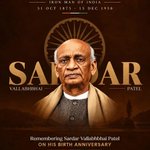
That could well have been the fate of Bharat had it not been for Sardar Vallabhbhai Patel, the Iron Man of India.
At a time when the task seemed almost impossible, his iron will, exceptional statesmanship and unwavering commitment to national unity brought hundreds of princely states into the Indian Union.
He knew when to persuade, when to negotiate, when to offer incentives and when circumstances demanded firmness and the use of force. Working alongside V.P. Menon, he accomplished one of the greatest exercises in political integration in modern history.
The world could have witnessed a fragmented subcontinent struggling with competing kingdoms and political instability. Instead, Patel helped lay the foundations of a united, sovereign nation that has stood resilient through eight decades of challenges.
His contribution did not end with territorial integration. When many questioned the need for an all-India civil service after independence, Patel strongly defended it. He understood that political unity meant little without administrative unity. The IAS and IPS, along with the wider All India Services framework, became an enduring part of that vision.
And the man himself? He never needed an official title to command respect. The people of Bardoli gave him the title Sardar because they recognised their leader in him.
We lost him far too early, on 15 December 1950. One can only imagine how much more he might have contributed had he lived longer.
The Statue of Unity is a fitting tribute to a man whose vision helped give India its political unity.
On his Jayanti, let us remember the man who helped make one Bharat possible. 🇮🇳


1
39
Rarely do civilians receive the Ashoka Chakra, Bharat’s highest peacetime gallantry award. Neerja Bhanot was one of them. She sacrificed her life saving hundreds of passengers during a hijacking.
Decades later, another Indian, Captain Smit Machchhar, has displayed extraordinary courage in the face of danger.
The UAE has honoured Captain Smit Machchhar with the First Class Order of Zayed II for his courage in thwarting a mid-air terror attack.
Despite being attacked by his co-pilot with a crash axe while the aircraft was airborne, Smit managed to fight back, open the cockpit door and help prevent a potential catastrophe.
His courage brings back memories of Neerja Bhanot.
In 1986, when Pan Am Flight 73 was hijacked in Karachi, Neerja risked everything to save passengers. She hid their passports, helped them escape through emergency exits and ultimately sacrificed her own life while shielding three children from bullets.
Bharat honoured her with the Ashoka Chakra in 1987, making her the youngest recipient of the award.
Different circumstances, different decades, but the same extraordinary courage and instinct to save human lives in the face of terrorists.
The UAE has recognised Smit’s bravery. I am certain Bharat will soon honour this extraordinary act of courage too.


2
63
A handshake with China means little if peace at the border remains fragile and economic dependence keeps growing. 🇮🇳
PM Narendra Modi and Xi Jinping met in New Delhi in September 2026, signalling a willingness to stabilise ties after years of tension.
But let’s keep the bigger picture in mind:
The border: Peace and tranquillity along the LAC must remain the foundation of any lasting improvement. Handshakes cannot replace verifiable ground-level peace.
• The 2020 Galwan clash killed 20 Indian soldiers & about 45 Chinese soldiers.
• In October 2024, the two sides reached a patrolling agreement covering Depsang and Demchok.
• Substantial military deployments along the border remain a concern.
Trade: Bharat’s dependence on Chinese machinery, electronics and industrial components remains a strategic vulnerability. Better ties must translate into fairer market access and stronger Indian manufacturing.
• Bilateral trade hit $151.1 billion in FY 2025–26.
• Bharat’s trade deficit with China reached $112.16 billion.
• Bharat imported $131.63 billion worth of goods from China but exported only $19.47 billion.
Bharat need not choose between diplomacy and national security. It must pursue both.
Engagement is a tool, not a substitute for leverage.

44
