

💫 Full-Time ASX Capital Growth Investor & Trader (19yrs) Chartist & Fundamentalist ( Posts Are Personal Opinion Not Financial Advice) ZERO Tolerance for Trolls
Australia
Joined June 2016
- Tweets13.4K
- Following230
- Followers6.5K
- Likes59.6K




Pinned Tweet
As 2022 comes to an end I found myself reflecting.
Most mention their biggest wins but here’s a list of my biggest $ losses
2017 - $1,471,000 (one stock)
2019 - $123,000
2021 - $310,000
2022 - $317,000
There’s no gain without risk
#asx #invest #australia
TheArchitect retweeted

Dysprosium oxide delivered to Europe cost 6.8 times the Chinese price at the end of June. By late September, it was 16.3 times, according to Benchmark Mineral Intelligence.
SMM quotes put European dysprosium oxide at $3,300–4,200/kg, compared with $215–220/kg in China. That translates to a gap of 15 to 19 times.
Terbium oxide rose $300 to $7,300–8,300/kg, while gadolinium oxide gained $100 to $2,700–3,000/kg.
SMM says all three materials were largely unavailable in Europe.

TheArchitect retweeted
MPs have been told that demand for the rare earths used in permanent magnets will jump 16-fold by 2030, as Britain looks to rebuild its military.
A parliamentary committee set 10 tests to de-risk the UK’s critical mineral supply chains.
Its verdict: the government does not currently appear able to pass any. Chair Liam Byrne calls Britain “dangerously exposed.”
The government points to £400 million for domestic production and recycling, and a 2035 goal of no more than 60% of any critical mineral from a single country.
China’s reprieve on rare earth export restrictions runs to January 2027.

TheArchitect retweeted

“The Power of Grade.” MST Access initiates coverage of $PNN with an A$0.32/share valuation, highlighting Morro do Ferro’s high grades and magnet rare earth potential.
Next: metallurgy and a maiden resource targeted for Q1 2027.

TheArchitect retweeted

China expands overseas mining stakes, tightening grip on critical minerals
cnbc.com/2026/11/04/china-cr…

TheArchitect retweeted

We’ve secured a strategic A$5.0M cornerstone investment from Critical Metals Corp (Nasdaq: CRML), via its Australian subsidiary European Lithium (#ASX: $EUR), through an at-market placement at A$0.14 per share.
The investment establishes a strategic relationship between Power and CRML, providing opportunities for collaboration, access to US capital markets and future project funding.
Proceeds will fund an expanded drilling campaign at our Morro do Ferro Rare Earth Project in Brazil, accelerating exploration, resource definition and development planning.
Read more: wcsecure.weblink.com.au/pdf/…
$PEIMF $PNN #RareEarths #CriticalMinerals

TheArchitect retweeted
In volatile markets, financial flexibility matters. $PNN’s agreed A$5m cornerstone investment will fund development at Morro do Ferro, ease near-term funding pressure and bring strategic backing with global reach. Capital to keep development moving.
Our focus: move quickly, put capital to work and accelerate development at Morro do Ferro. Turning potential into progress.
TheArchitect retweeted

📝 $PNN $PEIMF Go fast, go alone. Go far, go together.
$5M from a well-funded, US-listed strategic partner, a vote of confidence in the MDF rare earth project.
Funds will advance exploration and test the mineralised system at depth.
📇 @PowerMin_PNN

TheArchitect retweeted

Tell me US is desperate for rare earth without telling me US is desperate for rare earth.

US strategy links Myanmar peace talks to rare-earth access reut.rs/4jUOtSo

TheArchitect retweeted
China’s suspension of its rare earth export controls expires on 10 November, just six days away.
The broader US-China trade truce runs until Jan. 10, 2027, following an agreement reached on Sept. 28. But the statement did not explicitly address the rare-earth controls, and no formal MOFCOM extension has been announced.
Unless the suspension is extended, the affected measures could resume on Nov. 11.

The US can separate about 15,000 tonnes of rare earths a year, versus domestic demand of roughly 45,000 tonnes.
China holds about 88% of global light rare earth oxide separation capacity and 97% of heavy capacity, according to a European Parliament study.
Three rare-earth deadlines land in January 2027.
- China’s suspension of export controls expires January 10.
- The White House has targeted the same month for a ban on Chinese rare earth imports.
- Pentagon sourcing restrictions on Chinese-origin rare earth magnets also take effect January 1.
The US Government Accountability Office has estimated that rebuilding a fully domestic mine-to-magnet supply chain could take up to 15 years.
Source: BISI

TheArchitect retweeted

A$5M at A$0.14 a share: Critical Metals to hold ~8% of @PowerMin_PNN $PNN
discoveryalert.com/asx-stock…

TheArchitect retweeted

Via @StockheadAU
This week, Guy looks at a Brazilian rare earth explorer in $ALV.AX who has put out some impressive results not far from a recently acquired mine in a premier jurisdiction.
#ALV #REE
loom.ly/QkoxHtI

TheArchitect retweeted
41.7 g/t Au over 4 m at Baxters Sth in @TambourahM maiden drilling $TMB
discoveryalert.com/asx-stock…
TheArchitect retweeted
$PNN’s highest TREO sample yet: 1.2m at 40.5% TREO with 7.73% magnet REO from 42m 🇧🇷 within 111m at 8.25% TREO from surface at Morro do Ferro.
There is also an intercept of 15m @ 20.4% TREO.
Fo to our asx release for full details
#RareEarths #ASX

TheArchitect retweeted
Rare Earths Are Critical to Escape China's Grip!
Two Explorers with Amazing Potential to provide supply for non-China sources.
ASX Listed $ALV.ax (A$26m) and $PNN.ax (A$61m)
Both in Brazil and both neigbours to recent major takeovers with ALV on the same granite system 40km north of Serre Verde US$2.8 Billion takeover by USA Rare Earths. // PNN next door to $MEI where Lynas $LYC is acquiring for A$968 million.
Overview of each:
Alvo Minerals ($ALV):
Deposit Type: Ionic Adsorption Clay (IAC)
Cheaper to process than hard rock deposits.
Headline Grade: 1,000 to 2,500 ppm TREO
- Looks low but is not the end goal for IAC deposits.
Heavy REE Mix (Dy/Tb): High 3% of total rare earths.
- This is the differentiator and what makes ALV stand out against other higher grade hard rock deposits and makes up for the lower grades.
Processing Path: Simple, cheap salt wash at room temperature
Power Minerals ($PNN):
Deposit Type: Hard-rock hosted in weathered clay
Headline Grade: 4.0% to 17.5%+ TREO / 40,000 to 175,000+ ppm
- Looks huge and needs to prove it can be economical, size outweighs lower total REEs
Heavy REE Mix (Dy/Tb): Low (0.5% of total rare earths)
Processing Path: Complex, aggressive chemical and acid heating processes
PNN's Numbers Look Massive: PNN hits numbers like 91 meters at 7.7% TREO (77,000 ppm). In the mining world, anything reported in percentages sounds incredible.
Why Looks Can Deceive: Most of PNN's massive grade is made up of Cerium and Lanthanum—two light rare earths that are currently oversupplied worldwide and worth very little money.
ALV's Numbers Look Small: ALV reports grades around 1,300 ppm (0.13%). While this looks tiny next to PNN, this grade is completely normal and standard for an ionic clay deposit.
Rare earth value is not about how much rock you have; it is about which specific rare earths are inside that rock.
Heavy Rare Earths HREOs:
- Dysprosium & Terbium DyTb
These are the ultra-rare elements required for high-temperature electric vehicle motors and defense technology. Terbium trades for thousands of dollars per kilogram.
ALV has high Heavy REE content:
3% of ALV's total rare earth mix consists of DyTb. Because DyTb prices are so high, it drives the entire value of ALV's project.
PNN has low Heavy REE content:
In PNN's high-grade hits, DyTb makes up only about 0.5% of the mix. PNN is almost entirely a Light Rare Earth deposit.
Processing
ALV (Ionic Clays): The rare earths are lightly stuck to the outside of clay particles. You can wash them out using simple, cheap ammonium sulfate salt water at ambient temperatures. Low grade does not matter as much because processing is so cheap.
PNN (Hard-Rock Minerals): PNN's rare earths are locked inside hard minerals (bastnasite and cerianite). Even though the ground is weathered and soft, you cannot just wash the rare earths out with salt water. You generally have to bake them at high temperatures with strong acids to crack the minerals. This requires massive energy, heavy chemical costs, and expensive processing plants.
ALV is a low-grade, high-value Heavy Rare Earth clay play with cheap processing potential
PNN is an ultra-high-grade Light Rare Earth play that still has to prove its processing economics
Both high potential resources but very different projects.
#asx #rareearths #crticalminerals #lithium #copper #mining #xec #xjo #smallcaps $LYC $skk $jns $ody $WCN #Australia


TheArchitect retweeted
#ASXNews
$ALV.AX has commenced the first #drilling program at the Florence prospect, part of the Bluebush IAC #HREE in Goiás, Brazil. With over 100 auger holes, the program is designed to test the extent, thickness & grade of the ionic clay profile.
loom.ly/ou57mDw

TheArchitect retweeted
$26m (aud) market cap Alvo Minerals (asx $ALV) on the same geological granite as the US$2 Billion acquisition of Serra Verde by USA Rare Earths...

TheArchitect retweeted
JPMorgan unleashes $1.5T push for US critical minerals
mining.com/jpmorgan-unleashe…

TheArchitect retweeted
$ALV.AX MD, Rob Smakman hosted a webinar discussing #ALV Bluebush Ionic Adsorption Clay HREE Project in Central Brazil, as well as updates on the ongoing opportunity at the Palma #Copper- #Zinc Volcanic Massive Sulphide Project in Brazil.
Watch the recording: loom.ly/Wm6k-0I
TheArchitect retweeted

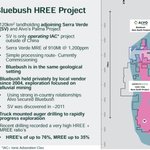
$ALV Bluebush Contract Completion & Further Drilling Delivers District Scale High Value HREE DyTb Enriched Ionic Clays
Bluebush shares the same geological setting and host granite as the Serra Verde HREE IAC mine,
occupying the northern portion of the Serra Dourada granite. acquired by USA REE for US$2.8 b
Assay results demonstrate Bluebush is enriched with HREE with an average content of 26ppm DyTb in the significant intercepts
Bluebush is a confirmed IAC rare earth project, with metallurgical testwork confirming extractions of up to 89%


$ALV
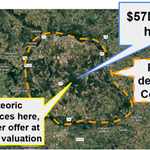
USA Rare Earth has agreed to acquire Brazil-based Serra Verde Group in a deal valued $2.8 billion,
$ALV's Bluebush HREE Project sits on the same Serra Dourada granite
HREE ionic-clay target, Shallow mineralisation already proven
18.5m @ 1,396ppm TREO from 0.5m
Exploration underway.
$ALV added 575ha directly adjoining Boa Vista, where reconnaissance work indicates the HREE mineralisation
mining-outlook.com/industry-…

Rare Earths Are Critical to Escape China's Grip!
Two Explorers with Amazing Potential to provide supply for non-China sources.
ASX Listed $ALV.ax (A$26m) and $PNN.ax (A$61m)
Both in Brazil and both neigbours to recent major takeovers with ALV on the same granite system 40km north of Serre Verde US$2.8 Billion takeover by USA Rare Earths. // PNN next door to $MEI where Lynas $LYC is acquiring for A$968 million.
Overview of each:
Alvo Minerals ($ALV):
Deposit Type: Ionic Adsorption Clay (IAC)
Cheaper to process than hard rock deposits.
Headline Grade: 1,000 to 2,500 ppm TREO
- Looks low but is not the end goal for IAC deposits.
Heavy REE Mix (Dy/Tb): High 3% of total rare earths.
- This is the differentiator and what makes ALV stand out against other higher grade hard rock deposits and makes up for the lower grades.
Processing Path: Simple, cheap salt wash at room temperature
Power Minerals ($PNN):
Deposit Type: Hard-rock hosted in weathered clay
Headline Grade: 4.0% to 17.5%+ TREO / 40,000 to 175,000+ ppm
- Looks huge and needs to prove it can be economical, size outweighs lower total REEs
Heavy REE Mix (Dy/Tb): Low (0.5% of total rare earths)
Processing Path: Complex, aggressive chemical and acid heating processes
PNN's Numbers Look Massive: PNN hits numbers like 91 meters at 7.7% TREO (77,000 ppm). In the mining world, anything reported in percentages sounds incredible.
Why Looks Can Deceive: Most of PNN's massive grade is made up of Cerium and Lanthanum—two light rare earths that are currently oversupplied worldwide and worth very little money.
ALV's Numbers Look Small: ALV reports grades around 1,300 ppm (0.13%). While this looks tiny next to PNN, this grade is completely normal and standard for an ionic clay deposit.
Rare earth value is not about how much rock you have; it is about which specific rare earths are inside that rock.
Heavy Rare Earths HREOs:
- Dysprosium & Terbium DyTb
These are the ultra-rare elements required for high-temperature electric vehicle motors and defense technology. Terbium trades for thousands of dollars per kilogram.
ALV has high Heavy REE content:
3% of ALV's total rare earth mix consists of DyTb. Because DyTb prices are so high, it drives the entire value of ALV's project.
PNN has low Heavy REE content:
In PNN's high-grade hits, DyTb makes up only about 0.5% of the mix. PNN is almost entirely a Light Rare Earth deposit.
Processing
ALV (Ionic Clays): The rare earths are lightly stuck to the outside of clay particles. You can wash them out using simple, cheap ammonium sulfate salt water at ambient temperatures. Low grade does not matter as much because processing is so cheap.
PNN (Hard-Rock Minerals): PNN's rare earths are locked inside hard minerals (bastnasite and cerianite). Even though the ground is weathered and soft, you cannot just wash the rare earths out with salt water. You generally have to bake them at high temperatures with strong acids to crack the minerals. This requires massive energy, heavy chemical costs, and expensive processing plants.
ALV is a low-grade, high-value Heavy Rare Earth clay play with cheap processing potential
PNN is an ultra-high-grade Light Rare Earth play that still has to prove its processing economics
Both high potential resources but very different projects.
#asx #rareearths #crticalminerals #lithium #copper #mining #xec #xjo #smallcaps $LYC $skk $jns $ody $WCN #Australia