

Doctor (PhD) | Account is Young but Qualified Team. Monitoring Insight Multipolar World | Geopolitics • Diplomacy • Global Affairs | Live from the fault lines
Joined February 2026
- Tweets4.4K
- Following158
- Followers340
- Likes490




The Axial Post retweeted

I 2 stati maggiormente responsabili dell'Olocausto, quasi cent'anni dopo, fregandosene dei trattati internazionali da allora in vigore, sono i maggiori fornitori di armi e i più strenui difensori di uno stato genocida.
Possano presto doverne rispondere dinanzi ad una Corte.

Oltre un milione di persone in Europa, decine di ong, quasi 400 ex diplomatici, esperti Onu, così come Belgio, Paesi Bassi, Irlanda, Slovenia e Spagna, hanno chiesto l’immediata sospensione dell’Accordo Ue-Israele. Ancora una volta, Germania e Italia che hanno avuto un ruolo chiave nel bloccare la sospensione.
📢 Fatti sentire bit.ly/4cAOsgZ

The Axial Post retweeted

Warmest congratulations to Mr. Muhammad Zeeshan Ali and Mr. Khurram Daud on their successful selection as the first batch of foreign astronauts for China's manned space program! Wish them successful training and a fruitful mission ahead. May they send out most resounding note of China-Pakistan friendship that transcends mountains, seas, and now—the space in the China Space Station! – at Punjab, Pakistan

The Axial Post retweeted
Oh Lord what will it take for Europe's leaders to show some integrity?
To ''limit'' trade with the colonies (WAR CRIMES) is a smokescreen. If Int'l law means anything, you don’t tweak complicity: you end it.
Trade with Israel -accused of atrocity crimes - must be suspended. Now.

Sweden and France call on the EU to "limit commercial engagement with illegal settlements", including a possibility of a full ban on imports irishtimes.com/world/europe/…

The Axial Post retweeted

We expect some positive decisions tomorrow on the €90 billion loan to Ukraine.
This would show that our support for Ukraine remains strong and that Russia cannot outlast Ukraine.
My doorstep ahead of today’s Foreign Affairs Council ↓
The Axial Post retweeted
BREAKING: ⚡️Hungary’s 🇭🇺incoming PM Magyar vows to enforce the ICC warrant against Netanyahu if he enters the country.
Hungary's withdrawal from the International Criminal Court (ICC). Legally, that means if Netanyahu steps foot in Budapest, the arrest warrant issued by the court must be executed.
But here is the twist: Magyar actually invited Netanyahu to visit in October.
He has boxed himself into a corner. He is telling the world he will follow international law, but he is personally inviting a wanted man to dinner. The ICC withdrawal process is not final until June 2, and rejoining takes another 60 days . That puts the potential membership re-activation dangerously close to the October visit.
Magyar says, "I don't have to say everything on the phone" . That is diplomatic code for: we are still figuring this out.
This isn't just about a visit. It is a test of whether European leaders will finally enforce the ICC warrants that have been ignored for two years.

The Axial Post retweeted
JUST IN: ⚡️Another hit on energy infrastructure.
Major fire erupts at 🇷🇺Russia’s Tuapse oil refinery after a 🇺🇦Ukrainian drone strike.
The Axial Post retweeted
Analysis: ⚡️The New Reserve Asset — Gold TO Crypto Switch
The News:
More Americans now own Bitcoin than gold — 50 million Bitcoin holders versus 37 million gold owners, according to a new report from River.
The Holdings:
Americans hold 40% of the world's Bitcoin supply, far outpacing any other country. The average Bitcoin holder has $11,089 in the asset, compared to just $1,512 for gold owners.
Institutional Adoption:
Wells Fargo, Bank of America, and Vanguard have opened Bitcoin ETF distribution to clients this year. Goldman Sachs reports that 71% of institutional investors plan to increase their crypto allocation over the next 12 months.
The Policy Catalyst:
The CLARITY Act is nearing a final Senate vote, which could grant Bitcoin permanent legal status in the US. A survey found that 4 in 5 Americans support converting some portion of US gold reserves into Bitcoin.
The Speed of Adoption:
Bitcoin ETFs reached $10 billion in assets in just seven weeks. The first gold ETF took more than two years to hit that mark.
The Geopolitical Angle:
Bitwise CIO argues Bitcoin's addressable market may be larger than gold's $38 trillion. The weaponization of SWIFT and financial sanctions against Iran is strengthening Bitcoin's case as an "apolitical alternative."
Bottom Line:
The Strait is still contested. Oil is still high. But a new reserve asset is emerging — and Americans are already holding it.
________________________________________________
Follow @TheAxialPost for More such Analysis
#Gold #Crypto #BTC

The Axial Post retweeted
Gold's War Paradox - Understand What does this Reveals
The Argument:
Gold has suffered a sell-off during the Iran war, but Standard Chartered's Suki Cooper argues the outlook is turning positive. The reason: the metal's traditional role as a safe haven is being tested—and will reassert itself.
What Happened to Gold?
When war broke out, gold initially spiked, then fell. Investors sold to cover margin calls in other assets and to raise cash for oil and defense spending. The sell-off was about liquidity, not lost faith in gold.
Why the Outlook Is Positive:
1- Central Banks Are Buying
Global central banks added 1,200 tons of gold in 2025—the second highest year on record . Diversification away from dollars continues, driven by geopolitical uncertainty.
2- The Fed Rate Path
Markets now expect fewer rate cuts. But gold has historically done well when real yields are falling—and the trajectory is still down.
3- The Dollar's Exorbitant Privilege Is Fraying
The Strait closure has pushed oil buyers toward yuan payments. If the petrodollar system cracks, gold becomes the neutral reserve asset. Suki Cooper notes: "Gold is no longer just a hedge against inflation—it's a hedge against the dollar system itself".
4- Physical Demand Is Holding
India and China, the world's largest gold consumers, are still buying . Jewellery demand has softened, but investment demand—bars, coins, ETFs—is rising.
The Risk:
If the Strait reopens quickly and oil prices fall, gold could drift lower. But Cooper argues the structural case—central bank diversification, dollar skepticism, geopolitical risk—remains intact.
Bottom line:
Gold sold off because investors needed cash. But the reasons to own it haven't disappeared. The dollar is losing its monopoly on energy trade. Central banks are buying. Real yields are still falling. When the liquidity panic fades, the gold case reasserts itself. The question is when.
____________________________________________
It's not a strategy. It's a slogan.
Follow @TheAxialPost for daily geopolitics.

The Axial Post retweeted
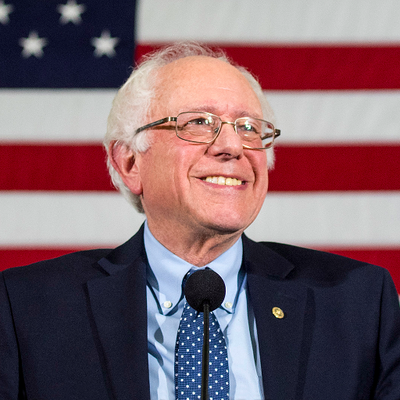
A recent poll shows over 70% of both white & blue collar workers think AI will lead to fewer jobs.
Why isn’t Congress acting?
The AI industry & the billionaires who own it will spend unlimited sums to defeat any candidate who takes them on.
Yes. We must end Citizens United.
The Axial Post retweeted
Analysis: ⚡️The Iran war will cement China’s superpower status — Financial Time
Here is what most people are not discussing about the emergence of A Silent Player.
The "Electrostate" Rises
The Argument:
The Financial Times and multiple analysts argue that while the Iran war poses short-term risks to China, Beijing is positioned to emerge as the long-term winner—cementing its superpower status through energy strategy, green technology dominance, and US distraction.
How China Wins:
1. The Strategic Reserve Buffer
China holds an estimated 1.3 billion barrels of emergency oil reserves—enough to cover over six months of Strait disruption. This dwarfs US stockpiles and allows Beijing to ride out the crisis without panic buying.
2. Iran Keeps Shipping
Iran has explicitly allowed vessels linked to "non-hostile" partners—including China—to transit the Strait . While other nations scramble for supplies, Chinese tankers keep moving.
3. The Green Pivot Advantage
China is now dubbed the "Electrostate" —powered increasingly by electricity generated at home rather than fossil fuels shipped abroad. Key stats:
🌞 Renewables accounted for 85% of new global power capacity last year
🇨🇳 China supplies 70% of the world's green hardware (solar, wind, batteries)
🚗 Majority of cars sold in China are now EVs
4. US Distraction, Chinese Gain
Every week the US is bogged down in Iran is a week it is not focused on the Indo-Pacific. The USS Abraham Lincoln was pulled from the South China Sea to fight this war. Beijing is watching—and taking notes.
5. The "Stable Hand" Narrative
While the US is portrayed as "chaotic, unrestrained, and unlawful," China presents itself as the reliable alternative—calm, predictable, and focused on diplomacy. This narrative matters for global influence.
6. Diversified Supply Lines
China's oil imports are highly diversified:
🇷🇺 Russia: 18%
🇸🇦 Saudi: 14%
🇮🇷 Iran: 11%
🇮🇶 Iraq: 11%
🇧🇷 Brazil and others make up the rest
No single source is critical.
The Risks:
Not all is smooth. China's export-driven economy is vulnerable if global growth stalls . Prolonged high oil prices could hurt its manufacturing sector. But Beijing has prepared for this crisis for years.
Bottom line:
Lindsey Graham called this "China's nightmare". The evidence suggests otherwise. While the US bleeds resources in the Middle East, China is watching from the mountain—and waiting to seize the peace.
____________________________________________
It's not a strategy. It's a slogan.
Follow @TheAxialPost for daily geopolitics.

The Axial Post retweeted
Analysis: ⚡️The $4 Gas Threshold
Here are the factors most people are not talking about contributing to gas surge.
The News:
Gas prices at U.S. pumps spiked above $4 a gallon for the first time since the summer of 2022, as the war in Iran sends oil costs surging. Natural gas prices in Europe and Asia have also surged over the past month.
The Numbers:
🇺🇸 U.S. gas: Above $4/gallon (national average)
🇪🇺 European gas: Up over 30% since the war began
🇯🇵 Asian LNG: Spot prices hit 2024 highs
What's Driving the Spike:
1. Hormuz Remains Closed
For over a month, the Strait has been effectively shut. Mines, missiles, and IRGC patrols have halted tanker traffic, taking 20% of global oil offline.
2. The Red Sea Threat
With the Houthis now formally in the war, the Bab el-Mandeb strait—the only exit for Saudi oil rerouted to Yanbu—is also at risk.
3. The SPR Is Draining
The U.S. is releasing 172 million barrels from the Strategic Petroleum Reserve, but that's less than two weeks of lost Hormuz flows. Markets are pricing a prolonged disruption.
4. Global Natural Gas
Qatar's LNG production—20% of global supply—remains halted. Europe and Asia are competing for replacement cargoes, driving prices higher.
The Political Impact:
5. The Midterm Math
Gas above $4 is a political threshold. Every cent at the pump translates to voter pain. With midterms months away, the price spike threatens to become the defining issue.
6. The Biden Comparison
During the 2022 spike, Republicans hammered Biden over gas prices. Now Trump faces the same vulnerability—and Democrats are using it.
Bottom line:
$4 gas is a psychological line. It tells Americans the war isn't abstract—it's at the pump. And as long as the Strait stays closed, prices will keep climbing.
____________________________________________
It's not a strategy. It's a slogan.
Follow @TheAxialPost for daily geopolitics.

The Axial Post retweeted
ran expanding targets to Big Tech marks a shift from military conflict to infrastructure warfare.
Cloud, AI, and data centers are now seen as force multipliers in modern war, not neutral assets.
Bottom line: The battlefield is no longer just physical—it’s digital, economic, and global.
The Axial Post retweeted
The war began with regime change. It's now about reopening a waterway.
Strait of Hormuz carries 20% of global oil. It's been closed for over a month. No tankers, no exports, no revenue.
Iran turned geography into leverage. The U.S. is learning that destroying a navy doesn't reopen a strait. Mines, missiles, and geography are harder to bomb.
The objective has shrunk from "new Iran" to "open passage." That's the war's new reality.
The Axial Post retweeted
BIG BREAKING: ⚡️Increased vessel traffic is moving through the Strait of Hormuz monitored today.
This signals that 🇵🇰Pakistan's FM meeting held earlier today with 🇨🇳China secured some assurances from Iran.
Speculations of China's Involvement has addressed the insecurities of Iran.
#Riyadh #Dubai #Qatar #Kuwait #IranUSwar #IranIsraelwar
The Axial Post retweeted
Do you understand what happened in the last 72 hours..
> Egypt shut down its shops at 9pm, mandated work-from-home Sundays, and the government internally called it "war economy mode".. four days after the IMF praised them and unlocked $2,300,000,000..
> Turkey's central bank burned through $30,000,000,000 in March defending the lira.. the finance minister everyone called a genius is now considering SELLING the national gold reserves..
> Pakistan's PM went on national TV on Eid and announced government salary cuts and a 50% fuel allocation reduction.. they approved a $358,000,000 "austerity fund" and nobody asked austerity from what..
> Russia banned cash exports above $100,000 and gold bars above 100 grams.. Putin signed it March 26.. called it fighting the shadow economy..
> Iraq banned 22 banks from USD transactions.. cashless mandate for ALL government institutions coming July 2026..
> South Korea launched a literal wartime economic response body on March 25.. the prime minister chairs it..
> India secretly created a $6,700,000,000 Economic Stabilisation Fund.. it wasn't in the news.. it was buried in a budget supplement..
> Lebanon's currency collapsed 98%.. the war added $14,000,000,000 in damage on top..
every single government on this list told their citizens "the economy is doing fine" within the last 30 days..
all of this.. a single week..
if you're not following me you're finding out about this 48 hours late from someone who read my post..
it's only getting crazier from here..
____________________________________________
It's not a strategy. It's a slogan.
Follow @TheAxialPost for daily geopolitics.

The Axial Post retweeted
Pakistan's Diplomatic Mediation
Here is to understand why It's a Pivot in the hot war zone.
The News:
Pakistan, once isolated by Washington for harboring Osama bin Laden, is emerging as a central mediator between the U.S. and Iran, hosting regional powers for talks aimed at ending the war.
Why Pakistan Now:
1. The Unique Position
Pakistan borders Iran and maintains ties with both Tehran and Washington. It is one of the few countries Iran has allowed to transit the Strait . Its army chief has been in direct contact with U.S. Vice President JD Vance.
2. The Diplomatic Hub
On March 29, Islamabad hosted foreign ministers from Saudi Arabia, Turkey, and Egypt to discuss reopening Hormuz. Proposals included a Suez-style management consortium.
3. The Trust Factor
Iran rejected participation in the Islamabad talks , but continues allowing Pakistani ships through the Strait. Pakistan has credibility with Tehran that few U.S. allies possess.
4. The U.S. Calculation
Washington needs channels to Tehran. Pakistan offers a backchannel that bypasses Europe's refusal and Gulf reluctance.
5. The Bin Laden Shadow
The irony is sharp: the country once branded an ally of terror is now America's best hope for a diplomatic exit.
Bottom line:
Pakistan just became the world's unlikely mediator. The country Washington once ostracized now holds a key to ending the war. Diplomacy makes strange bedfellows.
____________________________________________
It's not a strategy. It's a slogan.
Follow @TheAxialPost for daily geopolitics.

The Axial Post retweeted
The $66 Billion Treasury Selling- Here is to Understand What it Signals
The News:
Middle East oil producers have sold $66 billion in U.S. Treasurys since the Iran war began on Feb. 28, with total custodial holdings falling to their lowest level since 2012.
The Numbers:
🏦 Middle East holds roughly $300 billion in U.S. government debt (about 3.5% of total foreign holdings)
📉 $66 billion sold in March alone
🇸🇦 Saudi Arabia is the largest holder among Gulf producers
Why They're Selling:
1. The Liquidity Squeeze
Gulf states need cash. The war has disrupted oil exports, cratered tourism, and strained government budgets. Selling Treasurys is the fastest way to raise dollars for defense and reconstruction .
2. The "Safe Harbor" Myth
For decades, Gulf states parked wealth in U.S. assets in exchange for American security guarantees. Iranian missiles hitting Dubai airports and Abu Dhabi hotels proved that promise hollow. As one former UK Treasury official put it: "Alliance with the US no longer buys real security".
3. The Trust Deficit
Iranian officials have publicly stated that any institution buying U.S. bonds is "financing the war" against them. Gulf sovereign wealth funds are reportedly in dialogue about cutting U.S. commitments altogether .
The Bigger Picture:
A Pattern, Not a Panic
For now, the sell-off appears driven by short-term liquidity needs, not a strategic dumping of dollar assets . But the deeper trend is unmistakable: Gulf capitals are diversifying away from Washington.
The Chinese Alternative
Saudi exports to China now outpace those to the U.S. fourfold. Since December, the share of Saudi oil sales priced in yuan has jumped from under 20% to 40%.
Hong Kong Beckons
Middle Eastern sovereign funds are redirecting capital east. Their share of Hong Kong IPO cornerstone placements has surged from under 20% to nearly 40%. Over 20 Middle Eastern family offices have set up in Hong Kong since January.
Bottom line:
Gulf states aren't just selling Treasurys—they're rethinking the entire arrangement. The "oil for security" compact that built the petrodollar system is cracking. When the world's largest oil exporters start looking elsewhere, the dollar's exorbitant privilege comes into question.
____________________________________________
It's not a strategy. It's a slogan.
Follow @TheAxialPost for daily geopolitics.

The Axial Post retweeted
Is $200 Oil a Real Threat or Strategic Messaging?
Summary of Claim
The post highlights growing discussion among U.S. government officials and Wall Street analysts about a possible surge in oil prices to an unprecedented $200 per barrel.
Context & Drivers:
Such projections are typically rooted in a combination of structural and geopolitical risks rather than immediate market fundamentals. Key factors likely influencing this narrative include:
🔹Geopolitical tensions in major oil-producing regions (Middle East instability, sanctions, conflict risks)
🔹Supply constraints, whether due to OPEC+ production strategies or underinvestment in upstream capacity
🔹Strategic stockpile limitations, reducing the ability of governments to cushion supply shocks
🔹Rising global demand, particularly if economic growth stabilizes or rebounds
Market Interpretation:
Historically, extreme price forecasts (e.g., $150–$200 oil) often function more as risk signaling tools rather than base-case expectations.
They highlight tail risks rather than probable outcomes. Markets tend to partially price in such scenarios through volatility spikes rather than sustained trend shifts.
Narrative vs Reality:
There is a strong possibility that this narrative reflects:
🔹Forward-looking hedging behavior by institutions
🔹Psychological anchoring to worst-case supply shocks
🔹Policy signaling, especially if governments aim to justify preemptive actions (e.g., reserve releases or diplomatic moves)
Implications:
🔹Energy markets: Increased volatility, upward pressure on futures curves
🔹Global economy: Inflation resurgence risk, especially for oil-importing nations
🔹Financial markets: Rotation into energy stocks and commodities; pressure on equities sensitive to fuel costs
Bottom Line:
While a $200 oil scenario is plausible under extreme disruptions, it remains a low-probability, high-impact outcome.
The discussion itself is significant—not as a forecast, but as an indicator that market participants are increasingly focused on fragility in global energy supply chains.
____________________________________________
It's not a strategy. It's a slogan.
Follow @TheAxialPost for daily geopolitics.

The Axial Post retweeted
A Suez-Style Strait?
The Islamabad-Eccentric Proposal Could Change Everything
The News:
Pakistan hosted foreign ministers from Turkey, Egypt, and Saudi Arabia on March 29 for talks aimed at ending the Iran war. Initial discussions focused on proposals to reopen the Strait of Hormuz.
The Proposals:
1. A Suez-Style Management Consortium
Turkey, Egypt, and Saudi Arabia proposed forming a consortium to manage oil flows through the Strait, similar to the Suez Canal model. They asked Pakistan to participate—though Islamabad has so far declined.
2. Fee Structures
Egypt reportedly forwarded proposals to the White House that include Suez Canal-style fee structures for passage through the Strait. This would effectively monetize safe transit.
3. The Backchannel
Pakistan's army chief, General Asim Munir, has been in regular contact with U.S. Vice President JD Vance, signaling high-level military-to-military communication alongside diplomatic tracks.
The Players and Their Roles:
🇵🇰 Pakistan: Leverages ties to both Tehran and Washington; key diplomatic channel
🇹🇷 Türkiye: Prioritizes ceasefire; sees safe passage as "confidence-building measure"
🇸🇦 Saudi Arabia: Gulf power with direct stake in Strait reopening
🇪🇬 Egypt: Suez Canal operator; expertise in fee-based maritime management
The Iran-Pakistan Shipment:
Separately, Pakistan's Foreign Minister Dar announced that Iran has agreed to allow 20 additional Pakistani-flagged ships through the Strait. This follows earlier approvals for Indian, Turkish, and Bangladeshi vessels—confirming Tehran's selective access policy.
The US Factor:
Proposals have been discussed with both Washington and Tehran. The absence of any NATO or Western power at the Islamabad table is notable—regional nations are taking the lead.
Bottom line:
Pakistan just positioned itself as a diplomatic hub for the Iran war, advancing a Suez-style consortium model for the Strait. Whether Washington accepts a fee-based, regionally managed solution remains the open question. But for the first time, there's a framework—not just firepower.
____________________________________________
It's not a strategy. It's a slogan.
Follow @TheAxialPost for daily geopolitics.
