

Group Leader of the Genome Function Laboratory @TheCrick From 2025, find me over on the other side: https://xitter.cf/t.co/ajOqpCvaUY (he/him)
London
Joined July 2011
- Tweets280
- Following294
- Followers1.2K
- Likes635






Pinned Tweet
Great to see this out now in @CellGenomics . A few points about what we learned in revisions over on BlueSky:
bsky.app/profile/gregfindlay…

Our latest from @TheCrick, now on @biorxivpreprint:
biorxiv.org/content/10.1101/…
Michael Herger (@HergerMichael) and Christina Kajba jointly led development of a new prime editing platform for testing large numbers of human genetic variants.

Greg Findlay retweeted

Join us for a PhD! Applications close November 5th. crick.ac.uk/careers-study/va…
Crick PhD recruitment for fall 2025 is officially open! Please apply to our lab through the Crick application portal if interested. 👇
crick.ac.uk/careers-study/va…
Greg Findlay retweeted
New from our lab @TheCrick , led by @BetkaRoe. A fun side project that tried to understand what happens when a chaperonin encounters a translating ribosome.
biorxiv.org/content/10.1101/…

Greg Findlay retweeted

Come join us in making agriculture sustainable at @PhytoformLabs! 🌱We are looking for an R&D scientist with a background in Synthetic biology to join our tools & traits team for precision genome editing 🧬. If you think this could be you, please apply!
linkedin.com/jobs/view/39723…
Greg Findlay retweeted

So excited that our paper “De novo variants in the RNU4-2 snRNA cause a frequent neurodevelopmental syndrome” is out today in @Nature nature.com/articles/s41586-0…
🧵 1/16


(1/4) I’m delighted to announce that our research on RNU4-2 is now out on @Nature . This is an exciting finding that will bring many diagnoses worldwide. We have updated some new results since the preprint: nature.com/articles/s41586-0…
Greg Findlay retweeted

We are delighted to announce that Professor Edith Heard has been appointed as our new director and chief executive!
Edith, who is currently director-general at @EMBL, will succeed Paul Nurse in leading the Crick from the summer of 2025.
🔗 crick.ac.uk/news/2024-07-09_…

ALT "The Francis Crick Institute has quickly established a global reputation for its work at the frontiers of science. I relish the challenge of building on that work. I also want to pay tribute to Sir Paul Nurse, without whom the Francis Crick Institute would not be the world-leading institution it is today." - Edith Heard
Greg Findlay retweeted

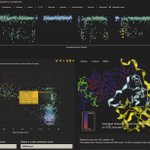
Want to fully investigate this large dataset beyond classical 2D formats? Go interactively explore the data 👇
vhl-board.onrender.com/
The VHL data can also be searched, visualised, and explored using this awesome SGE visualisation platform made by @ChloeTerwagne:
vhl-board.onrender.com/
Chloé’s code is all on GitHub if you’re interested in viewing and sharing your own data like this. (3/n)

Massive thanks to all authors, but particularly @ChloeTerwagne, Athina Ganner, @LauraCubitt3, @ReidBrewer3, Dong-Kyu Kim & @Eivakine for key inputs to revisions. And, of course, many thanks to reviewers, @nature_genet, and funders @TheCrick @CRUKresearch (7/n)
Of course, we hope you read the paper and use the data. Do feel free to reach out with questions on anything from protocol tips to variant classifications.
(8/n)
Finally, we’re delighted to see this published back-to-back with a massive SGE analysis of BAP1 led by Andrew Waters, @David_J_Adams and co. @sangerinstitute:
nature.com/articles/s41588-0…
So many more variants now readily interpretable, and still more on the way! (9/9)

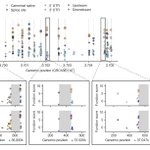
Lots more new analyses and validations in the paper, too. For instance, comparing function scores to SpiceAI and FoldX computational predictions – both of which do reasonably well. (6/n)

In new experiments, we also characterise novel mechanisms made apparent by SGE. Specifically, we show that a long C-terminus extension leads to LoF via VHL protein destablization and that stop-codon readthrough can impact the degree of functional impairment. See Fig. 6! (5/n)
The VHL data can also be searched, visualised, and explored using this awesome SGE visualisation platform made by @ChloeTerwagne:
vhl-board.onrender.com/
Chloé’s code is all on GitHub if you’re interested in viewing and sharing your own data like this. (3/n)

Our work led by @megan_buckley01 on Saturation Genome Editing of VHL is now out in @NatureGenet:
nature.com/articles/s41588-0…
Many new experiments and analyses to quickly highlight… (1/n)

Most importantly, all SGE scores and variant classifications are available for download in Supplementary Table 1 and from MAVEdb (mavedb.org/experiments/urn:m…).
Given the data’s high precision, we expect this will lead to a steep reduction in VUS reported clinically. (2/n)

Greg Findlay retweeted

Our DNA Typewriter protocol (written by @LiaoHanna, @JShendure, and myself) is out! Thank you @NatureProtocols for writing/editing this with us and having it as this week’s #FeaturedProtocol :-)

#FeaturedProtocol this week from Jay Shendure on using #DNATypewriter (#primeediting-based method) for tracing insertional events bit.ly/4cegahU
Greg Findlay retweeted

Happy to share this opportunity to join our team. Please apply if you are interested, or re-post if you are not on the look out for a new job crick.wd3.myworkdayjobs.com/…
Greg Findlay retweeted

Excited to see our work on the development of a platform for pooled screening of genetic variants using prime editing published on @biorxivpreprint: doi.org/10.1101/2024.04.01.5….