

A platform for emerging scholars committed to investigating Indian history, and the memories it tends to forget. For queries: [email protected]
New Delhi
Joined June 2026
- Tweets34
- Following0
- Followers2K
- Likes55








Every forgotten historical text waits for one reader who rediscover it but We have over 1,000 now.
Thank you to everyone who has read, shared, and argued with The Long Memory. However, The archive runs deep, and we have only turned its first few pages.
Stay Tuned and Subscribe to Thelongmemory.in for more such historical anecdotes.

The largest hoard of Gupta gold coins ever found. A fort of victory. A city that inspired Mughal architecture.
From the Gupta Empire to the earthquake that reshaped Bayana’s fortunes, its history spans sixteen centuries of kings, kingdoms, and shifting power. Yet a city once coveted by empires has faded into obscurity.
Read Sunny Pandey's Tale as he travels through seventeen centuries of ruins, legends and inscriptions to ask how a city so important came to be forgotten.

Read the essay by @ThePoeticEnigma here:
open.substack.com/pub/thelon…

We're hiring illustrators and graphic designers at The Long Memory!
You'll design visual content for our articles and social media, help shape the project's visual identity and aesthetics, and work with our editorial team to bring stories of Indian history to life.
To apply, send your CV, a link to your design portfolio, and a short note about yourself to [email protected] by 10 October.
Namaste!


The Long Memory retweeted

Absolutely incredible piece of writing. I'm still in the early parts of the article, but I'm gripped and will certainly finish it. This is the first work by Mihir I'm reading, but the quality of the prose and the flow of the sentences stand out immediately.
Take some time out and read this piece this week, and subscribe to The Long Memory if you haven't already! People on our side often like to complain about lack of "ecosystems" and high-quality work, but what you are seeing with TLM and other new publications is the green shoots of the emergence of one. Read the works, interact with the points being made, and leave a comment. This is how a Discourse is built!

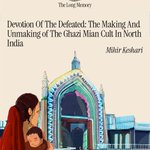
The cult of Ghazi Salar Masud, Mahmud's alleged nephew, grew in Bahraich for centuries through cultural assimilation, backed by political hegemony.
With the crumbling of that political structure and the ascent of Hindu political assertion, North India's historical memory is undergoing a massive transformation.
Read this piece to understand how the hegemony that once turned conquest into devotion is now working to erode it.

The Long Memory retweeted

Quite a perceptive piece on the origin and transformation of Ghazi Salar Masud into the cult of popular veneration. My only disagreement with the author is on the legend of Suheldev that it became popular in 1950s as a result of the efforts of Hindu revivalists orgs.
The cult of Ghazi Salar Masud, Mahmud's alleged nephew, grew in Bahraich for centuries through cultural assimilation, backed by political hegemony.
With the crumbling of that political structure and the ascent of Hindu political assertion, North India's historical memory is undergoing a massive transformation.
Read this piece to understand how the hegemony that once turned conquest into devotion is now working to erode it.
The Long Memory retweeted

Ghazi Mian, the alleged nephew of Mahmud Ghazani and a martyr of Islam, became a much-celebrated cult figure attracting devotion from both Hindus and Muslims in large parts of Uttar Pradesh.
In this article, I attempt to answer the possible reasons behind such a phenomenon by exploring the cult of Ghazi Mian as a site through which Islamic political hegemony was culturally translated and ritually channeled.
I argue that the hegemony which once made the cult is now working against it to unmake it.
Do read and share your comments!!
The cult of Ghazi Salar Masud, Mahmud's alleged nephew, grew in Bahraich for centuries through cultural assimilation, backed by political hegemony.
With the crumbling of that political structure and the ascent of Hindu political assertion, North India's historical memory is undergoing a massive transformation.
Read this piece to understand how the hegemony that once turned conquest into devotion is now working to erode it.
The Long Memory retweeted

Do read this excellent piece by @mihir_keshari . It is as much a history of Salar Masud Ghazi as it is a deep dive into the socio-political forces that shaped the emergence of figures like Salar Masud and eventually their decline.
Read the essay by @mihir_keshari here:
api.omarshehata.me/substack-…

The Long Memory retweeted

An excellent & evocative piece by young researcher @mihir_keshari . A must-read to understand the cult of Ghazi miyan
Read the essay by @mihir_keshari here:
api.omarshehata.me/substack-…
The cult of Ghazi Salar Masud, Mahmud's alleged nephew, grew in Bahraich for centuries through cultural assimilation, backed by political hegemony.
With the crumbling of that political structure and the ascent of Hindu political assertion, North India's historical memory is undergoing a massive transformation.
Read this piece to understand how the hegemony that once turned conquest into devotion is now working to erode it.
Read the essay by @mihir_keshari here:
api.omarshehata.me/substack-…
The Long Memory is now inviting submissions for its first print issue from students and scholars of history.
Been gatekeeping an interesting historical tale? Take it out of academic jargon and share it with a wider audience.
Pitch it to us at [email protected]
For more details: thelongmemory.in


What happens when a naked mystic confronts an empire?
Discover Sarmad Kashani, his bond with Dara Shukoh and a struggle over faith, freedom and power in Mughal India.
Read our latest piece by @Indic_drishti to know his story.


The Long Memory retweeted

📢 Graphic Designer Wanted for @TheLongMemory!
Role: Design engaging visuals (articles, website, socials), elevate our aesthetic identity, and collaborate with our editorial team to bring Indian history to life.
If you are:
Proficient in design tools (Adobe Suite, Figma, etc.)+
In 1722, a temple dancer became the most powerful woman in Assam. Phuleswari styled herself as "Bar Raja" (Great King) - reshaping Ahom politics and faith.
Two more queens would follow in her footsteps, leaving behind temples, coins, and a rift that erupted a generation later.
Read the full essay on our substack to know her story.

Read the essay here:
api.omarshehata.me/substack-…

The Long Memory retweeted

📢 Looking for interns to join @TheLongMemory
We’re looking for people interested in:
— Editing and working on articles about Indian history
— Researching, reading, and developing ideas for historical writing
— Outreach and building conversations around our work
— Helping shape the editorial and aesthetic direction of the project
Someone who:
— is diligent, committed, and genuinely enjoys reading
— has a basic understanding of Indian history and its debates
— can read closely and edit carefully
— has an interest in outreach, culture, and aesthetics
Only for those based in Delhi.
Stipend: ₹15K per month, negotiable
If interested, please DM me your CV + a short note about yourself and your interests.

The Long Memory retweeted
“Let no man’s caste or creed be asked; whoever adores Hari is His own.”
A conch sounds over Kashi. A “second sun” rises. Kings, artisans, ascetics and the marginalised enter the same devotional fold.
Nitin Maan’s essay follows Swami Rāmānanda from hagiography into history—and from history into living memory.
