

Military & Security Analyst | Covering global defence | Explainers • Updates • Geopolitics • Strategy | Verified sources
India 🇮🇳 |Global 🌍
Joined November 2019
- Tweets13.5K
- Following1.1K
- Followers11K
- Likes10.9K




Pinned Tweet
This is what a hypersonic missile looks like.
Look at that speed! That’s what makes these weapons so terrifying. And no air defense system on Earth can stop them.
Military Observer retweeted
India’s borders are guarded by fearless soldiers who stand firm against every threat. 🇮🇳
If China dares to show aggression again, it should remember Galwan, where China lost more than 45 soldiers. This time, the damage could be even greater.
India’s borders are guarded by fearless soldiers who stand firm against every threat. 🇮🇳
If China dares to show aggression again, it should remember Galwan, where China lost more than 45 soldiers. This time, the damage could be even greater.
Military Observer retweeted
Ukraine has struck a major Russian oil refinery in the Samara region, sending massive plumes of smoke into the sky. 🇺🇦
With Russian oil infrastructure under attack, Europe could be heading for a winter it won't forget.
Ukraine has struck a major Russian oil refinery in the Samara region, sending massive plumes of smoke into the sky. 🇺🇦
With Russian oil infrastructure under attack, Europe could be heading for a winter it won't forget.
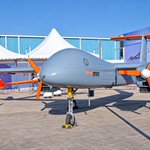
🇮🇳 DRISHTI-10 FILLS AN IMMEDIATE GAP. TAPAS MUST BUILD INDIA’S UAV FUTURE.
India needs capable drones today, but it also needs to develop its own technology for tomorrow. Drishti-10 and DRDO’s TAPAS represent two different approaches.
Drishti-10 is based on Israel’s Hermes 900 Starliner. Adani assembles the platform in Hyderabad with technology from Elbit Systems. It offers 36 hours of endurance and a 450 kg payload capacity, giving the Navy an important maritime surveillance capability.
TAPAS is developed by DRDO. It has previously demonstrated around 18 hours of endurance at 28,000 feet. It still has performance challenges to overcome, but the programme is important for developing India's own UAV design and engineering capabilities.
The difference matters. Drishti-10 brings an established foreign platform into Indian service through local assembly and technology transfer. TAPAS is an effort to develop an indigenous platform.
India needs both: the ability to bring proven technology into service quickly and the determination to develop its own systems.
Buying or assembling technology can meet today's needs. Building it at home will define India's long-term aerospace strength. 🇮🇳

Military Observer retweeted
🇮🇳 INDIA TAKES A STRONG STAND ON ENERGY SECURITY AT G20
External Affairs Minister S. Jaishankar delivered a clear message at the G20 Foreign Ministers’ Meeting in Atlanta: global energy trade must not become a hostage to geopolitical rivalries.
He warned that sanctions, deliberate attacks on energy infrastructure and disruptions to key trade routes are making energy markets unpredictable and driving up costs.
The consequences extend far beyond the countries involved. Developing economies, particularly those with limited resources, are often hit hardest.
India's position is clear: countries must have reliable access to affordable energy without being forced to bear the cost of geopolitical conflicts.
Military Observer retweeted
HYDERABAD STARTUP PITCHES JET DRONE TO TRAIN S-400 CREWS AGAINST KAMIKAZE DRONES 🇮🇳
Hyderabad's Apollyon Dynamics is promoting its Nightshade Mk-2 jet-powered drone.
It is meant first as a fast target for air-defence training, including crews of systems like the S-400.
The company claims 700 km/h speed, 300 km range and a 15 kg modular payload. These claims are not independently verified.
Apollyon says the Nightshade family could also be used as a decoy or a loitering munition later.
Those versions would need their own development and testing.
Whether it suits S-400 training is up to the military to decide. 🇮🇳
Military Observer retweeted
🇮🇳 The Rafale M that landed on INS Vikrant was flown by a Dassault pilot, not an Indian Navy pilot.
The Navy shared video of the October 29 landing, calling it a "first step towards induction."
The pilot was seen celebrating with Vikrant's commanding officer after touchdown.
His flight suit carries a patch that appears to relate to the Goa trials.
That points to INS Hansa's shore-based test facility. It copies the ski-jump set-up of India's carriers, so approaches and take-offs were practised there first. 🇮🇳
Military Observer retweeted
🇮🇳 DRDO'S VIKRAM VT-21 CLEARS A KEY TRIAL MILESTONE!
The wheeled variant has met key requirements in development trials, demonstrating mobility, trench-crossing and amphibious capability.
• Armed with an indigenous 30mm unmanned turret.
• Developed with Tata Advanced Systems and Bharat Forge.
• Next: Indian Army trials across different terrains.
The goal? Replace the ageing BMP-II fleet with an indigenous next-generation combat vehicle.
Target induction: 2029.
Military Observer retweeted
🇮🇳 AIR CHIEF MARSHAL AP SINGH RETIRES AFTER 42 YEARS OF SERVICE.
He led the Indian Air Force during Operation Sindoor and now hands over command to Air Chief Marshal Ashutosh Dixit.
Thank you for your service to the nation, Sir. Jai Hind! 🇮🇳

🇮🇳 AIR CHIEF MARSHAL AP SINGH RETIRES AFTER 42 YEARS OF SERVICE.
He led the Indian Air Force during Operation Sindoor and now hands over command to Air Chief Marshal Ashutosh Dixit.
Thank you for your service to the nation, Sir. Jai Hind! 🇮🇳
Military Observer retweeted
🇮🇳 INDIA MAY SPLIT QRSAM MISSILE ORDERS BETWEEN PSUs AND PRIVATE FIRMS!
The MoD is reportedly considering splitting the first batch of 1,000 QRSAM missiles, with 50% for Bharat Dynamics Limited (BDL) and 50% for private industry.
The proposal is still under discussion, according to Apollo Micro Systems' management.
Could this be a major opening for India's private defence industry?