

Providing expert advice on some of the most pressing challenges facing the nation and world. Non-partisan. Non-profit.
Washington, DC
Joined October 2008
- Tweets26.5K
- Following1.8K
- Followers88.5K
- Likes2.5K







National Academies retweeted

A day of bold ideas and collaboration for longer, healthier lives is in the books!
👏 Congratulations to this year’s #HealthyLongevity Global Competition awardees, and thanks to all of our amazing attendees.
📸 Be sure to check back for more summit highlights. #NAMedicine


National Academies retweeted

Register now for #TRBAM! Early bird discounts end after Nov 18. Choose from more than 4,500 presentations, over 500 workshops and sessions, & 3 days of exhibits.
Make your hotel reservation when you register. Hotels are already starting to sell out!
ow.ly/kizV50ZZvwr

National Academies retweeted

As dinosaurs evolved into birds, their ear canals changed shape, which was thought to be an adaptation for flight. A study finds that the avian inner ear may have instead been shaped by the reorientation of the skull–neck joint. In PNAS: ow.ly/blWS50ZZomg

ALT Braincase and semicircular canzal morphology of crown bird sparkling violetear (Colibri coruscans), showing orientation of the foramen magnum (arrow) and landmark coordinates (colored spheres). CREDIT: Guillermo Navalón.
National Academies retweeted

Science Speed Dating, our most popular event format returned! Thank you to our speakers for a wonderful speedy science evening: Michelle Belle, Mandy Joye, Cheyenne Kippenberger, Travis Longcore of @UCLAIoES, Cecilia Sorensen of @ColumbiaMSPH, and @DrStarkid_ Dakotah Tyler.😍


National Academies retweeted

In a new episode of Vox's Unexplainable, previous #SciComm award winner and science journalist @savagitsky explores the surprising science behind the super refrigerators making quantum computing possible.
🎧 Listen to the episode or watch it on Netflix: podcasts.apple.com/us/podcas…

ALT Image credit: Bluefors
New #AI tools are being developed and deployed throughout the electricity system. How can the power grid adopt these tools while maintaining reliability and security?
Join us to explore the benefits and risks of integrating AI in the #electricity system: ow.ly/ntBt50ZZV4p

#GeneticTesting can help identify health risks early and inform care decisions for children and families.
Explore its role at different stages of development and opportunities for a more integrated approach at our upcoming workshop: ow.ly/20tL50ZZR68


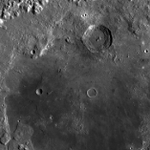
The Aristarchus Plateau is one of the Moon’s most volcanically diverse regions. A mission here could provide insights into the Moon's evolution.
The region also offers potentially useful resources and opportunities for space-weather monitoring and radiation-shielding tests.


Together, these four destinations offer unique opportunities to advance our understanding of the Moon and beyond.
Explore the report: nap.nationalacademies.org/re…

From detecting health problems earlier to monitoring symptoms, #WearableTechnology could play an important role in improving diagnosis.
Join us on October 26 to explore how wearable #DigitalHealth data can support timely and accurate diagnosis: ow.ly/ae6e50ZZwVn

National Academies retweeted
Whale falls—where whale carcasses land on the seafloor—become biodiversity hotspots. Elephant falls are less biodiverse than nearby areas, due to ammonium released by carcasses, but microbial respiration and herbivore grazing are elevated. In PNAS: ow.ly/EH5l50ZZ2v6

ALT Elephant carcass site in Kruger National Park, South Africa. CREDIT: Courtney Reed.
National Academies retweeted
Congratulations and welcome to the 100 new members elected today to the National Academy of Medicine's class of 2026!
Read the full announcement: nam.edu/classof2026
#NAMmtg #NAMedicine

From economic trends to public health, reliable #statistics help us understand the world and make informed decisions.
For #WorldStatisticsDay, explore principles and practices for keeping federal statistics accurate, trustworthy, and useful: ow.ly/EEJu50ZZoxb

Social media, gaming, and other digital technologies are a pervasive part of childhood, raising questions about how they interact with developing brains.
Explore what the latest #neuroscience research says about this relationship at our upcoming workshop: ow.ly/lh0S50ZZ8Rw
