





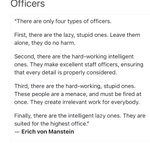


Write for talking! Great piece.

Here’s my Sea of Write blog blast from the past
Now on Substack
clare673203.substack.com/p/t…
The Reading Ape retweeted

In this week’s episode of The Amol Rajan Connection: @daisychristo on how we’re messing up Education; the danger of the Stupidogenic Society; what technology does to our minds; long-term vs working memory; and how AI affects what children should learn. Out now on YouTube, Spotify, Apple Podcasts and Amazon Music.
‘…I shall doubtless reveal an important truth to the nations. They will learn that they have in their hands the instrument of their greatness and their felicity, and that to be happy and powerful, it is only a matter of perfecting the science of education.’
(Helvétius 1773: 1,3)

Defining reading for pleasure is not easy: ubplj.org/index.php/TBJE/art…

The real reason children no longer enjoy reading.” Mary Wakefield has a theory in the latest Spectator. Instead of screen addiction, she blames school curricula which teach “to the test” rather than reading for enjoyment. Children are so busy analysing brief extracts, they can’t enjoy the book as a whole.
I read incessantly as a child, including illicitly when I was supposed to be sleeping. Not “great literature”, it was Dr Dolittle, Biggles, Bulldog Drummond, Just William, Arthur Ransome, Percy F Westerman. It would certainly have included Harry Potter if he’d been around then. I don’t believe I ever had my “comprehension” tested. I just loved reading.
Is Mary Wakefield right?
The reporting of this by the BBC has been inept. If all their reporting is so poor, how can we possibly know what is going on?

The Reading Ape retweeted

I know everyone will think today's Pisa either shows them that what they already thought is true, or that Pisa is irrelevant.
I'm in the former category.
We should be doubling down on the idea that *everyone* can be highly educated.
The Reading Ape retweeted

Coming to an INSET near you

Grit is great, but to realize your potential, you also need to get #Situated.
Pre-order SITUATED (out 9/1) and get a personalized bookplate signed by me: angeladuckworth.com/situated…
The Reading Ape retweeted
In short summary, each of which could be an essay:
Mossbourne showed me that poor kids can behave very well.
Dixons taught me that humility and purpose really matter.
Michaela taught me 'no nonsense' and that leaders must resist the fashionable.
Yes. Share’s (1995) self teaching model is clear that orthographic processing development (instant word recognition) is DEPENDENT upon phonological processing development. This might also help - thereadingape.com/single-pos…


This is serendipitous @TheReadingApe. In a recent meeting we agreed that beginning readers should use phonic knowledge to decode, but then debated what skilled readers are using, as there was a claim that skilled readers then switch to guessing. Thank you.

The Reading Ape retweeted

Huge opportunity for amazing job.
tes.com/jobs/vacancy/executi…

The Reading Ape retweeted

Only someone who sees explicit teaching every day can talk about it in the way Colin Campbell from @DoonsideTHS does.
Checkout the first in the new series of the What Works Best vodcasts in full at the link below
Spelling and grammar tests are not nearly as pointless as a comprehension tests. At least they assess the assessable- thereadingape.com/single-pos…


I have a bad feeling about this.
order-order.com/2026/07/28/e…

‘A system delivers the results it was designed to deliver…’ - William Edward’s Deming


Although a vital screening, the PSC is a low bar and based on a flawed theoretical framework- it should contain ONLY pseudowords. The threshold should be far higher. ubplj.org/index.php/TBJE/art…

Sigh. For 2026, the 'pass mark' for England's Year 1 PSC is 31 out of 40. This is the first time the expected standard has been lowered from the 32 out of 40 mark. @SWLiteracy @TheReadingApe @pastpolitics1 @tombennett71
As ever, KR nails it!

If only we had data on how well devolving education policy has gone in other areas of the UK 🧐 gov.wales/achievement-15-yea…

Sharp post AB! And to paraphrase Arfe and Dockrell - address the difficulty not the diagnosis (or label).

The EEF's new guidance on inclusive teaching is a very interesting piece of work. There is much to like, some bits to criticise, and one absolutely HUGE statement that should be getting a lot of attention.
Here are my thoughts:
- There is a lot there. Most won't read it.
- There is a heavy emphasis on explicit instruction, and the creation of simple routines and "calm classroom environments." This is what "trad" teachers have been banging on about for years, so is most welcome.
- There is very little that I can see about specific conditions/neurodevelopmental issues. If you want to know about how to support specific needs, the information isn't directly in this guide.
- This makes sense, because "While targeted interventions can help, they are most effective when they supplement – rather than replace – effective everyday teaching."
- This line is buried in one of the "myths" but is absolutely MEGA: "Strong universal provision reduces the number of pupils who require additional support..." I mean, let that sink in. I've said stuff like this before and been pilloried for it. It's a huge claim, and from what I've seen actually the most significant thing in the whole report.
- This is an important line: "Teachers should not be making assumptions about pupils’ learning rates based on their socio-economic background or SEND status." I have this conversation with people quite a lot. They say things to me like "how do your students with SEND respond to Name at End questioning?" or "how do your pupil premium students respond to your expectation that every student answers a question every lesson?" I always say the same thing, which is that the label tells me nothing, and that we need to reframe the relationship between label and issue. There is nothing causative there, it is all correlational.
- There aren't many concrete examples of good "inclusive practice" in the report itself. There is a link to other supporting resources, but you need a login for that. You can only log in with a school email account (odd choice for a research organisation), but I couldn't get it to work so 🤷
- Without concrete examples, it is almost guaranteed that people will do weird things, and cite the EEF in support.
educationendowmentfoundation…

The Reading Ape retweeted
The phonics threshold is down to 31.
And this will affect very few children indeed. Because magically very few get 31, and yet loads get 32.
We should probably reflect on what this means for validity given how it is administered.
