

Advancing Knowledge Through Global Research Insights💡#TheResearchCode
Joined September 2020
- Tweets2.1K
- Following2.2K
- Followers3.1K
- Likes709




Pinned Tweet
Why do different neurodegenerative diseases affect the same cellular transport system?
Our neurons depend on an intricate internal transport network to stay healthy and function properly. Along their long axons, essential materials such as proteins, mitochondria, vesicles and other cellular components must travel between different parts of the neuron.
But what happens when this transport system begins to fail?
Interestingly, disruptions in axonal transport have been observed in several neurological conditions, including amyotrophic lateral sclerosis (ALS), Huntington’s disease, Alzheimer’s disease and hereditary spastic paraplegia.
Although these diseases have different genetic and molecular origins, they may expose a shared vulnerability: the dependence of long-projecting neurons on efficient intracellular transport.
In her latest contribution to The Research Code, Dr. Şeyma Akarsu @sseymaakarsu explores:
🔬 Why long axons are particularly vulnerable to transport dysfunction.
🧬 How mutations affecting proteins such as spastin can disrupt axonal transport.
🧠 What experimental studies in ALS and Huntington’s disease reveal about potential therapeutic approaches.
💡 Why restoring a transport-related cellular function does not necessarily mean slowing or reversing disease progression.
The broader question is fascinating: Could protecting the cellular transport system help neurons withstand the effects of different neurodegenerative diseases?
Explore the science behind this shared neuronal vulnerability in our latest article.
#Neuroscience #Neurodegeneration #AxonalTransport #Neurobiology #AlzheimersDisease #ALS #HuntingtonsDisease #MolecularBiology #ScientificResearch #ScienceCommunication
1
2
213
🔗 Read the full article on The Research Code: theresearchcode.com/articles…
Different Diseases, Same Weak Point: Can We Target Axonal Transport?
✍️ By Dr. Şeyma Akarsu @sseymaakarsu
Different diseases, different molecular origins—but could they expose the same vulnerability in our neurons?
We welcome your thoughts and perspectives!

26
The Research Code retweeted
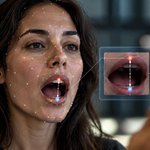
Can two points on a face tell us whether someone is really opening their mouth?
It sounds almost too simple. Yet behind this question lies an interesting intersection of computer vision, mathematics, and biometric security.
In a new article for The Research Code, Hangga explores how facial contours can be converted into coordinates, how a simple Euclidean-distance calculation can turn those coordinates into an observable signal, and how that signal can contribute to a broader face-liveness workflow.
But the mathematics is only part of the story.
A distance measurement is not the same as proof of liveness. The article also examines the effects of face scale, head pose, image quality, individual variation, thresholds, and potential replay or manipulated presentations.
The broader lesson is important: a mathematically correct measurement can still have significant limitations when applied to a real-world security problem.
Read the full article and explore how two points → one distance → one decision can become a useful example of mathematical reasoning in computer vision and security.
#ComputerVision #Mathematics #Biometrics #AI #Cybersecurity #MachineLearning #Research #ScienceCommunication
🔗 Read the full article: theresearchcode.com/articles…
Can Two Points Tell If a Face Is Real? The Mathematics Behind Open-Mouth Detection
What do you think—can simple, interpretable mathematical signals still have an important role alongside modern AI-based biometric systems?

40


The Research Code retweeted

Nuts: How much is healthy? Which ones? Raw, roasted or soaked?
Nuts are among the healthiest foods you can add to your diet. But there is a lot of confusion around them:
❓How many should you eat?
❓Are almonds better than peanuts?
❓Should you soak them overnight?
❓Are roasted nuts unhealthy?
❓Are nuts the same as dry fruits?
Let us separate science from social-media nutrition myths. Bookmark this thread for future reference, and share for wider reach.
1/n

The Research Code retweeted

Pilot's POV when taking off.
A Reminder that sun is always shining somewhere else.
The Research Code retweeted
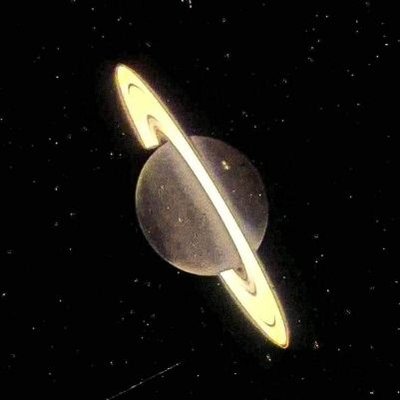
NASA has released one of the most detailed visualizations ever created of Earth’s ocean currents.
Using data from satellites and advanced ocean models, the map reveals massive rivers of moving water, swirling eddies hundreds of miles wide, and the powerful Gulf Stream carrying warm water from the Gulf of Mexico across the Atlantic.

The Research Code retweeted

For my first post, I’m sharing a letter @NVIDIA signed on why open models matter.
AI will transform every industry, power every company, and be built by every country.
Open models strengthen safety and cybersecurity, accelerate innovation and diffusion, and enable sovereignty.
The world needs both frontier closed models and frontier open models.
images.nvidia.com/pdf/Open-W…


The Research Code retweeted

JUST IN🚨: Neuroscience considers metacognition the highest form of Intelligence..... "The ability to think about your own thinking."


🌧️ Why rain feels so good (the science behind it)
Ever stepped outside after rain or stood near a waterfall and felt instantly calmer and happier? There’s real physics (and a bit of biology) behind that feeling.
The Lenard Effect:
When water droplets splash, collide, or break apart — whether it’s rain hitting the ground, waves crashing, or water tumbling down a waterfall — they create "negative ions" in the air.
This is called the "Lenard effect" (discovered in 1892). The splashing separates electrical charges, releasing clusters of negatively charged oxygen molecules into the surrounding air.
These negative ions are naturally abundant near:
- Waterfalls
- Beaches and breaking waves
- Rivers and moving water
- Even regular rainfall (especially when drops hit surfaces)
Do negative ions actually affect mood?
Research suggests they can. A 2013 meta-analysis found that exposure to high levels of negative ions was linked to reduced symptoms of depression — particularly in people with seasonal affective disorder. The effect was stronger with higher concentrations of ions.
While the exact mechanism isn’t fully settled, one popular explanation (popularized in certain health communities) involves the lungs. Negative ions may support the breakdown of serotonin there, which some researchers link to feelings of calm and reduced stress.
Even without perfect consensus on the “why,” people consistently report feeling refreshed in these high-negative-ion environments. Part of it is probably the ions, part is the fresh air, cooler temperatures, and the simple joy of being in nature.
Why do kids (and many adults) love getting caught in the rain?
It’s not just “because negative ions.” Rain is:
- Sensory-rich (sound, touch, smell)
- Novel and playful
- Often cooling on a warm day
The combination of the physical sensation + any mood-lifting effects from the ions can make it genuinely uplifting.
Want to try it?
Next time it rains:
- Step outside for a few minutes
- Feel the drops on your skin or hands
- Or just open a window and breathe the post-rain air
You don’t need to get completely soaked — even brief exposure to natural negative ions can feel surprisingly good.
Nature has been giving us this free “mood boost” for millions of years. Sometimes the simplest things really are backed by science. 🌿
(Pro tip: Waterfalls are basically negative-ion factories — if you ever get the chance to stand near one, do it.)

3
173
The Research Code retweeted

🚨 Scientists Just Discovered a Hidden Role for Ovaries After Menopause
What if ovaries don't actually "shut down" after menopause?
New research suggests they may switch from reproduction to supporting the immune system. Scientists found that postmenopausal ovaries become active with immune cells and may influence aging, inflammation, and overall health. It's a surprising discovery that's changing how researchers think about menopause.
Source:
Science. After menopause, ovaries may transform into organs with immune powers.

ALT 🚨 Scientists Just Discovered a Hidden Role for Ovaries After Menopause What if ovaries don't actually "shut down" after menopause? New research suggests they may switch from reproduction to supporting the immune system. Scientists found that postmenopausal ovaries become active with immune cells and may influence aging, inflammation, and overall health. It's a surprising discovery that's changing how researchers think about menopause. Source: Science. After menopause, ovaries may transform into organs with immune powers.
You’re not separate from everything. You’re just a small, temporary piece of this vast cosmos. Your life is short and you can only be in one place at a time, but you’re still connected to the whole.
A beautiful reminder to zoom out.

“A human being is a part of the whole, called by us ‘Universe,’ a part limited in time and space."
- Albert Einstein
1
120