

Exploring decision-making biases in VC & entrepreneurship.
Austin, TX
Joined February 2018
- Tweets3.2K
- Following391
- Followers525
- Likes1.1K






Bad decisions often come from our lack of insight into our own decision-making process, and our tendency to extract too much/too little information from our observations.
16
Aram Attar retweeted

You work your ass off solving really hard problems day after day for decades, and this is what you get: anyone could have done it.
As an investor, I can tell you the limiting factor isn't investment. It's founder ability.

Great leaders today understand that their teams have limited bandwidth and that their decisions are not always consciously processed.
They design and encourage choice environments that take bounded rationality into account and optimize decision outcomes.
28
@HowardMarksBook (Oaktree): An 80% chance of being right is not certainty. Betting as though it is can get you into serious trouble.
Source: My First Million
21


Aram Attar retweeted

such a fun time!
Martin Tobias (Incisive Ventures): Investing in 6 Unicorns, Raising A Fund II, And Selecting Founders At The Poker Table thevcfactory.com/martin-tobi… via @@TheVCFactory

Good decisions happen when we pay attention and correct biases at each step of the process:
1️⃣ Judgment: how we predict outcomes from possible choices
2️⃣ Preference: how we weigh those outcomes
3️⃣ Choice: how we combine judgment and preferences to reach a decision
Decision-making skills can improve with practice, clear feedback, and appropriate training.
29
Correct.
The post cited shows ignorance of base rates and confusion of causality & correlation to a degree it’s frankly embarrassing to display publicly.

Let's not glorify childhood trauma. What people make of their circumstances, good or bad, is what makes someone go the distance, not the trauma itself.
We **should** be talking more about locus of control because I think all great founders have that and it can be manifest in different upbringings and experiences.
22


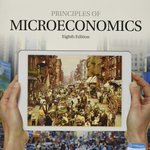
This is one of the most widely used economics textbooks, and yet one of its central tenets is repeatedly ignored by top decision-makers.
N. Gregory Mankiw, Professor of Economics at @Harvard, prescribes sunk costs should be ignored when decision-makers ponder economic decisions.
Yet many top execs, entrepreneurs, and VCs fall prey to sunk cost bias, escalating commitment to a failing course of action instead of taking the loss.
We seem to be naturally drawn to salvage whatever time, money, or commitment we’ve put in, even if doing so leads to a poor decision.
“Sunk cost bias is one of the biggest decision traps in organizations, across sectors.”
— @JenniferLerner, @Kennedy_School

1
37


@HowardMarksBook (Oaktree): Choose work that uses your strengths, avoids your weaknesses, and makes you happy.
Source: My First Million
19
Aram Attar retweeted
It is an uncomfortable truth that 70% of pre-seed funded startups never raise another dollar.
Seneca: we are dying every day, little by little.
So is your company. Quietly. On a Tuesday. While you polish the deck.
Memento mori isn’t morbid. It’s runway math.
The difference between the risks we perceive and reality is often due to one or several of these mental shortcuts we use to understand the world:
- What's easy to imagine or remember (availability heuristic)
- What can be seen or easily predicted (certainty heuristic)
- How much we feel we're in control (controllability heuristic)
For example, traveling by car can seem safer than by plane: we're behind the wheel (control) and we all have in our minds images of terrible plane crashes (availability).
Yet, far more people die in road crashes in the US than in commercial aviation (in the US, the death rate per passenger-mile is about 1,200 times as high for passenger vehicles as for scheduled airlines).
Taking base rates into account and, more generally, pausing to examine our first impressions can help us make better decisions.
17
People are more afraid of shark attacks than fireworks, even though the latter kill 11x more.
That’s partly because shark attacks are more often portrayed in the media and are easy to imagine, creating vividness.
What’s available is not necessarily more likely. Taking into account base rates can help reduce such biases.
20
Steve Jobs: The world you inherited can be changed. You can take an active part in shaping it.
Source: BarrancoStudio
28