

The Campaign for Accuracy in Public Health Research is an initiative to promote credible, unbiased & transparent science as the basis of public policy decisions
Joined October 2016
- Tweets1.2K
- Following5.7K
- Followers5.4K
- Likes18






The IARC carcinogenicity classification for Toluene Diisocyanate is based on an unrealistic exposure scenario and is not reflective of scientific consensus: ow.ly/hbzh30m19wq
IARC frequently ignores the professional conclusions of well-regarded scientists. Read more: ow.ly/jUDD30m19tC

World regulatory bodies have evaluated #glyphosate and agree that it is safe. Learn more: ow.ly/4E2y30m19s9

Learn how the latest ruling on coffee shows the widespread impact that IARC’s Monographs have on both policy and American consumers: ow.ly/OpUB30m19qP

Relying on a handful of isolated findings is not how scientists consider the “weight of the evidence.” Learn more: ow.ly/dZW830m19p1

Studies of cell phones have consistently demonstrated that radiofrequency does not pose a health risk. Learn more: ow.ly/wzId30m19lX

IARC’s 25 member states each pay between $750,000 and $1.5 million a year. Read more: ow.ly/NFek30m19kA

IARC’s treatment of coffee provides another example of the urgent need to reform both the agency’s Monographs Program and its processes: ow.ly/Jocu30m19jh

There is no convincing scientific evidence that radiofrequency radiation causes any adverse health effects, especially at levels emitted by devices such as cell phones: ow.ly/hWFY30m19hv

Despite IARC’s reclassification of coffee from “probably carcinogenic to humans” to “unclassifiable as to carcinogenicity to humans,” coffee is under fire by CA regulators as a result the organization’s controversial classification system: ow.ly/IFyd30m19fU

Though IARC uses the word “risk” in its monograph titles, it does not consider the actual risk of developing cancer based on exposure under real world circumstances: ow.ly/hEKE30m19dx

IARC goes to great lengths to keep its Monographs process and the justifications for its conclusions a secret: ow.ly/dJxy30m19bN

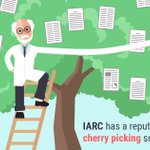
IARC has developed a reputation for cherry picking studies when evaluating a potential cancer hazard: ow.ly/Jeut30m19af

IARC must make key improvements to its Monographs Program to enhance the credibility and utility of its findings and prevent further public misunderstanding of its conclusions: ow.ly/Xcmq30m1991

Monograph participants are required to sign a confidentiality agreement promising not to disclose information about IARC’s deliberations: ow.ly/nw4i30m197D

The IARC carcinogenicity classification for Toluene Diisocyanateis based solely on one conceptually and technically flawed study performed over 30 years ago by the National Toxicology Program: ow.ly/xGrs30m196y
IARC’s identification of substances as carcinogens must no longer ignore the essential elements of dose and exposure: ow.ly/HJvf30m195c

IARC’s classification of radiofrequency from cell phones as “possibly carcinogenic” is a prime example of the agency’s outdated and faulty process: ow.ly/ibqQ30m193B

Hazard and risk are often used interchangeably, but there is a significant and meaningful difference between the two terms: ow.ly/tx7330m190y

IARC activities are not funded by WHO, but by regular budget contributions paid by its 25 participating states: ow.ly/Z1gm30m18Yz
