

History writer, medievalist, blogger, atheist, sceptic and expatriate Tasmanian. https://xitter.cf/t.co/bsQB7o1C3Q
Sydney, New South Wales
Joined May 2012
- Tweets57.8K
- Following156
- Followers10.9K
- Likes9.5K






Pinned Tweet
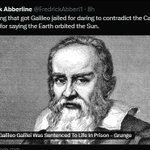
Consummatum est! Ten years in the planning and after over twenty years of reading and at least one year of writing, Galileo - History and Myth is complete.
historyforatheists.com/2026/…

History for Atheists now has a full site index. Thanks to the wonders of AI, I've created a searchable index covering 108 articles, with 434 headings and around 2,884 references. It's not dynamic, so if I do add any further articles I'll have to ...
historyforatheists.com/site-…


Tim O'Neill retweeted

Chris Wickham has passed away
Chris Wickham, a productive and highly regarded British historian of the Middle Ages, has passed away today.
These are some of his key works.

The full article is 25,000 words, so I've added a new page to host it permanently, along with a summary "TLDR" version. There, each of the five myths I address gets a 100 word precis and then a 1000 word summary.
historyforatheists.com/galil…

Preach!

So with the warning to look away from this one if you've yet to sit down for dinner (even you, that one single anonymous benefactor who X analytics suggests reads all of my posts!):
Next to the myth that Medieval Europeans never bathed, the belief that they never used toilets either, preferring simply to soil themselves or throw their waste out into the street, is perhaps pop history's equivalent of the proverbial bad penny - in that no matter how hard you tried to be rid of it, it keeps cropping up everywhere. Often in greater numbers, too.
Now while I know full well a post that statistically only one person will read will do absolutely nothing to dent the onslaught of Medieval bathroom deniers - since I'm a sucker for punishment and a hardcore ye olde toilet truther, I thought I'd do my bit for the war effort and assure you: contrary to popular belief, Medieval Europeans (in my case, the English specifically) in fact cared a great deal about where they did their business.
After all, when even a member of the king's household was in 1307 found relieving himself on the walls of a London back alley, far from the incident being shrugged off as "the done thing", he was in fact jostled and shamed by passers by. Somewhat more tragically, when later in 1339 a child beggar was killed by a passing cart whilst engaging in similar outdoor toileting, the official account of the incident specifically labelled him "Little more than a savage" over the act - and you really can't get a firmer condemnation of public urination than that.
The real tragic irony of it all, of course, is that the poor kid wouldn't have to have gone far at all to find a proper place to spend a penny. By the 15th Century, after all, some of the busiest parts of London already boasted over a dozen public latrines, one of which (the famous "Whittington’s Longhouse") catered for over a 100 people, whilst others were flushed by a private running water supply even back then!
Indeed, building public toilets ("Houses of easement", in the wonderful lingo of the day) was both increasingly seen as an important official duty, as a well as a sound philanthropic venture for the well to do. 'High end' facilities such as those built by the Wardens of London over London Bridge in the 1380s rubbed shoulders with less fancy, but still serviceable, stone or even tile lined privies built near churches and other places of mass attendance.
Nor was this just a preoccupation of Londoners! Public conveniences appear in almost all later Medieval English towns and cities, most often built over bridges such as the one crossing the Ouse in York, so that the waste could be carried as far away from the urban centre as possible. Not to be outdone, the treasurers of Norwich in the 1450s spent good money on purpose built guttering for their local toilets - while at roughly the same time, the waterfront of Hull carried no less than 5 facilities, all maintained by the public purse.
That's not even to mention the abundance of private privies increasingly found across Medieval England - but as there's only so many times you can talk about toilets in polite society without being asked firmly to leave, here's the source of today's information, which much like the Middle Ages is far cleaner than you might think!:
"Urban bodies", by Carole Rawcliffe - pages 140 to 142!

When I was hiking in the US a few years ago, I found the forests there eerily silent. Maybe it was just the regions I was in (California, Montana, Wyoming). Or maybe I'm used to hiking in Tasmania, where the birdsong is constant, varied, multilayered and beautiful.


Really @Jefiner1? Would that be this Giordano Bruno (below)? How did the execution of that theological eccentric, mystic and magician affect science, exactly? historyforatheists.com/2017/…


Oh no! It happened again!


Well, @_Rob_Ware, it seems your PHON/cooker mate doesn't like being shown he's wrong and has bravely blocked me. So I'll give you your history lesson here. But first: here's how analogies work. No, they don't work by corresponding on every point, just on the key one. So it's ...


