

Secretariat UK All-Party Parliamentary Group on NK; ODUK Spokesperson for NK; ACN Ambassador; Political Candidate; Public Speaker;
United kingdom
Joined February 2021
- Tweets2.2K
- Following1.2K
- Followers2.1K
- Likes14.2K








Pinned Tweet
My wife and I had the privilege of attending the Buckingham Palace Garden Party, having been invited by @RoyalFamily. Great to see The Prince and Princess of Wales, The Duke and Duchess of Edinburgh & Zara Tindall. Honour to be among many remarkable people serving our nation🇬🇧🙏


Timothy Cho retweeted

Grateful to our Co-Chair Lord Alton of Liverpool @DavidAltonHL for raising this important question with the Minister for the Indo-Pacific regarding religious persecution in #NorthKorea.
NK has ranked No. 1 on Open Doors World Watch List for persecuting Christians for many years.


Privileged to speak at @Eton_College last night, a full chamber of students gathered to hear challenging stories of Christian persecution, human rights abuses, the pursuit of freedom & personal journeys of faith - issues that remain deeply concerning in NK and many other nations.


Timothy Cho retweeted

On Friday evening it was a privilege to host @Timothycho08 - and hear hugely moving testimony of his escape from persecution and coming to faith in Christ.

A great evening at Parr Street Church Kendal, with @timfarron MP and an @APPGNK2024 member. A thoughtful discussion on Christian persecution, political situations & the security challenges posed by NK regime. Also reflected on the freedoms we often take for granted in the West.


A great evening at Parr Street Church Kendal, with @timfarron MP and an @APPGNK2024 member. A thoughtful discussion on Christian persecution, political situations & the security challenges posed by NK regime. Also reflected on the freedoms we often take for granted in the West.
Timothy Cho retweeted

Parliamentarians can hold different views but remain close friends. Here, five of us - Conservative, Labour & Independent - were together on a charity walk across Morecambe Bay. What united us was a profound belief in the supreme human right, the sanctity of and right to life. Two have now been murdered, two have died. I count myself privileged to have been a friend of Sir David Amess, Ann Widdecombe, Ken Hargreaves and Jim Dobbin. All pictured here. All so greatly missed. @KatieAmess @UKParliament @CommonsSpeaker @EdwardLeighGB


Timothy Cho retweeted
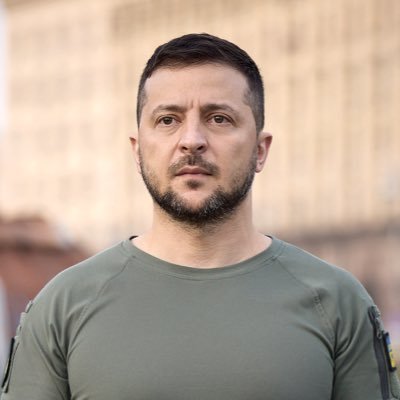
I thank His Majesty King Charles III for the audience. It is important for me to have the opportunity to personally thank him for his unwavering support for Ukraine. We appreciate all the assistance provided by the United Kingdom.
🇺🇦 🇬🇧
@RoyalFamily
Pictures are by Aaron Chown from Press Association.

Timothy Cho retweeted
Our🇬🇧 #APPGNK members, Field Marshal Lord Houghton and @DavidAltonHL, met with a delegation from the UN Command Korea, led by Deputy Commander Lt. Gen. Scott Winters, to highlight the importance role the Command plays in maintaining peace and security in the region. Thank you🙏


Timothy Cho retweeted
On behalf of All Party Parliamentary Group on North Korea @APPGNK2024 I joined my colleague, Field Marshall the Lord Houghton of Richmond in meeting a delegation from the UN Command Korea led by Deputy Commander, Lt. Gen. Scott Winters, who highlighted the important role of the UN Command in maintaining peace and security in South Korea and on the Korean Peninsula @Ed_Miliband @TomTugendhat @EdwardJDavey @UN


Timothy Cho retweeted
Abhorrent public executions are used in dictatorships like Iran, Afghanistan, and North Korea.
We might not be surprised by the savagery of the Mullahs or by dictatorships which routinely resort to barbarism.
But such macabre and grotesque spectacles should have no place in a democracy like the United States.
In 1849 Charles Dickens wrote to The Times after witnessing a public execution and said “I stand astounded and appalled by the wickedness it exhibits.”
Britain banned public executions in 1868. The death penalty has been banned in all cases since 1998.
In the case of Iran, tomorrow’s “No to Execution Tuesdays”campaign will be marked by political prisoners across 66 Iranian prisons who have staged weekly hunger strikes demanding the abolition of the death penalty.
Gina Romero, UN Special Rapporteur on the rights to freedom of peaceful assembly and of association, will join tomorrow's hunger strike campaign and has shared this video:
xitter.cf/Ginitastar/status/2109…
If we truly believe in the Greek, Roman, Judaea-Christian values which have shaped our civilisation, we must be clear in spelling out what distinguishes us from barbarism- public executions being a very clear example.

#Iran On Tuesday the 13th, I am joining the 'No Execution Tuesdays' hunger strike.
The death penalty is being used against people for exercising their rights to freedom of assembly, association, and expression, as well as their political rights. 1/
Timothy Cho retweeted

It is sickening that the USA is now lifting sanctions on Russian fuel, and transparently ridiculous to blame Ukraine for the spike in prices that obviously began with the closure of the Strait of Hormuz. Putin is murdering innocent Ukrainian civilians every day. The Ukrainians are fighting for their lives. And yet the White House is apparently determined to force American drivers to bankroll Putin’s slaughter. It won’t work and I doubt it will make much difference to the price of fuel.
If we want Russian oil and gas back on the world market then let’s end this war - with a free, sovereign and independent Ukraine.
Timothy Cho retweeted
Steffen Schwarzkopf:@S_Schwarzkopf writing in The Telegraph spells out the atrocities being committed by Putin in the Ukraine:
“`That leaves Putin with only one strategy: scorched earth. He cannot capture the Donetsk region, but he can destroy it. House by house, neighbourhood by neighbourhood.’ The Russians employed the same strategy in nearby Bakhmut, then under the command of Yevgeny Prigozhin, the head of the Wagner Group. The city, once home to 80,000 people, was decimated before it fell in May 2023…Normal life in Kramatorsk has become impossible. Businesses have shut down, petrol stations have been destroyed and electricity and water supplies have been severely disrupted. Every trip to one of the few supermarkets still open, albeit barricaded, could be someone’s last. There is a constant buzz of Russian drones. Those residents who remain – nobody can say with any certainty how many there are, perhaps 25,000, perhaps 30,000 – know that every time they step outside, a Russian drone operator sitting in front of a screen a few miles away could decide whether they live or die. No house, no building, is safe anymore.”


Timothy Cho retweeted

President Trump’s decision to lift sanctions on Russia to facilitate diesel sales is deeply troubling. Putin launched a brutal war against Ukraine that has already left an estimated 1.5 million people killed or wounded. Even now, Russian missiles rain down on families in Kyiv and other Ukrainian cities.
telegraph.co.uk/us/news/2026…
To reward Putin with renewed trade while this barbarity continues sends entirely the wrong message. Aggression must carry consequences, not commercial rewards.
As Chair of the APPG on Magnitsky Sanctions @UKMagnitsky, I believe we must be unequivocal: Putin should face greater pressure for his crimes, not be handed an economic lifeline.

Timothy Cho retweeted
Urgent international action is required to stop Ethiopia’s internal war morphing into an interstate war with Eritrea.
Putin's illegal use of lethal force in Ukraine to try and redraw state boundaries and seize sovereign territory has unleased comparable conflicts - the latest of which is in the Horn of Africa.
A cocktail of dangerous and competing claims has replaced international law.
The UN, African Union, State parties and regional players should heed calls for an immediate ceasefire before this surges into another major war; for international monitors to assess and report on hostilities and to mediate and broker new agreements on maritime access and territorial disputes; and above all to protect the civilian populations from a repeat of barbaric atrocities.
@Ed_Miliband @TomTugendhat
Tigray conflict: Eritrean troops move deep into Ethiopia. This gathering storm threatens more lives in a region covered in blood and suffering. Where is international mediation?
October 7 - “Eritrean soldiers have crossed into northern Ethiopia heading towards an area where clashes have been taking place between national army troops and regional forces, residents in the Tigrayan town of Adigrat”BBC Report:
bbc.co.uk/news/articles/ckvg…

Timothy Cho retweeted
Not surprising to see the two isolated and dangerous regimes of North Korea and Afghanistan now proudly shaking hands and publicly demonstrating their collaboration in support of Putin’s illegal war against Ukraine. Both regimes have some of the worst records of human rights violations against their own people.


Timothy Cho retweeted
Important testimony on The Long Arm of China and North Korea's Repression By @VictorDCha
Victor Cha recently testified before the US House Foreign Affairs East Asia and Pacific Subcommittee. In an important statement he describes how China facilitates North Korea's human rights abuses on 3 fronts: 1.enabling abuses of North Koreans at the border; 2. driving North Korean coerced labour into global supply chains, and 3. cooperating with North Korea on human rights abuses tied to the Ukraine war. @ipacglobal @iguangcheng @BobFu4China @JubileeC @TomTugendhat @timfarron @EdwardJDavey @wesstreeting @UNHumanRights @volker_turk @SecRubio @VP @tozzi_piero @APPGNK2024
---------
Chairperson Kim, Ranking Member Bera, and distinguished members of the committee, it is an honour to appear before on the topic of China and North Korea human rights abuses and transnational repression.
I will speak on three perspectives of this topic. The first is how China facilitates abuses of North Koreans on the border. The second relates to the Chinese business drivers of North Korea coerced labor entering global supply chains. And the third relates to China-North Korea cooperation in perpetrating human rights abuses derivative of the Ukraine war.
China’s Role in North Korean Human Rights Abuses
China facilitates North Korea’s human rights abuses in several ways. One, China traffics North Koreans seeking escape, refuge, or work across the Chinese border. Two, China forcibly repatriates North Korean refugees. Third, Beijing co-opts entities within the United Nations to block progress on initiatives advocating for North Korean human rights.
On the coercive expulsion of political refugees or refoulement, China has been actively engaged in sweeping up and forcibly repatriating North Koreans who enter its territory, pursuant to a 1986 bilateral agreement with Pyongyang. Beijing’s longstanding policy is to deny refugee status to North Koreans.
Since the late 1990s, Beijing has forcibly returned tens of thousands of refugees to North Korea, and the practice has not slowed: Human Rights Watch has documented at least 1,076 forcible returns since 2020, including at least 406 between January 2024 and September 2025. Their only crime was to have sought a better life outside of the repressive country, and many seek to live across the border in South Korea, one of Asia’s most vibrant and prosperous democracies.
The overwhelming majority of North Korean refugees exit through China. Numbers are very hard to come by, since no organization is allowed to conduct a systematic survey, and they have become harder still: data is no longer available from the UNHCR regarding North Koreans in China. When I wrote about this in 2012 in The Impossible State, the Chinese official estimate was about 10,000; but activists, press, and other governments put the number as high as 100,000 to 300,000; and the United Nations put it between 30,000 and 50,000. I cannot give a comparable range today. North Korea, of course, does not report any migration statistics. Beijing therefore decides what happens to almost every North Korean who gets out. The majority of these North Korean migrants are women, as high as 75 to 80 percent in 2012, and the share has risen since: in 2020 women outnumbered men 845 to 202, and fifty-nine of the sixty-three who reached South Korea in the first half of 2026 were women. That imbalance is not incidental. Since 2003 the number of female refugees far outnumbers males due to Chinese practices (targeting males) and human trafficking along the border (targeting females).
About 20,000 North Koreans had exited through China and found permanent settlement in third countries by 2012; the cumulative figure for South Korea alone is now about 34,600. The overwhelming majority still end up there. The United States, under its resettlement program, had taken in 96 by 2010 and roughly 200 over two decades, but admissions dwindled to zero in 2019 and the North Korean Human Rights Act still awaits reauthorization. Only about 14 percent seek to settle in China, because of the fear of refoulement. Most North Korean defectors come from North Hamgyŏng Province, which is one of the poorest parts of the country. They cross the porous Sino–North Korean border into Jilin Province’s Yanbian autonomous prefecture, a region of 2 million people, the largest concentration of ethnic Koreans in China. Some escapees find work in Jilin, usually menial labor jobs under poor conditions, but still better than what was available in North Korea. Others, mostly women, marry Chinese farmers or laborers as a way to start a new life.
As a signatory to the 1951 U.N. Refugee Convention and the 1967 Protocol, China is obligated to recognize a political refugee who flees his country because of fear of political persecution. Parties to the convention, including China, have an obligation to the principle of non-refoulement, meaning that “No contracting State shall expel or return (“refouler”) a refugee in any manner whatsoever to the frontiers of territories where his life or freedom would be threatened on account of his race, religion, nationality, membership of a particular social group or political opinion.”
China has consistently refused to recognize North Koreans as refugees, and instead classifies them as illegal economic migrants that require deportation. Beijing is supposed to allow the UNHCR access to these migrants to determine whether they qualify for refugee status. The UNHCR established an office in China in 1995 in order to handle refugee flows from Vietnam, but the office has been denied access to evaluate North Korean cases. That denial is now total: North Koreans in China have not had access to UNHCR staff at the border since 1999 and have not had access to UNHCR’s office in Beijing since 2008.
In a recent instance in 2023, the U.N. secretary general chose to refer the matter of an estimated 2,000 North Korean defectors being held in Chinese detention centers to the U.N.’s Office of the High Commissioner for Human Rights (OHCHR) instead of UNHCR, presumably because of China’s sizeable pledges of funds for refugee programs worldwide, that has made UNHCR hesitant to pressure Beijing. Those detainees, as of 2023, had no access to UNHCR staff or foreign embassies in Beijing. China’s repatriation policy is contrary to its obligations as a signatory to the International Refugee Convention. In addition, it refuses to allow the office of the U.N. High Commissioner on Refugees to interview or assist North Koreans who are hiding in China. Beijing likes to defend that policy by comparing it with the U.S. policy on Mexicans who are in this country illegally. This is absurd because Mexico doesn’t imprison, torture, or execute citizens whom the United States sends back.
From about 2001, China started to crack down on these cases more severely. The police increased the tempo of border patrols, repatriation, and security around foreign diplomatic compounds. Chinese living in Yanbian are offered rewards of $500 for turning in any North Korean migrants and are fined large sums ($3,600) if they are caught aiding any refugees, and periodic sweeps are conducted by police agencies to round up North Koreans for deportation. What follows is not unknown to anyone involved. Once refouled, these individuals are thrown into labor/interrogation prisons along the Sino–North Korean border, where refoulees are asked four questions: why did you leave, did you contact any South Koreans, were you given a Bible, and did you go to a church.
Those found to have met South Koreans or missionaries are harshly tortured, as part of “reeducation.” All women discovered to be pregnant are forced to have abortions; if Beijing repatriates a woman who is pregnant, North Korea either forces her to undergo an abortion, or, if the baby is allowed to be born, it is killed. And the practice is kept deliberately out of sight. When the Chinese forcibly repatriate, they send the North Koreans back on buses with curtained windows, to ensure anonymity, because nameless and faceless statistics are much less likely to raise international ire.
Supply Chains and Human Rights Abuses
Beyond China’s forced repatriation of North Korean refugees, the collusion between China and North Korea on transnational repression is also embedded in their supply chains.
An ongoing CSIS project examining the hidden links between North Korean forced labor and international supply chains points to a systematic division of labor between North Korean state entities and Chinese entities operating in North Korea’s special economic zones (SEZs).
What we are discovering, for example, is that a factory operating in these SEZs may be formally registered under a North Korean trading company, but its actual operations function as DPRK-PRC joint venture. The Chinese side often exercises control over all of the funding, raw materials, production equipment, quality standards, and final export destinations, while the North Korean state is responsible for mobilizing workers and enforcing control and surveillance.
The cost of this partnership is overwhelmingly borne by the North Koreans whose forced labor sustains it. CSIS’ ongoing study has found that inmates held in detention facilities and political prison camps throughout the country are actively mobilized by state security agencies for labor-intensive manufacturing work tied to production orders from Chinese commercial entities.
For inmates in these facilities, a typical workday can begin as early as 5:30 AM and continue until dark, with production operating seven days a week, 365 days a year. When production demands are high, some inmates reportedly continue processing goods through the night using battery-powered flashlights strapped to their heads. Within these facilities, rest is not recognized as a fundamental human right, and food is used as an instrument of coercion, with failure to meet production quotas resulting in meals being reduced to half-rations or withheld entirely. There are no cash wages for the workers.
These human rights abuses are not incidental; they help sustain a commercial partnership that also reinforces the North Korean regime’s system of state control. The same Chinese businesses that provide capital, raw materials, and equipment for primary processing in North Korea also eventually enable these goods to move out of North Korea into Chinese supply chains after final processing and repackaging.
These products range from false eyelashes and wigs to garments and leather goods. They enter global supply chains under Chinese brands or with “Made in China” labels. The multi-layered concealment process involved makes it nearly impossible to trace the North Korean origins of these goods and the human rights abuses involved in their production.
While these dynamics have long been anchored in North Korea’s economic ties with China, we are finding that they are increasingly involving Russia as well. We see this in the growing presence of Russian corporate entities and logistics brokers in the distribution networks of North Korea’s special economic zones, and in the two countries’ expanding cross-border infrastructure and logistics links.
North Korea’s Forced Labor at Yelabuga
Allow me now to talk about the link between the Ukraine war and North Korea human rights abuses.
The most significant development for North Korea coming out of the pandemic lockdown in mid-2023 has been the growing military cooperation with Russia. Russia’s dire need for munitions from North Korea reflects its growing international isolation and the state of its military industrial complex that cannot meet the needs of its own armed forces.
By March 2024 North Korea had supplied more than 10,000 containers of military equipment and munitions, which could amount to more than 3 million rounds of ammunition. By October 2024, the figure had reached 8 million rounds of 122 mm and 152mm munitions and scores of ballistic missiles. Then came North Korean soldiers in October 2024. The dispatch of North Korean troops to Russia for the war in Ukraine effectively shows that Kim Jong-un is “all in” in helping Putin win his unjust war. This also makes North Korea the most visible and committed supporter of Russia’s aggression in Europe.
By late 2025, Pyongyang was supplying as much as 50 percent of Russia’s needs for 122 mm and 152 mm ammunition. In early 2026, South Korea estimated that North Korea may have provided over 15 million rounds of artillery shells to Russia, deployed 16,000 troops to Ukraine, with reports that 30,000 to 50,000 more are expected to be deployed in the near future. In total, CSIS estimates North Korea may have profited as much as $14 billion so far from its burgeoning relationship with Russia.
Russia’s invasion of Ukraine in February 2022 created a demand for drones that Moscow could not initially meet. The Kremlin’s answer was an arrangement to manufacture the Iranian-designed Shahed on Russian soil, at Yelabuga in the Russian Republic of Tatarstan. Since late 2021 the UAV factory and associated facility area at the Yelabuga SEZ has expanded from two buildings under construction to a 17-facility complex comprising up to 116 buildings, now reportedly producing more than 5,500 units per month to support the war in Ukraine. Russia currently produces upgraded variants of the Shahed drone, redesignated as the Geran, and Ukraine’s Defence Intelligence estimates that Russia aims to produce 60,000 long-range drones and 50,000 decoys in 2026.
The workers trafficked to Yelabuga belong to three broad groups: 1) Russia’s domestic youth; 2) foreign workers; and 3) North Korean laborers.
The Alabuga Polytechnic college recruits Russian youth, some as young as 15 under a “work experience” label; they reportedly work shifts of up to 12 hours, their pay is tied to strict quotas, and they face threats of fines if they tell their families what they build. Workers come from North Korea, Africa, Latin America, South Asia, and former Soviet states, lured by fake job offers or coerced over by their governments.
The Alabuga Start program recruits foreign women ages 16 to 22 from the Global South with social-media advertising and paid influencers promising free airfare and a salary starting at over $500 a month, targeted at countries with high youth unemployment. They then learn on arrival that their job is weapons production: about 90% of foreign recruits are assigned to drone production, where they assemble airframes, handle caustic chemicals, and paint different types of drones. The company deducts costs of airfare, housing, medical care, and language classes from their pay, their passports are confiscated, and their movement is restricted, and remitting money home can be difficult because of banking sanctions. The United Nations defines human trafficking as the recruitment, transportation, transfer, harboring, or receipt of people through force, fraud, or deception, with the aim of exploiting them for profit, and the labor recruitment process for the Yelabuga drone factory meets this definition.
North Korea has underpinned the rapid growth at Yelabuga with reported recruits of up to 12,000 workers and engineers. If the foreign labor recruitment program constitutes trafficking by a Russian corporation, the North Korean arrangement is trafficking by the state. The regime is selling the labor of its citizens under a state-to-state arrangement, controlling whether they may leave and collecting most of their wages, in violation of U.N. sanctions, and pocketing the earnings. Earning roughly $2.50 an hour each, a workforce of about 12,000 North Korean laborers generates hundreds of millions a year, and the U.S. State Department has reported that the regime retains up to 90% of overseas workers’ earnings. The practice is not new to Pyongyang, which has ruthlessly and profitably exported labor for decades, to places like Chinese factories, Russian logging camps, and Gulf construction sites. What is new is the prohibition. In December 2017, UN Resolution 2397 required every U.N. member state to send North Korean workers home by December 2019. Continued trafficking to Russia by the Kim regime openly defies that obligation.
The money that North Korea receives from forced labor enables its nuclear and ballistic programs and bolsters the networks that keeps Kim Jong-un in power. The North Korean overseas labor program has more than 100,000 workers across some 40 countries, generating some $500 million a year, so disrupting the trafficking would cut into Kim’s coffers. North Korean labor also transfers technical know-how. Technicians sent to Yelabuga will return to Pyongyang with invaluable lessons from working at a mass-production drone assembly line.
If Iran supplied the original design, Russia built the plant, and North Korea contributes state-sponsored forced labor, then China, through a supply network it facilitates, provides the means for Russia to mass-produce the drones.
China’s participation exacerbates human rights abuses by enabling Russia to rapidly industrialize and scale the drone factory. China is the main supplier of dual-use components, including batteries, electronics, engines and engine parts, and navigation systems. It serves as an indirect financier, moving money to Russia through sanction-resistant payment networks. And it serves as a transit route for drone components, including Western products, which are shipped through China and Hong Kong. China has become the main supplier of the drones’ most critical subsystems: engines, navigation, and anti-jamming electronics. There has been a discernible increase in components from Chinese manufacturers, not merely Western parts routed through China, and Chinese-origin parts now account for roughly 80% of the critical electronics in Russia’s drones.
It is unclear whether China is directly financing the Yelabuga drone factories with traditional cash or monetary investments. The plant was financed by Russia, and the Deng Xiaoping logistics terminal that serves the special economic zone was funded by a Russian bank, VTB. The U.S.-China Economic and Security Review Commission documents China’s role in facilitating financial transactions that enable Russia and Iran to evade sanctions. Between 2023 and 2024, Chinese firms supplied at least $63 million in drone parts to Russia and roughly $96 million in contracts to Yelabuga; Beijing provided Russia with over $4 billion worth of dual-use equipment; and in 2024 China recorded more than $300 million a month in high-priority dual-use exports. A Shandong trading company linked to the same Russian procurement firms accounted for $6.4 million in transactions and clearances between April 2024 and January 2025.
Conclusion
Please allow me to close with two points. First, Congress needs to reauthorize the North Korea Human Rights Act, which has been languishing since September 2022. Thank you Chairperson Kim and members of this committee for all that you are doing in this Congress and in the next Congress to get this passed.
Second, thank you for providing a platform for calling for the release of Min Zin, as my colleague on this panel will talk about. No American citizen should be randomly incarcerated in China while attending an academic conference. This issue should be on the agenda of the summit between Presidents Trump and Xi later this month.


Timothy Cho retweeted
In @UKParliament I have frequently warned about the CCP’s infiltration of UK universities and their dependency on CCP regime money. I drew the attention of @BorisJohnson to his brother’s excellent report on the buying up of our universities and told @RishiSunak of the appalling treatment of non compliant academics like @MShipworth . In @HouseofCommons @MPIainDS has frequently and diligently warned of the dangers. The @HumanRightsCtte called on @DanJarvisMBE and the Starmer Government to put for the CCP regime in the top tier of the foreign influence registration scheme. It still hasn’t happened. davidalton.net/?s=+JCHR+repo…+
As today’s report in the Telegraph makes clear, this is negligent in the extreme.
My 2024 Question in @UKHouseofLords
Question by Lord Alton of Liverpool:
To ask His Majesty’s Government what assessment they have made of the extent to which the independence of the UK higher education sector has been compromised by a reliance on funding from China. (HL560). See
davidalton.net/2024/09/18/uk…
See other interventions:
davidalton.net/?s=China+and+…+
@andyburnham @KemiBadenoch @Nigel_Farage @EdwardJDavey @HelenaKennedyKC @Nus_Ghani @TomTugendhat @iguangcheng @BobFu4China Blaise Metreweli @XChiefMI6

In Vienna🇦🇹 past few days, speeches and discussions throughout the events have highlighted the crimes against humanity committed by #NorthKorean regime, as well as its exploitative relationships with 🇷🇺and🇨🇳 -countries whose regimes also suppress and persecute their own people.


Timothy Cho retweeted
Delighted that there will be a Tolkien Memorial for Poet’s Corner @wabbey Westminster Abbey @CHCStonyhurst @TolkienSociety Congratulations to all involved- especially sculptor Stephen Broadbent for a conceptually outstanding piece of work: See: url.uk.m.mimecastprotect.com…
See
xitter.cf/davidaltonhl/status/18… @Pontifex @TolkienSociety @CSLewisInst @RaymondArroyo @CharlesHMoore @timfarron


High Time That J.R.R.Tolkien Was Celebrated In Poet’s Corner of Westminster Abbey: @wabbey westminster-abbey.org davidalton.net/2020/11/12/hi…
