








Pinned Tweet
The real AI risk is not #rebellion.
It is #dependency.
#openai @steipete @sama @DarioAmodei @AnthropicAI #ClaudeCode #codex #Openclaw


Touchable AI retweeted

Peter Steinberger is joining OpenAI to drive the next generation of personal agents. He is a genius with a lot of amazing ideas about the future of very smart agents interacting with each other to do very useful things for people. We expect this will quickly become core to our product offerings.
OpenClaw will live in a foundation as an open source project that OpenAI will continue to support. The future is going to be extremely multi-agent and it's important to us to support open source as part of that.


Watch #ChatGPT4o bring a child’s imagination to life — turning simple sketches into breathtakingly realistic images. Pure magic! @sama


Inspired by @umesh_ai, here is another variation for the night time picture!


With ChatGPT-4o, you can explore different versions of the same iconic image—reimagined in marble, photo-realism, LEGO, and more. It is so addictive! @sama


🚨 THREAD ALERT!🚨
🤔 Ever wonder who told kings to “take a chill pill”? Or who figured out why apples fall instead of floating away? 🍏 Meet the #Enlightenment rebels who didn’t just think outside the box—they blew it up! 💥 These geniuses laid the groundwork for our world. Ready to dive in? 🕯️✨
1. John Locke (1632-1704)
Problem: 17th-century England was like a real-life episode of Game of Thrones, with kings getting beheaded (looking at you, Charles I), dictators running the show (hey there, Cromwell), and then more kings popping up again. The average Joe was like, “What’s going on? Who’s in charge? Do we even have rights, or are we just pawns in this crazy game?”
Locke’s Thoughts (1689):Locke couldn’t take it anymore. He stood up and said, “Alright, folks, listen up! We’ve all got these ‘natural rights’—life, liberty, and property. These aren’t gifts from the king; they’re our birthright!” And then he dropped the mic with this: “If the government isn’t protecting those rights, we have every right to kick them to the curb!” He published this radical idea in his Two Treatises of Government in 1689, and boom, it was like handing out pitchforks and torches to future revolutionaries.
Summary: Locke basically told the government, “You’re not the boss of us! We’re the bosses, and if you screw up, we’re firing you!”

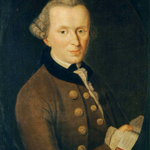
9. Immanuel Kant (1724-1804)
Problem: 18th-century Germany was a philosophical battleground. Rationalists and empiricists were duking it out, each side claiming they had the key to all knowledge. Kant watched from the sidelines and thought, “Guys, you’re both kind of missing the point.”
Kant’s Thoughts (1781):
In 1781, Kant dropped Critique of Pure Reason like a bombshell. He argued, “Sure, rationality is important, but some things—like time and space—are hardwired into our brains. You can’t just learn them from experience.” He also introduced the idea of the “categorical imperative,” which said that morality comes from your intentions, not just your actions. This made everyone sit up and rethink their philosophical stances.
Summary: Kant was the philosophical mediator who built a bridge between rationalism and empiricism, saying, “Let’s all calm down and see the bigger picture!”

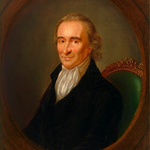
10. Thomas Paine (1737-1809)
Problem: Late 18th-century America was fed up with British rule. The colonies were like a pressure cooker about to explode. Paine thought, “If we don’t make a move now, we’ll be stuck in this oppressive mess forever.”
Paine’s Thoughts (1776):
In 1776, Thomas Paine wrote Common Sense, a pamphlet that was anything but gentle. He shouted, “Enough is enough! We Americans have the right to independence! We built this land with our own hands—why should we take orders from across the ocean?” His fiery words lit a fuse under the American Revolution, making Common Sense a bestseller and turning Paine into a revolutionary rock star.
Summary: Paine was the revolutionary coach who rallied the troops with a battle cry: “Independence or bust! No more British chains!”
#enlightenment

😏你知道是谁敢对国王说“哥们儿,消停点儿”?又是谁揭开了苹果为啥老往下掉的谜团?🍏欢迎来到 #启蒙时代!这些大佬不仅跳出了思维的框,他们干脆把那破框给炸飞了!💥想在2分钟内成为启蒙时代的活字典?认识一下那些用天才(偶尔也疯狂)想法重写规则的OG们吧!从洛克到潘恩,这些传奇人物点燃了理性的火炬,照亮了整个世界。准备好升级脑回路,来场知识爆炸了吗?一起来看看这些牛人的故事吧!💡🕯️✨
1. 约翰·洛克 (John Locke, 1632-1704)
问题: 17世纪的英国就像是权力游戏的真人秀,君主和议会斗得你死我活,结果一个国王脑袋被砍了(查理一世),接着又来了个专制的独裁者(克伦威尔),最后不得已还得复辟个国王回来。老百姓看得眼花缭乱,心里打鼓:“咱这是闹哪样?到底谁说了算?我们能不能有点自己的权利?”
洛克的思想 (1689年):
洛克老哥坐不住了,拍着脑袋想:“光看戏不行,咱得把事儿说清楚!”于是他在1689年出版了《政府论》。他说:“各位,咱们得有个‘人权套餐’,每个人生来就有生命、自由和财产的权利。这不是谁赏给你的,而是天生就有的。”更绝的是,洛克还说:“政府要是敢欺负你们,那它就得‘下线’了!”这番话在当时可真是石破天惊,直接给后来美国和法国的革命点了火。
总结: 洛克就像是给社会打了一剂清醒剂:“政府你别飘,人民才是老板!你要是敢乱来,随时炒你鱿鱼!”

9. 伊曼努尔·康德 (Immanuel Kant, 1724-1804)
问题: 18世纪的德国,理性主义和经验主义斗得不可开交,哲学家们吵得脸红脖子粗。康德冷静地看着这一切,心想:“这两边都没搞清楚关键问题啊!”
康德的思想 (1781年):
康德在1781年出版了《纯粹理性批判》,他一针见血地指出:“理性固然重要,但有些东西,比如时间和空间,是先天存在的,不靠经验也能理解。”他还提出了“定言令式”,强调道德行为的动机比结果更重要。这一理论让所有哲学家都刮目相看,康德的名字一下子响彻整个哲学界。
总结: 康德就像个“哲学调解员”,他为理性和经验搭了座桥:“别吵了,这事儿得从头说!”

