

We are driven by pushing the boundaries in Deep Learning, through our open-source projects and user-friendly tools 🔥
Joined November 2023
- Tweets114
- Following15
- Followers527
- Likes35



Tracel AI retweeted

Burn v0.22.0 is out
> This release removes backend generics from models/tensors (device selects runtime), adds LoRA/QLoRA, multi-optimizers, graph capture, and faster rebuilds.

ALT Image: Burn v0.22.0 is out > This release removes backend generics from models/tensors (device selects runtime), adds LoRA/QLoRA, multi-optimizers, graph capture, and faster rebuilds.
Tracel AI retweeted

Burn 0.22 just shipped. The deep learning framework written in Rust got significantly faster to build, train, and deploy. 🦀
The headline change: backend generics are gone from user-facing code.
Before:
pub struct Model<B: Backend> { linear: Linear<B> }
After:
pub struct Model { linear: Linear }
The backend is now selected through the device, not wired through every type. This breaks the compilation dependency chain that previously propagated through the entire application. Real measured rebuild times:
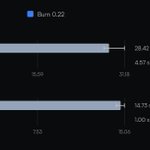
→ CNN project: 28.42s → 4.57s (6.2x faster)
→ Transformer project: 14.73s → 1.00s (14.7x faster)
That's not a microbenchmark, those are real model-edit rebuilds on release builds.
Training performance on CUDA also improved significantly:
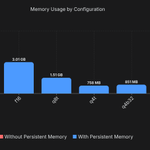
→ CNN: 80% higher throughput, 49% less peak VRAM (956 MiB → 486 MiB)
→ Transformer: 3.6% faster, 18% less VRAM
The VRAM reduction comes from adaptive memory pools that tune allocation sizes based on workload statistics, no manual configuration needed.
What else is in 0.22:
LoRA and QLoRA fine-tuning : attach low-rank adapters to frozen base weights, with per-parameter-group optimizer config. QLoRA keeps base weights quantized to reduce storage.
ONNX export : export a Burn model to ONNX with one call. Early stage, limited operator coverage, but the direction is there.
Remote compute via Iroh : run inference and training on another machine's GPU. Peer-to-peer, encrypted, authenticated. Repeated graph sequences are sent once and replayed by ID.
CubeCL Environment : ship pre-warmed compilation and autotuning caches with your application. Works across native, WASM, and no_std targets.
Graph capture and replay on CUDA and HIP : reuse kernel launch sequences without repeating launch preparation.
NDArray and LibTorch backends are deprecated. Candle is removed. Requires Rust 1.95+.
The team also hints at a native AI engine (LLM inference server + chat app + OpenAI-compatible API, all in Rust) shipping soon on top of Burn. Worth watching.
🔗 tracel.ai/blog/release-0.22.…
#RustLang #MachineLearning #DeepLearning #OpenSource #GPU


Tracel AI retweeted
Building on AMD made our CUDA side more reliable. I'd use nothing else than CubeCL to program AMD GPUs today.

Also in 0.22: up to 49% less training memory, 1.8× faster CNN training steps, LoRA and QLoRA, remote GPUs and ONNX export.
Everything in the post: tracel.ai/blog/release-0.22.…
🔥 Burn 0.21.0 Release: Up to 8× Lower Framework Overhead, Differentiable Collectives and Improved Kernels
All the details at burn.dev/blog/release-0.21.0…
We redesigned our distributed stack around differentiable collectives. Better autotuning and validation improve kernel selection, burn.toml configures internals without recompilation, and burn-dispatch simplifies backend selection while reducing overhead and compile times.
Tracel AI retweeted

CUDA, CUDA, CUDA... What if there was a different, open way to write highly-efficient GPU kernels?
This is the big swing that @Tracel_AI is taking. And, guess what... Rust is key to their approach. Check out our podcast with Tracel CEO Nathaniel Simard (linked below):
🔥 Burn 0.20.0 is officially here!
This release marks a massive architectural leap with the birth of CubeK, SOTA CPU performance, and support for the latest Blackwell GPUs.
Details: burn.dev/blog/release-0.20.0
Tracel AI retweeted

🦀New video!
At Rustconf 2025 in Seattle, I had a quick chat with Nathaniel Simard - Founder & CEO of Tracel Technologies, the first AI full-stack solution written in Rust.
@nath_simard @Tracel_AI

🔥 End of the Year Review and Burn Central Announcement
This year, we focused on the systematic consolidation of Burn and CubeCL. And now we are introducing Burn Central, a cloud platform designed to streamline the training and deployment of Burn models. youtu.be/lN6xS4l6DQE
Our hardware support has matured significantly. We’ve introduced a new MLIR/CPU compiler alongside a high-performance Rust runtime and a native Metal compiler.
This ensures Burn runs natively across all major GPU vendors and CPU architectures.
Our goal is to build a mature Rust ecosystem for AI and HPC and we look forward to 2026.
For more info, read the full post here: burn.dev/blog/burn-end-of-th…
We got our matrix-multiplication kernels optimized for consumer Blackwell GPUs, but profiling can be tricky in surprising ways.
Here's everything we learned:
burn.dev/blog/when-profilers…
With CubeCL we built our own JIT compiler that lets us define thousands or millions of potential kernel configurations that we select/search based on the hardware and data types