

This is the official X handle for the Ministry of Finance, Economic Development and Investment Promotion.
Zimbabwe
Joined September 2026
- Tweets31
- Following9
- Followers1.4K
- Likes0



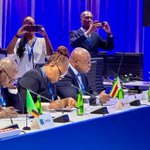


All eyes on the 2027 Pre-Budget Workshop!
Hon. Prof. Mthuli Ncube, Minister of Finance, highlights the importance of Parliament’s deliberations on the 2027 Budget priorities and resource allocation. Treasury stands ready to listen to and record submissions to inform the 2027 National Budget.
On behalf of the Ministry’s management and staff, we extend our heartfelt condolences to the Mbambe family, relatives, friends and all those who mourn his passing. We stand in solidarity with the bereaved family during this difficult time and wish them strength, comfort and courage as they come to terms with this immense loss.
As we celebrate his life and service, may we find solace in the lasting legacy he leaves behind and the many lives he touched throughout his career.
Rest in eternal peace Mr Cosmas Mbambe

CONGRATULATORY MESSAGE
The Honourable Minister, Prof. M. Ncube, Deputy Minister Hon. K. D. Mnangagwa, Permanent Secretary Mr. G. T. Guvamatanga, Chief Directors, and staff of the Ministry of Finance would like to congratulate His Excellency, President Dr. E.D. Mnangagwa, on assuming the Chairmanship of the Common Market for Eastern and Southern Africa (COMESA).
This prestigious leadership role is a resounding testimony to your visionary guidance and unwavering commitment to advancing regional integration, economic cooperation, and sustainable development across the African continent.
Under your stewardship, Zimbabwe continues to champion regional integration, economic harmonization, and sustainable growth in line with Africa’s Agenda 2063.
As you lead this vital economic bloc, we wish Your Excellency remarkable success, enduring unity, and legacy-defining achievements.
May your term bring great progress, unity among member states, and a lasting legacy for future generations.
"Congratulations! Makorokoto! Amhlophe!
The Ministry of Finance values your feedback.
Help us serve you better by participating in our Annual Stakeholder Satisfaction Survey.
Your insights are essential in improving service delivery, strengthening stakeholder engagement and enhancing policy implementation.
Take the survey today: docs.google.com/forms/d/e/1F…

Government Strengthens Oversight of State-Owned Enterprises Ahead of 2027 Budget.
Government is strengthening its oversight of State-Owned Enterprises (SOEs) through the development of a comprehensive 2027 Fiscal Risk Statement, aimed at identifying potential financial vulnerabilities, improving accountability and safeguarding public finances. The initiative reinforces efforts to strengthen public financial management and promote fiscal sustainability in support of Zimbabwe’s broader economic development objectives.
The initiative is being advanced through a technical workshop facilitated by the International Monetary Fund’s (IMF) Africa Regional Technical Assistance Centre South (AFRITAC South). The engagement brings together the AFRITAC/Fiscal Risk Team to coordinate the development of the 2027 Fiscal Risk Statement, share information on IMF technical assistance and strengthen capacity in fiscal risk reporting. The workshop is expected to produce a draft statement for the 2027 National Budget while equipping Treasury officials with the skills required to apply the framework in subsequent years.
In line with commitments under Zimbabwe’s IMF Staff-Monitored Programme (SMP), the statement will assess potential fiscal risks arising from the financial operations of SOEs. By providing a clearer picture of the financial health of public enterprises, the framework will help Government identify emerging vulnerabilities, prioritise interventions and make informed decisions on the management of public resources. Early identification of risks is also expected to strengthen oversight and reduce the likelihood of enterprise-related liabilities placing additional pressure on the national fiscus.
During the sessions, officials and the IMF mission team are reviewing Zimbabwe’s SOE Health Check Tool . The tool assesses the financial performance of individual enterprises and the overall SOE portfolio. Participants are also analysing the results, identifying key fiscal risks and exploring appropriate mitigation measures through group discussions and presentations on SOE financial health, risk assessment and management strategies.
The initiative supports the National Development Strategy 2 (NDS2) and Zimbabwe’s Vision 2030 ambition of attaining an upper-middle-income status. Effective oversight of SOEs is critical to fiscal sustainability, as financially sound and well-managed public enterprises can contribute to economic activity, infrastructure development and service delivery. Strengthening fiscal risk management will therefore support more informed decisions on public resources, reinforce macroeconomic stability and contribute to sustainable economic transformation.


MINISTRY LITERATURE EXCITES DELEGATES IN CHINHOYI
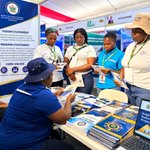
The Ministry of Finance intensified its public awareness and stakeholder engagement drive on the final day of the 23rd ZANU PF National People’s Conference, using the exhibition platform to disseminate key fiscal information to delegates and other stakeholders.
A key feature of the Ministry’s participation was the distribution of Ministry literature and publications, which provided delegates with access to authoritative information on the country’s fiscal position, policies, national budgeting processes and public debt management.
The distribution of literature also complemented direct interactions between Ministry officials and delegates, enabling officials to provide further clarification on issues arising from the publications and to respond to questions relating to the Ministry’s mandate and operations.
The exhibition consequently provided an important platform for the Ministry to take fiscal information directly to stakeholders, ensuring that key Government policy and budget information is accessible beyond formal policy and parliamentary processes.
The Ministry’s participation stresses its continued commitment to transparency, accountability, effective communication and informed public participation. By making its publications readily available and engaging stakeholders directly, the Ministry continues to strengthen public understanding of fiscal policy and create opportunities for citizens and stakeholders to participate more meaningfully in national development and the budget formulation process.


MINISTRY STRENGTHENS STAKEHOLDER ENGAGEMENT AND PUBLIC AWARENESS AT 23RD ZANU PF NATIONAL PEOPLE’S CONFERENCE
Stakeholder engagement, effective communication and transparency remain key priorities for the Ministry of Finance as it continues to engage citizens and stakeholders from all walks of life to promote knowledge sharing, enhance public understanding and strengthen participation in matters relating to its mandate.
In line with this commitment, the Ministry joined other Ministries, Departments and Agencies (MDAs) in exhibiting at the ongoing 23rd ZANU PF National People’s Conference in Chinhoyi, providing an important platform for direct interaction with stakeholders and the public.
During the exhibition, Ministry officials engaged visitors on key issues relating to national budgeting, public expenditure and expenditure prioritisation, among other aspects of fiscal management. The engagements provided an opportunity to simplify and explain complex budgetary issues while responding to questions and concerns from stakeholders.
The Ministry also distributed key publications, including the Budget Strategy Papers, Mid-Term Budget Review and Debt Bulletin, to facilitate access to information and promote greater understanding of the country’s fiscal position.
Through such engagements, the Ministry continues to advance its commitment to transparency, accountability and inclusive public participation, ensuring that citizens and stakeholders are better informed and able to contribute meaningfully to national budget formulation processes.


Africa Group 1 Constituency Meeting
At the ongoing 2026 IMF/Worldbank Group Annual Meetings in Bangkok, Thailand. The Africa Group 1 Constituency, represented by Executive Director Adriano Ubisse, met. The deliberations focused on navigating high global inflation, food security crises, and expanding financing options for the 22 sub-Saharan member countries. The key topics included Zimbabwe’s progress in restoring macroeconomic stability through disciplined fiscal policies under the IMF SMP, mobilising private capital and de-risking fragile, conflict and violence markets, supporting MSMSEs to buffer against global shocks, as well as food security and economic vulnerability to create crisis-ready, state-led social protection systems and regional safety nets.


ZIMBABWE–IFC ENGAGEMENT -ADVANCING PRIVATE SECTOR INVESTMENT
On the sidelines of the 2026 IMF/World Bank Annual Meetings in Bangkok, the Minister of Finance, Hon. Prof. Mthuli Ncube, and his delegation met International Finance Corporation (IFC) Managing Director, Mr. Makhtar Diop, to discuss strengthening support for Zimbabwe’s private sector.
The engagement follows a scoping mission in August 2026 to assess opportunities for renewed cooperation in investment, job creation, private sector development and advisory services.
The IFC welcomed Zimbabwe’s progress towards economic recovery and macroeconomic stability. A follow-up mission, led by its Regional Vice President, will visit Zimbabwe to consolidate partnerships across infrastructure, agriculture, energy, tourism and other productive sectors.
Key areas of cooperation include:
-Expanding credit lines for small and medium-sized enterprises to improve access to finance, stimulate investment and create jobs.
-Supporting trade infrastructure, including facilities at Chirundu, to strengthen cross-border connectivity.
-Developing regional trade corridors, particularly those supporting critical minerals, recognising Zimbabwe’s strategic role in regional commerce.
-Supporting agricultural investment, including blueberry and coffee production, to strengthen value chains and export opportunities.
As a member of the World Bank Group, the IFC promotes economic development and poverty reduction through private sector investment and support.
Government remains committed to deepening these partnerships to translate macroeconomic stability into productive investment and promoting the establishment of competitive businesses and employment opportunities for its citizens.


IMF WORLD ECONOMIC OUTLOOK - 2026 ANNUAL MEETINGS
At its World Economic Outlook press conference in Bangkok, the IMF projected global growth of 3.1% in 2026, before strengthening to 3.4% in 2027. Although growth is slowing, the 2026 forecast is up 0.1 percentage point, supported by investment in artificial intelligence and private-sector adaptation amid continuing conflict in the Middle East.
Key highlights:
▪️ Global inflation is projected to rise to 4.7% in 2026, reflecting energy cost pressures, before easing to 4.1% in 2027.
▪️ Risks remain tilted towards weaker growth, including escalating conflict, volatile commodity prices, high public debt and uncertainty over AI market valuations.
For Zimbabwe, the outlook underscores the importance of consolidating macroeconomic stabilisation to sustain strong short-term growth. Climate-related shocks and the debt burden remain significant threats to medium-term prospects.
Government remains committed to sustained fiscal and monetary discipline, climate-resilient investment and progress towards debt resolution and arrears clearance to safeguard stability, strengthen investor confidence and translate economic gains into lasting benefits for citizens as the nation transitions to Vision 2030.

2026 IMF/World Bank Annual Meetings Kick Off
Zimbabwe is making a strong case for international support for debt resolution and arrears clearance at the 2026 IMF/World Bank Annual Meetings in Bangkok, Thailand, from 12–18 October, under the theme “Thailand New Horizons: Empowering People, Building Resilience.”
Led by Minister of Finance, Hon. Prof. Mthuli Ncube, the Zimbabwean delegation met with World Bank Regional Vice President for Eastern and Southern Africa, Mr. Ndiame Diop; IMF Executive Director for Africa Group 1, Mr. Adriano Ubisse; and IMF African Department Director, Mr. Zeine Zeidane.
Discussions recognised Zimbabwe’s progress in restoring macroeconomic stability through prudent fiscal and monetary policies reflected in single-digit inflation, a stable exchange rate and stronger revenue performance.
Zimbabwe has achieved the following:
▪️ A strengthening reform record: Zimbabwe’s ongoing IMF Staff-Monitored Programme (SMP) is supporting policy discipline and international re-engagement. The September staff-level agreement on the second review marks further progress toward building the track record needed for arrears clearance and debt restructuring.
▪️ Economic recovery: The delegation highlighted economic growth of approximately 8% in 2025, projected growth of around 5% in 2026, and agricultural growth of 27%. These gains strengthen Zimbabwe’s case for support to sustain the recovery and expand economic opportunities.
▪️ Protecting vulnerable households: Government is completing the social registry to improve the targeting of assistance, including through the Basic Education Assistance Programme (BEAM), while addressing outstanding social spending commitments under the SMP.
▪️ Building climate resilience: Priorities include strategic grain reserves, cash transfers and increased investment in cloud seeding to strengthen preparedness for climate shocks and protect livelihoods.
▪️ Mobilising arrears clearance support: Zimbabwe is seeking development partners to champion the process, exploring bridge financing arrangements and engaging on potential International Development Association (IDA) support, subject to applicable requirements and approvals. Government is also addressing domestic arrears.
With the final SMP review expected in December, Zimbabwe is calling for coordinated support to translate its reform progress into a credible, financed arrears clearance pathway.
Supporting Zimbabwe’s debt resolution would help consolidate stability, restore access to concessional development finance, unlock investment in jobs, infrastructure and essential public services.
The delegation expressed appreciation for the IMF and World Bank’s continued engagement and reaffirmed Zimbabwe’s commitment to sustained reforms, transparent engagement and inclusive growth.
#Zimbabwe #IMFMeetings #DebtResolution #ArrearsClearance


2027 NATIONAL BUDGET
Following the launch of the 2027 Budget Strategy Paper on 30 July 2026, which outlines proposed policy measures for the coming year (accessed on zimtreasury.co.zw/budget-doc…), Treasury has commenced budget formulation for the 2027 fiscal year in line with Sl. 135 of 2019 (Public Finance Management (General) Regulations, 2019) and SI 153 of 2026 (Public Finance Management (General) (Amendment) Regulations, 2026 (No. 2).
Given your critical role in our collective effort to achieve the NDS2 performance targets and Vision 2030 in line with the President’s Clarion Call of ‘Nyika inovakwa nevene vayo/ ilizwe lakhiwa ngabanikazi balo’, Treasury hereby requests your inputs into this important policy document. Submissions should clearly articulate proposed key policy priorities, programmes, and projects for consideration.
Kindly forward submissions to [email protected] on or before 30 October 2026to allow sufficient time for consolidation.
NATIONAL BUDGET
Consultative engagements are pivotal as formulation of the 2027 National Budget gathers momentum with the
Ministry harnessing input from stakeholders to shape the country's strategic financial roadmap and macro-fiscal framework.
Grounded in the spirit of inclusive economic planning, this morning, Head ZPDMO,Mr. A. Bvumbe led deliberations between Government and Development Partners with particular focus on ensuring that national resources are effectively aligned with high-impact national growth and socio-economic development priorities.
Chief Director for Economic Affairs, Mr. Joseph Mverecha, delivered a presentation highlighting the alignment of the 2027 National Budget with the National Development Strategy 2 (NDS2).
Mr. Mverecha emphasised how the upcoming budget will serve as a critical operational vehicle for driving NDS2 priorities, sustaining long-term macro-fiscal stability and accelerating the nation toward Vision 2030.
In line with the recently promulgated S.I 153 of 2026, this year's National Budget will be presented on the 19th of November 2026 under the theme: "Accelerating Economic Transformation and Building Resilience to Climate and Global Shocks."
The engagement brought together key international partners, including representatives from the United Nations (@UN), African Development Bank (@AfDB_Group), European Union (@EUinZimbabwe) and various diplomatic missions.
During the discussions, Development Partners put forward submissions on strategies to ensure the country's recent economic growth directly benefits vulnerable and marginalised populations across the nation.
Delegates emphasised creating direct positive impacts for youths, women and vulnerable households, ensuring macroeconomic progress translates into tangible socio-economic improvement at the community level.
Partners reiterated the need for targeted social safety nets and inclusive support mechanisms to protect these vulnerable groups ahead of the anticipated El Niño-induced drought.
Development Partners also applauded Government for the recent staff level agreement on the Staff Monitored Program as well as noticeable progress on macroeconomic stability.
#NationalBudget


CALLS FOR INPUTS INTO THE 2027 BUDGET
Following the launch of the 2027 Budget Strategy Paper on 30 July 2026, which outlines proposed policy measures for the coming year (accessed on zimtreasury.co.zw/budget-doc…), Treasury has commenced budget formulation for the 2027 fiscal year in line with Sl. 135 of 2019 (Public Finance Management (General) Regulations, 2019) and SI 127A of 2021 (Public Finance Management (General) (Amendment) Regulations, 2021 (No. 1).
Given your critical role in our collective effort to achieve the NDS2 performance targets and Vision 2030 in line with the President’s Clarion Call of ‘Nyika inovakwa nevene vayo/ ilizwe lakhiwa ngabanikazi balo’, Treasury hereby requests your inputs into this important policy document. Submissions should clearly articulate proposed key policy priorities, programmes, and projects for consideration.
Kindly forward submissions to [email protected] on or before 30 October 2026to allow sufficient time for consolidation.
Theme for the Budget: “Accelerating Economic Transformation and Building Resilience to Climate and Global Shocks”
As Government accelerates the implementation of its development agenda towards the attainment of an empowered and prosperous upper-middle-income society by 2030, sustained investment in critical public infrastructure and services remains central to improving the quality of life of citizens.
Minister of Finance, Economic Development and Investment Promotion, Prof. Mthuli Ncube, undertook a fact-finding tour of developmental projects in Cowdray Park to assess progress, implementation and their impact on communities.
The tour covered a water treatment plant, a health facility and the Magistrates’ Court, which is currently under construction and is expected to be completed by March 2027.
The visit underscores Government’s commitment to accelerating development and ensuring that public investments translate into tangible benefits for citizens. These investments are critical to expanding access to clean water, quality healthcare and justice, strengthening public service delivery and improving the quality of life of communities in line with the aspirations of Vision 2030.


ZEDCON 2026
Hon. Minister of Finance, Economic Development and Investment Promotion, Prof. Mthuli Ncube, gives a concluding interview on how key recommendations emerging from ZEDCON 2026 will inform the formulation of the 2027 National Budget.
The Minister highlights the importance of translating discussions and proposals from the Convention into practical policy measures that support economic growth, infrastructure development, investment and Zimbabwe’s journey towards an Upper-Middle-Income Society by 2030.
As ZEDCON 2026 draws to a close, the focus now shifts from dialogue to implementation ensuring that the ideas generated translate into actionable priorities for the 2027 National Budget.
#ZEDCON
📢S.I. 153 of 2026
S.I. 153 of 2026 sets clear deadlines for Zimbabwe’s annual budget process.
The Government of Zimbabwe is strengthening public finance management through S.I. 153 of 2026 (Public Finance Management (General) Amendment) Regulations, which set a clear timetable for annual budget preparation, review, and approval.
The Budget Strategy Paper and Mid-Year Fiscal Review will be submitted to Parliament by July 31, and the National Budget by the third Thursday of November, supporting timely planning and accountability.
Ministries, Departments, and Agencies must submit strategic priorities and expenditure intentions by 1 June, then present the Budget Strategy Paper and the Mid-Year Fiscal Review to Cabinet by 15 July and to Parliament by 31 July.
Updated economic forecasts and expenditure ceilings guide budget submissions by September 30, ahead of October budget discussions. The National Budget must be presented to Parliament no later than the third Thursday of November.
This structured process supports coordinated planning, fiscal discipline, Parliamentary oversight and greater accountability in the allocation and use of public resources.


ZEDCON is more than a conference, it is a national platform for shaping Zimbabwe’s economic future.Opening the 5th Zimbabwe Economic Development Conference #ZEDCON2026 in Bulawayo, Hon. Prof. Mthuli Ncube, Minister of Finance, Economic Development and Investment Promotion, emphasised the importance of turning dialogue into policy, investment and practical action towards Vision 2030.
Prof. Ncube said the theme, “Smart Infrastructure for an Upper Middle-Income Society,” is more than an aspiration,it is a call to action. Zimbabwe’s transformation requires smart, resilient and integrated infrastructure that strengthens productivity, competitiveness, investment and inclusive economic growth.
The Minister underscored Zimbabwe’s strategic position as a land-linked country, with the potential to become a logistics hub connecting markets across SADC, COMESA and the wider African continent. Modern roads, rail networks, border infrastructure and transport corridors will be critical to unlocking trade opportunities under AfCFTA.
Prof. Ncube identified five priority areas for high-impact capital investment:
▪️ Energy and power security
▪️ Digital & broadband connectivity
▪️ Integrated transport & rail networks
▪️ Water infrastructure
▪️ Urban planning & smart cities
These are key foundations for Zimbabwe’s structural transformation.
The Minister also emphasised the importance of sustaining macroeconomic stability as Zimbabwe pursues stronger and more sustainable economic growth. He highlighted progress in inflation and exchange-rate stability, supported by prudent fiscal and monetary policies, while stressing the need to preserve these gains to support investment and economic confidence.
Prof. Ncube stressed that the scale of infrastructure investment required cannot be financed through public resources alone.
He called for stronger participation by the private sector and financial markets, alongside innovative financing instruments including municipal infrastructure bonds, institutional capital and green energy funds.
The message from ZEDCON 2026 is clear: deliberations must translate into delivery.
Prof. Ncube called on policymakers, investors, businesses, engineers, contractors and young Zimbabweans to help turn ideas into projects, investment and opportunities that advance Vision 2030.
Zimbabwe is open for business. The time to invest in smart infrastructure is now.
#ZEDCON2026


