

Localized pricing automation for #MobileApps Push smarter prices to Apple & Google Play 190+ countries | PPP adjustments
Joined February 2026
- Tweets307
- Following3
- Followers51
- Likes64






Pinned Tweet
Hello X 👋
PricePush is a tool for mobile app publishers who want to localize pricing properly, without living in spreadsheets.
YOUR OFFERS NOW MOVE WITH THE SUBSCRIPTION 🏷️
Cut a plan in Mexico from 235 to 117 MXN and its 50% offer follows.
PricePush 2.0 lists a subscription's offers on both stores. Tick one and it's pushed with the plan, keeping today's discount, or give it its own price.

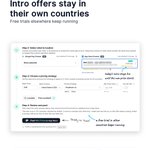
INTRO OFFERS STAY IN THEIR OWN COUNTRIES 🍎
Paid intro offer in some countries, free trial in others? When you push a new intro price, PricePush 2.0 only writes the countries where that intro runs, and the confirm screen names the ones it leaves alone.

EVERY PUSH ON ONE PAGE 📋
Google Play pushes now show next to the App Store ones on the PricePush Jobs page.
A Localize all run is one item: follow it, cancel what hasn't started, retry what failed. On Pro, roll the whole run back in one go.

240 apps now run their prices through PricePush 🎉
5,949 price pushes so far, across 190+ countries on the App Store and Google Play.

Indie games, a cooking app, chess, a rubber duck, fitness, music, PDF tools: every kind of app sells in more than one country. Thank you to every dev who trusts us with their prices.
Free for one app: pricepush[.]app
#IndieDev #AppStore #GooglePlay #MobileApps
"Currency conversion doesn't tell you what people in each country can afford."
@emeeliojohann put the whole idea of PricePush in one line.


PricePush retweeted

Localized my nascam.tv Play store prices using @TryPricePush and got a sale in Bangladeshi Taka the day after!

PRICEPUSH 2.0 IS OUT 🌍
Localize all: every product of your app, priced for 190+ countries and pushed to the App Store and Google Play in one run.
Preview each country's new price, check the impact on a world map, then push in one click.
PricePush retweeted

PRICEPUSH 2.0 IS OUT 🌍
New: Localize all.
Every product of your app, priced for 190+ countries and pushed to the App Store and Google Play IN ONE CLICK!
A typical app means 1,750 prices to set by hand. I made it one click.
#indiedev #appstore #googleplay #pricing #buildinpublic
LOCALIZE YOUR PRICES 🌍
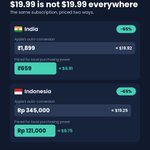
A $19.99 sub, auto-converted by Apple:
🇮🇳 ₹1,899 (≈ $19.92)
🇮🇩 Rp 345,000 (≈ $19.25)
Priced for local purchasing power:
🇮🇳 ₹659 (≈ $6.91)
🇮🇩 Rp 121,000 (≈ $6.75)
65% lower. PricePush automates it on both stores 👉 pricepush.app

PricePush retweeted
One base price in. Fair prices for 193 countries out.
The Price Localizer maps your number across 193 countries on a globe and a country-by-country table, using purchasing-power tiers, not a flat currency swap. No account.
Try it: pricepush.app/price-localize…
Netflix doesn't run one global price. In India it sells a mobile plan from about Rs149/month.
That's not a discount. It's a different price for a different wallet.
Here's what most indie devs get wrong. They let the App Store auto-convert their price into rupees and call it localized. It isn't. The exchange rate tells you what a currency is worth on a trading desk. It tells you nothing about what a person in Mumbai can actually spend.
So your $4.99 becomes about Rs415, a local user does the math against their own budget, and they close the tab. You never see the lost sale. It just looks like India doesn't convert.
Netflix priced into India instead of converting into it. The Rs149 mobile tier was built for the budget first, then the product was shaped to match.
You are not Netflix. You don't need to be. The same logic works at indie scale: pick a base price, then set each country by purchasing power, not by the exchange rate. India, Brazil, Turkey, and Indonesia usually want to sit well below the converted number.
That gap, between the converted price and the price people can actually pay, is revenue most apps never collect.
(Netflix is a public example, not a PricePush customer.)
PricePush sets and pushes that per-country price across 190+ countries: pricepush.app

'You're not Microsoft.'
Best answer I've heard to the fear of price arbitrage, people VPN-hopping to your cheapest country.
At Microsoft scale, moving 1,000 seats to a cheaper region is real money. At indie scale it's a rounding error, and that person was a motivated buyer anyway. They still bought. Stop guarding revenue you were never going to get.
Apple auto-converting your USD price into local currency is not localized pricing. It's a currency calculator with extra steps.
The gap, in numbers:
1/ Apple's own suggested price for India sits about 21% below the US. Sounds reasonable, until you see what apps that actually localize do.
2/ Apps that localize for India go 50 to 80% below the US price. Not 21%. Up to 80%. The auto-converted number and the market-correct number are in different leagues.
3/ You can see the right answer in the giants. Spotify India is ~$2.2 vs ~$12 in the US. Netflix runs India-only mobile plans from ~Rs149/mo. Those are 70 to 80% gaps, nowhere near Apple's 21%.
4/ And plenty of devs never touch the default: take USD, let the store convert, ship. That leaves the India price roughly 3x too high versus what works.
The fix isn't complicated: per-market prices based on purchasing power, pushed to every store. I built PricePush to do exactly that in one click.
(Sources are independent research, not PricePush customers.) pricepush.app/#case-studies
Google Play named the 3 ways developers actually pick a localized price (Playtime 2019). Most devs use the worst one.
A thread on choosing the number, not just translating the currency.
Method 1: copy your competitors' price in that market.
Google's own warning: you have no idea if their price is even converting. And price discovery is brutal, devs 'scouring Reddit, going on random blog posts, VPNing into every market' to read a number that might be wrong.
Method 2: anchor to a universal benchmark. Not competitors, the local monthly phone plan, cable, the newspaper subscription.
A user won't pay more for your app than they pay for their phone plan. They know that number. You should too.
Method 3: index to GDP per capita, PPP-adjusted. The one the Google BD manager recommended most. Scale the price to local disposable income.
US GDP per capita ~$62K. India ~$7K. India indexes to 12% of the US. So the price shouldn't be 100% of the US either.
The catch he was honest about: pure GDP can UNDERprice you. Play buyers spend more than GDP predicts, 2x to 3x higher willingness to pay in India, Brazil, Mexico. Indonesia, Russia, Turkey went the other way.
So the rule he landed on: start high, test your way down. Easier to drop a price than raise it on existing subscribers.
PPP gets you a defensible starting number for 175 countries. Then you tune. PricePush does that first 95% in one click: pricepush.app
What is a good free trial conversion rate? There is no single answer, but there is a ladder.
By trial length, median trial-to-paid in 2026:
- 4 days or less: 25.5%
- 5 to 9 days: 37.4%
- 17 to 32 days: 42.5%
Compare against your own band, not the overall median.
pricepush.app/blog/trial-to-…
#SubscriptionApps #AppMarketing #IndieDev
