

Tyrian Trade. A trust‑first ecosystem for trading & investing — where transparency isn’t promised, it’s built in. ↓ Explore Tyrian Trade Beta
Joined May 2025
- Tweets480
- Following3
- Followers813
- Likes88




Pinned Tweet
Is Palantir the future of AI... or the next big bubble? 🤔
The stock is hot, but here's the catch: insider selling, massive short interest, and a reliance on government contracts 👀
📈Among major U.S.-listed public companies, Meta holds the record: it first crossed a ~$1T market cap in 2021, roughly 17 years after its 2004 founding. An Anthropic path of ≈5 years would therefore be more than 3x faster than the historical record.

🚨The Critical Take: Anthropic’s Massive Gamble
The most revealing number in Anthropic’s S-1 isn't their revenue-it’s the $265.6 billion in future contract commitments. That is double their entire cash pile. Anthropic isn't just spending cash; they are aggressively mortgaging their future to lock in global compute capacity.
💻Furthermore, a 900% net revenue retention is borderline terrifying. It means enterprise clients aren't just staying-they are multiplying their AI spend nearly tenfold.
Anthropic is burning $9 billion on compute to feed insatiable corporate demand, yet still managing to turn a $974 million operating profit. They aren't just playing the AI game; they are pre-buying the entire track.

🌐According to Elon Musk, debt markets are currently closed to companies lacking non-AI data center revenue.
While SpaceX secured $40B for GPUs due to its investment-grade status and Starlink/launch revenues, he predicts severe consolidation for the 200+ neoclouds in the market.
🚀Ultimately, access to capital is now a major competitive advantage, making debt-to-equity ratios a critical metric for separating the survivors from the failures.

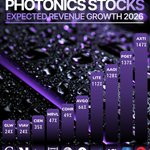
📈During Nvidia's recent GTC event, CEO Jensen Huang highlighted a massive paradigm shift in AI infrastructure. The key fact he shared is that as AI data centers increasingly transition to optical networking, the industry could experience a staggering 15-fold surge in optical volume.
💡He emphasized that the future of scaling up computing power will fundamentally rely on optical technology. This prediction is the core catalyst driving the current bullish sentiment and projected revenue spikes for the photonics sector leading into 2026.

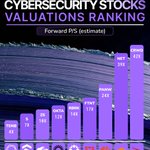
🛡️A Stark Valuation Divide in Cybersecurity
A massive bifurcation is emerging in the sector. While a select few dominant platforms command extreme valuation premiums, specialized vendors are trading at a fraction of those multiples. Growth alone is no longer enough-capital is now strictly rewarding scale, consolidation, and impenetrable moats.
📊Are you paying for hype, or structural dominance?

🌍The Great Divergence
The staggering divergence across global equities reveals a harsh reality: not all markets are created equal. While some indices show only mild pullbacks, several major economies have plunged into deep bear markets, erasing over 40% of their value from recent peaks.
🧠This extreme fragmentation shows that global capital isn't just retreating—it's highly selective. The real risk for investors is assuming broad market stability, while severe localized crises quietly unfold across the globe.

🤝Strategic Consolidation: Tesla and SpaceX Explore Merger
Elon Musk is potentially converging two major enterprises. Tesla and SpaceX have established special committees of independent directors to evaluate a prospective merger.
💼Market participants on Polymarket currently assign a 79% probability to an official merger announcement by the end of 2027. At these odds, a merger has effectively become the market's baseline scenario.

🧮Market fixation on the next major AI breakthrough tends to fade rapidly once credit conditions tighten. At that point, innovation ceases to be the sole metric of success, and a company's ability to service its debt obligations becomes the primary concern.
Our focus is not on market hype; it is on fortress-like balance sheets. When capital becomes expensive, cash-rich enterprises do more than just weather the storm-they acquire overextended competitors that neglected to build a durable competitive moat.
🧱Investors should prioritize fundamental mathematics over compelling narratives. Consider a stress test: if your portfolio faced a 30% drawdown tomorrow, would you have full confidence in your current holdings?
The decision is yours.

🎯The 42% top-10 concentration isn't just a stat-it's the ultimate insider signal.
Unlike most AI ETFs that passively track indexes, this is a high-conviction, actively managed book . They aren't just buying software hype; they are making a concentrated bet on the physical bottlenecks of AI-memory,chipdesign, and connectivity.
📊The real story? It’s a "picks and shovels" strategy with valuation discipline, not just a passive basket.

Semi Sell-Off: Strategic Buy Window
The recent market dump is a prime entry point. Underlying demand remains intact. Key plays:
⚡ NBIS & CRDO: Powering AI cloud infrastructure & high-speed data highways.
⚡ MU: AI-driven HBM demand breaks cyclical norms, driving pricing power.
⚡ SITM: Silicon-based precision timing for data centers & autonomous tech.
Treat this drawdown as a strategic window to accumulate essential digital infrastructure at a discount.

📉 A number of the Nasdaq-100’s most prominent companies have experienced substantial share-price declines. Five major stocks are currently trading more than 50% below their 52-week peaks, reflecting considerable selling pressure in parts of the market.
The largest drawdowns are: AppLovin at -64.5%, Rocket Lab at -60.8%, CoreWeave at -56.3%, Intuit at -55.0%, and Alnylam Pharmaceuticals at -54.7%. In addition, Netflix, Arm, Strategy, and Western Digital have each fallen more than 40% from their highs.
📊 Volatility is weighing heavily on some of the Nasdaq-100’s largest growth stocks, with even previously leading names undergoing notable corrections.

The Illusion of Diversification 📉
An S&P 500 index fund is supposed to offer broad, diversified exposure to the U.S. economy. Yet, just five mega-cap tech and semiconductor stocks are currently driving 55% of the index’s year-to-date gains.
The other 495 companies contribute less than these top five combined. The critical takeaway? Passive investing no longer guarantees true diversification-it means heavy concentration in a handful of names.

💹UnitedHealth’s earnings rebound is a margin story, not a volume one. Q3 adjusted EPS rose to $4.69 from $2.92 as the company cut unprofitable plans and repriced risk. The medical care ratio improved to 88.4%-operational discipline, not revenue growth, drove the recovery.

🎭Earnings season reveals which companies are built on durable operations and which rely primarily on presentation. When macroeconomic conditions change, the distinction between a lean, high-performing organization and an inefficient one becomes immediately visible.
The critical indicator is the margin of efficiency: a strong ROIC is not simply a metric-it demonstrates how effectively management converts each unit of capital into profit. Revenue growth alone is not enough. During a tightening cycle, operational discipline is the most reliable competitive advantage.
🚫If you cannot clearly explain how your largest holding generates cash from invested capital, you are speculating rather than investing. Draw your own conclusions.

📈The global DRAM market remains highly consolidated, with three dominant players capturing nearly 90% of total revenue. In Q2 2026, Samsung held a 38% share, followed by SK Hynix at 25% and Micron at 24%. Together, these three memory manufacturers account for 87% of the market.
⚡CXMT represents 10%, while all remaining competitors collectively hold just 3%. As AI and data center investments continue to drive memory demand, the DRAM sector stands as one of the most concentrated segments in the semiconductor industry.

💰Patience is often cited as the key to wealth, yet the math behind it is brutally unforgiving. The average holding period for U.S. equities has collapsed from roughly eight years in the 1950s to just eight months today. Meanwhile, research shows that over any 10-year holding period, only about 23% of individual S&P 500 stocks actually beat the index itself.
🚀The winners on this chart didn't just survive-they compounded through multiple recessions, bubbles, and crashes. The real lesson isn't about picking the right stock; it's about having the temperament to do nothing while everyone else panics.

💰The Magnificent 7’s combined operating profit now nears $1 trillion - exceeding the rest of the S&P 500 combined. But their massive $780B AI capex is compressing free cash flow below 10% of revenues for the first time in a decade.
The market isn’t pricing growth anymore; it’s pricing the ROI of a historic capital cycle.

💥Concentration in the Nasdaq-100 has hit levels unseen since 2000. The top 10 holdings now drive nearly half the index - but unlike the dot-com era, today’s leaders are backed by real earnings.
The catch: index funds are no longer diversified. They’re a concentrated bet on a single theme.

🔄The dispersion in AI valuations is not random - it maps directly to where revenue is contracted versus where it is expected. Companies with hardware-heavy, capacity-constrained models trade at structurally lower forward multiples than those whose revenue is software-like and recurring.
The market is effectively pricing the durability of each revenue stream, not just its growth rate. In prior technology cycles, infrastructure names compressed toward single-digit multiples once supply caught up with demand.
⚠️The current spread suggests investors believe AI infrastructure scarcity will persist longer than historical precedent implies - a bet that either validates itself or resets violently.

📈The Rule of 40% is a benchmark for healthy software companies. $PLTR is operating on a different scale entirely.
The mathematical reality of this chart is that the gap between Palantir and the second-place name is larger than the gap between the second-place name and the bottom of the entire index.
🚀This isn't just market leadership. It's an unprecedented demonstration of combined hyper-growth and disciplined free cash flow margin expansion.
