

Our Institute brings together scientists and clinicians from all UCSF campuses to address the most critical and intractable questions related to Aging.
San Francisco, CA
Joined January 2021
- Tweets1.4K
- Following366
- Followers1.4K
- Likes546




Pinned Tweet
We bring together UCSF scientists and clinicians to uncover mechanisms behind aging, develop novel diagnostic/therapeutic tools, and establish best practices for providing equitable care to older adults in our communities. geroscience.ucsf.edu/

New tools for phage therapy screening: BARI’s Seth Shipman reports Detectrons, which converts a detected RNA sequence into a durable DNA barcode. In Nature Biotechnology, they show multiplexed, live-cell detection of which phages infect bacteria. pubmed.ncbi.nlm.nih.gov/4283…

BARI’s Aric Prather reports a small randomized trial of lemborexant for daytime sleep in night-shift workers. The drug didn’t beat placebo overall, but participants on the 10mg dose showed a signal worth testing in larger studies. link.springer.com/article/10…

BARI’s Dengke Ma reviews strategies to take on APOE4 in Alzheimer’s. The focus is restoring healthy cholesterol handling in the brain, with approaches that range from small molecules to antibodies and systemic lipid drugs. febs.onlinelibrary.wiley.com…

When TBK1 doesn’t work well enough, cells struggle to clear waste and control inflammation. In this new review, BARI’s Daniel Mordes explains how this dual hit contributes to ALS and related dementias, and what it means for future therapies. frontiersin.org/journals/neu…

Aging tissues get stiffer, and more fragile. In the Journal of Cell Science, BARI’s Hanna Martens & colleagues review how failed mechanotransduction, from matrix to nucleus, drives senescence & inflammation, and how resetting that niche might rejuvenate tissue.


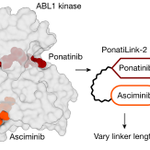
One binding site often means choosing potency or selectivity. BARI’s Kevan Shokat & team link two ligands on the same kinase and apply the idea to ABL1 leukemia. In Nature: their lead compound PonatiLink-2 stays potent against resistance and is better tolerated in mice.


BARI’s Margaret Wallhagen & colleagues invite nurses to help shape geroscience. Nursing’s prevention-focused, person-centered perspective is a natural fit, and the field will be stronger with that voice in education, research, practice, and policy. nursingoutlook.org/article/S…

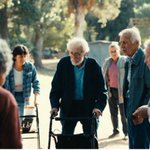
In Geroscience, BARI’s Scott Bauer reports that walking energies, but not peak fitness, track with urinary symptoms in adults 70+. Higher walking energy cost was linked in incontinence in men. link.springer.com/article/10…

Blood-brain barrier cell types are undercounted in many single-cell studies. BARI’s Andrew Yang shares a Nature Protocols method to isolate cerebral vessels and recover high-quality nuclei for downstream multi-omics. nature.com/articles/s41596-0…

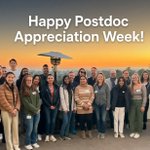
This week is Postdoc Appreciation Week and we’re grateful for the BARI postdocs who keep our science moving! You bring the experiments, the ideas, the late nights, and the questions that push aging biology forward. Thank you for being such a vital part of this community!

CDK4/6 inhibitors transformed some cancer treatment, then resistance emerged. In a Nature Chemical Biology Perspective, BARI’s Kevan Shokat maps emerging CDK2 targeting strategies to stay ahead of resistance. nature.com/articles/s41589-0…

Respiration isn’t just “use oxygen.” In Trends in Biochemical Sciences, BARI’s Isha Jain surveys the many terminal electron acceptors eukaryotes still use, and why those backup routes shape health in low-oxygen settings. cell.com/action/showPdf?pii=…

BARI’s Martin Kampmann and team ran a genome-wide CRISPRi screen in human microglia and found 772 genes that control the interferon-responsive state linked to aging and neurodegeneration. New regulators plus a resource for turning this program up or down. bit.ly/4reK3az

In Clinical Nutrition ESPEN, BARI’s Katrina Abuabara reports that extra dietary sodium is associated with an increase in inflammatory skin and joint disease in the UK Biobank. Next question: can a lower-salt diet help? bit.ly/4hdeGIJ

From new BARI member Jason Gestwicki in JACS: cofactor-free tau fibrils behave like a changing hydrogel, then mature into more stable polymorphs. Environment (agitation, polyanions) may help explain how disease-specific tau folds get locked in. pmc.ncbi.nlm.nih.gov/article…

Fertility drops after mid-30s, and much of that failure happens at implantation. BARIs Orion Weiner reports in Nature Cell Biology that embryos from aged females are hypercontractile, a mechanical defect that is necessary & sufficient for implantation failure.


