

Unite4Freedom is a nonpartisan, volunteer civic organization focused on election accuracy and administration, with reports covering 35 states.
Chesterfield, MO
Joined September 2023
- Tweets3.8K
- Following609
- Followers13.6K
- Likes4.2K





CALIFORNIA BALLOT FIGHT: DOJ IS PURSUING TWO LEGALLY DISTINCT ROUTES TO STOP CERTAIN BALLOTS FROM BEING COUNTED. NEITHER IS THE SAME AS A COURT ORDER.
The DOJ wants California to set aside mail ballots associated with roughly 20,000 people federal officials identify as likely noncitizens until their citizenship can be verified. Those allegations have NOT established that all 20,000 are ineligible or voted illegally, but that they need to be verified.
Here’s where things stand:
ROUTE #1: THE NINTH CIRCUIT COURT OF APPEALS
On Oct. 22, DOJ appealed BEFORE the district judge ruled on its emergency request. DOJ argues that the judge’s failure to meet its demanded deadline effectively denied relief. California counters that the judge never denied the motion, scheduled a hearing for Oct. 27, and that DOJ cannot manufacture an appeal simply by imposing its own deadline.
The Ninth Circuit ordered California to respond by noon Pacific on Oct. 24. That is a procedural order - not an injunction. I have not verified a subsequent appellate order granting DOJ’s requested relief.
ROUTE #2: AN EMERGENCY INJUNCTION FROM THE DISTRICT JUDGE
On Oct. 23, DOJ separately asked the district judge to impose an injunction while its appeal proceeds. It wants ballots associated with the flagged individuals set aside and withheld from counting until citizenship is verified.
California opposes that request, arguing the appeal is premature, the federal government lacks the necessary legal authority, its data may be outdated or mismatched, and the requested process risks disenfranchising eligible citizens. Los Angeles County also warns that once ballots are separated from identifying envelopes and mixed together, officials cannot identify and retrieve individual ballots – which is why this is such a critical timeline and why the DOJ is pressing hard for decisions.
WHY THIS MATTERS: DOJ is trying to obtain immediate relief through the appeals court while simultaneously asking the district court to impose restrictions pending that appeal. These are related strategies, but they are NOT one proceeding and neither request automatically puts the restrictions into effect.
The district-court hearing is scheduled for Oct. 27. The key questions are whether DOJ can appeal before an actual denial, whether federal law authorizes the remedy it seeks, and whether its evidence justifies withholding ballots before individual eligibility is established.
Nobody SHOULD get to vote without their eligibility being established - FIRST.
The government has a legitimate interest in enforcing the law against unlawful voting. But a list of people suspected of being noncitizens should result in verification of whether every person on it is eligible to vote or not.
WATCH THE COURT ORDERS - not the demands, deadlines or headlines. Until a court grants relief, DOJ’s requested ballot restrictions are just that: requested relief.
Follow @Unite4Freedom as we continue to track what is now a set of court actions between the DOJ and the state of California
#Unite4Freedom
#ElectionValidity
#ElectionSecurity
#DOJ
#California
PAY ATTENTION TO WHAT DOJ IS DOING IN REAL TIME
This isn’t one lawsuit. It’s a MULTI-TRACK election-security operation unfolding while Americans are already voting.
DOJ + DHS are examining voter rolls against federal immigration/citizenship records. In California, they identified 20,000+ registrants they say are likely noncitizens, asked the state to verify them and segregate questioned mail ballots, then went to federal court when California refused.
DOJ has now charged 28 foreign nationals from that same list with election-related crimes - allegations that still must be proven in court.
In ALASKA, the issue is completely different - and just as significant.
There are TWO U.S. Senate candidates named Sullivan: incumbent Sen. Dan S. Sullivan and another candidate, Daniel J. Sullivan. Alaska election officials originally removed Daniel Sullivan from the ballot after concluding his candidacy could confuse voters, but state courts put him back on.
Now DOJ has filed a federal lawsuit arguing that if Sen. Sullivan loses by fewer votes than Daniel Sullivan receives - and the ranked-choice transfers could have changed the outcome - the state should NOT be allowed to simply certify and move on.
DOJ is asking for certification to be halted long enough to investigate whether voter confusion materially affected the result.
That means DOJ is not only looking at voter eligibility. It is examining whether ballot design, candidate confusion, administration and certification itself could undermine a valid result.
And AG Todd Blanche says DOJ is looking at “a number of states” and additional election litigation could come BEFORE November 3.
Think about the parallel approach:
Investigate the rolls.
Cross-check citizenship.
Prosecute alleged illegal voting.
Segregate questioned ballots before they become irretrievable.
Challenge administrative failures in court.
Monitor ballot and candidate issues.
Intervene before certification where DOJ believes the result may be legally compromised.
At the same time, courts are scrutinizing DOJ and DHS - including whether federal matching methods produce false positives – so both agencies are being made to defend their process while trying to execute on a very tight timeline.
THAT is what real-time election oversight looks like:
Find the problem while the election is underway.
Preserve the evidence.
Test the facts.
Use the courts.
Fix what can be fixed BEFORE the result becomes irreversible.
Valid elections should never depend on “it’ll probably be fine.”
They depend on verification, transparency, lawful process and the willingness to address problems
WHEN THEY ARE FOUND.
This is not your average election cycle. Follow @Unite4Freedom to keep track of all of the moving parts.
#Unite4Freedom
#ElectionValidity
#ElectionSecurity
#DOJ
#California
#Alaska
FEDERAL JUDGES ARE BLOCKING ELECTION-SECURITY EFFORTS - AGAIN.
On October 21, a federal judge in California issued a preliminary injunction restricting DHS investigations into suspected noncitizen voter registration in NINE STATES:
- California
- Connecticut
- Georgia
- Missouri
- Nevada
- New York
- Pennsylvania
- Washington
- Wisconsin
The ruling targets what is being referred to as DHS’s “Unlawful Voter Initiative” and its surge of field investigations. Federal agents have been sent to conduct interviews about immigration status and whether people are registered or voted.
The judge is now ordering federal officials to stop specified election-related field operations when they involve - are likely to involve - people agents know, suspect, or reasonably should suspect are U.S. citizens.
The problem is that the records being investigated do not fall into the “know, suspect, or reasonably should suspect are U.S. citizens” category. The whole point is that the records are basically the opposite of this categorization. The order also restricts certain field operations based wholly on records generated by DHS’s voter-matching process.
Why? The court says the data may wrongly flag citizens and that the investigations likely intimidate people who assist or encourage others to vote. The real problem is that there are data issues in the voter data and there might be issues with the citizenship data, but how do you justify ignoring issues in one dataset while claiming there are issues with another.
Noncitizens cannot vote in federal elections. Identifying potentially ineligible registrations and investigating suspected illegal voting are legitimate election-security objectives. A database match is not proof of wrongdoing, but it identifies the need for investigation. Period.
WHAT HAPPENS NEXT?
The injunction is temporarily paused until the EOD today - Friday, October 23, at 5 p.m. Pacific. The Trump administration has an opportunity to appeal or seek emergency relief. Unless the order is changed, it is scheduled to restrict the specified operations through Election Day, November 3.
That could interrupt ongoing field investigations across all nine states during the final days before the election - including Wisconsin. It does not ban every federal election-fraud investigation, but it puts immediate legal limits on how DHS can conduct certain operations and use specified data to target people.
The plaintiffs - argued that the program intimidates citizens and discourages lawful voter assistance. The judge granted preliminary relief. This is not a final ruling on the merits, nor a finding that all federal election-security investigations are unlawful.
But, the timing matters. With Election Day approaching, a judicial order will change what federal investigators are permitted to do before questions about voter eligibility are fully resolved.
The standard must be simple: verify the facts, correct errors, protect eligible voters, and enforce election law.
If DHS’s data is flawed, fix the data. More important – the purpose of the investigation – If the election data is flawed – FIX THE DATA. Election security should not become a casualty of blanket assumptions, political pressure, or litigation that prevents legitimate work from proceeding.
Today’s deadline could determine whether these restrictions take effect - or whether an appeal changes the outcome.
Courts must stop unlawful conduct. They should not make lawful election-security work impossible.
#Unite4Freedom
#ElectionSecurity
#DOJ
#DHS
DEMOCRATS ARE SUING TO STOP TRUMP’S VOTER-ELIGIBILITY ENFORCEMENT.
A new federal lawsuit challenges the administration’s efforts to identify potential noncitizens on voter rolls and demand that states verify eligibility before counting their ballots.
Look at the plaintiffs:
• Democratic Senatorial Campaign Committee
• Democratic Congressional Campaign Committee
• Democratic Governors Association
• Nevada State Democratic Party
• Senate Democratic Leader Chuck Schumer
• House Democratic Leader Hakeem Jeffries
• A California citizen whose party affiliation is not identified in the complaint.
Every named political plaintiff is a Democrat or a Democratic Party organization.
The defendants
The complaint names six defendants:
· President Donald Trump, in his official capacity.
· The U.S. Department of Justice (DOJ).
· Attorney General Todd Blanche, in his official capacity.
· The U.S. Department of Homeland Security (DHS).
· Homeland Security Secretary Markwayne Mullin, in his official capacity.
Why has the Democratic Party made this its fight?
Why has election security turned into a Democrat vs. Republican fight?
Noncitizens are prohibited from voting in federal elections. Verifying voter eligibility is legitimate.
But this lawsuit seeks to restrict the administration’s ability to identify suspected non-citizens, direct voter removals and prosecution of election officials that fail to do their jobs.
So why is the entire Democratic political establishment fighting these efforts?
What, specifically, do Democrats believe the administration must not be allowed to do—and why?
Let’s be precise: the lawsuit’s allegations are not judicial findings, and a database match is not proof that someone is ineligible. But neither is a lawsuit proof that federal election-security efforts are unlawful.
Voters deserve verified facts, transparent methods, and equal enforcement of election law - not political spin from either side.
If election security is the goal, why does it seem the Democratic party simply wants to stop all efforts to improve it?
Election validity is non-partisan – this should be an easy discussion to find support on both sides of the aisle. The fact that it is becoming a fight instead raises serious questions.
Every eligible voter deserves answers to those questions.
#Unite4Freedom
#ElectionSecurity
#ElectionValidity
#Transparency
WHEN IT COMES TO VOTING, THE LEGAL CLASSIFICATION MATTERS.
A lawful permanent resident (LPR) - a green-card holder - is legally permitted to live and work permanently in the United States.
But a lawful permanent resident is NOT automatically a U.S. citizen.
They may still be a citizen of Mexico, Canada, India, Germany, South Africa, or many other countries.
And federal law is clear:
Noncitizens - including lawful permanent residents - cannot vote in federal elections.
That distinction matters in the dispute now unfolding between DOJ/DHS and several states over individuals the federal government has identified as potential or likely noncitizens appearing on voter rolls.
States are pushing back, arguing that the federal data may be inaccurate. In some cases, officials say their own records show individuals on federal lists were born in the United States - which ordinarily means they acquired U.S. citizenship at birth.
That is important evidence, but it raises an equally important question:
What makes one government's database automatically more reliable than another government's database?
- A birthplace field can be wrong.
- An immigration record can be outdated.
- Two people can be incorrectly matched.
- Someone born overseas can later become a naturalized citizen.
- Someone born in the United States can also hold citizenship in another country.
These classifications are VERY specific - and eligibility depends upon getting them right.
So this should not become:
“Our database says citizen.”
versus
“Your database says noncitizen.”
It should become:
VERIFY THE PERSON'S ACTUAL CITIZENSHIP STATUS.
DOJ says DHS and federal partners used multiple data-enrichment and verification methods to identify more than 20,000 California registrants they consider likely noncitizens - not conclusively adjudicated noncitizens. California disputes the reliability of those findings.
Meanwhile, DOJ has separately charged 28 California lawful permanent residents with election-related offenses, emphasizing the very distinction at issue here: they were legally residing in America, but they were not U.S. citizens and therefore were not permitted to vote.
The answer should be investigation and verification - not assumptions from either side.
- Citizen? Eligible, assuming all other requirements are met.
- Lawful permanent resident but not a citizen? Not eligible to vote in federal elections.
If government databases conflict, resolve the conflict.
Establish citizenship with reliable documentary evidence and determine eligibility from the verified facts.
Election integrity security accuracy in BOTH directions:
- Do not allow an ineligible noncitizen vote.
- Do not wrongly disenfranchise an eligible American citizen.
That is what actual verification is supposed to accomplish.
Unite4Freedom continues to fight for Valid, Transparent and Auditable elections. Join our effort...
Become a Volunteer – Donate!
#Unite4Freedom
#DOJ
#Citizenship
#ElectionSecurity
#California
THE WASHINGTON POST IS STOKING FEAR - BUT WHERE ARE THE FACTS?
A Washington Post story claims 10 national-security officials are quietly advising officials in 10 states and members of Congress about possible federal interference in the 2026 midterms.
But look at what’s missing:
NO NAMES. NO STATES. NO IDENTIFIED ADVISORS. NO SPECIFIC EVIDENCE OF A PLAN.
Who are these people? Which states are involved? Which current or former national-security officials are making these warnings? What concrete evidence supports them?
The article offers alarming scenarios - but doesn’t establish that the administration plans to carry them out.
Meanwhile, here are the facts the fear narrative leaves out:
- The Chairman of the Joint Chiefs of Staff confirmed in writing that the military has no plans to send federal military personnel or federalized National Guard members to polling places—or to seize ballots, voting machines, or other election materials.
- The Assistant Secretary of Defense separately confirmed that the Pentagon has no plan to deploy troops or federalized National Guard to polling sites or interfere with election materials.
- DHS Deputy Assistant Secretary Heather Honey told state election officials that claims ICE would be present at polling locations were untrue. DHS has said ICE is not planning operations targeting polling places.
- FBI Director Kash Patel testified under oath that the FBI would not seize ballots, voting machines, or other election-related materials before the 2026 election concluded and results were certified.
These are documented statements from actual officials - not anonymous warnings about unnamed people in unidentified states. There is a legitimate role for preparing for election contingencies. But preparation is not proof of a secret plan, and hypothetical scenarios are not evidence of imminent interference.
When a major news outlet amplifies alarming allegations while leaving out relevant official assurances, it has a responsibility to explain that distinction.
Instead, this story risks turning unnamed sources and hypothetical fears into another weapon in America’s already bitter political divide.
Report what is known. Identify what is alleged. Show the evidence. Stop presenting speculation as though it establishes a threat.
Election security demands facts - not fear.
Unite4Freedom has facts – we have completed analysis in 35 states and not one state meets the legal standard for a certifiable election. We have a litigation strategy under way.
We need support.
Become a volunteer – donate!
#Unite4Freedom
#ElectionValidity
#FakeNews
#WashingtonPost
#Transparency
GEORGIA: DOJ ANNOUNCES EXPANDED FEDERAL ELECTION-OVERSIGHT EFFORT FOR THE 2026 GENERAL ELECTION
This is NOT the same limited Election Day monitoring structure Georgia has seen in prior federal elections.
On October 19, 2026, the U.S. Attorney’s Office for the Southern District of Georgia, working with the DOJ Civil Rights Division and federal law-enforcement partners, announced what it calls a “comprehensive strategy” beginning DURING EARLY VOTING.
The stated purpose:
• protect eligible voters from discrimination, intimidation and unlawful coercion;
• oversee compliance with federal voting protections;
• investigate actionable allegations of election fraud;
• monitor absentee/mail-in voting and ballot processing;
• examine voter-registration and eligibility compliance.
And DOJ used this exact language:
“Monitoring compliance with federal laws regarding voter registration and eligibility.”
This effort goes beyond simply placing a federal prosecutor on call on Election Day.
In 2022 and 2024, the Southern District’s election announcements largely centered on District Election Officers handling Election Day complaints involving voting-rights concerns, threats against election workers and election fraud.
For 2026, DOJ says federal oversight will remain active THROUGHOUT EARLY VOTING and specifically identifies:
• voter registration and eligibility
• early voting
• absentee/mail-in voting
• ballot harvesting
• voter impersonation
• disruption of polling places
• interference with mail-in ballot processing
• Voting Rights Act compliance
This announcement covers the SOUTHERN DISTRICT OF GEORGIA — 43 counties encompassing areas including Savannah, Augusta, Brunswick, Statesboro, Dublin and Waycross.
It does NOT by itself cover Atlanta or Fulton County, which are located in Georgia’s Northern District.
The Southern District U.S. Attorney’s Office says it will work alongside:
• DOJ Civil Rights Division
• federal law-enforcement partners
• Georgia state officials
• local election and law-enforcement partners
The public is also being directed to report suspected election fraud, intimidation or unlawful voting activity to federal or local authorities.
There is a larger timeline behind this.
DEC. 18, 2025:
DOJ sued Georgia seeking federal election records after the state allegedly refused to provide records requested under federal law.
JULY 7, 2026:
DOJ warned Georgia officials regarding potential criminal liability associated with intentionally allowing illegal voting.
SEPT. 18, 2026:
DOJ worked with Georgia regarding compliance with federal requirements governing timely transmission of military and overseas ballots.
OCT. 19, 2026:
DOJ announces active early-voting election oversight focused on voter eligibility, registration compliance, ballot handling, mail voting, federal voting protections and potential election fraud.
The DOJ Civil Rights Division’s Voting Section — which is participating in this Georgia effort — is responsible for enforcing the civil provisions of:
• Voting Rights Act
• National Voter Registration Act — NVRA
• Help America Vote Act — HAVA
• Uniformed and Overseas Citizens Absentee Voting Act
• federal Civil Rights Acts
Now watch the NORTHERN DISTRICT OF GEORGIA.
If DOJ announces a similar operation covering Fulton, DeKalb, Cobb or Gwinnett Counties, the scope of federal election monitoring in Georgia will expand considerably.
The 2026 federal election-integrity posture in Georgia is clearly no longer limited to Election Day.
Early voting has started and so has the engagement of the DOJ
Follow @Unite4Freedom to get the latest updates as this story develops
#Unite4Freedom
#ElectionSecurity
#DOJ
#Georgia
ILLINOIS: “DEAD PEOPLE VOTING? WE’VE PUT THE NAIL IN THAT COFFIN.” REALLY?
The Illinois State Board of Elections recently published this message:
“Dead people voting? We’ve put the nail in that coffin.”
ILSBE says it uses Social Security data, state vital statistics, and other resources to remove deceased voters — and says its signature-verification system catches anyone attempting to impersonate them.
There’s only one problem:
ILLINOIS CITIZENS KEEP FINDING DEAD PEOPLE STILL ON THE VOTER ROLLS. STILL RECEIVING BALLOTS IN THE MAIL.
And we’re not talking about people who died yesterday.
We’re talking about people who have been dead for YEARS.
Here are just TWO real-life reports brought to our attention:
An Illinois man in his early 80s reports that his wife has been deceased for approximately 12 YEARS — yet election-related mail continued arriving for her.
In 2023, after she had already been dead for roughly nine years, he says he personally went into the clerk’s office WITH HER DEATH CERTIFICATE and asked that she be removed from the voter rolls.
According to him, because she had died out of state, he was told by his County Clerk's office they would rely on the systems designed to identify deceased voters rather than simply removing her.
Think about that.
SHE HAD ALREADY BEEN DEAD FOR NINE YEARS.
If all these systems are working so effectively, how did they miss her for nearly a decade?
And then there is another Illinois woman citizen researchers recently identified:
Dead since 2021
Still appearing on the voter rolls
Still receiving vote-by-mail-related election material
And these are not the only reports.
Dozens and dozens of Illinois voters and citizen researchers have described experiences involving deceased voters that do not match the clean, reassuring narrative being presented to the public.
So here is the question:
IF ALL THESE SYSTEMS ARE WORKING — WHY DO CITIZENS KEEP FINDING WHAT THOSE SYSTEMS WERE SUPPOSED TO CATCH?
Don’t tell Illinois voters how many databases you use.
Don’t tell them how sophisticated the safeguards supposedly are.
Don’t tell them the issue has been “put in the coffin.”
SHOW US THAT THE SYSTEMS ACTUALLY WORK.
And ILSBE makes another sweeping statement:
“What about their impersonators? We catch them with our signature verification system.”
Catch them?
Every one?
How is that claim measured?
How often does signature verification reject a legitimate voter?
How often does it accept a signature that should have been rejected?
What independent auditing exists?
What is the error rate?
What happens when the system gets it wrong?
And where can Illinois citizens see the data supporting such a sweeping claim?
Because election security is not established by publishing a Facebook graphic saying everything is fine.
Election security is demonstrated through accurate, transparent, auditable and independently verifiable records.
And then there is another possibly far more troubling problem.
ILSBE TURNED OFF THE COMMENTS ON THIS POST.
A government agency publishes a sweeping statement about the integrity of Illinois elections…
…and the citizens who have firsthand experiences contradicting that message cannot even respond underneath it.
No questions.
No documented counterexamples.
No public challenge.
No visible discussion.
That is not how public confidence is built.
Government agencies should be willing to hear from the citizens they serve — especially when those citizens are producing records and firsthand accounts that appear inconsistent with the government’s public messaging.
Publishing the narrative while preventing the public from responding creates a one-way authoritative government message — not transparency.
If the systems are as reliable as ILSBE says they are, citizen scrutiny should strengthen their case.
It shouldn’t be something shut out of the conversation.
And to be absolutely clear:
Finding a deceased person on a voter roll does NOT, by itself, prove that an illegal ballot was cast in that person’s name.
That is not the point.
The point is that you cannot repeatedly reassure the public that voter-list safeguards are functioning properly while citizens continue finding deceased individuals who apparently remained in the system for years.
The public has every right to ask:
WHY?
Illinois citizens are checking the records.
Illinois citizens are finding discrepancies.
Illinois citizens are documenting what they find.
And citizen volunteers should not have to perform the quality-control work that election authorities are already funded and staffed to perform.
Citizen verification is not the problem.
Citizen verification is how we determine whether government claims match government records.
So if ILSBE wants Illinois voters to trust these systems:
TURN THE COMMENTS BACK ON.
ANSWER THE QUESTIONS.
SHOW THE DATA.
LET THE PUBLIC VERIFY.
Because trust is not created by telling citizens:
“We’ve put the nail in that coffin.”
Trust is earned through TRANSPARENCY, ACCOUNTABILITY AND VERIFICATION.
#ElectionIntegrity #DOJ #Illinois #VoterRolls #ElectionTransparency #U4F #VerifyTheVote

CALIFORNIA: THE FEDERAL NONCITIZEN-VOTING INVESTIGATION JUST ESCALATED — AGAIN
This is no longer simply a fight over voter rolls.
In less than ONE WEEK, California has gone from a federal demand to investigate more than 20,000 registered voters identified by federal agencies as likely noncitizens…
to a federal lawsuit…
to a warning that election officials could face criminal exposure if they knowingly count unlawful ballots…
and now to Operation Protect the Vote - a statewide federal enforcement operation resulting in more than two dozen arrests.
Here is what we know.
Federal court filings show the government's 20,000-person list was not produced from one simple database comparison.
USCIS says it:
• compared California voter-registration records against federal immigration data;
• identified high-confidence matches using multiple identifiers;
• connected those matches to verified alien numbers;
• searched for evidence of naturalization;
• checked whether citizenship could have been derived through parents;
• reviewed State Department records;
• checked Social Security records;
• conducted a second-level review; and
• sent high-confidence matches to Homeland Security Investigations for additional analysis and investigation.
HSI says it then conducted another data-enrichment process designed to identify potential mismatches before referring cases to investigators in the field.
The result?
USCIS referred more than 20,000 California registered voters it believed were likely noncitizens.
After its own review, HSI told the court it “reasonably believes” approximately 20,000 noncitizens are registered to vote in California. Because California automatically mails ballots to active registered voters, federal authorities allege those individuals were also mailed — or would receive — ballots for the November 3 federal election.
OCT. 13: Federal officials provided the list and demanded action within 48 hours.
California Secretary of State Shirley Weber said her office had not itself received the list and disputed the federal government's methodology.
OCT. 15: DOJ sued California.
And here's an important distinction largely missing from the headlines:
DOJ's complaint does NOT simply ask the judge to “purge 20,000 voters.”
It asks the court to prevent California from TABULATING ballots from the federally identified voters until their citizenship is verified.
DOJ bases its case partly on 18 U.S.C. §611, which makes noncitizen voting in federal elections illegal, and argues under the Supremacy Clause that California cannot administer a federal election in a manner that knowingly facilitates conduct prohibited by federal law.
OCT. 16: DOJ escalated again.
Acting Deputy Attorney General Trent McCotter warned California officials that knowingly tabulating ballots cast by noncitizens could create criminal exposure — including potential aiding-and-abetting liability.
And now:
OCT. 19 — OPERATION PROTECT THE VOTE.
Federal authorities have launched a statewide enforcement operation involving all four federal judicial districts in California. More than two dozen foreign nationals have been arrested.
Authorities say all are lawful permanent residents — NOT U.S. citizens.
They face allegations including fraudulent voter registration and false statements in naturalization proceedings. Federal authorities say some of those arrested also actually voted in U.S. elections.
We have gone from:
DATA MATCHING
- FEDERAL INVESTIGATION
- 20,000+ HIGH-CONFIDENCE/LIKELY MATCHES
- STATE NOTIFICATION
- 48-HOUR DEMAND
- FEDERAL LAWSUIT
- CRIMINAL WARNING
- STATEWIDE ARREST OPERATION
- all while voting for the November 3 federal election is already underway.
The fundamental question should not be partisan:
If federal investigators have credible evidence that a registered voter may not be eligible to vote in a federal election, shouldn't citizenship be determined BEFORE the ballot is counted — not after the election is certified?
Election integrity isn't about deciding whose vote we like.
It is about ensuring that every lawful vote is counted — and only lawful votes determine the outcome.
This story is moving quickly. Follow @Unite4Freedom to track it as it unfolds
#Unite4Freedom
#ElectionSecurity
#DOJ
#California
THIS IS THE PART OF ALITO’S USPS DISSENT EVERYONE NEEDS TO UNDERSTAND.
Justice Alito’s dissent regarding the September Supreme Court ruling on the USPS ballot-security rule has popped up on social media platforms again today – so we want to make sure that dissent is properly framed and understood.
The argument was never simply that the USPS ballot-security rule came “too late.”
THE LAWSUITS HELPED MAKE IT LATE.
Here is the timeline:
- March 31: President Trump directs USPS to develop new federal ballot-mail security requirements.
- Early April: States and activist groups sue BEFORE USPS has even issued a final rule.
- June: USPS manages to publish a proposed rule.
- July: A federal court issues an injunction restricting not only implementation — but RULEMAKING itself.
- Late July: The federal government is forced to seek emergency Supreme Court intervention.
- August: Another injunction further restrains the rulemaking process.
- The government tells the courts it needs the rule finalized so election officials will have enough time to implement it.
- August 24: The Supreme Court finally intervenes and concludes the earlier challenge was premature because there was not yet a final agency action to review.
- August 26: The USPS final rule is formally published.
- August 27: ONE DAY LATER, another court blocks the rule for the 2026 election.
Then came the argument:
“IT’S TOO LATE TO IMPLEMENT.”
That is exactly what Justice Samuel Alito called out…
Alito wrote that the plaintiff states could not rely on the timing of the rule to tip the equities in their favor when THEY — and the courts hearing their lawsuits — were responsible for so much of the delay.
That is the story.
- Sue before the rule exists.
- Obtain injunctions interfering with the rulemaking process.
- Force the government to spend critical weeks fighting those injunctions.
- Lose the argument that the original challenge was properly timed.
- Then, once the rule is finally released, argue that too much time has passed to implement it.
And now the 2026 election proceeds WITHOUT the benefit of the new USPS safeguards the government argued would improve visibility, accountability and fraud detection for federal ballot mail.
That does not prove the rule would have prevented every election problem – it certainly would not.
But it DOES mean voters will never get to see what additional security those safeguards might have provided in 2026 — because the litigation process itself materially contributed to making implementation impractical.
Alito took that directly on. And Clarence Thomas joined him.
This wasn't merely a fight over a USPS regulation.
It was a warning about a legal process capable of delaying a security measure until the delay itself becomes the justification for stopping it.
READ THE TIMELINE.
That is the scandal.
This is what Unite4Freedom is up against as we fight for valid, transparent and auditable elections. The legal system appears to have been used to impede justice as much as achieving it. Our elections are too important to allow this.
Unite4Freedom needs your support – become a volunteer – donate!
#Unite4Freedom
#USPS
#SCOTUS
#Alito
#Dissent
#ElectionSecurity
TEXAS: ANOTHER VOTER-REGISTRATION SYSTEM FAILURE - NOT MORE OF THE SAME ISSUE - THIS IS A NEW SEPARATE PROBLEM
Just days after Texas officials said counties had cleared a backlog of more than 500,000 voter-registration applications caused by a DPS software failure, election officials discovered another state error creating a new backlog.
This time, the problem involves voter name/address updates submitted through "Texas .gov" between September 1 and last week. Texas's deadline to register for the November 3 election was October 5
Counties were suddenly sent thousands of additional records to process just days before early voting begins Monday:
• Bexar: ~3,000
• Travis: ~1,100
• Williamson: ~700
• Hays: ~400
So counties receiving these files now have to determine, among other things:
· Whether the voter actually submitted the change on or before October 5;
· Whether the voter was already registered elsewhere in Texas;
· What county/precinct and ballot style the voter should now be assigned to;
· Whether the delayed transaction affects the registration record presented at check-in; and
· Whether any missing address information needs to be resolved.
Officials also reported that some of the newly delivered records were missing necessary address information. Even though the address verification steps are being blamed for this problem.
READ THIS CAREFULLY:
This is NOT the same 500,000+ registration failure we reported days ago.
That earlier problem involved a DPS driver's-license portal software update and left more than half a million applications unprocessed.
This is a NEW and SEPARATE "Texas .gov" problem creating a NEW backlog.
If the transaction wasn't transmitted, the voter might still appear at their old address. That can affect:
· County assignment;
· Precinct assignment;
· Congressional/legislative districts;
· Local races;
· Ballot style;
· Polling-place information; and
· Ultimately the election-participation history attached to that record.
The public has every right to demand more than assurances at this point.
When election systems repeatedly produce failures involving thousands - and then hundreds of thousands - of voter records, election authorities should be able to demonstrate, with auditable reconciliation, that every eligible voter's record was received, processed correctly, assigned properly and accounted for.
Trust should not be the standard.
Verification should be.
This is why Unite4Freedom is fighting for Valid, Transparent and Auditable elections where the results can be proven.
Support our work – Become a Volunteer – Donate!
#Unite4Freedom
#Transparency
#ElectionValidity
#Texas
DOJ IS LASER-FOCUSED ON VOTER ELIGIBILITY - and California is now in federal court.
On October 15, the Justice Department sued California after federal investigators identified MORE THAN 20,000 people they believe are likely noncitizens registered to vote that were sent mail ballots for the November 3 midterms.
This followed a direct demand to California officials: review the names, verify citizenship, and set aside the affected ballots until eligibility can be established. DOJ gave the state just 48 hours. California refused to comply with the demand, citing concerns about the evidence and the reliability of the federal data.
So DOJ escalated.
According to its complaint, investigators compared California’s publicly available voter-registration records against federal immigration and citizenship records, used multiple identity-matching and verification methods, and conducted additional reviews through DHS’s investigative agencies.
The department is now asking a federal judge to prevent the identified ballots from being counted until citizenship is verified.
This is more than rhetoric. It is an active federal investigation, a formal demand for state action, and a lawsuit seeking judicial enforcement.
DOJ has made voter eligibility a clear enforcement priority. It has pursued access to voter records, investigated suspected unlawful voting, and taken legal action when state officials refused federal demands.
The principle at stake is straightforward: only eligible citizens may vote in federal elections, and credible indications of ineligibility must be investigated - not simply ignored.
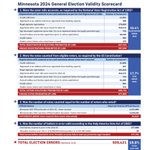
To be clear, these are allegations, not 20,000 proven illegal votes. The identities and citizenship status of the individuals must be verified, and eligible citizens must not be wrongly excluded. This mirrors the work Unite4Freedom has been doing for three years. The Election Validity Scorecards we have completed for 35 states identify registrations that are questionable based on comparing the data to applicable state and federal law. We are not claiming every one of these concerns is an example of fraud or illegality, but they need to be verified and resolved – not ignored because there are so many.
But the question remains:
When federal investigators flag more than 20,000 registrations as potentially ineligible, shouldn't state officials work to resolve those questions before counting the associated ballots?
Election validity requires more than promises. It requires verification, accountability, and enforcement of the law.
The DOJ is signaling that voter eligibility is not a box to check.
It is a responsibility it intends to enforce
– and that enforcement has made it’s way to the election authorities, not just the voters.
#Unite4Freedom
#ElectionSecurity
#DOJ
#California
WISCONSIN JUST TOOK THE FEAR CAMPAIGN TO THE NEXT LEVEL
Today, the Wisconsin Elections Commission approved official guidance for what poll workers should do if federal agents or law enforcement show up at polling places. Clerks are instructed to notify election administrators, follow observer procedures, and encourage officers planning to visit to wear plain clothes.
Stop and think about what that communicates.
DOJ and DHS have publicly stated that federal agents will not be deployed to polling places as part of a mass enforcement operation. Yet mainstream media coverage has repeatedly elevated the hypothetical possibility of agents appearing at the polls, prompting questions from voters and county clerks.
Now an authoritative state election commission has formalized procedures for responding to that very scenario.
No, this does NOT mean agents will show up. But official guidance carries weight. When the government publishes procedures for a feared event, people naturally ask: Why are they preparing for this if it isn't likely to happen?
That is precisely how an unfounded what-if scenario can become a source of public fear.
Media outlets claim they are trying to reassure voters while repeatedly publicizing scenarios that make people wonder whether voting will expose them to federal agents or police. Now the official machinery of election administration risks reinforcing that same fear.
You cannot claim to be protecting voters from fear while continually giving them new reasons to be afraid.
Election officials have a responsibility to prepare for legitimate contingencies. But they also have a responsibility to communicate proportionately, distinguish documented threats from hypothetical scenarios, and avoid creating the impression that an event is expected simply because it is in the news.
The consequences are not abstract. Voters may hesitate, stay home, or approach Election Day believing that exercising their constitutional right carries a risk that officials have not actually established – actually, that official have said will not be happening.
Our election system depends on public confidence, accurate information, and the assurance that eligible Americans can vote without intimidation. What seems to be slipping past people is the idea that the unfiltered open conversation - warnings - about an event that the federal government has officially stated will not happen – IS INTIMIDATION.
Protect voters. Prepare responsibly. Report facts.
Stop turning hypothetical scenarios into official-looking reasons to be afraid of voting.
Follow @Unite4Freedom for more insight into these news stories. Become a volunteer – Support our work – Donate!
#Unite4Freedom
#ElectionValidity
#Wisconsin
#VoterIntimidation
TEXAS: 500,000+ VOTER REGISTRATION RECORDS CAUGHT IN A SYSTEM FAILURE. WHO WAS WATCHING?
More than 500,000 voter-registration applications and updates went unprocessed in Texas because of a state software failure dating back to October 2025.
But the software error is only part of this story.
THE TIMELINE IS THE PROBLEM.
In July 2025, the Secretary of State's Office launched an overhaul of its voter-registration management system, known as TEAM.
In October 2025, According to DPS (Department of Public Safety), an update caused three data fields to be omitted from the daily information file sent to the Secretary of State's Office. Without the necessary information, the automated process did not properly match and forward affected records to counties.
In March 2026, Texas DPS acknowledged a separate programming failure affecting 992 registration transactions. Voters received receipts confirming their selections to register or update their addresses - yet their information was never properly saved or transmitted.
Officials said the problem was resolved.
In July, voting-rights organizations raised further complaints. Officials again offered assurances that technical problems were being addressed.
By late August, DPS says it had identified the missing-data problem behind the much larger backlog. The error was reportedly fixed by September 13.
Then came the revelation: MORE THAN 500,000 RECORDS had been held up, and county election offices were left scrambling to process them just before the October 5 registration deadline.
SO MUCH FOR “PROBLEM RESOLVED.”
How does a system issue get identified, supposedly corrected, and monitored - REPEATEDLY - while hundreds of thousands of records remain unprocessed?
Where were the independent checks? Where were the alerts? Where was the reconciliation between what voters submitted, what receipts told them, and what the state's actual voter-registration system recorded?
A receipt is not a registration. A claimed software fix is not proof that the system is working. And clearing a backlog is not proof that every affected record has been correctly reconciled.
AND WHY DID THE PUBLIC LEARN THE FULL SCOPE SO LATE?
Officials had received warnings months earlier. Complaints continued. Yet the scale of the failure became public only in late September, with the registration deadline days away and a major election approaching.
This raises a serious transparency question: Why weren't voters told sooner that a system they relied on might not have completed their registration or address update?
County officials say they have cleared the backlog. Good. But that is damage control - not a complete accounting of what failed, who was affected, or whether the underlying weaknesses have been corrected.
VALID, SECURE ELECTIONS REQUIRE MORE THAN CRISIS MANAGEMENT AND ENDLESS PROMISES THAT EVERYTHING IS NOW ‘FIXED’
They require election authorities to maintain reliable systems, detect errors, verify that corrective actions actually work, disclose material failures promptly, and protect every eligible voter's right to cast a ballot.
Every eligible voter must be able to know that when the government says their registration was received, the system actually did its job.
Texas owes its voters answers - not just assurances.
This is why Unite4Freedom is fighting for Valid, Transparent, Auditable Elections where the results can be proven.
Texas deserves that – every eligible voter in America deserves that.
Support our work – become a volunteer – donate!
#Unite4Freedom
#ElectionSecurity
#Transparency
#Texas
THE FIGHT TO KEEP INELIGIBLE VOTERS FROM CASTING BALLOTS IS ESCALATING IN CALIFORNIA.
JULY 16: Homeland Security Secretary Markwayne Mullin informed California that the federal government believed noncitizens were registered to vote. California challenged the reliability of the federal claims and questioned the evidence behind the numbers.
JULY: The administration expanded its demands for states to review voter rolls and verify citizenship. DOJ also pursued access to sensitive state voter-registration data, triggering legal battles over federal authority and voter privacy.
OCTOBER 9: A federal judge ruled against DOJ’s broader voter-roll verification policy involving federal immigration databases, citing legal limits and the risk of incorrectly flagging naturalized citizens. But his is not that policy – this is a focused investigation of a specific list of individuals that have already been sent a ballot.
OCTOBER 13: DOJ escalated the confrontation. Acting Deputy Attorney General R. Trent McCotter sent California Secretary of State Shirley Weber a 48-hour demand after federal officials provided Los Angeles County with a password-protected USB drive containing names of people the government believes are likely noncitizens who were sent mail-in ballots.
The demands are explicit:
• STOP sending ballots to those identified until citizenship is verified.
• SEPARATE ballots returned by those individuals.
• WITHHOLD those ballots from counting until eligibility is determined.
DOJ warns it will seek emergency court intervention if California does not comply.
NOW THE QUESTION IS WHETHER CALIFORNIA WILL COMPLY, CHALLENGE THE DEMAND, OR FORCE THE MATTER INTO COURT.
Let’s be clear: Noncitizens cannot vote in federal elections. State election authorities have an affirmative responsibility to enforce eligibility laws, protect the integrity of the ballot, and ensure every eligible citizen can exercise their right to vote.
But allegations must be verified. A database flag is not proof of non-citizenship, and the public needs answers about the list, the methodology and accuracy.
This is no longer just a debate over voter-registration records.
It is a direct confrontation over determining eligibility and what happens to ballots already in circulation.
THE STANDARD MUST BE NONNEGOTIABLE: PROTECT EVERY ELIGIBLE CITIZEN’S RIGHT TO VOTE WHILE KEEPING EVERY INELIGIBLE PERSON FROM VOTING.
Election officials have a duty to do both
— and the American public deserves evidence, transparency and accountability.
Unite4Freedom is fighting for exactly that - valid, transparent and auditable elections.
Support our work - become a volunteer - donate!
#Unite4Freedom
#California
#DOJ
#ElectionSecurity
YOUR BALLOT CAN BE MAILED ON TIME AND STILL BE REJECTED. READ THAT AGAIN.
USPS changed its regional mail transportation and processing procedures to handle mail more efficiently. Those changes were about the broader postal network—not ballots, elections, or election materials. But they created a serious problem: the day you deposit your ballot may not be the day USPS postmarks it.
The results are showing up in the data.
Washington rejected 20,267 ballots as late in its 2026 primary, up 32% from 2024 - even as turnout declined. Some rural counties saw late-ballot rejections triple or quadruple.
Oregon rejected 7,314 ballots that arrived within its seven-day grace period because their postmarks were dated after Election Day. California's share of late-arriving mail ballots climbed from 0.3% in 2024 to 1.1% in its 2026 primary.
These are not theoretical concerns.
A voter can follow the rules, return a ballot, and still face rejection because the postal system's processing schedule determines a postmark that the voter cannot control.
USPS recognized the problem and understood what EO 14399 was asking be done so they developed special election-mail procedures to prioritize ballot handling, accelerate transportation, and address postmark delays.
Sadly the fight over the administration's proposed mail-ballot verification system - and the legal challenges surrounding the administration's new election-mail restrictions - resulted in court injunctions and stopped that system from being implemented for the 2026 election. USPS subsequently announced extraordinary measures for the November election, but those are not the same as implementing the blocked verification system.
The legal battles have consequences. Now we are seeing that the timing and cumulative effect of those challenges left voters exposed to a problem that could have been addressed differently.
THE BOTTOM LINE: Election officials have a duty to protect every eligible voter's right to have a ballot counted. Postal procedures need to be evaluated honestly – rules were built to address mail-in ballots like they are a priority, but people and organization decided they knew better so those rules are not in place for this election.
A ballot is not just another piece of mail. It is a citizen's vote. It should be treated accordingly.
Unfortunately for this election, when we could have listened to the USPS - the experts in the mail processes - for how to handle election mail. Instead, activist judges listened to activist complaints and now this is where we are left.
Only once we have valid, transparent and auditable elections where the results can be proven, will we know our elections are conveying the will of the people.
Unite4Freedom is working to achieve exactly that – we need your support – become a volunteer – Donate!
#Unite4Freedom
#ElectionSecurity
#ElectionValidity
#USPS
16 PEOPLE CHARGED. BUT WHAT ABOUT THE ELECTION AUTHORITIES?
On October 12, the DOJ announced charges against 16 individuals across 11 federal judicial districts for alleged election crimes, including noncitizens voting in federal elections, falsely claiming U.S. citizenship on voter registrations, voting in multiple elections over many years, voting twice across state lines, and attempting to submit a deceased person's ballot.
These allegations deserve investigation. But so does the SYSTEM that allowed these vulnerabilities to exist.
The Unite4Freedom analysis has identified more than 38 MILLION voter registrations across 35 states with material issues requiring investigation and reconciliation. Those registrations were associated with more than 20 MILLION votes cast in the 2024 election.
These are registrations flagged for further investigation - not 38 million proven illegal registrations but 38 million questions that needs answers - the scale itself demands answers.
Individual prosecutions address individual cases. Election authorities control the systems, maintain the rolls, administer the processes, and have affirmative responsibilities to comply with state and federal law. Their decisions can affect millions of registrations and ballots.
So here's the question:
WHEN WILL THE DOJ TURN ITS ATTENTION TO THE ELECTION AUTHORITIES RESPONSIBLE FOR THESE SYSTEMS?
Arresting individuals addresses alleged violations one case at a time. Investigating systemic failures could identify the causes, establish accountability, and drive reforms that strengthen election security nationwide.
State election authorities have an affirmative responsibility to uphold the law, protect every eligible American's right to vote, and prevent ineligible individuals from casting ballots. These duties are not mutually exclusive. They are the foundation of valid, secure election.
Every eligible voter deserves the opportunity to cast a lawful ballot - and every lawful ballot deserves protection from dilution by ineligible voting.
Unite4Freedom is serious about valid, transparent and auditable elections.
If the DOJ is serious about valid, secure elections, they cannot stop at the individual voter.
They must examine the institutions responsible for administering our elections - and hold them accountable when systemic or individual failures are identified.
Election security requires more than prosecutions. It requires systemic accountability.
Unite4Freedom has a litigation strategy that is currently under way. We need your support. Join us – become a volunteer – donate!
#Unite4Freedom
#DOJ
#Arrests
#ElectionValidity
ANOTHER RED HERRING? FEAR WITHOUT EVIDENCE.
Politicians and election officials keep warning Americans to prepare for ICE or federal agents at polling places. But where is the evidence?
DHS has officially stated that ICE has NO PLANNED OPERATIONS targeting polling locations. That message has been delivered to state election administrators.
Yet the warnings continue.
The Pittsburgh Post-Gazette reported on October 10 that Pennsylvania voting advocates were preparing for the possibility of ICE-related election disruption. State Rep. Malcolm Kenyatta, a Democrat from Philadelphia, has proposed amending Pennsylvania law to explicitly include federal agents in restrictions on law-enforcement presence near polling places.
On September 24, Senate Democratic Leader Chuck Schumer, House Democratic Leader Hakeem Jeffries, the Democratic Party and allied campaign organizations filed a lawsuit seeking to prevent the administration from sending armed federal agents to polling places.
…and where is the logic in these concerns? These same people are the ones claiming there are no non-citizens on the voter rolls – that there will be no non-citizens voting. One would conclude then that polling locations would be the last place to look for non-citizens, right?
When the responsible agencies say no such operation is planned, why keep fueling a narrative that encourages Americans to fear their own federal government?
This is how distrust spreads. One party warns of a threat without producing evidence of an actual deployment plan. The other becomes the target of suspicion. Citizens are left fearful, divided, and questioning the integrity of an election before a single vote is cast.
You cannot condemn the creation of fear while repeatedly amplifying the very fear you claim to be fighting.
Demand evidence.
Demand transparency.
Stop turning hypothetical scenarios into political flashpoints.
America has real election-security challenges to address. This is where we should be focusing our attention – instead of unfounded warnings manufacturing another partisan conflict.
But after all, that is the point, right? Avoid solutions that will move the needle by stirring up fear and divisiveness as a distraction.
Every eligible voter deserves better than this
#Unite4Freedom
#ElectionSecurity
#DHS
#DOJ
ARE VOTERS FINALLY RECOGNIZING THE RISKS OF MAIL-IN VOTING? THE NUMBERS ARE TELLING A STORY
New early-voting data reveal a significant shift in mail-ballot requests ahead of the November 2026 midterms.
NORTH CAROLINA — Compared with the same point in 2022:
• Democratic mail-ballot requests: DOWN 40%
• mail-ballot requests: DOWN 23%
• Ballots returned among Democratic requesters: 22%, versus 17% at the comparable point in 2022.
GEORGIA — Compared with the 2022 midterm cycle:
• Requests in strongly Harris-voting precincts: DOWN 52%
• Requests in strongly Trump-voting precincts: DOWN 39%
These Georgia figures reflect precinct-level voting patterns, not individual voters' party affiliations.
CONFIDENCE IN USPS DELIVERY
A September 2026 Marist poll found that Democratic confidence in timely mail-ballot delivery fell from 86% before the 2024 election to 60%. The reported decline among Democrats was not mirrored by a comparable decline among Republicans - but Republicans historically use mail-ballots less than Democrats do.
State procedures and election calendars matter when comparing these numbers.
What do these numbers mean? They document changes in mail-ballot requests and returns, but they do not prove why voters are changing their behavior or whether overall turnout will fall. A pattern is emerging and the pattern is encouraging.
Mail voting involves multiple steps: ballot issuance, delivery, completion, return, receipt, verification, and counting. Each step requires safeguards, accurate records, and clear accountability.
There are new USPS rules waiting for implementation as well, so we will see if this will further shape voter confidence in the process.
The central question is whether every ballot can be tracked, protected, and counted reliably - and whether the public has confidence in that process.
Election officials should publish transparent performance data, explain chain-of-custody procedures, document rejected and delayed ballots, and address identified weaknesses without partisan assumptions.
The goal should be straightforward: a secure, verifiable election process that earns public confidence, protects eligible voters, and counts every lawful ballot.
Unite4Freedom will continue its work to achieve valid, transparent and auditable elections where the results can be proven.
We are in the middle of our legal strategy and we need your help – Support our work – Volunteer – Donate!
#Unite4Freedom
#ElectionSecurity
#USPS
