

#CountryOverParty A movement to put voters first.
Denver, CO
Joined May 2011
- Tweets4.4K
- Following1.2K
- Followers8.1K
- Likes1.2K




Pinned Tweet
🗳️ Over 100 million Americans are voting today. But in the vast majority of congressional races, today’s votes won’t decide the winner.
According to @UniteAmerica research, just 9% of eligible voters effectively elected 84% of the U.S. House months ago in low-turnout primaries.
Read what we already know about the 2026 elections: uniteamerica.org/articles/el…

Early results show Alaskans voting to protect their election system: “No” on Ballot Measure 2 is leading with nearly 52% of the vote to preserve top-four open primaries, ranked choice voting, and donor transparency.
Read the latest returns: alaskapublic.org/news/politi…

Yesterday, voters across the country overwhelmingly supported protecting and defending the ballot initiative process.
“Last night was a continuation of a consequential year for election reform. " -@NickTroiano
Post-election analysis here on the ballot measures @uniteamerica is tracking:
uniteamerica.org/articles/st…

For those tracking results in Alaska, it could be some time before we get final numbers 🗳️⬇️

When will we get election results from Alaska?
The state has long accepted ballots 15 days after Election Day – well before adopting ranked choice voting.
Due to Alaska's size, geography, & laws, it has frequently taken all 15 days to call close races.⬇️
fairvote.org/when-should-we-…

🗳️Voting this November is essential, but it’s not the only election that matters.
As our Policy Director Beth Hladick explains, the party primary effectively decided the winner in nearly 90% House districts this year - where turnout was only in the low 20s.
Make a plan for November, and make a plan for the primary next time. More on the 2026 Primary Problem here: uniteamerica.org/primary-pro…
1
5
221


@NPR's @AshLopezRadio: "Alaska's unique system could actually blunt the effects of any potential scheme.
The state has a top-four nonpartisan primary system and ranked-choice voting, which means that Republicans, Democrats and independents all got to weigh in on the same ballot during the primary. And they had an opportunity to block the other Sullivan from the ballot, but they didn’t. He was one of the top four vote-getters.
Also, because of ranked-choice voting, if voters are confused, they could rank both Dan Sullivans and not rank Peltola."
npr.org/2026/10/29/nx-s1-602…

With the World Series underway, @MLB has proven that expanding postseason access delivers better competition.
Meanwhile, 87% of congressional districts in 2026 are already foregone conclusions before November arrives.
Why our elections need to take a page from baseball’s playbook from @uniteamerica's Carlo Macomber: uniteamerica.org/articles/it…

On November 3, voters aren't just choosing candidates - they're deciding who gets to participate in our elections and whether citizens keep the power to change the rules.
From open, all-candidate primaries in Alaska and Massachusetts to protecting citizen initiatives in Montana, Missouri, and Utah, the future of election reform is on the ballot.
Unite America breaks down what's on the ballot across the country: uniteamerica.org/articles/un…

Roughly one-third of the U.S. House - 147 seats - will be filled by politicians who ran unopposed in their primary and face no real competition this November.
As @NickTroiano writes in @RCPolitics, for most of the country, the primary is the election, and most voters were never invited to participate.
Read: realclearpolitics.com/articl…

@McConaughey citing The Primary Problem: "The system has never been more lopsided. In 2024, 87% of U.S. House seats were effectively decided in party primaries - by just 7% of voters."

After a decade building and leading Unite America, founding Executive Director @NickTroiano will step down March 1, 2027. We’re grateful for his leadership and excited for Unite America’s future as our Board launches a national search for our next CEO.
uniteamerica.org/articles/un…

Calls to “terminate” Alaska’s ranked choice voting miss the bigger picture: Measure 2 would eliminate far more than RCV. A YES vote wipes out the entire three-part reform Alaskans passed in 2020:
🗳️Top-4 open primaries
🏅Ranked choice general elections
💰Dark money disclosure rules
The irony? The "vote-splitting" concerns critics cite are the exact problems the system was designed to solve. Meanwhile, primary turnout reached over 31% this cycle, candidate competition is up, and uncontested races dropped to 16%.
Read our full analysis ⬇️
uniteamerica.org/articles/tr…

5
252
Just 9% of voters have already effectively elected nearly 90% of the U.S. House before November.
Because safe, gerrymandered districts make the November election a formality, races are decided in primaries where less than 10% of voters turn out.
Worse: many House members didn't face a single primary opponent in their safe seats.
This is the Primary Problem. Learn more: uniteamerica.org/primary-pro…
#ElectionReform #Democracy #PrimaryProblem #UniteAmerica
BREAKING: The PA House just passed HB 280 in a bipartisan vote! 🗳️
This brings 1.4 million independent Pennsylvanians one step closer to having a voice in every taxpayer-funded election. Next stop: the Senate.
Read our full statement 👇
uniteamerica.org/articles/st…

📊 How are voters experiencing the Primary Problem in real time? A new national poll sponsored by Unite America Institute shows:
🚨 62% say wealthy donors & Super PACs have too much influence, compared to just 13% of ordinary voters
🚨 74% say Congress is not effectively addressing the country’s biggest problems
✅ More than 70% said all voters - including independents - should be able to participate in either party’s primary
Dig in to the poll’s findings here: uniteamerica.org/articles/ne…

With general elections less competitive than ever, primaries decide who controls Congress. But only ~20% of voters show up.
New analysis from American University professor @Jferrer505 on primary rules and state voter files since 2000 reveals how unrepresentative primary voters really are today:
📊 Primary Voters vs. Eligible Population:
• Avg Age: 61 vs. 48
• Unaffiliated Voters: 10% vs. 34%
• Non-White Voters: 15% vs. 26%
Read the full analysis: uniteamerica.org/articles/op…

🚨 2026 PRIMARY ANALYSIS 🚨
📉With less than 10% of voters effectively electing nearly 90% of the U.S. House, this is the least competitive election of our lifetime.
🔒16 states held closed party primaries in 2026, barring approximately 16.5 million registered independent voters from participating.
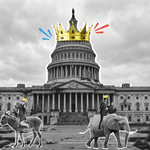
👑 150 candidates were "crowned" - they ran unopposed in the dominant party primary for a safe seat, and face no meaningful competition in the general election - effectively winning their seat without having to secure a single vote.
This is the Primary Problem.
uniteamerica.org/articles/20…

150 winners of primary elections faced no opposition in the primaries, and now head into the general election without any doubt of their victory in November.
What's more, our 2026 analysis shows that less than 10% of voters effectively elected 88% of the U.S. House before a single vote is cast in the general election.
"I think we’re entering a period in our politics where increasingly people are looking for solutions to the corruption and dysfunction they are seeing,” @NickTroiano in the @washingtonsun
washingtonsun.com/us-news/co…

The reality as primary season concludes: less than 10% of voters elected nearly 90% of the U.S. House before a single vote is cast in the general election.
"No wonder Congress has an abysmal approval rating—most Americans did not elect them, and they are not representing the majority of voters in turn." - @NickTroiano in the @washingtonpost from @merica.
washingtonpost.com/politics/…
