

Welcome to the X page of https://xitter.cf/t.co/qT49TKsP7T, an online platform dedicated to the exploration of a vast and mysterious #universe. #astronomy #space #science
Poland
Joined May 2026
- Tweets1.9K
- Following55
- Followers235
- Likes3.1K






Pinned Tweet
The Silent Armada: Mapping Humanity’s Longest-Enduring Messages in the Deep🛰️🌌
As we go about our daily lives on Earth, a tiny fleet of human-made objects is silently slipping away into the colossal, ink-black expanses of the cosmos. These spacecraft, some still whispering their data back to us through billions of miles of void and others long since dead, represent the outer boundary of human reach. They are our emissaries to the stars, traveling on trajectories that will outlast our cities, our nations, and perhaps even our species.
To understand their journey is to confront the terrifying, beautiful scale of the universe. In space, distance is so vast that miles and kilometers lose their meaning; instead, we measure their journeys in “light hours”, the time it takes for their signals, traveling at the speed of light, to bridge the gap back to Earth.
Here is the current state of humanity’s furthest outliers, our past ghosts, and our ambitious future scouts.👇👇👇
universelost.com/2026/10/07/…
#Voyager #Pioneer #FermiExplorer #NewHorizons

China’s commercial space sector just pulled off another offshore launch. 🇨🇳🚀
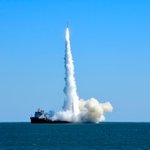
At 11:39 a.m. Beijing Time, October 21, Galactic Energy launched a CERES-1 Y8 solid-fuel rocket directly from a mobile sea platform off the coast of Rizhao, Shandong Province. The rocket successfully deployed a commercial remote sensing satellite into orbit.
This marks the 7th successful sea-based launch for the CERES-1 vehicle, and brings Galactic Energy’s total tally to 23 successful orbital missions delivering 90 commercial satellites. Launching from the ocean allows for extreme flexibility in orbital inclinations while ensuring spent rocket stages drop safely into international waters rather than over populated landmasses.
The global commercial launch market is rapidly expanding, and #China's private sector is proving they have reliable, operational hardware ready to fly from anywhere.

For years, astronomers looking at young, compact protoplanetary disks, the spinning clouds of gas and dust around newborn stars, saw only smooth, featureless blobs. They assumed these tiny systems simply lacked the complex planetary assembly lines found in massive stellar nurseries.
They were wrong. They just didn't have the resolution.
Using the ALMA observatory in Chile pushed to its absolute maximum resolution limit (0.02 arcseconds), astronomers zoomed in on 11 extremely compact disks in the Lupus star-forming region.
When they zoomed in far enough, the "smooth" disks vanished. Instead, they revealed incredibly intricate rings, gaps, and carved-out cavities right next to the host stars.
These newly discovered planetary assembly lines are operating within 10 Astronomical Units (AU) of their stars, a zone directly mirroring our own inner solar system where Earth, Mars, and Jupiter formed.
The mathematical models suggest that these tiny gaps are actively being cleared out by forming super-Earths and mini-Neptunes, capturing planetary construction in real-time.

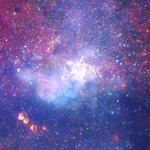
Using the James Webb Space Telescope (JWST), researchers from the McGill University just analyzed the gas swirling around Sagittarius A*, the supermassive black hole at the center of the Milky Way. It turns out the surrounding gas is surprisingly rich in heavy metals, which were likely deposited by older stars that exploded over time.
What makes this interesting is that our black hole actually consumes material much slower than other supermassive black holes. Because these heavy elements dictate how quickly the gas cools down, this metallic makeup directly impacts how readily material gets pulled into the void.

Neptune didn't form its largest moon, it stole it. Triton is a rogue dwarf planet violently captured from the Kuiper belt, and the proof is in its trajectory: it is the only large moon in our solar system that orbits its planet completely backward.
Even though surface temperatures plunge to a staggering -391°F, this frozen world is shockingly alive. Deep internal tidal heating powers massive cryovolcanoes that blast plumes of nitrogen gas and dark dust miles into the alien sky.
But the most incredible part of Triton is its ultimate fate. Because it orbits in reverse, Neptune's gravity is slowly draining its orbital energy, dragging the moon inward. Billions of years from now, #Triton will cross the Roche limit, where it will be completely ripped apart to form a spectacular icy ring system around Neptune that could one day rival Saturn's. 🔵🪐

Watching the aerospace industry shift this year has been absolutely wild.
Just a few weeks ago, we saw SpaceX's Starship hit a massive milestone with Flight 14, finally achieving orbit and deploying its first operational payloads. Earlier this year, NASA's Artemis II mission pushed the boundary by setting a new distance record for human spaceflight around the Moon.
The game is so radically different from even five years ago. If you're still thinking about space access in terms of disposable, multi-billion dollar rockets that launch once and burn up in the atmosphere, you're missing the massive economic shift happening right over our heads.
Fully reusable, heavy-lift orbital delivery is officially going mainstream.
Iterative engineering and rapidly dropping launch costs really feel like the only way we realistically become a multi-planetary species.
Rocket Lab has officially stood down from today’s Electron launch attempt for HawkEye 360 after detecting out-of-family telemetry data during vertical operations on the pad in New Zealand.
When dealing with orbital mechanics and zero margins for error, anomalous sensor readings mean an automatic halt. The rocket and payload are completely secure while engineers review the numbers.
The launch window remains open through the week. They’ll fly when the data is pristine.
#RocketLab

☕️Morning Orbital Briefing | Oct 21, 2026:
1️⃣ Rocket Lab: Electron launches "We're Not Hawking Around" from NZ today, deploying 3 HawkEye satellites. 🚀
2️⃣ Starship: SpaceX confirms Flight 15 will attempt a historic "double catch" of both the booster & ship mid-air. 🦾
3️⃣ Meteors: Earth hits Halley's Comet debris tonight, triggering the Orionid peak. ☄️
4️⃣ Starfall: SpaceX's reentry vehicle is now powered up in LEO. 🌍
SpaceX didn't just crush Wall Street’s #Q3 estimates today, they completely redefined what kind of company they are.
Posting a staggering $14.58 billion in revenue and a massive $4.4 billion net profit, the real shockwave is hiding in the segment breakdown.
#SpaceX is no longer just an aerospace manufacturer. The newly renamed "SI" (Superintelligence) division exploded by 830% year-over-year to $7.56 billion, officially eclipsing both the space and Starlink connectivity segments. By rapidly standing up a jaw-dropping 1.7 gigawatts of installed compute infrastructure, they have turned their massive AI investments into their primary cash engine. Armed with 13.6 million active Starlink subscribers and an unbelievable $90 billion cash war chest, this earnings report proves Wall Street is no longer valuing a rocket builder.
We are watching the real-time formation of a sovereign-scale conglomerate that simultaneously dominates orbital logistics, global telecommunications, and artificial intelligence under a single ticker. 🚀

Right now, two identical spacecraft named Blue and Gold are setting up one of the most audacious deep-space maneuvers ever attempted.
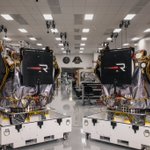
Built by @RocketLab for NASA and UC Berkeley, the twin #ESCAPADE probes have spent the last twelve months silently loitering in a high-altitude gravitational parking orbit near Earth. But next month, the planetary geometry finally aligns, and it is time to execute the shot.
In a meticulously choreographed sequence, both spacecraft will dive back toward Earth, using our planet's immense gravity well to slingshot themselves forward. At the exact moment of maximum velocity during their closest approach, they will fire their main engines in a single, continuous, make-or-break burn. This is known as an Oberth maneuver, a brilliant application of orbital mechanics that uses the extreme kinetic energy of a gravity assist to exponentially multiply the efficiency of their thrusters. It is a terrifyingly precise, high-stakes operation that has never been successfully executed by a coordinated, multi-spacecraft planetary mission before.
If this trans-Mars injection succeeds, Blue and Gold will break free of Earth’s gravitational hold and begin an 11-month cruise to the Red Planet to study how solar winds are stripping away the Martian atmosphere. If the math or the hardware fails, they miss the transfer window entirely.
Rocket Lab’s mission control is currently locked in full-scale rehearsals, running every possible contingency before the live event.
We are watching the dawn of commercial, low-cost, multi-probe interplanetary exploration, and the ultimate test happens next month. 🚀🔴

Comet ATLAS isn't just a dirty snowball, it’s an ancient, frozen time capsule that’s been drifting through the deep dark for tens of thousands of years. ☄️✨
Right now, Comet ATLAS is plunging through the inner solar system, baking under intense solar radiation after tens of thousands of years in the cosmic freeze.
Racing at over 150,000 mph, its ancient icy core is boiling into a glowing tail millions of miles long. The last time a visitor like this swept past Earth, early humans were still sharing the planet with Neanderthals.
Because of its extreme orbit, this is a one-way ticket, slingshotting around the Sun before disappearing into the deep dark forever.
Look up while you can.🔭

Right now, in October 2026, humanity is quietly operating an active interplanetary civilization. 🌌✨
🟠Mars: #MMX is racing to land on Phobos while 3 rovers explore the surface.
☀️Sun & Deep Space: Earth is absorbing a G1 solar storm while plowing through Halley’s Comet dust.
🌑Mercury: BepiColombo is closing in for its final arrival.
🌍Earth Orbit: SpaceX is launching heavy orbital freight multiple times a week like a commercial airport.
Humanity spent millennia staring up at the stars. Now, our hardware is everywhere. Look up. 🌍💫

LIFTOFF at 7:04 AM EDT! SpaceX's Falcon 9 roars off SLC-40 at Cape Canaveral, punching through the Florida morning to send 32 payloads into mid-inclination orbit for #Bandwagon -5! 🚀✨
After holding 34 minutes into the one-hour window, booster B1085 ignited all 9 Merlin 1D engines for its 19th successful flight.
Minutes after staging, B1085 executed its entry and landing burns, touching down safely on A Shortfall of Gravitas.
Delivering SpaceX's Starfall reentry test capsule (~4,600 lbs), Varda’s W-7 orbital pharma lab, and 30 customer satellites.
Routine orbital logistics in action. 🌍🛰️

☕️Morning Orbital Briefing | Oct 20, 2026:
1️⃣ Bandwagon-5: Falcon 9 targets 6:30am ET today from Cape Canaveral carrying 32 payloads (including Starfall & Varda) after yesterday's weather scrub.
2️⃣ MMX Liftoff: JAXA's MMX launched today on an H3 rocket! Now en route to land on Phobos and return Martian moon samples to Earth by 2031.
3️⃣ G1 Solar Storm: NOAA predicts a G1 geomagnetic storm today as a high-speed solar wind stream slams into Earth's magnetosphere.
4️⃣ 36th Flight Record: SpaceX targets another launch today from California, booster B1063 flying for a mind-blowing 36th time.
The frontier never sleeps. 🪐
Japan just launched humanity's first-ever mission to land on a Martian moon and bring pieces of it back to Earth. 🇯🇵🔴
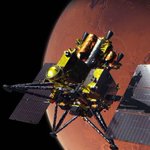
At 04:41:03 JST on October 20, 2026, JAXA’s Martian Moons eXploration (MMX) spacecraft lifted off atop an H3 rocket from Tanegashima Space Center. Spacecraft separation was confirmed 71 minutes later, locking MMX onto its trans-Mars trajectory.
MMX is heading for Phobos, the heavily cratered, mysterious moon orbiting just 3,700 miles above the Martian surface. It will land a 4-legged rover, drill directly into the surface, and collect pristine samples of alien soil.
After conducting flybys of Mars' outer moon Deimos, MMX will ignite its engines and bring those Phobos samples back to Earth by 2031.
We aren't just sending orbiters to take photos anymore as deep-space hardware is actively harvesting material across the solar system. 🚀🪨
#JAXA #MMX

Europe is officially building a "service station" on the Moon.
ESA has unveiled #OASIS (Outpost for Advanced Scientific Investigation Station), a modular utility grid designed to solve the single hardest problem in lunar exploration: surviving the brutal 14-day lunar night.
Temperatures during the two-week darkness plunge below -130°C (-200°F), destroying unheated electronics. OASIS collects solar energy during the day to feed a continuous survival power grid through the dark.
Instead of every payload carrying heavy, expensive batteries and radio transmitters, OASIS acts as a central power dock and communications hub via ESA’s Moonlight satellite constellation.
Future iterations are designed as sheltered service bays where autonomous rovers can dock, recharge, and safely ride out the freezing night.
Delivered via the heavy Argonaut lander on an Ariane 6, OASIS marks the European pivot from single-shot science landers to permanent, sustained infrastructure on the #Moon .

UPDATE: SpaceX is standing down from today's Falcon 9 launch of the Bandwagon-5 rideshare mission from Cape Canaveral. 🛑
When deploying 30+ commercial payloads on a 19x-flown flight-proven booster (B1085), mission assurance and zero-margin safety come first.
Teams are now targeting the backup opportunity tomorrow, Tuesday, Oct 20 at 6:30 AM ET (10:30 UTC) from SLC-40.
The hardware is ready when the conditions are perfect. 🚀
#Falcon9 #Bandwagon5

☕️Morning Orbital Briefing | Oct 19, 2026:
1️⃣ Bandwagon-5: Falcon 9 lifts off at 6:30am ET today, lofting more than 30 payloads and possibly creating a predawn "jellyfish" effect over Florida.
2️⃣ MMX to Mars: JAXA launches its historic Phobos sample-return probe today at 3:41pm ET (Oct 20, 4:41am JST in Japan) on an H3 rocket.
3️⃣ Orionids and Space Weather: Earth enters Halley's Comet debris stream this week, bringing fast meteors alongside tomorrow's G1 solar storm.
The frontier never sleeps. 🚀
#OrbitalBriefing
🚨Incoming: The Sun has opened a massive coronal hole, and Earth’s magnetic shields are preparing to take a direct hit from a high-speed solar wind stream. ☀️
National Oceanic and Atmospheric Administration (#NOAA) has officially flagged an approaching G1 Geomagnetic Storm targeting our planet on October 20th, with the planetary Kp index expected to surge to 4.67 during the early UTC hours.
While a G1 classification is considered a "minor" event on the official space weather scale, the physics behind what is about to happen in our upper atmosphere is absolutely staggering.
When supercharged solar electrons hit the upper atmosphere, they violently collide with oxygen and nitrogen atoms. This collision transfers massive amounts of energy to the atmospheric gases, causing them to temporarily "excite." As those atoms relax back to their baseline state, they release that stolen energy as visible photons. The sky literally glows. A G1 storm has the power to stretch this auroral oval further south, pushing the Northern Lights past the Arctic Circle.
Even a minor G1 storm pumps massive amounts of electrical current through the ionosphere, forcing engineers to monitor high-latitude power grids for voltage fluctuations and prompting satellite operators to account for increased atmospheric drag in Low Earth Orbit.
#SpaceWeather

Venus is officially back on the menu!
After major budget threats, NASA is accelerating its return to Earth's toxic twin.
-DAVINCI (2030): Launching a year early! A descent probe will parachute through the crushing atmosphere, returning the first direct surface images since 1982.
-VERITAS (2032): An orbiter mapping the blistering volcanic surface with high-res radar.
We're finally going to figure out how a planet just like Earth turned into a 900°F hellscape.
#Venus

Orbital momentum never stops. Next week in space:
1️⃣ Oct 19: SpaceX launches Bandwagon-5, lofting 30+ commercial payloads and the new Starfall demo capsule.
2️⃣ Oct 20: Japan (JAXA) launches the historic MMX mission on an H3 rocket to land on Mars' moon Phobos and return a sample to Earth!
3⃣ Oct 20 & 23: SpaceX continues its relentless LEO buildout with back-to-back Falcon 9 Starlink missions from California.
4⃣ Oct 21-22: Orionids peak! Earth slams into the debris trail of Halley's Comet, sparking 20+ high-speed meteors per hour.
The frontier is wide open. Look up. 🚀
