

Building @fuseenergy as CTO. Energy is an engineering problem.
Joined June 2011
- Tweets249
- Following178
- Followers1K
- Likes250





Pinned Tweet
Turning down a Jane Street offer for @fuseenergy, for less than a quarter of the pay, was the FIRST real decision of my life.
Until then, I’d been an automaton: best school I could get into, job that paid most.
But I wanted to build something from nothing (apparently office chairs included 🪑).
Fuse had about 20 people, and I believed in @alanchanguk and @charlesorr, who’d helped build Revolut. Having done it before is the best predictor of winning again.
I’d accepted a remote role but practically moved into the office for full immersion, working every day to help get Fuse off the ground. Now I lead engineering here.
Seeing us on a billboard makes me glad I went all in with them.


I concentrate responsibility in individuals.
Last week a candidate told me he feels like a cog in the machine. That doesn't happen when the outcome is yours:
1. You stand behind your decisions. You underwrite them, and the results are better.
2. You move faster. Rather than being blocked waiting on someone, you take a problem and run through walls with it.
One of our engineers owned:
Our shop
The data model for products and orders, a mini Amazon inside our app. Plus the vehicle routing constraint optimiser that sends our 175 electricians to every install.
Irish gas and electricity billing
A new market, with its own meter data and its own gas conversion rules.
Market-wide half-hourly settlement
The biggest change to how Britain settles electricity in decades. He works out what each of our 450,000 homes used in every half hour.
One engineer.

Sat: deployed an AI agent that answers anyone, customer or not
Sun: shipped our new website
Mon: announced Jules, the UK's first plug-in solar and battery system. Cheaper per kWh of storage than a Tesla Powerwall.
Tue: made every agent in our fleet model-agnostic: change from Claude to Codex with one line of config
Wed: announced Fuse Compute: NVIDIA GPUs reserved for you alone, in UK data centres powered by Fuse
Thu: wired production up to Ireland, ahead of our Irish launch
Fri: let our AI code reviewer approve PRs without humans (for select classes of PRs)

You can't overweight hunger when you're hiring.
Last year we hired an engineer who was weaker in system design.
What sold us was their red-eyed ambition and ownership.
1. Beat down our door. Operations interviews first, then engineering.
2. Asked for work before day one.
3. Often worked weekends.
4. Was interviewing candidates by month 3.
5. A year later, became engineering leader for our retail backend. Upcoming Ireland launch included.
Hunger sets your rate of improvement.
Everything else is the starting line.
We’re Fuse Compute’s first customer. We won’t be its biggest.
Fuse supplies electricity to 450,000 UK homes, and we never capped that at how much our solar farms generate. When they make more than our customers use, we sell the difference on the market. When they make less, we buy it.
Compute is no different. Our product factory runs on tokens. It’s how we’ll print every new country we launch in, so we’re the first offtaker. Spare GPU capacity gets sold, and when we need more, we buy tokens like everyone else.
Same hungry engineers across all of it. The team that gets our solar farms and peakers onto the grid secured the connection for our first data centre. The software team moved 94% of our customer chat onto GPUs in our office server room, and swapped the attention kernel when the stock one didn’t work.
Cheap power makes cheap tokens. We make both.

Fuse Energy is entering AI compute.
Introducing Fuse Compute: dedicated NVIDIA GPUs in UK data centres hosted and powered by Fuse. Available to businesses globally.
Sensitive customer data needs a clear answer to where it runs and who it runs next to.
With Fuse Compute, it’s bare-metal GPU nodes reserved for you alone, hosted in the UK, under UK jurisdiction.
The hardest part of scaling compute today is getting power to the site, which is the part we already do. With 142MW of data centre connections in the pipeline across 15 projects, compute is our next step. We have the infrastructure to deliver this to businesses globally.
Our first 128 NVIDIA GPUs are due online in December 2026, followed by 1,024 in Q2 2027.
Reserve your capacity now.

Today Britain can't power AI. Our mission is to engineer our way to energy abundance, fast.
April: OpenAI shelved Stargate UK.
Yesterday: Microsoft confirmed it pulled out of the UK's largest AI datacentre.
Treating energy as an engineering problem has put our operating costs about 17% below other suppliers:
➡️ Our AI agent resolves 80% of customer chats on our own GPUs. That's 300 support hires we didn't need.
➡️ Software we built re-plans every electrician's route each time a job is booked.
➡️ Jules, unveiled yesterday: plug-in storage that trades power for you, up to £330 a year back.
➡️ In Spain, we already own and operate part of the grid.
Every one of those has an engineer who owns it.
Next:
➡️ A product factory where agents approve most PRs, minimising human decisions while shipping quality code.
➡️ A trading desk using transformers we train on our proprietary data.
➡️ A 20MW solar farm in Wales, built by our own team.
Britain's power problem is solvable.

Microsoft has pulled out of a UK data center deal with British neocloud Nscale at a critical time for the startup’s initial public offering hopes, the Telegraph reported. bloomberg.com/news/articles/…

Energy is the bottleneck to abundance, and driven engineers will carry the world there.
Last year we hired one who’d found us himself, after months researching energy companies. Our engineers out-coded him in interviews, but his system design round was the best we’d seen.
In March we put him on Jules. He built the whole backend on his own: provisioning, device shadows, telemetry.
Six months later, he was leading our devices team. With our quants, they built the optimiser that charges Jules when power is cheap and powers your home when it’s expensive.
Today, you can reserve Jules for £199 if you fix with Fuse for 5 years.
Working with people like him every day, it’s hard not to be stoked about the future.
Meet Jules by Fuse Energy.
An intelligent energy system for your home. Plug in and autopilot does the rest.
It learns your habits, stores power, trades the excess and continuously lowers your bills.
Solar and storage is now for everyone.
Energy intelligently designed for you.
Up to £330 a year off your bills.
Reservations now open
Two firmware engineers and a plexiglass box.
I still remember my first visit to our hardware lab. December 2025. A warehouse in Hackney. Corrugated steel walls. No meeting rooms. Laptops scattered across workbenches. Intimidating ITECH power supplies.
Inside the box, our power electronics were being tested at high voltage. I could watch, but couldn’t touch.
So I started reviewing embedded C and tracing it up the stack: from firmware to our backend, all the way to the app on your phone. True full stack.
Today, the team has grown to 7 firmware, 6 electrical, 3 test and 5 mechanical engineers. And a much nicer workspace.
Come Monday, you’ll see what comes out of the box.
"Full stack" is the most undersold label in engineering. Why stop at React and Postgres?
At @fuseenergy, full stack runs from a power board to the app on your phone:
1. A backend engineer in SF reviews how security keys get onto the chip.
2. A firmware engineer writes VS Code extensions to debug our power board.
3. I give AI our schematics and talk through the power controls on my commute.
Good engineers have always peeked up and down the stack. With AI, there’s no excuse.

#2 is just #1 on a long list of losers.
FT: ft.com/content/92195205-ac56…
LinkedIn: linkedin.com/pulse/linkedin-…

The biggest bug in Western hardware is distance.
Iteration speed drops with every kilometre. Questions to the factory wait overnight for an answer, and a faulty unit spends days with a courier before an engineer can open it up.
We design in London and build in China, so we patch it in person. Our hardware engineers have been flying out to our manufacturers since August, and over the coming months most of the team will be on the line.
“Energy (…) you got to solve that”
Yes boss 🫡


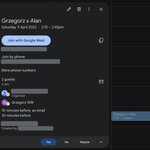
My first date with @alanchanguk, @fuseenergy's founder, was a 30-minute interview on a Saturday in April 2022.
The Saturday was foreshadowing. We've had 130+ weekend catch-ups since.
He sat so deep in his chair I wasn't sure his feet touched the ground. By the end, I was on the edge of mine.
One slide said "Cheaper and with better margins." A bold claim from anyone else. But Alan made @Revolut profitable during COVID. I'd heard plenty of pitches as an angel investor, and learned to bet on people who'd done it before.
The optimal dating strategy is to spend the first 37% of your options just looking, then commit to the first one who beats everyone before. Alan beat all the rest, by 3 sigma.
I committed. Now I run engineering here.

You won't build a trillion-dollar company on work-life balance.
I tell every candidate what it looks like:
Our office is busy at 8pm and buzzing at the weekend. The work is hard, and there's a lot of it. No theatrics: work whenever suits you. Most teams have three regular meetings a week. Maker time over manager time.
This isn't for everyone, and there's nothing wrong with balance. But clocking off at five won't get us to a trillion.
The best recruiter I know recruited himself.
In 2022, @jonnywalsh123 got me a Jane Street offer. I turned it down for Fuse, and he lost his fee.
In 2024, he messaged me: “I’m beginning to consider a move out from agency recruitment.” That July, he made the same choice I did.
In 2026, he became our Director of Recruitment.
No metric predicts a company’s future like talent density.
The first thing I did as Head of Engineering was delete half our codebase.
Early 2023: 4 backend engineers at @fuseenergy, split across Python and Kotlin. I deleted Kotlin.
Organisations are limited by the interfaces in their systems. Every one is a place where work waits on someone else.
Good interfaces are hard to design even when you know what you’re building. When you don’t, they’re all but impossible. You WILL remix what does what.
Every extra language, service or repo makes remixing harder: longer onboarding, request amplification, non-trivial failure modes.
I want our best engineers to cut across the whole system in one PR, singlehandedly.
Today, all of Fuse is one repo.
Burnham has pledged to end non-competes. That fixes half the problem.
The other half is notice periods. A senior engineer in London usually gives three months. In SF it's two weeks, with no non-compete.
So when we need to hire fast, we look in the US first.
The NYSE trades many times the LSE's volume, so its prices find fair value faster. Hiring is a market too. The freer engineers are to move, the faster they find what they're worth. And the faster they end up on the problems where they contribute most.

I left high frequency trading to join @fuseenergy and had to sit out SIX MONTHS of gardening leave (doing no work).
I believed in Fuse and was desperate to witness its early days (+ I’m not built for prolonged holidays 😅).
I now lead engineering here. I believe in the right to EXIT. If this isn’t the best place in the world for my engineers, they should be free to leave.
