

AI-powered reverse-engineering https://xitter.cf/t.co/4ekdN1jbuU
Joined February 2026
- Tweets52
- Following3
- Followers332
- Likes2
New VirLabs research: Tessera, an undocumented backdoor targeting MikroTik RouterOS on TILE-Gx.
The samples had 0 detections on VirusTotal. Underneath a small launcher and wrapper sits a fairly sophisticated remote-control implant.
virlabs.ai/blog/tessera/

[Insert witty knock-knock joke]
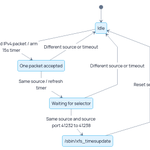
I found an interesting/undetected Linux sample on VirusTotal: a port-knocking launcher that waits for a packet sequence before executing a separate payload, which unfortunately I couldn't find.
virlabs.ai/blog/knock-outd/


In the first sample, uploaded to VT a minute after being compiled, four "models" actually return hardcoded answers ("exfiltrate" always wins). Its handler logs messages and enumerates local interfaces without stealing or sending data. The shellcode generator produces four NOPs.
Hot take: LLM-controlled malware might in fact be very difficult to achieve in practice: attackers simply have no way of meaningfully protecting secrets. If I were to find API keys in a sample, you better believe I'd be "imposing cost" and burning tokens like there's no tomorrow.
Original research: blog.talosintelligence.com/t… (h/t @iknowuhack)

CLOSEDQUORUM, spotted by @TalosSecurity asks four LLMs to decide what a Windows implant should do next. AI-as-a-C2?
I analyzed two samples from their report. There is real experimentation here, but the implant was never really finished.
virlabs.ai/blog/closedquorum….

Two names in a Linux rootkit configuration led back to HestiaCP compromises reported months before Acronis's Red Heron report.
I used VirLabs to follow the trail through SIXZUT, JITTERLY and their infrastructure.
virlabs.ai/blog/red-heron/

Working hypothesis: acquiring servers for staging and proxying may be a substantial part of this actor's job.
The data theft documented by Acronis and GreyNoise could be opportunistic, in the context of mass 1-day exploitation (speculation).
Several related hostnames still resolve to public IPs. The post includes current and historical infrastructure, recovered configurations, and eight sample hashes with very low detections.
Full analysis, with links to the VirLabs reports:
virlabs.ai/blog/red-heron/