

Official Twitter account of the World Health Organization (WHO) Country Office in Namibia.
Windhoek
Joined April 2014
- Tweets4.6K
- Following922
- Followers6.6K
- Likes4.7K
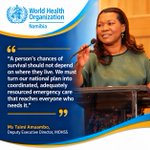





The @MhssNamibia , with technical support from @WHONAMIBIA , brought together stakeholders in Windhoek for the National Consolidation Workshop on the Emergency Care System Assessment and Development of Namibia’s National Emergency Care Action Plan.
The objective: review progress since the 2022 roadmap, address remaining gaps and shape one nationally owned Emergency Care Action Plan for 2027–2031, with clear priorities, responsibilities, timelines, financing needs and measurable results.
Over five days, participants consolidated 13 priorities into nine, strengthening the focus on coordinated services, emergency care data and quality, and preparedness for mass-casualty incidents.
The goal is to translate these commitments into faster access to care, more effective referrals, better-supported health workers and fewer preventable deaths and disabilities.
WHO remains committed to supporting Namibia to finalise the plan and move towards implementation.
Explore the cards for reflections from speakers and participants on strengthening emergency care for everyone in Namibia.
#EmergencyCare #HealthForAll


WHO Namibia retweeted
When extreme heat strikes, how many people become ill or die?
Too often, the true toll remains invisible.
A new global monitoring framework will help countries connect health and heat-exposure data—to support earlier action to protect pregnant women, newborns and children.
Learn more: bit.ly/4zLTLEh

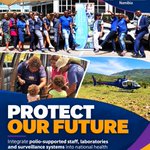
Protect our future.
Integrating polio-supported staff, laboratories and surveillance into Namibia’s health system can preserve expertise and strengthen responses to other health threats.
#WorldPolioDay #EndPolio #HealthForAll

Protection must reach across borders.
Namibia and its neighbours can help stop polio through coordinated vaccination campaigns, timely information sharing and services that reach mobile families.
#WorldPolioDay #EndPolio

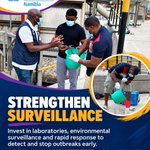
Detect early. Respond rapidly. Protect children.
Investing in laboratories, environmental surveillance and rapid response strengthens Namibia’s ability to detect poliovirus and stop outbreaks early.
#WorldPolioDay #EndPolio

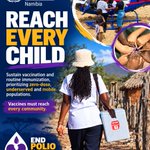
Every child counts—wherever they live.
Let’s strengthen routine immunisation and reach children in underserved communities, mobile families and those who have never been vaccinated.
#WorldPolioDay #EndPolio #Namibia

Protect our gains. Protect Namibia’s children.
Check your child’s health passport and ask your nearest health facility about missed vaccinations. Every child reached brings us closer to ending polio.
#WorldPolioDay #EndPolio

🇺🇳 Walking together for a healthier future!
Today is #UNDay , marking the entry into force of the United Nations Charter in 1945 and celebrating the power of working together for peace and sustainable development.
WHO Namibia joined the UN family for the “UN Walk towards 2030”, with a health talk on breast and prostate cancer prevention and control, plus wellness activities.
Together for a healthier Namibia!
#ProudUN #SDGs #ProudToBeWHO


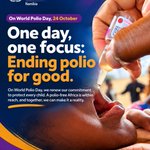
One day. One focus. Ending polio for good.
On 24 October, WHO Namibia renews its commitment to protecting every child through vaccination. Together, let’s build a polio-free future.
#WorldPolioDay #EndPolio

Do not let fear or stigma delay care. Breast cancer is not a curse. Seeking help early is a sign of strength.
#BreastCancerAwareness #EndStigma

Some risks cannot be changed, such as age and family history. Others can be reduced: tobacco, alcohol, physical inactivity and excess weight. Healthy choices help, but still seek care for changes.
#CancerPrevention

Breast cancer can affect men too. Men should report a new breast or chest lump, nipple changes, unusual discharge or persistent changes around the nipple.
#MensHealth #BreastCancerAwareness

Spot the signs: new lump, armpit swelling, nipple change, unusual discharge, skin dimpling, redness or change in breast shape. These do not always mean cancer, but they should be checked.
#KnowTheSigns

The WHO Representative, Dr Richard Banda, met with H.E. Mr Shinichi Asazuma, Ambassador of Japan to Namibia, to review progress on two Japan-funded initiatives supporting cancer prevention and control and malaria response in Namibia.
They also discussed opportunities to deepen collaboration in health systems strengthening, emergency preparedness, and disease prevention and control, highlighting the importance of strong partnerships in advancing health for all.

Tell a health worker if a close family member has had breast or ovarian cancer. It helps assess your personal risk, but it does not mean you will definitely develop
cancer.
#BreastCancerAwarenessMonth #KnowYourRisk

October is #BreastCancerAwarenessMonth
Know what is normal for you. A new lump, nipple change, unusual discharge, skin dimpling or swelling should be checked by a health worker. Do not wait for pain.
#BreastCancerAwarenessMonth #EarlyAction

Honouring Madam Penehupifo Pohamba: A champion for mothers and children
Dr Richard Banda, WHO Representative to Namibia, and the WHO Namibia team extend their heartfelt condolences on the passing of Madam Penehupifo Pohamba, Namibia's second First Lady. Our thoughts are with His Excellency Dr Hifikepunye Pohamba, former President of the Republic of Namibia, the Pohamba family, and the Namibian nation.
We remember with deep respect and gratitude her commitment to the health and well-being of women, newborns and children, and her valued partnership with WHO Namibia.
As we share these photographs of her engagement with WHO and our partners, we honour a valued Patron and advocate whose compassion and service will remain part of Namibia’s maternal and child health story. Her legacy inspires our continued commitment to a future in which no woman or child dies from preventable causes.
May Madam Penehupifo Pohamba rest in peace.
Dr Richard Banda and the WHO Namibia team
🎓 Better data. Earlier action. Healthier communities.
@WHONAMIBIA congratulates the 20 graduates of the SPARK NCD NamFELTP Frontline Cohort X, celebrated in Windhoek on 15 October 2026—NamFELTP’s first frontline cohort dedicated to noncommunicable diseases.
Through three months of practical training and mentored fieldwork, graduates strengthened their skills to check data quality, analyse health information and translate findings into better prevention and care.
“We cannot respond to what we cannot see.” — Dr Richard Banda, WHO Representative to Namibia.
Reliable surveillance helps reveal gaps in screening, treatment and follow-up, guiding resources to the people and communities who need them most.
WHO remains committed to supporting the @MhssNamibia to strengthen data analysis, data use and the integration of NCDs into routine information systems.
Congratulations to the graduates, mentors and partners supporting this @AfricaCDC -led initiative. Your next task: turn evidence into action.
#NamFELTP #SPARK #NCDs #HealthForAll #Namibia


Turning policy into better care in Namibia 🇳🇦
@MhssNamibia , supported by @WHONAMIBIA & @UNFPA_Namibia , brought together 50+ stakeholders in //Kharas to strengthen youth-friendly sexual and reproductive health services, GBV response and referral pathways.
#HealthForAll #EndGBV


WHO Namibia retweeted

Climate resilience cannot sit with one ministry alone.
Led by @MinistryofEnvi2, 🇳🇦’s #NDC3 calls for climate action to shape planning, budgets & investment across government and society.
@UNNamibia stands with Namibia as ambition moves to implementation. #ClimateAction


