

National charity supporting women affected by the criminal justice system & campaigning to end the harm of prison to women, their families & our communities.
- Tweets10K
- Following2.8K
- Followers20.5K
- Likes3.7K







ALT Prisoners rely almost entirely on staff to manage their everyday requests, either through informal conversations or by submitting formal, written ‘applications’. But staff shortages and inexperience can mean prisoners do not always get the help they need. This can lead to frustration and poor behaviour.


ALT Four women in an office setting engaged in a lively creative discussion.

ALT In a screenshot of a Team's webinar, four women are shown in their respective windows. Each sits in front of book shelves and look directly at the screen.

ALT A screenshot of a waiting page for the Justice and Home Affiairs committee. There is an off-white page with the committee title, room and date (Tuesday 18th March 2025) besides a dark blue illustration of Big Ben's clock face.

ALT Purple graphic with white and orange bold text. It reads "Together in power: A plan for real justice for women. 2025-2030" Below the text two women stand side by side with their arms around one another, laughing and smiling.

ALT A text and image graphic with a purple background. In the foreground, headshots of 3 women are edited into purple contrast. The text reads: "Women in Prison What's next for women's justice? Thursday 13 March, 11am GMT, webinar. Moderated by Sonya Ruparel, CEO of Women in Prison. The speakers pictured are Vera Baird KC, Former Victims Commissioner and member of the Women's Justice Board. Kate Fraser, Head of Practice at Women in Prison. Kate Osamor MP, Chair of the APPG on women in contact with the justice system.


ALT Purple text graphic reads: "Rather than addressing the root causes of crime and supporting women in their communities, we have seen an increasing use of prison over the last few decades. There are now double the number of women in prison as there were 30 years ago." Nicola Drinkwater, Director of External Affairs and Campaigns Women in Prison

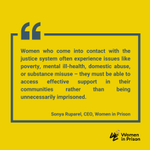
ALT Ochre yellow graphic with steel blue text reads: "Women who come into contact with the justice system – often experience issues like poverty, mental ill-health, domestic abuse, or substance misuse – they must also be able to access effective support in their communities rather than being unnecessarily imprisoned" Sonya Ruparel, CEO of Women in Prison

ALT Orange graphic with 3D balloons that spell "40"

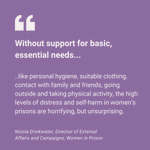
ALT A muted purple graphic with light grey text reads: "Without support for basic, essential needs like personal hygiene, suitable clothing, contact with family and friends, going outside and taking physical activity, the high levels of distress and self-harm in women’s prisons are horrifying, but unsurprising." Nicola Drinkwater, Director of External Affairs and Campaigns, Women in Prison


