

membrane dynamics | pattern formation | cell size | lab @YaleCellBio RT ≠ endorsements
New Haven, CT
Joined January 2016
- Tweets1.2K
- Following382
- Followers833
- Likes2.5K




Min WU retweeted

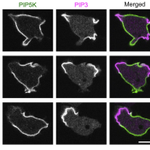
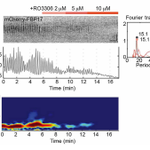
A conserved oscillatory system that positions the divisome in Archaea dlvr.it/TWSQcm #MicroSky

Min WU retweeted

Jon Clardy: 1943-2026
One of the most impactful, creative, and (quietly) irreverent practitioners of chemical biology. Transformed how we think about nature's chemicals: their structures, their role in biology. Loved him -- he had tremendous influence on my thinking.

Min WU retweeted

New Viewpoint: Yannick Frey and Hesso Farhan @Hesso_F_Sci discuss why competing ER export models persist and argue that vesicles, tubules, and tunnels are alternative outputs of a flexible ER export machinery. hubs.la/Q04CCrP90

Min WU retweeted

新しい論文、出ました (doi.org/10.1038/s41467-026-7…)。
@hayamas2017と@BiplabBhatt1988の渾身の一編。細胞キラリティが創る、センチメートル級のスパイラルパタン。開放系のアクティブマターも切り拓く。


Our paper is now out(doi.org/10.1038/s41467-026-7…)!
How is chiral info amplified in a multicellular system to form centimeter-scale chiral structures? @hayamas2017 discovered a beautiful multi-armed chiral spiral pattern in Dicty, and @BiplabBhatt1988 developed a model to explain it.
Min WU retweeted

How does the mitotic spindle adapt to genomes that differ in size by more than 10,000-fold? Our new paper in @NatureCellBio reveals a simple scaling law and the physics behind it: chromosome crowding! 🧵
nature.com/articles/s41556-0…
Min WU retweeted

🎉 Our paper is out today in @ScienceMagazine!
How does the intestine maintain the right balance of cell types? We find that signalling rhythms matter!
So proud of our three shared first authors, Sonja Weterings, @HiromuneEto & @jddeleede!
🔗 science.org/doi/10.1126/scie…
Min WU retweeted

To change color, animals often rearrange their optical materials: redistribute pigments, change crystal spacing, or tilt reflective structures. In our new study, just published in Advanced Materials, zebrafish reveal another mechanism: changing the molecular order within those materials.
We studied xantholeucophores, cells in the light stripes of the zebrafish anal fin, originally identified by the @parichylab lab as developing from yellow, xanthophore-like progenitors. During development, these cells become highly efficient visible-light scatterers while retaining strong UV absorption.
What changes inside them?
Their pteridine-containing organelles undergo a transition from relatively disordered assemblies to highly ordered, liquid-crystal-like structures. This molecular reorganization transforms how the cells interact with light.
The gatekeeper is potassium!
We found that as the cells mature, K⁺ levels fall within their organelles and the pteridines become ordered. In vitro, removing K⁺ alone was sufficient to trigger ordering and crystallization. A change in the ionic environment can therefore control the assembly's molecular order and its optical function.
The chemistry held another surprise. These organelles contain a composite of isoxanthopterin and 7-oxo-biopterin, which we identify as a major constituent. This adds 7-oxo-biopterin to the repertoire of small molecules known to participate in ordered, functional biological assemblies.
The result is one cell doing two optical jobs: efficiently scattering visible light and absorbing UV. Molecular ordering makes the fin more conspicuous while preserving the pigments' UV absorption.
Biology doesn't always need to move its optical materials around. Sometimes it just needs to convince the molecules to get their act together.
This work was led by the terrific @SourabhBera4 , together with @ZoharEyal1, Yael Noy, @yuval_barzi, @Siddharth Sahoo, Avi Baram, and Tali Lerer-Goldshtein from our lab. With amazing contributions from our collaborators and friends: Venkata Jayasurya Yallapragada, Srikant Moharana, Ido Hadar, Bar Bader, Andrea Sorrentino, Neta Varsano, Lothar Houben, Uwe Heinig, Iddo Pinkas, Moshe Goldsmith, Tamar Unger, Shira Albeck, Maxim Itkin, Sergey Malitsky, and Ziv Porat. @Weizmann Institute of Science
Check it out:
advanced.onlinelibrary.wiley…

Min WU retweeted

Kenneth Showalter @WestVirginiaU passed away on June 4th. Ken was a leader in the field of nonlinear dynamics, and we remember some of his many accomplishments in this short paper that just appeared in Chaos doi.org/10.1063/5.0350230
Min WU retweeted

this is the bistable motion illusion
ur influencing which of two equally plausible models your visual system adopts.
en.wikipedia.org/wiki/Multis…

Min WU retweeted
Ani Michaud, @GoryachevAndrew, von Dassow, @BementLab et al. identify a versatile cortical pattern-forming circuit based on #Rho, F-#actin, Ect2, and RGA-3/4: hubs.la/Q04p9X4Y0
📕 Part of “Collective Behaviors and Self-Organization in Cells”: hubs.la/Q04p9ZLw0
Min WU retweeted
This collection was curated by JCB Editorial Board member Min Wu and Scientific Editor Gabriele Stephan. Blending aspects of mechanobiology, developmental biology, and signaling, we hope this collection will engage a broad readership interested in biophysics and systems biology!
Min WU retweeted
This collection explores emergent phenomena incl. how cellular events are rapidly coordinated by waves of chemical & electrical signals, how tissue patterning is governed at the cellular level & how cellular interfaces guide cellular migration & morphology hubs.la/Q04p9r3T0

Min WU retweeted

Introduced by Bernhard Riemann in the mid-19th century, manifolds are crucial to our understanding of the universe. quantamagazine.org/what-is-a…


Min WU retweeted

#DynamicsClub in June: 𝗠𝗮𝗿𝗸 𝗚𝗿𝗲𝗲𝗻𝘄𝗼𝗼𝗱 will share his work with Pulin Li on epinephrine dynamics in stress response.
June 25 (Thursday) at 11am PT / 2pm ET
Join us on Zoom: lingyunxiong.github.io/Dynam…

Min WU retweeted

Reinisch's lab work with @LabVanni, now is online in Cell!! Combining cryoEM and MD simulations, we reveal how the bridge-like lipid-transfer protein VPS13A coordinates with the scramblase XK to deliver and redistribute lipids to plasma membrane. cell.com/cell/fulltext/S0092…

Min WU retweeted

𝗕𝗿𝗮𝗶𝗻 𝗮𝘁𝘁𝗿𝗮𝗰𝘁𝗼𝗿 𝗱𝘆𝗻𝗮𝗺𝗶𝗰𝘀
Does it support a modular and hierarchical organization as the author support? Not really.
Highly distributed and multifunctional findings even in the context of a binary task!
doi.org/10.1038/s41586-026-1…

Min WU retweeted

Sleep may synchronize the brain and body in ways that protect against dementia.
During sleep, norepinephrine, dopamine, serotonin, and acetylcholine oscillate together in ~50-second rhythms that help drive cerebrospinal fluid flow and glymphatic clearance of amyloid-β and tau. #SleepScience #Neuroscience #Dementia
science.org/doi/10.1126/scie…

Min WU retweeted

this isn’t an abstract concept; your heartbeat is a stable limit cycle
sciencedirect.com/science/ar…

