
Investor Sentimentologist, Founder of http://t.co/wxm9wjx7GD, trader, and technical analyst.
Cincinnati, OH, USA
Joined April 2009
- Tweets6.7K
- Following464
- Followers1.1K
- Likes99.9K


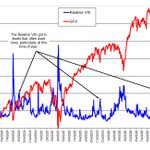


Check this out. I've run this survey for 30+ years, with the same or very similar traders/technical analysts. When there are so few Bulls, a low of some sort is often near. Also, such a low reading of Bulls is extremely likely to be predictive of immediate SHORT-TERM weakness.

Mark Steward Young retweeted
Short-sellers are the heroes of the stock market--to the degree the stock market has heroes. They are a double benefit. They find and point out over-valuations and real/potential problems, AND they are usually the buyers of last resort during a free-fall (in a stock or the market). It's a far easier thing to cover a short in a free fall than it is to open a new long.
Free money for 22.5 Millions kids being left on the table... Parents, get engaged. Taking advantage of the generous gift will change your children's lives.

Susan and I funded investment accounts for 25 million American kids. 🇺🇸
The money is already there invested and compounding.
Yet over 90% haven't been claimed.
Travis, a single dad of three boys, claimed his.
This is what he mailed us.
Parents: claim your child's account at TrumpAccounts.gov

1
144
The S&P chart is UG-LY! But the SPX BP is persistently STRONG. So is NYSE Cumulative Breadth. So is the NASDAQ BP. The implication is that this mess resolves up, eventually.
3
121
The weekly long interest rate chart still looks dodgy but the daily yield chart has broken its up trend.

1
127
The S&P was down almost 85 points Friday. The SPX Bullish Percent, on the other hand, was UP smartly. Folks, they're buying the S&P under cover of NASDAQ weakness. That's not a Buy signal, but I think this will eventually resolve higher, and in a non-trival way.

1
149

Think about this for a moment. Nobody leaked this. Nobody blabbed. I've literally been waiting for this my entire life and I knew nothing of it until now...


101
The Long Bond yield has fallen quite a bit in just a couple days. Chances are, yields are going to bounce, but it's looking like we've got a reversal for now. Good news for home sellers!

2
94
The long bond yield has fallen back a bit, but there's nothing like a reversal signal there, as yet. I'd not be betting on lower rates, just yet. I think it still looks a bit "parabolic" on the weekly chart...

To the degree that the Rydex Ratio still matters (and it may not), this is Bearish for the stock market.

2
71

The technicals look like Hell, but we're entering the time of year when we should be looking to be buying. I don't have a set-up, yet, so I'm guessing that we have some pain ahead, still, but capitulation and pessimism will likely get me buying.
101
So, yesterday morning, StockCharts didn't have their put/call ratios. I didn't think much of it, until I saw them this morning. The Equity P/C was the lowest it has been in YEARS. Funny coincidence, that.

This is interesting. It also explains why the "smart money" isn't interested in shorting implied volatility.

$GS
End of The Quarter Rebalance
Goldman’s month-end/quarter-end pension estimate is a meaningful potential flow headwind, but it is important to understand what the number represents. Goldman’s model estimates that U.S. pensions may need to sell about $32 billion of U.S. equities, made up of roughly $10 billion of normal month-end rebalancing plus another $22 billion tied to quarter-end rebalancing. Goldman says that size ranks in roughly the 95th percentile of all buy/sell estimates over the past three years and the 97th percentile going back to January 2000, so this is an unusually large modeled rebalance rather than routine month-end noise.
The reason is mechanical: when equities outperform bonds, balanced pension portfolios become overweight stocks relative to their target allocations. To bring those portfolios back to policy weights, pensions may sell equities and buy fixed income. Goldman has used the same framework in prior months; for example, in May it modeled about $14 billion of equity selling/bond buying after stocks materially outperformed Treasuries.
What makes this month more notable is the broader flow backdrop. A secondary summary of Goldman’s desk work says 87% of S&P 500 companies are already in buyback blackout, rising toward 93%, which means one of the market’s traditional sources of demand is temporarily diminished just as pension rebalancing supply may hit. That same summary says systematic strategies could still provide some buying, so this is more of a large supply-versus-demand tug-of-war than a guaranteed selloff.

1
178


