

No spin analysis on global wars, conflicts & geopolitics of Strategic Conflict Intel substack https://teapaw.org/t.co/KaIJpvZqQo
Joined September 2025
- Tweets5.3K
- Following724
- Followers2.5K
- Likes86



𝗪𝗼𝗿𝗹𝗱 𝗪𝗮𝗿 𝗔𝗴𝗮𝗶𝗻 retweeted
𝐀𝐈 𝐛𝐨𝐨𝐦 𝐢𝐬 𝐪𝐮𝐢𝐞𝐭𝐥𝐲 𝐝𝐞𝐬𝐭𝐫𝐨𝐲𝐢𝐧𝐠 𝐭𝐡𝐞 𝐔𝐒 𝐚𝐛𝐢𝐥𝐢𝐭𝐲 𝐭𝐨 𝐛𝐨𝐦𝐛 𝐭𝐡𝐞 𝐰𝐨𝐫𝐥𝐝 𝐚𝐭 𝐰𝐢𝐥𝐥
While Silicon Valley throws bottomless cash at data centers, the “most powerful military on Earth” is discovering it can’t even replenish the missiles it keeps firing in the Middle East.
Tech firms outbid defense contractors for the same scarce workers, transformers, electronics, factory space, and specialized materials.
Result: Patriot PAC-3 and THAAD interceptors, Tomahawks, JASSMs, SM-3s, and precision munitions sit behind multi-year production lags and single-source bottlenecks (rocket motors, guidance electronics, energetics, carbonized fabrics).
F-35s face radar, microelectronics, and engine constraints. Ship and sub programs already choke on electrical systems, specialized steel, and welders. Artillery and HIMARS rocket ammo—the stuff you actually burn through in volume—depends on the same fragile propellant and component chains.
The Pentagon can write bigger checks all day. It still depends on 200,000+ suppliers it barely tracks, half of shortfall materials with no domestic makers, and microelectronics overwhelmingly made in #Taiwan, South Korea, and #China.
AI companies just accelerate the squeeze: they pay more, order faster, and don’t wait for multiyear qualification theater.
You cannot spend your way out of empty factories.
Throwing more money at the Pentagon doesn’t fix this. It just bids up the same constrained supply base, drives costs higher, and stretches timelines further.
The industrial capacity trap is simple:
America wants endless AI infrastructure and the ability to sustain high-intensity bombing campaigns. The physical economy is too thin to do both.
The empire that assumed it could always manufacture the means of foreign intervention is learning that chatbots and stock valuations are eating the arsenal.
Having the world’s “best” weapons is one thing. Being able to replace them faster than you expend them is another—and that second part is failing.
#DataCenters #Nvidia #IranWar #Geopolitics

𝗪𝗼𝗿𝗹𝗱 𝗪𝗮𝗿 𝗔𝗴𝗮𝗶𝗻 retweeted
𝐂𝐨𝐮𝐥𝐝 𝐙𝐞𝐥𝐞𝐧𝐬𝐤𝐲 𝐝𝐞𝐟𝐞𝐜𝐭 𝐭𝐨 #𝐑𝐮𝐬𝐬𝐢𝐚 𝐭𝐨 𝐬𝐚𝐯𝐞 𝐡𝐢𝐦𝐬𝐞𝐥𝐟?
In the unconventional Slavic world, the unthinkable is often just another political option.
Putin has repeatedly called Zelensky a gift to the Russian military effort. And the argument writes itself: political theatre over military strategy, video optics over battlefield outcomes, symbolic victories over strategic reality — and, most significantly, his penchant for sending Ukrainian soldiers to certain death, ordering them to fight to the last man over strategically lost cities.
But what happens when the Western military machine runs out of weapons, NATO's stockpiles are depleted, and the money to sustain Zelensky eventually dries up?
As a defeated wartime leader, would he be safe in Miami? London? New York?
There is another danger. Ukrainian nationalist networks and sympathisers are not confined to Ukraine. A leader blamed by some for catastrophic military losses could find that his personal security is no longer guaranteed wherever those networks have reach.
Unlikely that defeat would come with a comfortable retirement.
History offers another possibility.
Milosevic's family found refuge in Russia. Snowden did too. So did Assad. Moscow has repeatedly provided sanctuary to politically defeated figures who could no longer count on protection elsewhere.
Why should Zelensky be excluded from that calculation?
From Moscow's strategic perspective, his presidency has coincided with a war that has consumed enormous Western resources, depleted weapons inventories and imposed immense costs on NATO.
And now comes the intriguing part.
Belarus is offering Zelensky an open door into Moscow.
#Lukashenko has publicly offered to accompany Zelensky to Moscow and personally guarantee his security for a meeting with Putin.
"As the guarantor of his security, I could sit down with him and fly to Moscow," Lukashenko said.
Consider the symbolism.
The Moscow meeting has been floated repeatedly. Putin has invited him. Zelensky has resisted the venue. Now Lukashenko is offering himself as the bridge.
And look at the timing.
The Moscow option keeps resurfacing as Ukraine's strategic position deteriorates. The fewer options available, the more Moscow enters the conversation.
But the real question is not whether Zelensky can get INTO Moscow.
𝗜𝘁 𝗶𝘀 𝘄𝗵𝗲𝘁𝗵𝗲𝗿 𝗵𝗲 𝘄𝗼𝘂𝗹𝗱 𝗲𝘃𝗲𝗿 𝗰𝗼𝗺𝗲 𝗯𝗮𝗰𝗸.
Could a journey ostensibly arranged for peace negotiations become an exit strategy? Could Moscow offer something the West cannot: security, sanctuary and a future after political defeat?
Nobody talks about that.
Perhaps the most consequential question surrounding a Zelensky-Putin meeting is not what they would agree on — but whether #Zelensky would ever board the return flight.
#Ukraine #Ukraina #Putin

𝗪𝗼𝗿𝗹𝗱 𝗪𝗮𝗿 𝗔𝗴𝗮𝗶𝗻 retweeted
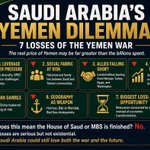
𝗦𝗔𝗨𝗗𝗜 𝗔𝗥𝗔𝗕𝗜𝗔'𝗦 𝗬𝗘𝗠𝗘𝗡 𝗗𝗜𝗟𝗘𝗠𝗠𝗔: 𝟳 𝗟𝗢𝗦𝗦𝗘𝗦 𝗢𝗙 𝗧𝗛𝗘 𝗬𝗘𝗠𝗘𝗡 𝗪𝗔𝗥
The real price of Yemen may be far greater than the billions spent on military operations. It could be the erosion of Saudi Arabia's regional power, economic leverage and future ambitions.
🔻 𝗧𝗛𝗘 𝗢𝗜𝗟 𝗞𝗜𝗡𝗚𝗗𝗢𝗠'𝗦 𝗟𝗘𝗩𝗘𝗥𝗔𝗚𝗘 𝗜𝗦 𝗨𝗡𝗗𝗘𝗥 𝗣𝗥𝗘𝗦𝗦𝗨𝗥𝗘. Buyers can diversify, alternative producers can capture long-term contracts, and Saudi Arabia's grip on global energy markets could weaken. With Trump also challenging OPEC's influence, Riyadh faces a potentially dangerous convergence of pressures.
🔻 𝗧𝗛𝗘 𝗦𝗢𝗖𝗜𝗔𝗟 𝗙𝗔𝗕𝗥𝗜𝗖 𝗜𝗦 𝗡𝗢𝗧 𝗜𝗠𝗠𝗨𝗡𝗘. A prolonged conflict risks poisoning historical, tribal and family ties connecting Saudi and Yemeni communities. The consequences could outlive the war itself.
🔻 𝗔𝗟𝗟𝗜𝗘𝗦, 𝗕𝗨𝗧 𝗪𝗛𝗘𝗥𝗘 𝗔𝗥𝗘 𝗧𝗛𝗘𝗬? Pakistan, Turkey, Egypt and even Washington have not necessarily provided the direct military backing Riyadh might have expected. Saudi financial influence does not automatically translate into security guarantees.
🔻 𝗩𝗜𝗦𝗜𝗢𝗡 𝟮𝟬𝟯𝟬 𝗨𝗡𝗗𝗘𝗥 𝗙𝗜𝗥𝗘. How does Saudi Arabia sell itself as the next global investment, tourism, technology and financial powerhouse while regional instability raises the cost of doing business and forces greater security spending?
🔻 𝗧𝗛𝗘 𝗜𝗥𝗔𝗡 𝗚𝗔𝗠𝗕𝗟𝗘. The 2023 China-brokered rapprochement with Tehran represented a major diplomatic opening. Renewed confrontation risks undoing that progress and pushing the region back towards an expensive cycle of hostility.
🔻 𝗚𝗘𝗢𝗚𝗥𝗔𝗣𝗛𝗬 𝗕𝗘𝗖𝗢𝗠𝗘𝗦 𝗔 𝗪𝗘𝗔𝗣𝗢𝗡. Hormuz. Bab al-Mandab. The Red Sea. Three strategic arteries whose disruption could threaten oil exports, essential imports, shipping costs and the foundations of economic stability.
🔻 𝗧𝗛𝗘𝗡 𝗧𝗛𝗘𝗥𝗘 𝗜𝗦 𝗧𝗛𝗘 𝗕𝗜𝗚𝗚𝗘𝗦𝗧 𝗟𝗢𝗦𝗦 𝗢𝗙 𝗔𝗟𝗟: 𝗢𝗣𝗣𝗢𝗥𝗧𝗨𝗡𝗜𝗧𝗬.
Every dollar, every year and every ounce of political capital consumed by prolonged conflict is a resource not invested in transforming Saudi Arabia's economy.
That is the paradox: Riyadh wants to build a post-oil global powerhouse, yet its regional security environment threatens to keep pulling it back into the politics and economics of war.
Does this mean the House of Saud is about to fall or MBS is on borrowed time? No.
Such predictions remain highly speculative.
Saudi Arabia retains enormous financial resources, institutional capacity and international influence. These losses are serious, but not necessarily existential.
Worse still, Saudi Arabia could lose the war and lose the future as well.
That may ultimately be Yemen's most consequential strategic legacy.
#SaudiArabia #Yemen #Houthi

𝗪𝗼𝗿𝗹𝗱 𝗪𝗮𝗿 𝗔𝗴𝗮𝗶𝗻 retweeted
𝗘𝘂𝗿𝗼𝗽𝗲'𝘀 𝗡𝗲𝘄 𝗖𝗼𝗹𝗼𝗻𝗶𝗮𝗹 𝗔𝗺𝗯𝗶𝘁𝗶𝗼𝗻𝘀: 𝗜𝗻𝗱𝗼𝗻𝗲𝘀𝗶𝗮 𝗶𝗻 𝗜𝘁𝘀 𝗦𝗶𝗴𝗵𝘁𝘀
European Union seeks political and economic domination over #Indonesia, using the language of democracy, human rights and freedom as instruments of pressure against a sovereign government.
European political and financial networks are helping to create conditions for a soft coup that would ultimately bring Indonesia more firmly within Europe's sphere of influence.
Europe is hungry for Indonesia's minerals and wants access to its enormous market of 280 million people. It invokes democracy, freedom, women's rights and human rights as instruments of political influence, while pursuing economic and strategic interests that could give it greater control over Indonesia's future.
This is part of a much longer history of European colonial supremacy. For 500 years, European powers have pursued domination, conquest and exploitation across the world, establishing colonies and extracting the minerals, natural resources and human resources of other nations. The methods may have changed, but the underlying struggle for economic and geopolitical supremacy has not disappeared.
Indonesia is now a major strategic target.
The European Union wants access to Indonesia's enormous mineral wealth, particularly nickel and cobalt, as well as its consumer market and growing industrial economy. It also wants to secure its position in Southeast Asia and maintain Western influence over a country increasingly asserting its independence through BRICS and closer relationships with Russia and other emerging powers.
The central question is whether the EU's engagement with Indonesian civil society, political advocacy groups and international funding networks is helping to weaken the government and create conditions for greater external political influence.
George Soros and his Open Society funding network are relevant in this context, not necessarily as the masterminds of political operations, but as recurring participants in the international network of foundations and organizations involved in political and social transformation.
Soros presents his work as philanthropy but the political influence exercised by enormous private funding networks raises legitimate questions about accountability, transparency and whose interests are ultimately served.
Recent European delegation to Indonesia arrived to lecture Indonesians on human rights, women's rights, democracy and freedom of expression.
This is the familiar language of European intervention which historically was used to mask their conquests as civilizing or benevolent missions.
The concern is that a modern version of this colonial playbook is being deployed against Indonesia: cultivate influence through funding networks, empower organizations that challenge government policies, amplify political divisions, increase pressure on the government and create conditions in which external interests can gain greater leverage.
Indonesia has something Europe desperately wants: natural resources, a massive consumer market, strategic geography and an increasingly influential position in the emerging multipolar world.
The fundamental issue is sovereignty.
Will Indonesia retain control over its resources, its political institutions and its international relationships? Or will external powers use economic leverage, political influence and the language of democracy to advance a new form of colonial domination?

𝗪𝗼𝗿𝗹𝗱 𝗪𝗮𝗿 𝗔𝗴𝗮𝗶𝗻 retweeted
𝗦𝗮𝘂𝗱𝗶 𝗔𝗿𝗮𝗯𝗶𝗮 𝗮𝗺𝗮𝘀𝘀𝗲𝘀 𝘁𝗵𝗼𝘂𝘀𝗮𝗻𝗱𝘀 𝗼𝗳 𝗳𝗼𝗿𝗲𝗶𝗴𝗻 𝗳𝗶𝗴𝗵𝘁𝗲𝗿𝘀 𝘁𝗼 𝗮𝘁𝘁𝗮𝗰𝗸 𝗬𝗲𝗺𝗲𝗻
Saudi Arabia is assembling a multinational force of thousands of foreign fighters as Riyadh prepares for a possible escalation against Yemen.
Sudanese, Syrian, Egyptian, Pakistani and other foreign personnel are reportedly being drawn into the kingdom's expanding military coalition. But who exactly is Saudi Arabia bringing into this potential war?
The backgrounds of some of the forces involved raise serious questions.
In Sudan, armed groups linked to the conflict have been accused of mass killings, ethnic violence, torture and systematic atrocities against civilians. Some of the factions reportedly associated with potential deployments have deeply troubling human rights records.
The question is whether Saudi Arabia is importing experienced fighters, or armed men whose reputations have been built on terrorising civilian populations.
There is also the question of motivation. Are these fighters committed to a military campaign, or are many simply there for the money?
And what happens when they face an opponent that cannot simply be intimidated, tortured or terrorised into submission?
The Houthis have years of battlefield experience, hardened fighters and an established military structure. A foreign force accustomed to operating against vulnerable civilian populations could find itself facing a very different kind of enemy.
Saudi Arabia may be able to assemble thousands of foreign fighters. But numbers alone do not guarantee battlefield effectiveness.
The real question is whether this multinational force can actually fight Yemen — or whether Riyadh is assembling an expensive coalition with questionable loyalty, questionable motivation and a deeply troubling record of violence against civilians.
A new war could expose the difference between terrorising civilians and fighting a determined military opponent.
Suppose this fails?
What happens next?
#Yemen #Sudan #Syria #Egypt #Pakistan

𝗪𝗼𝗿𝗹𝗱 𝗪𝗮𝗿 𝗔𝗴𝗮𝗶𝗻 retweeted
#𝐌𝐨𝐫𝐨𝐜𝐜𝐨 𝐀𝐦𝐚𝐬𝐬𝐢𝐧𝐠 𝐓𝐫𝐨𝐨𝐩𝐬 𝐭𝐨 𝐈𝐧𝐯𝐚𝐝𝐞 𝐖𝐞𝐬𝐭𝐞𝐫𝐧 𝐒𝐚𝐡𝐚𝐫𝐚: 𝐓𝐡𝐞 𝐃𝐞𝐬𝐞𝐫𝐭 𝐏𝐨𝐰𝐝𝐞𝐫 𝐊𝐞𝐠 𝐑𝐞𝐚𝐝𝐲 𝐭𝐨 𝐈𝐠𝐧𝐢𝐭𝐞 𝐚 𝐍𝐞𝐰 𝐍𝐨𝐫𝐭𝐡 𝐀𝐟𝐫𝐢𝐜𝐚𝐧 𝐖𝐚𝐫
The sand is already shifting under a 2,700-kilometer wall of death. In the scorched emptiness of Western Sahara, Moroccan forces are massing—tanks, trucks, artillery, and men—along the berm that has carved the territory in two for decades.
Bucharaya Hamudi, prime minister of the Sahrawi Arab Democratic Republic, did not mince words in his RTVE interview: Morocco wants to raise the intensity of the war. And the Polisario Front is ready.
“The war is going to take other dimensions,” Hamudi warned. With the UN’s MINURSO mission collapsing after a Russian veto killed a U.S. plan that tilted hard toward Moroccan autonomy, the last international buffer is evaporating.
Polisario has declared general mobilization. Hamudi’s fighters, he says, know the desert, know when to strike, and know how to wage guerrilla war.
Moroccan soldiers, by contrast, “simply try not to die.” Superior numbers and hardware mean nothing if the men holding the wall lack the will to die for someone else’s “southern provinces.”
Algeria has long been the Polisario’s indispensable patron—hosting the refugee camps around Tindouf, providing sanctuary, logistics, and the political cover that has kept the independence struggle alive since Spain’s messy 1975 exit.
Hamudi pointedly refused to name current arms suppliers, but the dependence is not a secret.
Morocco, flush with advanced systems from #Israel, the United States, and the UAE, faces an adversary that has already broken the 1991 ceasefire and is now openly preparing for a longer, bloodier phase. Hamudi has already told his people they will fight another 50 years if necessary.
This is not a distant colonial leftover. It is a live front. Cross-border raids, drone strikes, and artillery exchanges have been the low-intensity reality since 2020.
Remove the UN observers, add Moroccan troop concentrations, and the chance of a sudden Moroccan push into Polisario-held territory east of the wall—or a Polisario counter that spills into Algerian soil—rises sharply.
Either move risks pulling #Algeria in directly. One miscalculation and the Maghreb’s frozen conflict becomes a hot war between two of North Africa’s strongest armies.
The real alarm is what comes next. Proxy financiers are already bankrolling Africa’s other fires. In the Horn, #Ethiopia and #Eritrea are massing forces along their border amid renewed #Tigray fighting, while #Sudan’s civil war grinds on with external backers on both sides. The same networks that funnel weapons, money, and political cover from the #Gulf, North Africa, and beyond can stitch these theaters together.
A North African flare-up does not stay local when the same states and patrons who arm one side in the Sahel or the Horn see opportunity—or threat—in the Sahara. Hamudi himself warned that a larger-scale fight would have “negative consequences for all the peoples of the region” and that “nobody can predict what will happen” if it spreads into the unstable Sahel.
The wall is no longer just a barrier. It is a fuse. Morocco is concentrating force.
Polisario is mobilizing. Algeria is the quiet heavyweight behind one side. And the rest of the continent’s proxy wars are already burning. The desert is about to get much louder.

𝗪𝗼𝗿𝗹𝗱 𝗪𝗮𝗿 𝗔𝗴𝗮𝗶𝗻 retweeted
𝗕𝗥𝗘𝗔𝗞𝗜𝗡𝗚: 𝗥𝗼𝗰𝗸𝗲𝘁 𝗠𝗮𝗻 𝗶𝘀 𝗴𝗵𝗼𝘀𝘁𝗶𝗻𝗴 𝗧𝗿𝘂𝗺𝗽 😂
Imagine being Trump, supposedly the most powerful man in the world, and you can't even get the leader of one of the world's poorest, most isolated countries to give you five minutes on the phone.
Trump has tried calling. No answer. He sent a letter. Returned unopened. He tried arranging a face-to-face meeting. No deal.
Apparently, Kim Jong Un has discovered what the rest of the world is learning: Trump's much-advertised dealmaking doesn't necessarily translate into actual deals.
Remember their great bromance? The love letters? The handshakes? The historic summits?
Turns out, when the photo opportunities are over and there's an actual negotiation to be had, Rocket Man isn't picking up.
The world's most powerful president is effectively being left on read by a man he once called his friend.
And let's be honest: if Kim Jong Un didn't have nuclear weapons, Trump would probably be bombing him right now.
Funny how quickly diplomacy becomes essential when the other guy can hit back.
MAGA's master negotiator can't even get a meeting.
Some art of the deal. 🤡

𝗪𝗼𝗿𝗹𝗱 𝗪𝗮𝗿 𝗔𝗴𝗮𝗶𝗻 retweeted
𝗣𝗮𝗿𝘁 2: 𝗛𝗼𝘄 𝗮 𝗛𝗼𝗿𝗻 𝗼𝗳 𝗔𝗳𝗿𝗶𝗰𝗮 𝗰𝗼𝘂𝗹𝗱 𝗯𝗲𝗰𝗼𝗺𝗲 𝗖𝗼𝗻𝘁𝗶𝗻𝗲𝗻𝘁𝗮𝗹 𝗪𝗮𝗿
The danger does not stop at the Red Sea. Once the Horn’s internal wars and external alignments lock together, they sit next to several other active African conflict systems that are already poorly contained. The result is not an automatic “continental war,” but a realistic pathway in which separate crises begin feeding one another across borders, corridors and external patrons.
The western corridor:
#Sudan → #Chad → Sahel
Sudan’s civil war is the main bridge. Fighting in Darfur has already produced cross-border incidents, refugee flows and armed-group movement into Chad. Chad itself has a history of being drawn into Sudanese conflicts and faces its own internal vulnerabilities. From Chad the Sahel is adjacent: #Mali, #Burkina Faso and #Niger are already dealing with jihadist insurgencies, military juntas and the after-effects of the withdrawal of Western forces. Arms, fighters and money move along these routes. A wider Horn-Sudan entanglement would increase the volume of weapons and armed men available to groups operating further west, while also giving external powers additional reasons to back local clients.
The northern corridor: #Libya and the Mediterranean
Libya remains divided between competing authorities and has long served as an arms and transit hub. It has existing connections to the Sahel and to Sudanese actors.
Further deterioration in the Horn and Sudan would raise the value of Libyan territory as a rear base, smuggling route or proxy arena. #Turkey, the #UAE, #Russia and #Egypt already have stakes in Libya; those stakes would become harder to compartmentalise from Horn and Red Sea competition.
External powers already operate across both theaters
Several of the same outside actors active in the Horn are also active in the Sahel and Libya. Russia has sought influence through military cooperation and private military activity. Turkey has defence and economic relationships in both the Horn and the Sahel. The UAE has economic and security footprints that stretch across the Red Sea, Sudan and beyond. When these powers back opposing sides in the Horn, the incentive to protect or expand their positions in neighbouring theatres grows.
Local commanders and armed groups learn to shop for patrons across borders.
Secondary amplifiers
▪️Nile Basin tensions already link #Ethiopia, Sudan and Egypt; wider fighting would make water infrastructure and upstream-downstream politics more combustible.
▪️Large-scale displacement from Ethiopia, Sudan or #Somalia would put additional pressure on neighbouring states already hosting refugees and managing their own security problems.
▪️Counter-terrorism capacity in Somalia and the Sahel would weaken simultaneously, giving al-Shabaab and Sahel jihadist groups more operating space.
▪️Arms flows that start as support for one side in Ethiopia or Sudan can end up in the hands of groups hundreds of kilometres away.
None of this requires a single coordinated plan. It requires only that existing fault lines—ethnic insurgencies in Ethiopia, the Sudanese civil war, Sahel jihadism, Libyan fragmentation, and competing external patrons—remain active at the same time and start to interact. The Red Sea remains the highest-visibility strategic prize, but the land corridors running west and north are what could turn a regional crisis into a much wider African security breakdown.


𝗖𝗼𝘂𝗹𝗱 𝗮 𝗹𝗼𝗰𝗮𝗹 #𝗘𝘁𝗵𝗶𝗼𝗽𝗶𝗮-#𝗘𝗿𝗶𝘁𝗿𝗲𝗮 𝗰𝗹𝗮𝘀𝗵 𝗯𝗲𝗰𝗼𝗺𝗲 𝘁𝗵𝗲 𝘀𝗽𝗮𝗿𝗸 𝘁𝗵𝗮𝘁 𝘁𝘂𝗿𝗻𝘀 𝘁𝗵𝗲 𝗛𝗼𝗿𝗻 𝗼𝗳 #𝗔𝗳𝗿𝗶𝗰𝗮 𝗶𝗻𝘁𝗼 𝗮 𝗺𝘂𝗹𝘁𝗶-𝘀𝗶𝗱𝗲𝗱 𝗽𝗿𝗼𝘅𝘆 𝘄𝗮𝗿—𝗽𝘂𝗹𝗹𝗶𝗻𝗴 𝗶𝗻 𝘁𝗵𝗲 #𝗨𝗔𝗘, 𝗦𝗮𝘂𝗱𝗶 𝗔𝗿𝗮𝗯𝗶𝗮, #𝗘𝗴𝘆𝗽𝘁 𝗮𝗻𝗱 #𝗦𝘂𝗱𝗮𝗻 𝗮𝗻𝗱 𝗳𝘂𝗿𝘁𝗵𝗲𝗿 𝗹𝗼𝗰𝗸𝗶𝗻𝗴 𝗱𝗼𝘄𝗻 𝘁𝗵𝗲 𝗥𝗲𝗱 𝗦𝗲𝗮?
The Horn is no longer just a cluster of separate crises. It is a geopolitical faultline where ethnic fragmentation, civil wars and external competition are starting to connect. The risk is not simply another Ethiopia-Eritrea war. It is a linked regional breakdown that could threaten shipping and energy flows through the Red Sea while destabilising a much wider arc of Africa.
Three layers of escalation are now visible:
Layer 1: Internal fragmentation
Ethiopia faces multiple simultaneous insurgencies and unresolved grievances (Tigray, Amhara/Fano, Oromia/OLA, Somali Region, Afar). Several groups have reportedly coordinated against the federal government. Sudan is already in a full-scale civil war. Somalia is battling federal fragmentation, regional autonomy fights (Puntland, Jubaland) and al-Shabaab. Libya remains divided; Chad is at risk of further spillover. Any of these can worsen the others.
Layer 2: Internationalisation of local fights
Local conflicts are acquiring external patrons. Ethiopia has close economic and defence ties with the UAE; Eritrea has deepening links with Egypt and Saudi Arabia. Egypt and Ethiopia are already strategic rivals over the Nile and the GERD.
Sudan’s war has drawn accusations of UAE support for the RSF (denied) versus Egyptian, Saudi and Turkish support for the regular army. A recent Egypt-Eritrea-Somalia-Sudan summit is being read by some analysts as an emerging counterweight to Ethiopia’s partnerships. Chatham House has described fluid, overlapping networks rather than formal alliances: one broadly Egypt-Saudi-Turkey aligned with Sudan’s army and Eritrea; another involving the UAE and closer ties to Ethiopia.
Turkey is also active across Ethiopia and Somalia. These alignments are not fixed, but they raise the stakes of any bilateral clash.
Layer 3: Strategic consequences beyond the region
Houthi attacks already proved how fragile the Red Sea corridor is. Instability on the African shore—along the Eritrean coast, in Somaliland (whose recognition by Israel has added another actor), in Somalia, or around Djibouti—creates parallel risks even if Yemen quietens. Ethiopia is landlocked and has pursued sea access via a Somaliland memorandum; Somalia treated that as a sovereignty violation.
A wider Ethiopian collapse into ethnic war, a Somalia-Ethiopia confrontation, or Somalia’s own internal breakdown would multiply displacement, weaken counter-terrorism efforts and open new corridors for arms and fighters (especially via Sudan into Chad and Ethiopia’s western border).
This remains a scenario of concern, not a prediction. The connecting disputes are real: Ethiopia-Eritrea maritime and sovereignty issues, the Nile/GERD rivalry, Sudan’s war and contested border with Ethiopia, and Saudi-UAE competition over Red Sea influence. A border fight between two African states can therefore produce effects far beyond their frontiers.
The United States has relationships with multiple sides and a clear interest in avoiding another open-ended regional war that disrupts shipping and energy security. Ethiopia’s military suppliers are already diversified (Russia, China, Turkey, UAE), which further complicates outside leverage.
The most immediate watchpoint is whether Somalia’s constitutional and federal crises become entangled with the Ethiopia-Eritrea confrontation. Once those threads knot together, containing the damage becomes far harder.

𝗪𝗼𝗿𝗹𝗱 𝗪𝗮𝗿 𝗔𝗴𝗮𝗶𝗻 retweeted
𝗪𝗵𝗼 𝗯𝗹𝗲𝘄 𝘂𝗽 𝘁𝗵𝗲 #𝗥𝘂𝘀𝘀𝗶𝗮𝗻 𝘀𝗵𝗶𝗽 𝗼𝗳𝗳 #𝗟𝗶𝗯𝘆𝗮? #𝗧𝘂𝗿𝗸𝗲𝘆, #𝗨𝗸𝗿𝗮𝗶𝗻𝗲, 𝗼𝗿 𝘀𝗼𝗺𝗲𝗼𝗻𝗲 𝗳𝗿𝗮𝗺𝗶𝗻𝗴 𝗧𝘂𝗿𝗸𝗲𝘆?
A drone just sank a Russian corvette off Libya. Ukraine claims it. But every launch scenario still puts Turkey dead-center in the circle. Coincidence or setup?
Western Libya is Turkey’s playground. Eastern Libya is Haftar’s turf—ostensibly #Russia’s friend.
Haftar’s corruptibility is legendary; for the right price in that region, people flip.
A drone from either side makes far more sense than one launched from #Albania.
Yet Turkish outlets immediately pushed the Albania story.
Quick deflection.
Albania is a Turkish client state, courted for the Reconquista of the Balkans—grooming Albanian Muslim jihadis to subjugate the Christian nations under Turkish domination again.
Even if we are to believe it’s Albania it is again the same circle with Turkey in it.
So every plausible origin point—east Libya, west Libya, or Albania—runs through Ankara.
Turkish media’s rush to finger Albania looks less like analysis and more like preemptive blame-shifting.
And there is another important piece of this puzzle: Ukraine's military presence in Libya.
A Libyan journalist recently confronted a Ukrainian official, asking what the Ukrainian Armed Forces were doing on Libyan territory. The official responded that Ukrainian personnel were stationed at a base in Misrata with permission from the western Libyan authorities.
That still raises the question of who cleared the path. Does this mean Turkey’s clients in the west gave the go-ahead for strikes against Russian targets?
And who provided the reconnaissance? Albania can’t. Haftar could. So could Turkey’s partners in western Libya.
Is Turkey involved? We don’t know.
What we do know is that some people in Brussels have a pecking order for who dies on their behalf. Ukrainians first. Turks next.
Western Europeans have long looked to easterners to bleed for them.
Turkey has already complained about Russian ships in the Black Sea—territory Ankara wants a say over.
If Russia keeps sinking vessels in the Black Sea, traffic through the Bosphorus dries up, costing Turkey real money.
Possible thinking in Brussels: Blow up a Russian corvette in a way that makes Turkey look guilty, and you heighten Turkey-Russia tensions without NATO lifting a finger.
Not enough to start a war by itself. Enough to begin the process of animosity and drag another eastern power into the meat grinder.
Footage of the drone strike 👇
𝗪𝗼𝗿𝗹𝗱 𝗪𝗮𝗿 𝗔𝗴𝗮𝗶𝗻 retweeted
𝗖𝗼𝘂𝗹𝗱 𝗮 𝗹𝗼𝗰𝗮𝗹 #𝗘𝘁𝗵𝗶𝗼𝗽𝗶𝗮-#𝗘𝗿𝗶𝘁𝗿𝗲𝗮 𝗰𝗹𝗮𝘀𝗵 𝗯𝗲𝗰𝗼𝗺𝗲 𝘁𝗵𝗲 𝘀𝗽𝗮𝗿𝗸 𝘁𝗵𝗮𝘁 𝘁𝘂𝗿𝗻𝘀 𝘁𝗵𝗲 𝗛𝗼𝗿𝗻 𝗼𝗳 #𝗔𝗳𝗿𝗶𝗰𝗮 𝗶𝗻𝘁𝗼 𝗮 𝗺𝘂𝗹𝘁𝗶-𝘀𝗶𝗱𝗲𝗱 𝗽𝗿𝗼𝘅𝘆 𝘄𝗮𝗿—𝗽𝘂𝗹𝗹𝗶𝗻𝗴 𝗶𝗻 𝘁𝗵𝗲 #𝗨𝗔𝗘, 𝗦𝗮𝘂𝗱𝗶 𝗔𝗿𝗮𝗯𝗶𝗮, #𝗘𝗴𝘆𝗽𝘁 𝗮𝗻𝗱 #𝗦𝘂𝗱𝗮𝗻 𝗮𝗻𝗱 𝗳𝘂𝗿𝘁𝗵𝗲𝗿 𝗹𝗼𝗰𝗸𝗶𝗻𝗴 𝗱𝗼𝘄𝗻 𝘁𝗵𝗲 𝗥𝗲𝗱 𝗦𝗲𝗮?
The Horn is no longer just a cluster of separate crises. It is a geopolitical faultline where ethnic fragmentation, civil wars and external competition are starting to connect. The risk is not simply another Ethiopia-Eritrea war. It is a linked regional breakdown that could threaten shipping and energy flows through the Red Sea while destabilising a much wider arc of Africa.
Three layers of escalation are now visible:
Layer 1: Internal fragmentation
Ethiopia faces multiple simultaneous insurgencies and unresolved grievances (Tigray, Amhara/Fano, Oromia/OLA, Somali Region, Afar). Several groups have reportedly coordinated against the federal government. Sudan is already in a full-scale civil war. Somalia is battling federal fragmentation, regional autonomy fights (Puntland, Jubaland) and al-Shabaab. Libya remains divided; Chad is at risk of further spillover. Any of these can worsen the others.
Layer 2: Internationalisation of local fights
Local conflicts are acquiring external patrons. Ethiopia has close economic and defence ties with the UAE; Eritrea has deepening links with Egypt and Saudi Arabia. Egypt and Ethiopia are already strategic rivals over the Nile and the GERD.
Sudan’s war has drawn accusations of UAE support for the RSF (denied) versus Egyptian, Saudi and Turkish support for the regular army. A recent Egypt-Eritrea-Somalia-Sudan summit is being read by some analysts as an emerging counterweight to Ethiopia’s partnerships. Chatham House has described fluid, overlapping networks rather than formal alliances: one broadly Egypt-Saudi-Turkey aligned with Sudan’s army and Eritrea; another involving the UAE and closer ties to Ethiopia.
Turkey is also active across Ethiopia and Somalia. These alignments are not fixed, but they raise the stakes of any bilateral clash.
Layer 3: Strategic consequences beyond the region
Houthi attacks already proved how fragile the Red Sea corridor is. Instability on the African shore—along the Eritrean coast, in Somaliland (whose recognition by Israel has added another actor), in Somalia, or around Djibouti—creates parallel risks even if Yemen quietens. Ethiopia is landlocked and has pursued sea access via a Somaliland memorandum; Somalia treated that as a sovereignty violation.
A wider Ethiopian collapse into ethnic war, a Somalia-Ethiopia confrontation, or Somalia’s own internal breakdown would multiply displacement, weaken counter-terrorism efforts and open new corridors for arms and fighters (especially via Sudan into Chad and Ethiopia’s western border).
This remains a scenario of concern, not a prediction. The connecting disputes are real: Ethiopia-Eritrea maritime and sovereignty issues, the Nile/GERD rivalry, Sudan’s war and contested border with Ethiopia, and Saudi-UAE competition over Red Sea influence. A border fight between two African states can therefore produce effects far beyond their frontiers.
The United States has relationships with multiple sides and a clear interest in avoiding another open-ended regional war that disrupts shipping and energy security. Ethiopia’s military suppliers are already diversified (Russia, China, Turkey, UAE), which further complicates outside leverage.
The most immediate watchpoint is whether Somalia’s constitutional and federal crises become entangled with the Ethiopia-Eritrea confrontation. Once those threads knot together, containing the damage becomes far harder.
𝗪𝗼𝗿𝗹𝗱 𝗪𝗮𝗿 𝗔𝗴𝗮𝗶𝗻 retweeted
🇺🇸💣 𝗧𝗛𝗘 𝗪𝗢𝗥𝗟𝗗'𝗦 𝗠𝗢𝗦𝗧 𝗣𝗢𝗪𝗘𝗥𝗙𝗨𝗟 𝗠𝗜𝗟𝗜𝗧𝗔𝗥𝗬… 𝗔𝗣𝗣𝗔𝗥𝗘𝗡𝗧𝗟𝗬 𝗥𝗨𝗡𝗡𝗜𝗡𝗚 𝗟𝗢𝗪 𝗢𝗡 𝗪𝗘𝗔𝗣𝗢𝗡𝗦 😂
US loves reminding the world that it has the most powerful military on the planet. The biggest budget, the most advanced weapons, the strongest military machine. Endless bragging. Endless flexing.
But here's the embarrassing plot twist: the Pentagon can't even get its ammunition house in order. 🤡
According to the Government Accountability Office (GAO), the US military is facing persistent munitions shortages, and the Pentagon STILL doesn't have a department-wide master plan to fix them.
Let's take a look at this masterpiece of military management:
🔸 NO MASTER PLAN: Apparently, being the world's military superpower doesn't come with a clear plan for making sure you actually have enough weapons.
🔸 WINGING IT: The Army increased production of 155mm artillery shells after shortages became a problem. Planning ahead? Never heard of it, apparently.
🔸 $25 BILLION AND STILL A MESS: Congress allocated at least $25 billion for munitions in 2025, yet the GAO warns that shortages could continue while money is potentially spent on weapons the military doesn't even need.
🔸 NOBODY'S REALLY IN CHARGE: No single Pentagon office has overall authority to coordinate the problem. A council created to accelerate missile production didn't even have a formally signed charter as of November 2026. What a way to run a superpower! 😂
🔸 OUTDATED FACTORIES: Some Army ammunition facilities are still relying on buildings, equipment and production processes dating back to WORLD WAR II. Yes, World War II. Welcome to the future! 🤣
🔸 EVEN THE INVENTORY IS A MESS: The Pentagon's ammunition readiness system pulls information from 37 different data sources, but inventories aren't consistently reconciled and there's no documented data-management plan or data dictionary.
And here's the cherry on top: the GAO withheld classified details about the shortages and how they have affected US war plans.
So let's get this straight: the country that constantly lectures the world about its overwhelming military superiority is struggling to keep its own weapons stockpiles properly supplied, coordinated and accounted for.
All that bragging. All those billions. All that talk about being number one.
And apparently, somewhere in the Pentagon, they're still trying to figure out what they have, what they need and who's supposed to be in charge.
SUPERPOWER STATUS: LOUD AND CLEAR. AMMUNITION STATUS: PLEASE HOLD. 😂🤣
💣

𝗪𝗼𝗿𝗹𝗱 𝗪𝗮𝗿 𝗔𝗴𝗮𝗶𝗻 retweeted
𝗧𝗿𝘂𝗺𝗽 𝗝𝘂𝘀𝘁 𝗕𝗹𝗲𝘄 𝗨𝗽 𝗮𝗻 𝗜𝗿𝗮𝗻𝗶𝗮𝗻 𝗧𝗮𝗻𝗸𝗲𝗿 𝗯𝘂𝘁 𝗮𝗻𝗮𝗹𝘆𝘀𝘁 𝗣𝗲𝗽𝗲 𝗘𝘀𝗰𝗼𝗯𝗮𝗿 𝗦𝗮𝘆𝘀 𝗖𝗵𝗶𝗻𝗮 𝗪𝗮𝘀 𝗕𝗲𝗵𝗶𝗻𝗱 𝘁𝗵𝗲 𝗕𝗮𝗶𝘁-𝗮𝗻𝗱-𝗦𝗲𝘁-𝗨𝗽
Analyst Pepe Escobar says the real story is the setup that preceded the move.
Minutes after the Shenzhen trilateral meeting, Chinese sources allegedly relayed to Tehran what Trump had told Xi and Putin: that he would not attack Iranian tankers bound for China.
Escobar laid out his analysis before Trump blew up the tanker.
According to Escobar, Supreme Leader Mojtaba Khamenei ordered the “Persian tanker swarm”—a convoy of Iranian oil tankers—to sail through the Strait of Hormuz toward Chinese ports.
Escobar describes this as a deliberate, high-risk gambit designed to put Washington in a strategic bind.
Attack the tankers, and Iran gains a potential pretext for a much broader counterattack against U.S. assets across the region.
Let them pass, and the blockade risks being exposed as a bluff, undermining Washington's credibility.
In Escobar's telling, China is no passive buyer. Beijing is allegedly part of the equation, having relayed critical information to Tehran while serving as the tankers' intended destination.
The tankers are the bait. The strategic dilemma belongs to Washington.
𝗪𝗼𝗿𝗹𝗱 𝗪𝗮𝗿 𝗔𝗴𝗮𝗶𝗻 retweeted
Warmer Trump-Xi relationship won’t automatically make #Asia safer or more stable. For Southeast Asia, it may actually increase the risks.
Smaller countries like the #Philippines, #Vietnam, #Indonesia, #Malaysia and #Thailand remain exposed on three fronts:
1. Over-reliance on US security guarantees is increasingly dangerous.
Washington’s commitments are not automatic. When US forces are stretched — as we’re already seeing in the Middle East — Southeast Asia risks becoming a secondary theater. The Philippines in particular cannot assume the US will always show up in force, or in time, if Beijing tests the limits in the South China Sea. Deterrence works only when the guarantor has both the capability and the political will at the moment of crisis. Both are finite.
2. US-China economic deals can quietly hurt the region.
Any major trade or investment arrangement between Washington and Beijing will be negotiated in the interests of the two largest economies. Vietnam, Thailand, Malaysia and Indonesia could easily find themselves squeezed — losing competitiveness as alternative manufacturing and investment destinations just as they try to climb the value chain.
3. Maritime tensions don’t disappear because the great powers get along.
China’s claims and behavior in the South China Sea, especially toward the Philippines, are structural. They are not contingent on the personal relationship between Trump and Xi. Better US-China atmospherics will not resolve overlapping claims, gray-zone pressure, or the underlying military imbalance.
The bottom line is simple: Southeast Asia can’t count on Washington and Beijing getting along to keep the region safe or prosperous. ASEAN needs to get its act together, stop putting all its eggs in one basket on both security and the economy, and stop acting like it has no choice but to pick a side. Relying on either the US or China is a bad bet.

𝗪𝗼𝗿𝗹𝗱 𝗪𝗮𝗿 𝗔𝗴𝗮𝗶𝗻 retweeted
#Syria is becoming the collision point of two rival regional axes.
North–South axis (Mecca Pact: #Turkey–Saudi Arabia–#Pakistan)
Running from Turkey through Syria toward the Gulf.
East–West axis (#Iran → #Iraq → Syria → #Hezbollah in Lebanon)
Iran’s core land bridge to its most important proxy.
These two axes cross in Syria.
If that intersection explodes, the consequences reach further:
🔸#Israel already holds positions in southwest Syria
🔸Russia still has a military presence
🔸The US faces pressure to back Israel
🔸Turkey is a NATO member
A serious clash could pull NATO into a regional war it never planned for — not through Article 5 against an outside attacker, but through internal fracture between the US and Turkey.
Syria is no longer just a postwar reconstruction case. It is the geographic hinge where these competing projects meet. Joining the Mecca Pact may bring Damascus money and legitimacy, but it also risks placing a still-fragile state at the centre of a confrontation it cannot control.

𝗪𝗼𝗿𝗹𝗱 𝗪𝗮𝗿 𝗔𝗴𝗮𝗶𝗻 retweeted
𝗗𝗲𝗮𝗱𝗹𝗶𝗻𝗲𝘀𝘀 𝗼𝗳 𝘁𝗵𝗲 𝗬𝗲𝗺𝗲𝗻 𝗪𝗮𝗿 𝗡𝗼𝗯𝗼𝗱𝘆 𝗧𝗮𝗹𝗸𝘀 𝗔𝗯𝗼𝘂𝘁
Explosions like this over Riyadh make headlines. Markets full of dead civilians in Taiz do not.
The real story of this war is the mounting, underreported toll inside Yemen, the Saudi-led coalition’s repeated failure to turn superior firepower into victory, and the growing risk that Riyadh will try to expand the conflict to compensate.
The unspoken toll
These are reported figures from different periods and sources. Many are not independently verified. Military claims are partial. Actual numbers are almost certainly higher.
🔸 51 civilians killed and 85 wounded in Taiz, Nov 1–12 (Taiz Human Rights Center). 13 of the dead and 30 of the injured were children. Causes included missiles, artillery, snipers, and landmines.
🔸 85 civilians killed and 234 injured in Taiz, Sept 1–Nov 14 (Musawah Organization). 114 incidents of shelling, snipers, executions, landmines, and attacks on medical sites. Children and women heavily represented. Group says limited monitoring means the real toll is higher.
🔸 At least 30 killed and 8 wounded in the Nov 6 Al-Hadara market strike (Houthi health authorities). Responsibility disputed. AP could not verify competing claims.
🔸 ~40 reported killed in Bani Hushaysh near Sanaa, Nov 7 (needs independent confirmation).
🔸 201 Houthi fighters claimed killed or wounded on Nov 15, and 173 on Nov 16 (Yemeni Armed Forces spokesperson). Combined killed-and-wounded figures from a party to the conflict.
🔸 356,602 people displaced Aug 1–Nov 17 (IOM). Taiz holds the largest share (~143,000–145,000), followed by Lahj and Aden.
🔸 Health authorities recorded ~11,755 cumulative casualties (including ~2,098 deaths) by early November in the escalation, with hospitals overwhelmed and non-emergency care suspended.
A damaged Saudi skyscraper trends. These numbers stay in the background.
Saudi inability to win
The Houthis have advanced toward Aden (claims of roughly ten districts across Taiz and Lahj, ~7,100 km²). Government-aligned forces withdrew from the Dhubab Airport and Bab al-Mandab area to protect Aden. Houthi positions were reported within ~60 km of the city. Taiz remains under siege.
Intensive Saudi-led airstrikes (reports of thousands since July) and years of intervention have not produced a decisive outcome. The Houthis keep expanding, threatening shipping, and striking deep into Saudi territory (Aramco Tower debris damage Nov 8; Public Investment Fund headquarters windows blown out Nov 19; no casualties reported in either case).
Government forces remain fragmented. Houthi command is more unified.
Announced “hundreds of operations and casualties” coexist with retreats and lost ground.
The expansion risk
Saudi Arabia faces a clear dilemma: continue a costly war it is not winning, withdraw and risk further Houthi gains, or try to widen the fight. Reports indicate Riyadh is preparing for a campaign into 2027. Earlier, Mohammed bin Salman reportedly asked for direct U.S. strikes; that request was declined in favor of intelligence support.
If the coalition cannot secure its objectives on the ground, pressure will grow to internationalize the conflict further—drawing in additional powers and raising the stakes for civilians, regional stability, and the Bab al-Mandab Strait.
Traffic through the strait has already dropped.
The war began in 2014–2015. The 2022 truce never resolved the underlying divisions. The current escalation is the most intense since then.
Whatever Riyadh chooses next, Yemenis remain trapped in the consequences. The spectacle over Saudi cities keeps dominating the narrative while the far higher human cost inside Yemen stays largely unspoken.
Readers added context they thought people might want to know
מדובר בסרטון שנעשה בבינה מלאכותית.
תמונת הנזק האמיתי— x.com/kann_news/stat…
𝗪𝗼𝗿𝗹𝗱 𝗪𝗮𝗿 𝗔𝗴𝗮𝗶𝗻 retweeted
The real reason the US never let #Russia into #NATO has nothing to do with #democracy.
John Mearsheimer just laid it out: Washington runs NATO under “pacifier logic.” It wants weak allies it can push around. A powerful Russia inside the alliance would destroy that advantage.
“There’s no way the United States would ever tolerate Russia becoming a member of the alliance, because Russia is a very powerful state. The United States does not want powerful states inside of NATO, because it can’t dictate to those powerful states the way it dictates to weaker states.”
This is why every Russian probe was rejected — Molotov in 1954, Gorbachev in 1990, Yeltsin in 1991 and 1994, Putin in 2000 and 2001.
Some observers go further, arguing the deeper goal was to dismember Russia into smaller states, with the US positioned to control the east. They point to the 1999 NATO war on #Serbia over Kosovo as the precedent — establishing the right of NATO members to carve out and recognize new states by force.
It was never about values. It was about control.
𝗪𝗼𝗿𝗹𝗱 𝗪𝗮𝗿 𝗔𝗴𝗮𝗶𝗻 retweeted
🛢 𝐎𝐈𝐋 𝐆𝐋𝐔𝐓 𝐖𝐀𝐑𝐍𝐈𝐍𝐆
Goldman Sachs sees a potential price slump as a 2 million barrels a day surplus looms in 2027.
After months of elevated prices driven by the US-Iran conflict and supply disruptions, the market could reverse sharply.
In a Nov 15 research note, analysts led by Daan Struyven estimate global #oil production will exceed end-user demand by ~2 million bpd in 2027. That already factors in potential supply disruptions of around 1 million bpd.
Goldman’s price forecasts:
🔸Brent: $88 average in 2027, falling to $78 by December 2027
🔸WTI: $78 average in 2027, declining to $70 by year-end
The projected decline reflects the gradual unwinding of the geopolitical risk premium as supply conditions improve.
MODDLE WAST SUPPLY RECOVERY
Goldman expects Middle Eastern production to rise above its 2025 average, even with ongoing risks. Producers are adapting via:
🔸Alternative shipping routes
🔸Ship-to-ship transfers
🔸Expanded pipeline infrastructure that bypasses vulnerable chokepoints
Supply growth outside the Middle East is
expected to largely stall, making the region’s recovery central to the surplus forecast.
#CHINA AS A HEADWIND
Demand is also weakening. Goldman estimates persistent weakness in China’s road-transport fuel use could cut oil demand by ~400,000 bpd. More importantly, the bank believes China’s overall oil consumption may have already peaked in 2025.
That would be a structural shift. China has long been one of the biggest engines of global oil-demand growth.
MARKET ALREADY TURNING
Brent surged above $126 in April 2026 amid the US-Iran escalation and Middle East disruptions. By Nov 16, Brent had settled at $92.44 (−3.6%) and WTI at $85.72 (−3.2%).
The IEA has also warned of a return to oversupply, forecasting Q4 2026 production around 105 million bpd — roughly 1.7 million bpd above demand.
Goldman further expects US wholesale diesel to average ~$150/bbl in 2027, showing that refined products can stay relatively tight even as crude becomes more abundant.
BIGGER PICTURE
The market may be shifting from a supply-shock environment into an oversupply cycle. Risks remain, however. Intensified attacks on shipping, further damage to energy infrastructure, or renewed disruption around the Strait of Hormuz could still push prices higher in the near term.
The central question for 2027 is whether recovering production and alternative export routes can outpace slowing demand.
If Goldman’s base case holds, the market faces a meaningful correction — with implications for producers, energy companies, inflation, and consumers.
The next big oil story may not be a shortage of crude. It could be what happens when the world suddenly has too much of it.

𝗪𝗼𝗿𝗹𝗱 𝗪𝗮𝗿 𝗔𝗴𝗮𝗶𝗻 retweeted
Read our full version of Syria analysis of this post on our parent Substack Strategic Cinflict Intel
sciglobal.substack.com/p/syr…

𝗪𝗼𝗿𝗹𝗱 𝗪𝗮𝗿 𝗔𝗴𝗮𝗶𝗻 retweeted
🚨 𝐄𝐥𝐨𝐧 𝐌𝐮𝐬𝐤 𝐣𝐮𝐬𝐭 𝐬𝐚𝐢𝐝 𝐙𝐞𝐥𝐞𝐧𝐬𝐤𝐲 𝐢𝐬 𝐚 𝐥𝐢𝐚𝐫
At the NYT DealBook Summit, #Musk said:
“I don’t want to blow your mind, but #Zelensky is not always truthful.”
He clarified that Zelensky is lying about “Starshield” restrictions. What he actually wants is unrestricted commercial Starlink for offensive military operations — including coordinating drone strikes deep into Russian territory.
SpaceX has said no from day one of the war. Starlink is a civilian system, not a weapons platform.
This is the same leadership that’s faced repeated allegations of Western weapons vanishing onto the black market. Blank checks don’t buy honesty.
Musk told him no.
#Starlink #Ukraine #RussiaUkraineWar #ElonMusk
𝗪𝗼𝗿𝗹𝗱 𝗪𝗮𝗿 𝗔𝗴𝗮𝗶𝗻 retweeted
𝗛𝗼𝘄 𝗥𝘂𝘀𝘀𝗶𝗮'𝘀 𝗩𝗶𝗰𝘁𝗼𝗿𝗶𝗲𝘀 𝗢𝘃𝗲𝗿 𝘁𝗵𝗲 𝗖𝗼𝗹𝗹𝗲𝗰𝘁𝗶𝘃𝗲 𝗪𝗲𝘀𝘁 𝗛𝗮𝘃𝗲 𝗦𝗮𝘃𝗲𝗱 𝗖𝗵𝗶𝗻𝗮 — 𝗮𝗻𝗱 𝗪𝗵𝘆 𝗘𝘃𝗲𝗿𝘆 𝗔𝗹𝘁𝗲𝗿𝗻𝗮𝘁𝗶𝘃𝗲 𝗪𝗲𝘀𝘁𝗲𝗿𝗻 𝗦𝘁𝗿𝗮𝘁𝗲𝗴𝘆 𝘁𝗼 𝗗𝗲𝗳𝗲𝗮𝘁 𝗖𝗵𝗶𝗻𝗮 𝗜𝗻𝗰𝗿𝗲𝗮𝘀𝗲𝘀 𝗥𝘂𝘀𝘀𝗶𝗮'𝘀 𝗩𝗮𝗹𝘂𝗲 𝘁𝗼 𝗕𝗲𝗶𝗷𝗶𝗻𝗴
#Russia’s victories in #Ukraine didn’t just save Putin. It saved #China. Every Western plan to break Russia, choke its energy routes, or isolate Beijing has done the opposite: it has made Moscow more valuable to Beijing and given China a land-based energy lifeline that maritime blockades can’t touch.
Here’s why.
Breaking up Russia was supposed to be simple: follow the established pattern in the Balkans. The breakup of Serbia, the Kosovo war, and the subsequent international administration of Kosovo provided a precedent for fragmenting a state and redistributing political influence among outside powers.
The next, much bigger prize was supposed to be Russia.
The plan appeared straightforward: weaponize Ukraine, inflict a series of military defeats that would ultimately lead to Putin's removal, and then move to the next stage. A coup in Kazakhstan would follow, paving the way for Russia's disintegration into smaller cantons, each effectively governed by different NATO states. Finland was supposed to get a share, Sweden another — which helps explain their NATO accession. The United States would presumably secure Russia's Far East, gaining direct land access to China's northern flank.
But all of that collapsed in Ukraine. Putin remained alert to the threat in Kazakhstan and responded with a diplomatic counteroffensive.
Washington was therefore forced to consider Plan B, although its precise contours were initially unclear.
Then Venezuela happened.
Chinese interests were displaced, and the broader strategy began to come into focus: corner the global energy markets, restricting the oil supply available to China, reducing its options, and driving up the cost of energy for its economy.
The attack on Iran followed as the next stage of this energy strategy, with Saudi Arabia and other Gulf states playing their part.
What was supposed to follow was an American maritime shipping blockade — not merely in the Strait of Hormuz, but potentially extending to the Danish Straits, the Strait of Malacca, and the Red Sea.
There was, however, one major problem: Iran did not fold. Instead, it responded with its own blockade of the Strait of Hormuz, while exempting Chinese cargo.
Attacking Iran again now would amount to doubling down on a version of Plan B that has already failed.
So, what is Plan C?
Plan C is no longer a Western plan. It is the Russia–Iran–China axis moving onto the offensive — using energy leverage, diplomatic ultimatums, and military entanglement to force the United States onto the back foot.
There is little reason to expect Washington to draw meaningful lessons from the failures of its previous strategies. The first and most important lesson is that the more pressure the United States places on Russia, the more valuable Russia becomes to China.
From Beijing's perspective, the more energy China receives overland through Russia, the less exposed it becomes to American maritime chokepoints. Stronger Russian energy infrastructure and a stronger Russia more broadly mean a weaker American ability to squeeze Chinese factories by restricting oil supplies through maritime shipping routes.
There is another strategic dimension. If the United States remains entangled in Ukraine and Iran simultaneously, fewer American resources and less military power will be available for projection in China's immediate neighbourhood — whether around Taiwan or the Strait of Malacca.
#Geopolitics #MultipolarWorld #EnergySecurity
