
AP @BostonChildrens @harvardmed AM @broadinstitute inflammation, tissue biology, quant.&systems immunology #1stGen #ImmigrantScientists @xuzhoulab.bsky.social
Boston, MA
Joined January 2012
- Tweets2.4K
- Following772
- Followers1.8K
- Likes7K







Pinned Tweet
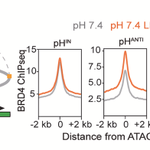
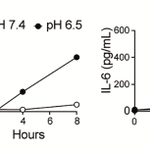
Beyond excited to share our #NewPaper in @CellCellPress! Inflamed environments acidify intracellular pH. BRD4 senses this via transcriptional condensates, tuning #macrophage responses to match demand and consequences of inflammation. #inflammation #pH authors.elsevier.com/sd/arti…
Xu Zhou (周旭) retweeted

● Twist, unwind, repeat. Dr. Chongyi Chen (NIH) investigates the forces that keep our DNA topologically balanced—and what happens to gene regulation, chromatin architecture, and genome stability when that balance is disrupted! :nyulangone.zoom.us/webinar/r… #chromatin2026

Xu Zhou (周旭) retweeted

1/9) Excited to share my preprint on Polycomb 3D chromatin interactions from my postdoc with @Anders_S_Hansen!
We were surprised to find that canonical PRC1 doesn't seem to be the only contributor to these interactions:
biorxiv.org/content/10.64898…

Xu Zhou (周旭) retweeted

Check out our new preprint led by @mileshuseyin unexpectedly discovering Polycomb 3D interactions independent of cPRC1.
Miles led this ambitious study. He's also on the faculty job market, and I can't recommend him highly enough for important and comprehensive science!

1/9) Excited to share my preprint on Polycomb 3D chromatin interactions from my postdoc with @Anders_S_Hansen!
We were surprised to find that canonical PRC1 doesn't seem to be the only contributor to these interactions:
biorxiv.org/content/10.64898…
Xu Zhou (周旭) retweeted

1/ Excited to share our new preprint from a joint collaboration between @JswLab + @Bruce_Ksander!
Aging is marked by a progressive loss of resilience to stress. Can we systematically search the human ORFome for genes that make vulnerable cells more resilient?
Performing such a genome-scale ORF screen led us to NKX2-5—a heart transcription factor we engineered to restore vision, and improve health in aged mice.
A breakdown🧵
🔗 doi.org/10.64898/2026.09.29.…
Xu Zhou (周旭) retweeted

Thank you to Boston Children’s Hospital for highlighting our recent publication, describing:
Receptor Free Signal Transduction.
childrenshospital.org/newsro…
Xu Zhou (周旭) retweeted

The next big questions in immunology dlvr.it/TVf2tH
Xu Zhou (周旭) retweeted
Today, the Toll-like Receptors reveal a new mechanism of signal transduction: Receptor-Free Signal Transduction.
nature.com/articles/s41586-0…

Congrats Daniel & @jkagan1 for another landmark study! 👏👏Many systems showed how expression kinetics can be encoded with receptor based signaling - frequency & duration signaling 👉gene expression. Couple signaling-some to gene beyond time-scale of receptors is a game changer!


Xu Zhou (周旭) retweeted

SURPRISE! Key interferon-stimulated genes (ISGs) can be induced without interferon! Sounds like an oxymoron, but it is true! Read the paper to find out more.
Switching of transcriptional control from interferon regulatory factor 2 to interferon regulatory factor 1 drives innate immune cell activation: Cell cell.com/cell/fulltext/S0092…

just talked about this idea with lab and saw this work coming out! congrats to @ReganVolk @amycfanphd and all. it is challenging to target specific macrophage subtypes but possible to do it based on on their interacting cells?nature.com/articles/s41589-0…

Xu Zhou (周旭) retweeted

Very excited to share our new paper in @CellReports - the first Adler Lab in-house paper! 🎉
Led by @SYonassi, @noaGoldenber & @AviaWalfisch, together with @Eitan42Cohen, @Einat_Tamar & @XuZhouLab.
We ask how supportive cells coordinate division of labor across tissues.
🧵

Xu Zhou (周旭) retweeted

First study out! Using a new cooperative paradigm and multi-agent inverse RL, we show that mice spontaneously adopt leader/follower roles, and the prefrontal cortex encodes these role dynamics and an egocentric social value map of the partner’s position.
nature.com/articles/s41586-0…

How to turn unprecedented cellular data into insights of tissue function? #TissueUnits, #DivisionOfLabor, and tissue-specific #Archetype. Congrats to @MiriAdler &team, go-to for tissue systems biology adler-lab.com🔥honored being a small part👇
sciencedirect.com/science/ar…

Xu Zhou (周旭) retweeted

Come be our colleague 👇🫵

The Department of Neuroscience at Yale is hiring faculty members. We have 2 searches: one general (deadline Oct 15), one focused on computational neuroscience (deadline Nov 30). Apply! apply.interfolio.com/190736 & apply.interfolio.com/190740
Xu Zhou (周旭) retweeted

🚀Please help share widely! We're excited to launch the new #AI4BIO #Fellows Program @SCSatCMU to recruit exceptional early-career scientists pursuing bold, independent research at the intersection of AI and biology.
Fellows will be supported by The Center for AI-Driven Biomedical Research (#AI4BIO) @SCSatCMU and co-mentored by two CMU School of Computer Science faculty members, with opportunities spanning AI models, computational biology, and autonomous science, including engagement with the CMU AI Science Foundry (ai-science-foundry.cmu.edu/).
We are looking for truly exceptional candidates who want to help define new directions for AI-driven biomedical discovery.
📅 Apply by November 15, 2026.
🧬 Program information: cmu.edu/ai4bio/apply/index.h…
🤖 Application via Interfolio: apply.interfolio.com/190197

Xu Zhou (周旭) retweeted

Sorry for bursting your bubble but NASA's Apollo program relied heavily on a contingent of first-generation German immigrant engineers and scientists—brought to the U.S. via Operation Paperclip after World War II—who led crucial development, testing, and launch infrastructure operations. You are showing German talents your former competent political leaders brought into the U.S. through another mechanism to make it to the moon.
Awesome work from @Anders_S_Hansen @bloodgenes 👏👏chromatin looping regulates precise expression control during embryogenesis 👍

(1/n) Excited to share close collab w @bloodgenes led by @VarshiniRam23 & @guo_chunjie et al
How to induce expression of key genes while silencing much of the genome during Erythropoiesis?
A: Matchmaker CREs load cohesin near key genes to promote looping
biorxiv.org/content/10.64898…


Atlas of lysosome aging👇🏻congratulations to @AniaPuszynska @MIT

Excited to see our work now published science.org/doi/10.1126/scie…!
Lysosomal dysfunction has long been considered a hallmark of aging, but we still know remarkably little about what actually changes inside lysosomes as organisms grow old. Using rapid lysosome isolation and metabolomics, we built the first atlas of lysosomal aging across tissues.

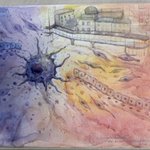
A bittersweet moment to say goodbye to @younggouu as he starts his own academic journey back in China! So lucky to have Zhongyang as 1st postdoc and truly the technical pillar for every projects. Two creative gifts from Zhongyang depicting pH sensitive condensates in macrophage❤️


What an incredible five-year journey.
My deepest gratitude to Xu Zhou,@XuZhouLab whose mentorship has profoundly shaped the way I think about science. Thank you to my lab members, collaborators, and friends for making Boston feel like home.Excited for the next adventure at USTC.
Xu Zhou (周旭) retweeted

What an incredible five-year journey.
My deepest gratitude to Xu Zhou,@XuZhouLab whose mentorship has profoundly shaped the way I think about science. Thank you to my lab members, collaborators, and friends for making Boston feel like home.Excited for the next adventure at USTC.