

I help adults 50+ get stronger, leaner, and calmer. Click my link below for a simple to follow, custom workout, eating and exercise recovery plan.
USA/Canada (Remote)
Joined June 2011
- Tweets57.4K
- Following33.8K
- Followers66.6K
- Likes23.3K






Pinned Tweet
Caught in a sympathetic stress loop?
Stress, anxiety or even panic?
🔄 Trigger "The 3 Minute State Shift." for:
Doomscrolling Interruption: Use to break the dopamine-seeking loop of social media scrolling and re-orient attention to the physical present.
Pre-Meeting Anxiety: Use immediately before high-stakes calls or presentations to lower heart rate and project calm authority.
Conflict De-escalation (break): Apply during heated arguments (partners/colleagues) to disengage the "fight" response and restore social engagement capabilities.
Acute Tech Overload: Deploy when overwhelmed by notification fatigue or screen apnea to reset respiratory rhythm and visual focus.
Sleep Onset Transition: Practice in bed to downregulate the nervous system and clear physical tension before sleep
By combining clinical 5/7 breathing with Blue Space immersion, this protocol manually engages the Vagal Brake & PMR to spike Heart Rate Variability and drop, muscle tension and cortisol.
📉 This an evidence-based meditation micro-dose— physiological engineering for the digital age. Sync your breath, release the jaw, and reset your baseline.
__
David Haldorsen MA, ISSA-EPT-SCS-CN retweeted

Four weeks of wall squats reduced systolic blood pressure by nearly 10 points in adults with high blood pressure.
Researchers then compared continuing three sessions weekly with reducing to two, one, or none for another month. Systolic pressure remained roughly 7 mmHg below starting levels in the once- and twice-weekly groups. Continuing three sessions weekly produced the greatest reduction of about 14 mmHg. In those who stopped completely, blood pressure moved back toward baseline.
This fits with a previous analysis of randomized trials that identified isometric exercise, which involves holding a muscle contraction, as an effective way to lower resting blood pressure.
What interests me is the practical question - how much of an exercise benefit can we preserve when we temporarily have less time? This study suggests that reducing the frequency can retain part of the benefit for up to a month.

David Haldorsen MA, ISSA-EPT-SCS-CN retweeted

New Perform with Dr. Andy Galpin episode: How to Get Faster (Acceleration, Deceleration, Agility & Strength) | Les Spellman (@les7spellman)
0:00 Can You Make People Faster?
5:45 40-Yard Dash Benchmarks by Position
7:30 Sponsor: Momentous
8:57 Defining Speed & Whether a Fast 40 Translates to the Field
13:43 Engines, Brakes & Steering: How Sport Shapes Speed
20:05 Training Speed for Court vs. Field Sports
24:03 Lessons Learned: Speed, Capacity & Conditioning
28:03 Aerobic Work, Post-Game BFR & Recovery Basics
35:39 Linear Speed, Change of Direction & Agility
41:14 Agility Ladders, Deceleration & Injury Risk
50:04 Sponsor: David
51:26 Early vs. Late Deceleration & Cutting Angles
1:00:02 Agility vs. Change-of-Direction Drills; Drill Progressions
1:06:51 Youth Athletes, General Preparation & Free Play
1:10:22 Sponsor: Eight Sleep
1:11:54 Fast vs. Quick, False Steps & the “Stay Low” Myth
1:23:40 Stride Length vs. Frequency & Sprint Archetypes
1:34:49 Sponsor: LMNT
1:36:10 Lifting Weights for Speed: High, Fast & Slow Force
1:44:31 Plyometrics, Session Design & Rest Between Sprints
1:54:01 How Strong Is Strong Enough?
1:56:57 Sprinting Injury Risk & Max-Speed Dosing
2:01:39 Youth Speed Training: When to Start & What to Avoid
2:07:03 Speed Development in Girls vs. Boys
2:10:05 Getting Faster as an Adult or Endurance Athlete
2:14:09 Advice for Young Coaches
Includes paid partnerships.
David Haldorsen MA, ISSA-EPT-SCS-CN retweeted
Doing "exercise snacks" every 45-60 minutes beats a single 30-minute walk for lowering blood glucose after a meal.
Even when total activity time is the same, distributing it throughout the day makes a difference.
Your muscles help clear glucose from the bloodstream, and repeatedly putting them to work appears to matter. Vigorous exercise is especially good for this.
How often you move deserves attention alongside how much you move, especially for those who work a desk job and sit for most of the day.
David Haldorsen MA, ISSA-EPT-SCS-CN retweeted
So true! And I love your 60 second air squat drills @foundmyfitness that people can do as work break -even right beside their desk!
I was inspired by your post some weeks back to develop this step by step progression from chair squats to air squats - and even single dumble squats for a female client I have:
teapaw.org/YourCoachDavid/status/…

Standing up from a low couch, climbing stairs with groceries, and stepping out of a car all depend on one daily skill:
the squat.
If rising from a chair feels harder lately, you can rebuild your leg and hip strength at home.
Start at the level that feels comfortable for your body today, and spend about 6 weeks training twice a week at each stage before moving up.
Level 1: Chair Squat
Stand in front of a sturdy, wheel-free chair with your feet hip-width apart. Reach your arms forward for balance, move your hips back to sit down gently, pause, and press through your whole foot to stand. Use a higher seat or the armrests for support if needed.
Level 2: #Bodyweight Squat
When chair squats feel steady, lower your hips toward the seat and pause right above it before standing. Keep the chair directly behind you as a safety net.
Level 3: Dumbbell Front Squat
Once your balance is solid, hold one light dumbbell vertically against your chest with both hands and elbows tucked. Keep a natural forward torso lean as you squat.
Your 6-Week Progression Plan
Do 3 sets of 7 to 12 reps, resting 60 to 90 seconds between sets, twice a week.
The 6-Week Rule:
Begin your comfortable starting level with 3 sets of 7 smooth reps. Over about 6 weeks, gradually add reps until you complete 3 sets of 12 with steady control before advancing.
Experment with gradually increasing the dumbbell weight every 6-8 weeks
Form & Breathing:
Guide your knees in line with your toes.
Inhale as you lower, and exhale as you stand.
Safety First: Stop if you feel sharp pain, and get personalized guidance if you have osteoporosis.
At level one: experiment with "partials" only going part of the way down -i.e. just the very top few inches of the move at first and gradually deepen over days or weeks.
Bookmark this 6-week roadmap for your next workout.
Which level feels most comfortable for you to start with today: Level 1, 2, or 3?
-
#Dumbbell #Workout for #Women
🤖 Made with AI
Dear Inactive women: even small strength-training “snacks” can be a powerful place to begin.
A 2024 study of over 216,000 older adults linked strength training with 6% lower overall mortality, 8% lower cardiovascular mortality and 5% lower cancer mortality.
Among women, the associations were even stronger:
12% lower risk of death from any cause
16% lower risk of death from cardiovascular disease
Women averaging 68 years old completed 12 weeks of strength training and improved cognition by up to 5%, verbal fluency by 12%, while depression symptoms fell by 34% and anxiety by 42%!
Strength training supports the brain as well as the body.
Start with simple bodyweight exercises.
Try a few chair squats, and gradually build up and more when you're ready - it's a great starter exercise!
Small movements can be the beginning of a stronger, longer, healthier life!
#StrengthTraining #WomenOver50


David Haldorsen MA, ISSA-EPT-SCS-CN retweeted

Regarding the recent discussions on threshold training, let me save you a whole lot of pain and frustration...
The following chart from chapter 11 of #TheEnduranceCode tells you everything you need to know 👇
"You can become good with a focus on threshold training. But without a deep aerobic base to go along with it, you will stay (just) 'good' for a very long time!"
If you want to discover your potential as an endurance athlete, Aerobic Base work is the (only) gift that keeps on giving.

David Haldorsen MA, ISSA-EPT-SCS-CN retweeted
Caught in a sympathetic stress loop?
Stress, anxiety or even panic?
🔄 Trigger "The 3 Minute State Shift." for:
Doomscrolling Interruption: Use to break the dopamine-seeking loop of social media scrolling and re-orient attention to the physical present.
Pre-Meeting Anxiety: Use immediately before high-stakes calls or presentations to lower heart rate and project calm authority.
Conflict De-escalation (break): Apply during heated arguments (partners/colleagues) to disengage the "fight" response and restore social engagement capabilities.
Acute Tech Overload: Deploy when overwhelmed by notification fatigue or screen apnea to reset respiratory rhythm and visual focus.
Sleep Onset Transition: Practice in bed to downregulate the nervous system and clear physical tension before sleep
By combining clinical 5/7 breathing with Blue Space immersion, this protocol manually engages the Vagal Brake & PMR to spike Heart Rate Variability and drop, muscle tension and cortisol.
📉 This an evidence-based meditation micro-dose— physiological engineering for the digital age. Sync your breath, release the jaw, and reset your baseline.
__

David Haldorsen MA, ISSA-EPT-SCS-CN retweeted
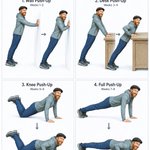
Your push-up count may reveal more about your heart health than you think.
In a 10-year study of 1,104 active male firefighters aged 21–66, men who could complete more than 40 push-ups had a 96% lower observed rate of serious heart-related problems than those who could complete fewer than 10.
These included heart disease, heart failure and sudden cardiac death.
Push-up ability was a marker of health, not proof that push-ups prevented these problems. Still, it is a powerful reason to start building your strength today.
Start where you are: wall, counter, knees or floor—one strong repetition at a time.
---
#exercise #longevity

David Haldorsen MA, ISSA-EPT-SCS-CN retweeted

🚨 Can bright indoor light replace outdoor daylight?
A new randomized study followed 202 older adults across three European cities. Greater naturalistic light exposure—including exposure above 2,000 melanopic EDI, used as a proxy for outdoor light—was associated with better sleep, greater daytime activity, more consolidated wakefulness, and better metabolic health.
A 10,000-lux indoor lamp offered some benefit, particularly when used earlier in the day. But simply giving people a light box did not significantly improve outcomes across the entire intervention group; timing and adherence mattered.
The takeaway: bright indoor light is a reasonable partial substitute when outdoor daylight is unavailable—but it is not an equivalent replacement. Outdoor light is generally brighter, broader in spectrum, and accompanied by other potential benefits of being outside.
Use indoor light to supplement daylight, not replace it.
onlinelibrary.wiley.com/doi/…

David Haldorsen MA, ISSA-EPT-SCS-CN retweeted
The most important principle when it comes to safe and effective strength training... 🏋️
Own the movement before you load the movement.
And if you're not sure whether you own it, don't test the answer by piling on weight. Spend some time finding out!
#TheStrengthCode
David Haldorsen MA, ISSA-EPT-SCS-CN retweeted
If you want to be a complete athlete, the first question to ask...
How wonky is your triangle?
#TheStrengthCode 🏋️

David Haldorsen MA, ISSA-EPT-SCS-CN retweeted

I agree 👍🏻 one caveat, the MPS response curve and plateau may not be exactly the same in 60+ yr as 25 y o

David Haldorsen MA, ISSA-EPT-SCS-CN retweeted
Join me as we take a (very) deep dive into how to program effective strength training for athletes...
teapaw.org/Alan_Couzens/status/20…

Apparently, writing one enormous book wasn’t enough…
I ran out of space to properly cover strength training in #TheEnduranceCode, so I’m doing it again...
Introducing The Strength Code: a complete system for developing stronger, more powerful, more durable athletes.
Join me (again 😊) to get first access to all of the early-release chapters below... 👇
One more rep. I've got this. 🏋️♂️

David Haldorsen MA, ISSA-EPT-SCS-CN retweeted
Thanks, David 🙏
Possibly. Will have to see how visual-heavy this one turns out to be.
Can't wait! Will you be doing an adio-book version Alan?
Join me as we take a (very) deep dive into how to program effective strength training for athletes...
teapaw.org/Alan_Couzens/status/20…

David Haldorsen MA, ISSA-EPT-SCS-CN retweeted

Staring at screens all day? Pistachios are loaded with lutein and zeaxanthin. These act as internal sunglasses, protecting your retinas from blue light damage.
#EyeHealth #Pistachios #FoodFacts

David Haldorsen MA, ISSA-EPT-SCS-CN retweeted

Latest study suggests you don’t need extra carbs in your post-workout protein shake to enhance training adaptations, but the study subjects were NOT engaged in significant glycogen-depleting activities (e.g., metcon, crossfit, Hyrox, etc.):
pubmed.ncbi.nlm.nih.gov/4235…
