










zjoko retweeted

VERCEL GOT HACKED
ShinyHunters - the group behind the Ticketmaster breach - is selling Vercel's internal database for $2M on BreachForums
here's why every developer should care:
- they have NPM tokens and GitHub tokens
- Vercel owns Next.js - 6 million weekly downloads
- one malicious push = global supply chain attack
- Vercel confirmed the breach today, April 19
- they literally DMed the hackers on Telegram asking them to stop
rotate your env variables RIGHT NOW


We’ve identified a security incident that involved unauthorized access to certain internal Vercel systems, impacting a limited subset of customers. Please see our security bulletin:
vercel.com/kb/bulletin/verce…

zjoko retweeted

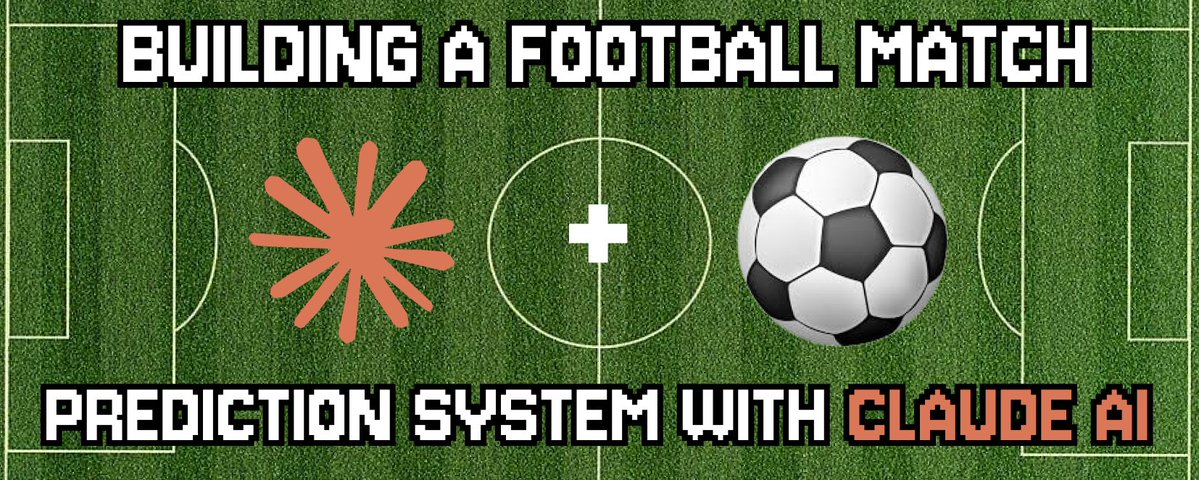
We’re building a latency Football bot for Polymarket. Target: operational before the World Cup. Save this.
The principle: pro sports feeds (Sportradar, Opta) deliver pitch events in ~200-500ms. The Polymarket orderbook takes longer to reprice thin liquidity, market makers pulling quotes while they reassess. That window is the edge.
Yesterday, first live test on Bayern vs Real (Champions League QF).
86th minute, Camavinga gets his second yellow. Pipeline receives the event from Sportradar 280ms after the card. “Bayern advances” market was at ~0.55. Model recomputes to ~0.68 post-red and fires a $500 order.
Partial fill as expected: ~$180 caught around 0.55-0.57, the rest slipped to 0.63. Average 0.59. Market stabilized at 0.67 a few seconds later. Unrealized +$30. +6% in seconds.
It’s a test. But the loop worked end to end detection, decision, fill, before the book caught up.
What we learned: network latency is part of the problem. The real bottleneck is orderbook depth. We’re competing with sharp bots, not retail on their couch. And “next goal” markets have better spreads than qualification markets. Pivoting there.
What we’re building before June: fill routing across 12 venues via Jito atomic bundles. Low-signal event modeling (dangerous fouls, injuries, tactical shifts). UMA oracle hedging. Node co-location near Sportradar servers.
Why the World Cup matters.
104 matches in 39 days. $2.5B+ in projected prediction market volume. Deep liquidity means bigger positions fill cleanly. Thin liquidity in group stages means wider spreads. Both environments leave serious money on the table.
56 days to ship. We’re on it.

zjoko retweeted

This is what Claude has to say about Solana
→ SOL is down 68% from its ATH of $293. Same price as early 2021.
→ SOL is a far better asset today than it was in 2021.
++ ETFs
++ 2 Years with no outages
++ Supply is better distributed, no more FTX shadow
++ Flipped Ethereum on almost every metric except for TVL and Market Cap
→ Assuming BTC +$100K, the 1-year base case $180-$250 (50%)
The main risk is complacency. Similar to Ethereum when it downplayed the growth of Solana.

zjoko retweeted

The Solana validator count has fallen to sub-800, down from ~2,500 at its peak. That is a ~70% drop.
Some KOLs have argued this is simply “zombie” validators being flushed out by @SolanaFndn. That is partly true, and the cleanup IS healthy. But it only explains part of what is happening.
Speaking from first-hand experience running an independent validator, and from conversations with other genuine small operators, it is becoming increasingly impossible to operate a validator profitably.
Many small validators are actively considering shutting down (including us). Not due to lack of belief in Solana, but because the economics no longer work. At this point, the only justification left is altruism. Loving the network and caring about decentralization is not a sustainable business model.
Without aligned incentives, decentralization is fighting against gravity.
Here is the structural problem today:
1) Large validators can sustainably charge 0% fees.
Small validators cannot. With limited stake, zero fees simply do not cover operating costs.
2) Stakers rationally prefer large validators.
0% fees mean higher yields. There is no incentive to delegate elsewhere.
3) Even matching 0% fees does not solve it for small validators.
Large operators have dominant visibility, established reputations, and direct access to large stakers. Competing on fees alone is a losing battle.
4) Historically, small validators survived via stake pools and foundation matching.
Both mechanisms are weakening.
5) Stake pools are increasingly monetising validators.
Fees charged to validators will likely rise to the point where the incremental revenue from pooled stake trends toward zero. The economics increasingly favor the pool operators, not the validators.
6) Foundation matching for smaller operators has been cut by ~50%.
This was the only meaningful source of net revenue for many independent validators. That lifeline has been materially reduced.
7) Under current conditions, even “successful” small validators are losing money.
Run the numbers. Participation in multiple stake pools no longer guarantees sustainability.
We started validating to support decentralisation. But without economic viability, decentralisation becomes charity.
If @solana does not address validator economics, stake will continue consolidating into a small number of large operators. That outcome weakens the network over time.
A possible solution:
Disincentivize excessive stake concentration. Either cap the amount of stake a single validator can attract, or introduce diminishing returns beyond certain thresholds. This would force redistribution toward smaller, performant validators.
To prevent circumvention, validators effectively controlled by a single entity should be grouped and treated as a combined stake cluster.
Naturally, large operators will resist this. Nobody volunteers to give up market share.
But for Solana’s long-term health, something like this needs to be on the table.
Please @calilyliu @toly @jacobvcreech
And @mert you have a large validator but you also have a big voice in the space so I hope you can see the balance required.


zjoko retweeted

Trojan (@TrojanOnSolana) hit 100k+ users in its first week of launching their web terminal


trojan dashboard:
dune.com/adam_tehc/trojan


zjoko retweeted

BREAKING 🚨 TESLA HAS PATENTED A "MATHEMATICAL CHEAT CODE" THAT FORCES CHEAP 8-BIT CHIPS TO RUN ELITE 32-BIT AI MODELS AND REWRITES THE RULES OF SILICON 🐳
How does a Tesla remember a stop sign it hasn’t seen for 30 seconds, or a humanoid robot maintain perfect balance while carrying a heavy, shifting box?
It comes down to Rotary Positional Encoding (RoPE)—the "GPS of the mind" that allows AI to understand its place in space and time by assigning a unique rotational angle to every piece of data.
Usually, this math is a hardware killer. To keep these angles from "drifting" into chaos, you need power-hungry, high-heat 32-bit processors (chips that calculate with extreme decimal-point precision).
But Tesla has engineered a way to cheat the laws of physics. Freshly revealed in patent US20260017019A1, Tesla’s "MIXED-PRECISION BRIDGE" is a mathematical translator that allows inexpensive, power-sipping 8-bit hardware (which usually handles only simple, rounded numbers) to perform elite 32-bit rotations without dropping a single coordinate.
This breakthrough is the secret "Silicon Bridge" that gives Optimus and FSD high-end intelligence without sacrificing a mile of range or melting their internal circuits. It effectively turns Tesla’s efficient "budget" hardware into a high-fidelity supercomputer on wheels.
📉 The problem: the high cost of precision
In the world of self-driving cars and humanoid robots, we are constantly fighting a war between precision and power. Modern AI models like Transformers rely on RoPE to help the AI understand where objects are in a sequence or a 3D space.
The catch is that these trigonometric functions (sines and cosines) usually require 32-bit floating-point math—imagine trying to calculate a flight path using 10 decimal places of accuracy.
If you try to cram that into the standard 8-bit multipliers (INT8) used for speed (which is like rounding everything to the nearest whole number), the errors pile up fast. The car effectively goes blind to fine details.
For a robot like Optimus, a tiny math error means losing its balance or miscalculating the distance to a fragile object. To bridge this gap without simply adding more expensive chips, Tesla had to fundamentally rethink how data travels through the silicon.
🛠️ Tesla's solution: the logarithmic shortcut & pre-computation
Tesla’s engineers realized they didn't need to force the whole pipeline to be high-precision. Instead, they designed the Mixed-Precision Bridge.
They take the crucial angles used for positioning and convert them into logarithms. Because the "dynamic range" of a logarithm is much smaller than the original number, it’s much easier to move that data through narrow 8-bit hardware without losing the "soul" of the information.
It’s a bit like dehydrating food for transport; it takes up less space and is easier to handle, but you can perfectly reconstitute it later.
Crucially, the patent reveals that the system doesn't calculate these logarithms on the fly every time. Instead, it retrieves pre-computed logarithmic values from a specialized "cheat sheet" (look-up storage) to save cycles.
By keeping the data in this "dehydrated" log-state, Tesla ensures that the precision doesn't "leak out" during the journey from the memory chips to the actual compute cores. However, keeping data in a log-state is only half the battle; the chip eventually needs to understand the real numbers again.
🏗️ The recovery architecture: rotation matrices & Horner’s method
When the 8-bit multiplier (the Multiplier-Accumulator or MAC) finishes its job, the data is still in a "dehydrated" logarithmic state. To bring it back to a real angle theta without a massive computational cost, Tesla’s high-precision ALU uses a Taylor-series expansion optimized via Horner’s Method.
This is a classic computer science trick where a complex equation (like an exponent) is broken down into a simple chain of multiplications and additions.
By running this in three specific stages—multiplying by constants like 1/3 and 1/2 at each step—Tesla can approximate the exact value of an angle with 32-bit accuracy while using a fraction of the clock cycles.
Once the angle is recovered, the high-precision logic generates a Rotation Matrix (a grid of sine and cosine values) that locks the data points into their correct 3D coordinates.
This computational efficiency is impressive, but Tesla didn't stop at just calculating faster; they also found a way to double the "highway speed" of the data itself.
🧩 The data concatenation: 8-bit inputs to 16-bit outputs
One of the most clever hardware "hacks" detailed in the patent is how Tesla manages to move 16-bit precision through an 8-bit bus. They use the MAC as a high-speed interleaver—effectively a "traffic cop" that merges two lanes of data.
It takes two 8-bit values (say, an X-coordinate and the first half of a logarithm) and multiplies one of them by a power of two to "left-shift" it.
This effectively glues them together into a single 16-bit word in the output register, allowing the low-precision domain to act as a high-speed packer for the high-precision ALU to "unpack".
This trick effectively doubles the bandwidth of the existing wiring on the chip without requiring a physical hardware redesign. With this high-speed data highway in place, the system can finally tackle one of the biggest challenges in autonomous AI: object permanence.
🧠 Long-context memory: remembering the stop sign
The ultimate goal of this high-precision math is to solve the "forgetting" problem. In previous versions of FSD, a car might see a stop sign, but if a truck blocked its view for 5 seconds, it might "forget" the sign existed.
Tesla uses a "long-context" window, allowing the AI to look back at data from 30 seconds ago or more.
However, as the "distance" in time increases, standard positional math usually drifts. Tesla's mixed-precision pipeline fixes this by maintaining high positional resolution, ensuring the AI knows exactly where that occluded stop sign is even after a long period of movement.
The RoPE rotations are so precise that the sign stays "pinned" to its 3D coordinate in the car's mental map. But remembering 30 seconds of high-fidelity video creates a massive storage bottleneck.
⚡ KV-cache optimization & paged attention: scaling memory
To make these 30-second memories usable in real-time without running out of RAM, Tesla optimizes the KV-cache (Key-Value Cache)—the AI's "working memory" scratchpad.
Tesla’s hardware handles this by storing the logarithm of the positions directly in the cache. This reduces the memory footprint by 50% or more, allowing Tesla to store twice as much "history" (up to 128k tokens) in the same amount of RAM.
Furthermore, Tesla utilizes Paged Attention—a trick borrowed from operating systems. Instead of reserving one massive, continuous block of memory (which is inefficient), it breaks memory into small "pages".
This allows the AI5 chip to dynamically allocate space only where it's needed, drastically increasing the number of objects (pedestrians, cars, signs) the car can track simultaneously without the system lagging.
Yet, even with infinite storage efficiency, the AI's attention mechanism has a flaw: it tends to crash when pushed beyond its training limits.
🔒 Pipeline integrity: the "read-only" safety lock
A subtle but critical detail in the patent is how Tesla protects this data. Once the transformed coordinates are generated, they are stored in a specific location that is read-accessible to downstream components but not write-accessible by them.
Furthermore, the high-precision ALU itself cannot read back from this location.
This one-way "airlock" prevents the system from accidentally overwriting its own past memories or creating feedback loops that could cause the AI to hallucinate. It ensures that the "truth" of the car's position flows in only one direction: forward, toward the decision-making engine.
🌀 Attention sinks: preventing memory overflow
Even with a lean KV-cache, a robot operating for hours can't remember everything forever. Tesla manages this using Attention Sink tokens.
Transformers tend to dump "excess" attention math onto the very first tokens of a sequence, so if Tesla simply used a "sliding window" that deleted old memories, the AI would lose these "sink" tokens and its brain would effectively crash.
Tesla's hardware is designed to "pin" these attention sinks permanently in the KV-cache. By keeping these mathematical anchors stable while the rest of the memory window slides forward, Tesla prevents the robot’s neural network from destabilizing during long, multi-hour work shifts.
While attention sinks stabilize the "memory", the "compute" side has its own inefficiencies—specifically, wasting power on empty space.
🌫️ Sparse tensors: cutting the compute fat
Tesla’s custom silicon doesn't just cheat with precision; it cheats with volume. In the real world, most of what a car or robot sees is "empty" space (like clear sky).
In AI math, these are represented as "zeros" in a Sparse Tensor (a data structure that ignores empty space). Standard chips waste power multiplying all those zeros, but Tesla’s newest architecture incorporates Native Sparse Acceleration.
The hardware uses a "coordinate-based" system where it only stores the non-zero values and their specific locations. The chip can then skip the "dead space" entirely and focus only on the data that matters—the actual cars and obstacles.
This hardware-level sparsity support effectively doubles the throughput of the AI5 chip while significantly lowering the energy consumed per operation.
🔊 The audio edge: Log-Sum-Exp for sirens
Tesla’s "Silicon Bridge" isn't just for vision—it's also why your Tesla is becoming a world-class listener. To navigate safely, an autonomous vehicle needs to identify emergency sirens and the sound of nearby collisions using a Log-Mel Spectrogram approach (a visual "heat map" of sound frequencies).
The patent details a specific Log-Sum-Exp (LSE) approximation technique to handle this. By staying in the logarithm domain, the system can handle the massive "dynamic range" of sound—from a faint hum to a piercing fire truck—using only 8-bit hardware without "clipping" the loud sounds or losing the quiet ones.
This allows the car to "hear" and categorize environmental sounds with 32-bit clarity. Of course, all this high-tech hardware is only as good as the brain that runs on it, which is why Tesla's training process is just as specialized.
🎓 Quantization-aware training: pre-adapting the brain
Finally, to make sure this "Mixed-Precision Bridge" works flawlessly, Tesla uses Quantization-Aware Training (QAT).
Instead of training the AI in a perfect 32-bit world and then "shrinking" it later—which typically causes the AI to become "drunk" and inaccurate—Tesla trains the model from day one to expect 8-bit limitations.
They simulate the rounding errors and "noise" of the hardware during the training phase, creating a neural network that is "pre-hardened". It’s like a pilot training in a flight simulator that perfectly mimics a storm; when they actually hit the real weather in the real world, the AI doesn’t "drift" or become inaccurate because it was born in that environment.
This extreme optimization opens the door to running Tesla's AI on devices far smaller than a car.
🚀 The strategic roadmap: from AI5 to ubiquitous edge AI
This patent is not just a "nice-to-have" optimization; it is the mathematical prerequisite for Tesla’s entire hardware roadmap. Without this "Mixed-Precision Bridge", the thermal and power equations for next-generation autonomy simply do not work.
It starts by unlocking the AI5 chip, which is projected to be 40x more powerful than current hardware. Raw power is useless if memory bandwidth acts as a bottleneck.
By compressing 32-bit rotational data into dense, log-space 8-bit packets, this patent effectively quadruples the effective bandwidth, allowing the chip to utilize its massive matrix-compute arrays without stalling.
This efficiency is critical for the chip's "half-reticle" design, which reduces silicon size to maximize manufacturing yield while maintaining supercomputer-level throughput.
This efficiency is even more critical for Tesla Optimus, where it is a matter of operational survival. The robot runs on a 2.3 kWh battery (roughly 1/30th of a Model 3 pack).
Standard 32-bit GPU compute would drain this capacity in under 4 hours, consuming 500W+ just for "thinking".
By offloading complex RoPE math to this hybrid logic, Tesla slashes the compute power budget to under 100W. This solves the "thermal wall", ensuring the robot can maintain balance and awareness for a full 8-hour work shift without overheating.
This stability directly enables the shift to End-to-End Neural Networks. The "Rotation Matrix" correction described in the patent prevents the mathematical "drift" that usually plagues long-context tracking.
This ensures that a stop sign seen 30 seconds ago remains "pinned" to its correct 3D coordinate in the World Model, rather than floating away due to rounding errors.
Finally, baking this math into the silicon secures Tesla's strategic independence. It decouples the company from NVIDIA’s CUDA ecosystem and enables a Dual-Foundry Strategy with both Samsung and TSMC to mitigate supply chain risks.
This creates a deliberate "oversupply" of compute, potentially turning its idle fleet and unsold chips into a distributed inference cloud that rivals AWS in efficiency.
But the roadmap goes further. Because this mixed-precision architecture slashes power consumption by orders of magnitude, it creates a blueprint for "Tesla AI on everything".
It opens the door to porting world-class vision models to hardware as small as a smart home hub or smartphone. This would allow tiny, cool-running chips to calculate 3D spatial positioning with zero latency—bringing supercomputer-level intelligence to the edge without ever sending private data to a massive cloud server.


zjoko retweeted

Everyone talks about the pain of losing money. Nobody talks about the relief.
The strangest part about losing it all isn't the money disappearing. It's discovering that half your confidence was just your net worth wearing a disguise.
Here's what actually happens: You spend years training your brain like a lab rat. Numbers go up, dopamine hits, you feel alive. Numbers go down, cortisol floods, you feel like a fraud. Your portfolio becomes a mirror that only shows you what you're worth, never who you are.
You get addicted to checking because the numbers became your personality. When that scorecard disappears, something interesting happens.
You're forced to exist without the performance.
Conversations where you're actually listening instead of calculating who has more money. Sunsets you actually see because you're not checking prices. Food that tastes real again because you're not scrolling through anxiety while eating.
The money gave you permission to exist. Losing it teaches you that you never needed permission in the first place.


zjoko retweeted

the last raise that was this stacked was aiccelerate that went to $100M mcap out the gate…..
internet capital markets

The Most Important ICM Stream Of All Time On X With @ICMdotrun teapaw.org/i/broadcasts/1MYxNlRAO…
zjoko retweeted

1/
@toly @solana @zachxbt @rajgokal my comment might go unnoticed but I believe you need to flag a trust problem. Numbers aside I don’t know the authenticity of this report, the sentiment is clear: people feel extracted, not onboarded.
If Solana went from 8M unique traders to 1M in 10 months (as reports say), it shows we’re bleeding users, not gaining them. Core users are feeling extracted.
2/
Launchpad wars, FnF rugs, and KOL-driven pumps are eroding confidence. Headlines like the Hayden Davis scam, LIBRA mess, and others put Solana in the blast radius. It creates the image of a “dump casino or hey I’m a ho* come f**k me for free I’m cheap asf others have done it before too” instead of a serious builder’s chain.
Ngl it disgusts me to my spine realizing a wide range of these scams occur on “solana” I mean it’s a good thing (solana is recognized but recognized for being cheap? Recognized for being exploited? Recognized for hosting scammers? Good or bad?)
So literally anyone can wake up, decide to “scam” and walk off, no governance in place, we have so many launchpads we absolutely do not even need.
3/
Decentralization ≠ absence of standards. Chains thrive when there are transparent, neutral guardrails. That’s a governance design problem, not a censorship one. Without them, cheapest chain becomes easiest chain to exploit, easiest chain to exploit becomes dead when there’s no one left to exploit.
4/
Practical fixes (no hard fork needed):
• DAO governed launchpad accreditation, escrowed mint proceeds, staged unlocks, wallet/team disclosures. Violations = loss of accreditation via DAO vote (Realms is already built for this).
• Wallet risk labels & warnings mandatory asf
RugCheck/token metadata scanner integrations on launchpads + wallets.
• Attestations/identity tiers optional but incentivized KYC or pseudonymous rep layers for retail-facing sales.
• Escrow & delayed disbursement — milestone-based unlocks on launches.
• Bad-actor registries — DAO-curated blocklists that wallets/infra can subscribe to. (Where tf is Hayden Davis now??? Chillin with baddies)
(I know my ideas sound crazy but then again we very well know they’re not impossible to implement)
5/
Why it matters: Solana’s speed + low cost is a magnet for both builders and extractors. Without shared standards, reputational damage compounds. LIBRA showed how fast the narrative flips.
6/
Proof governance already works on Solana:
• Marinade DAO — $1B-scale liquid staking governed transparently on Realms.
• Jito DAO — token-holder control over MEV client + treasury via a formal constitution.
• Pyth DAO — oracle governance live, with proposals staked + voted openly.
7/
@solana can convene a DAO-of-DAOs working group (Realms + launchpads + wallets + infra) to draft “Solana Launch Standards v1”:
– Disclosures
– Escrow rules
– Risk scanners
– Attestations
– Default wallet warnings
Ship the standard. Let apps compete on UX above it.
8/
If we prioritize users now, we protect builders and long-term liquidity. If not, the casino narrative wins, usage leaks, and another chain eventually dethrones. (This literally seems far fetched or impossible but don’t get too comfortable, the pump vs bonk era shows this is possible EVERYWHERE)
Don’t get me wrong I love solana, but my love makes me question my own sanity.
We absolutely don’t need anymore multiple launchpads, celebrity rugs when the market is good & they exit like nothing happened, & careless unverified builders hiding behind a facade.
zjoko retweeted

🇦🇷🇦🇷🇦🇷

Argentina: President Milei's "chainsaw" approach is providing a real-world template for how to actually shrink government.
Other countries should be taking note.
cato.org/free-society/spring…


