
Political economist studying economic statecraft, tech, and Chinese foreign policy @Georgetown @GUGovt
Joined March 2011
- Tweets192
- Following1.1K
- Followers618
- Likes401






Zenobia Chan retweeted

“Correspondence: The Challenge of Studying What China Wants.” @RushDoshi, @AGhiselliChina, Todd Hall, Jamie Gruffydd-Jones, and Arash Heydarian Pashakhanlou respond to David Kang, @SiuHeiWong2, and @ZenobiaChan’s Summer 2025 article.
doi.org/10.1162/ISEC.c.418

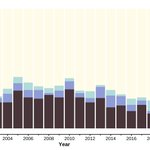
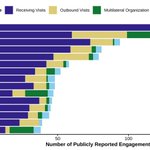
1/10: Who conducts diplomacy when presidents and diplomats aren’t in the room? We map 2,500+ meetings between senior Chinese military leaders and foreign counterparts, 2000–2023.
New open-access article with Noel Foster & @SiuHeiWong2 in J Confl Resolut: doi.org/10.1177/002200272614…

9/10: Military diplomacy is not simply civilian diplomacy in uniform.
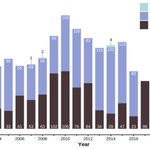
In many country-years, senior PLA engagement occurred without a president or premier visit, revealing a channel of Chinese diplomacy that civilian-travel datasets miss.

10/10: Official reporting frames meetings mainly around cooperation and exchange, from training and exercises to consultations, peacekeeping, disaster relief, and counterterrorism.
Data + R code: doi.org/10.7910/DVN/VEBBRF

TL;DR from my @ISEAS Fulcrum piece: China is scaling up Southeast Asian studies, but scale is not understanding. A system that rewards ideological legibility over open-ended inquiry may miss what makes the region hard to grasp.

Fulcrum Commentary by Zenobia Chan - The US appears to be losing to China in the race to understand Southeast Asia. The real test, however, centres on whether a country can sustain the institutions to study the region critically. fulcrum.sg/china-and-the-us-…

Zenobia Chan retweeted
3) “What Does China Want?” by @daveckang, @ZenobiaChan, and @SiuHeiWong2
doi.org/10.1162/ISEC.a.5
This article is ungated thanks to @mitpress!

Zenobia Chan retweeted

📣Calling all early-career researchers in social sciences!
Join our FREE 5-day workshop on #LargeLanguageModels
@NuffieldCollege, @UniofOxford, 23-27 September 2024!
We offer in-depth lectures, coding tutorials, and collaborative research projects!🤓😍llmsforsocialscience.net/
Zenobia Chan retweeted

I keep running into “China experts”
I remember my college days that I need to go to school library for China news on WSJ. I usually need to flip to page 12 before finding a sliver of news. Today every piece of news has a China angle. And, you find China experts / analysts everywhere.
Next time you meet a China expert or read from a China expert ask these questions
- have they met the subject that they are analyzing?
I found them usually have never met the person they are analyzing, not even someone in the category of the person they are analyzing
- how they build their knowledge and expertise?
Many of these ppl done it by reading books, papers by other “experts”, news articles …. By reading, not by practicing. Most of them have never been in business in China, forget about in politics in China
- Who do they know?
Many of these “experts” only are able to met ppl at the periphery of power in China, if even that. Also, I question their ability to qualify the info they received. CCP has installed an atmosphere of fear for Chinese to share information w foreigners.
I found western academia and think tanks are full of these theorists. They form a cohort and fend for one another. Patting one another on the back, writing blurbs for one another’s books, interviewing one another to promote one other…. It’s a business. It’s a career
Garbage in garbage out. Fanciful theories leads to terrible decisions.


Zenobia Chan retweeted

To tell people that their experiences aren’t real or valid because they don’t meet some threshold for statistical significance across a large population doesn’t account for the breadth & nature of AI’s impacts on the world. 10/
@natematias @ZenobiaChan osf.io/tn6x4/

Latest manuscript w/ @natematias @HeadsUpPenny on N-of-1 trials and the effects of a grayscale screen on phone usage: osf.io/jtdng/

This quoted post is unavailable.