

Jack of some trades || Manchester United || BSc Physiology || Forex 📉📈 || Shit posting 👐🏾
Lagos, Nigeria
Joined January 2019
- Tweets53.3K
- Following2.7K
- Followers2.5K
- Likes167K
Homeboy Tochukwu 👑 retweeted
Bro @Timo_x9 this girl wey u give belle for Ekiti dey text me say u block am. Why tho?
Homeboy Tochukwu 👑 retweeted

MrBeast challenged his team member Tareq to steal as much money as possible in GTA 6 within ONE HOUR, promising to give his mother the equivalent amount in real cash.
Tareq managed to steal approximately $45,000, earning his mom a massive payday in real
Homeboy Tochukwu 👑 retweeted

🤍 Presenting today's starting XI, in positional order...

ALT United's starting XI to face Liverpool, with Patrick Dorgu as the player image. Starting XI: Lammens; Yoro, De Ligt, Martinez, Dalot; Tielemans, Mainoo; Mbeumo, B.Fernandes (c), Dorgu; Cunha Substitutes: Heaton, Heaven, Maguire, Mazraoui, Andrey Santos, Mount, Amad, Lacey, Zirkzee.

Homeboy Tochukwu 👑 retweeted
I'm lying yeah, this was our conversation we had.... Please reach out her and take responsibilities 👍🏾


. @FBI I am being defamed by the user behind this X account. Ever since I met him in NYSC camp. He’s been saying all sort of lies about me on the internet. If you need his details I can forward them to you.


I'm lying yeah, this was our conversation we had.... Please reach out her and take responsibilities 👍🏾
. @FBI I am being defamed by the user behind this X account. Ever since I met him in NYSC camp. He’s been saying all sort of lies about me on the internet. If you need his details I can forward them to you.
Homeboy Tochukwu 👑 retweeted
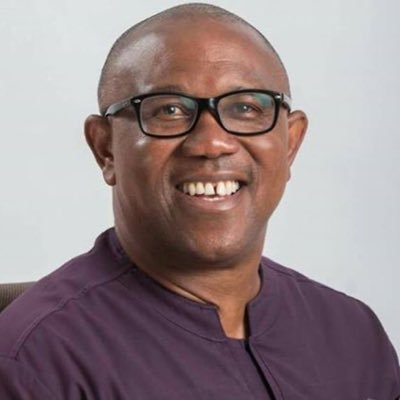
NIGERIANS, GO AND VERIFY (7)
LIFTING THE VULNERABLE : ANAMBRA’S BLUEPRINT FOR POVERTY ALLEVIATION AND SUSTAINABLE EMPOWERMENT (2006–2014)
Economic growth that does not translate into improved living conditions for ordinary citizens is incomplete. This is one of our fundamental concerns with President Bola Ahmed Tinubu's government. Development must ultimately be measured by its impact on human lives, particularly those of the poor and vulnerable. This was underpinned by the Anambra Integrated Development Strategy (ANIDS). We believed that infrastructure, education, healthcare, agriculture, and social protection must reinforce one another. Poverty was not merely a shortage of money; it was also a lack of access to opportunities, productive resources, and the basic conditions necessary for a decent life.
Our poverty alleviation strategy, therefore, went beyond temporary handouts. It focused on restoring dignity, creating economic opportunities, and equipping vulnerable citizens with the means to become self-reliant.
Our approach attracted recognition beyond Anambra. In May 2010, Magnus Kpakol, then National Coordinator of the National Poverty Eradication Programme (NAPEP), commended our commitment to poverty reduction, declaring: “We are prepared to support you in the excellent work you are doing in Anambra State.”
1. POVERTY MAPPING: KNOWING WHERE POVERTY LIVES
We recognised that poverty could not be effectively addressed without knowing where it was concentrated and what caused it. We, therefore, undertook a poverty-mapping exercise to identify the most deprived local government areas and communities.
The exercise revealed that some of our poorest communities were also important food-producing areas. Their challenges included poor access to markets, agricultural inputs, electricity, water, and other economic opportunities.
Areas including Anambra West, Orumba South, Awka North, and Ogbaru required particular attention. The findings informed our development priorities, enabling us to direct roads, agricultural support, and social interventions toward neglected communities.
2. EMPOWERING WOMEN, WIDOWS, AND COOPERATIVES
We recognised that rural women, widows, and indigent households bore a disproportionate burden of poverty. Across the 21 local government areas, we provided financial assistance and productive support to thousands of beneficiaries.
Our administration provided financial assistance to support the establishment and expansion of small businesses and farming activities. We also introduced revolving loan schemes to promote enterprise development, economic self-reliance, and improved livelihoods.
We distributed productive equipment, including sewing machines, generators, ovens, cookers, hair dryers, shoe-making machines, and welding equipment. The objective was to help beneficiaries establish sustainable livelihoods rather than remain dependent on government assistance.
We also promoted access to microcredit and cooperative financing to enable small entrepreneurs to expand their businesses, improve their incomes, and create employment.
Our philosophy was simple: rather than merely giving people money to survive today, the government should help them acquire the means to earn a living tomorrow.
3. AGRICULTURE AND FADAMA: MAKING RURAL COMMUNITIES PRODUCTIVE
Agriculture was central to our poverty-reduction strategy because many rural households depended on farming.
Through partnerships with the Federal Government, the World Bank, and other development partners, particularly under the FADAMA programme, we supported farmers with finance and productive assets.
In November 2009, our administration disbursed millions to FADAMA Community Associations across the state. By October 2010, the National FADAMA office was commending Anambra’s commitment. Its National Project Coordinator, Buka Tijjani, represented by Charles Ugwuona, described Anambra as the leading state in the programme.
Bro @Timo_x9 this girl wey u give belle for Ekiti dey text me say u block am. Why tho?


