

We are an organization whose goal is to connect people from diverse backgrounds and build a community on the shared love of all things geek!
Omaha, NE
Joined January 2018
- Tweets1.6K
- Following318
- Followers146
- Likes1.4K








The House retweeted

Dorothy Tillman, a Foundational Black American civil rights activist and Chicago politician, was born in 1947 in Montgomery, Alabama. She joined MLK’s field staff in 1963 and marched alongside him in the Selma to Montgomery marches. In Chicago, she campaigned for better housing and education for Black Americans, eventually becoming an alderman in 1985.
Tillman successfully advocated for accountability from companies with ties to slavery, notably leading campaigns against banks like Bank of America for their alleged historical links to slavery. In early 2005, Tillman challenged a $500 million refinancing deal with Bank of America due to its purported connections to slavery through its acquisition of FleetBoston.
In 1991, she pulled out a .38 in a South Side redistricting meeting, placed it on the table, and dared the council to vote on it. They didn’t vote on it. Despite the controversies, Tillman is a staunch advocate for Reparations; her bold actions left a lasting impact on Black Politics. #BlackHistoryMonth
The House retweeted

A Black American (#Freedmen) woman contributed to the development of plastic. Dr. Mary Elliott and her husband, Carl Hill, used specialized chemical reactions to form ketenes. Their development of ketene synthesis was crucial in plastics development. #BlackHistoryMonth

The House retweeted

Malinda Williams Launches HBCU Coding Boot Camp For Women blackenterprise.com/malinda-…

The House retweeted

31 Years Ago Today, @DakotaUniverse debuted in the comic book industry and world. Milestone changed comics and entertainment, started careers, forged futures in thermonuclear fire, and changed lives, including mine.
The revolution was real.

The House retweeted

My mom’s creativity is INSANE!!!!! Check out what her daycare babies did for black history month . #blackinwax ☺️
The House retweeted
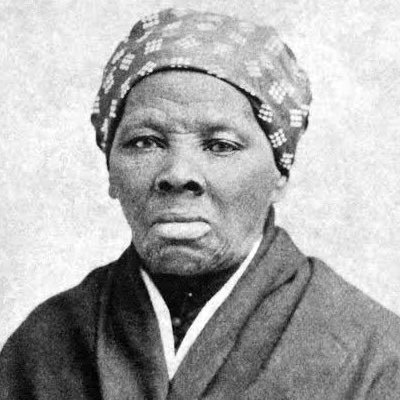
In 1926, thirteen black men put together their savings and founded Safe Bus Company, making it the largest black owned bus company at that time.
It was formed in Winston-Salem to serve the black neighborhoods due to segregation and operated till 1972.
Thirteen Black men put together their life-savings and purchasing shares of stock for $100,000; forming Safe Bus Co, Inc. on May 26, 1926, Safe Bus Co became the largest African-American owned bus company in the nation.
The company grew large and fast and was at one point named the largest black-owned transportation company in the world. In 1955, Safe Bus grossed $825,000. At it’s prime, the company carried 15,000 fares a day, grossed $18,000 a week and had 75 employees.
Fares started at five cents in the early operating days and grew as the company expanded. The number of buses expanded as well, from 35 to 42. Safe Bus operated in 20 percent of the city.
Black bus drivers made, around $1.60 to $2.50 an hour. “That was more than school teachers were making then.”
By 1968, Safe Bus provided transportation to all city residents. The company took on more routes, but finding drivers proved difficult.
Despite more routes, after integration, Safe Bus started to lose money. Old attitudes about segregation made it difficult to make a profit, and the company lost 60 percent of riders, according to the Winston-Salem Transit Authority.
“When the whites started riding Safe Bus, they thought they had to go to the back,”.
After integration Black people Started riding on white-owned buses so they could sit up front with white people. Stockholders voted to sell the company to the city in 1972. The Winston-Salem Transit Authority became responsible for all public.
🖊️As the only admin behind this page, I try to research to educate. If you appreciate this effort, you can support to help the page thrive on ko-fi.com/africanarchives. Your support is deeply appreciated! Or just follow the page for articles.

The House retweeted

In 1961, I was hired as the FIRST Black female reporter for The Washington Post. This month, you'll learn about many #BlackHistory firsts. I encourage you to use our stories to fuel your ambitions. There are many FIRSTS yet to be had and I'm excited for YOU to join the club.

The House retweeted

Remembering Natalie Cole on her birthday (February 6, 1950 – December 31, 2015)💙🕊


The House retweeted
Most people have heard or used the term UNCLE TOM when we refer to a sell-out, but did you know that the inference is totally wrong.
The real Uncle Tom was a hero, Josiah Henson, was an abolitionist who helped slaves escape among other great things #BlackHistoryMonth
A THREAD!

The House retweeted

“Kinship” social dances are a mainstay of African American creative art and cultural expression. Coordinated line dances evolved over generations with dances like "The Electric Slide." Learn more about Black performance art this #BlackHistoryMonth: s.si.edu/3vNZMVd
The House retweeted
On this day in 1945, legendary reggae artiste Bob Marley was born.
"One good thing about music, when it hits you, you feel no pain." —Bob Marley
Rest in Power.


The House retweeted

Hi my name's Hobie, Hobie Brown. I was bitten by a- wouldn't you like to know? Get what I mean? 😜🤟🏾🕷
📸: @maizon_jar (on IG) #spiderpunk


The House retweeted

Robert "Bobby" Carter, 41, a 2000 Jackson State University graduate, is the producer of the Tiny Desk concert series, which garners millions of views a month featuring some of the music industry's heavy hitters and burgeoning acts.


The House retweeted

The #Spiderverse meetup was a SUCCESS !!! Thank you to all who came out ! More pics and videos
Coming very soon ! 🕷️❤️🔥
#Blerdcon #AcrossTheSpiderVerse

The House retweeted

All episodes of ‘KIZAZI MOTO: GENERATION FIRE’ are now streaming on Disney+
The anthology series is developed by rising animation talent from 6 African nations.
The House retweeted

Shoutout to our incredible community participants who make #OConExpo shine brighter than ever!
Ghostbusters NE Division
@OmahaFilmFestvl
@OmahaCorgis
@_HOACC
@renfestnebraska
Artist Jam @KryptonComicsNE
@CentralGarrison
@OmahaLibrary
@BookwormOmaha
And more to come!

The House retweeted

Black on Both Sides: A Racial History of #Trans Identity
by C. Riley Snorton
"...identifies multiple intersections between blackness and transness from the mid-nineteenth century to present-day anti-black and anti-trans legislation and violence."
ow.ly/Q8pE50A75C1
