






Pinned Tweet
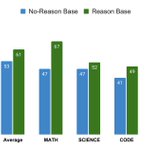
Most LLMs learn to think only after pretraining—via SFT or RL. But what if they could learn to think during it? 🤔
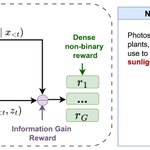
Introducing RLP: Reinforcement Learning Pre-training—a verifier-free objective that teaches models to “think before predicting.”
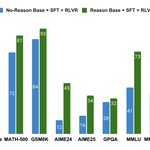
🔥 Result: Massive reasoning boosts & gains that COMPOUND after post-training!
📝 Blog: research.nvidia.com/labs/adl…
🔗Paper: github.com/NVlabs/RLP/blob/m…
🧵↓

Syeda Nahida Akter retweeted

🚀 We're hiring interns on the Pretraining Data team at @MistralAI !
Come work on what actually makes frontier models tick ... the stuff that decides what our models learn.
If you're curious about how training data is built at scale and want hands-on experience with it, apply here 👇
Link: jobs.ashbyhq.com/mistral.ai/…

Syeda Nahida Akter retweeted

Through my wonderful time at NVIDIA and Stanford, one question has kept me up at night:
Should the future of AI be monolithic or plural?
To answer this question, we’ve raised $110M to get started, backed by @MenloVentures, @MadronaVentures, @NVIDIA, @NEA, @KindredVentures,@Wing_VC, @aixventureshq, @Principal_VC, @Cisco, @Snowflake, among others.
Today, Carlos (@guestrin) and I are stoked to launch Noeri, a neolab to push the frontier of plural intelligence.
Noeri means “the plural of intelligence” or many intelligences.
The future of AI we root for is plural: a healthy ecosystem of many intelligences, in all sizes, strengths, and quirks.
Discovery, in particular, has always been plural: many curious minds, each devoted to their own question, often on roads less traveled.
Our path there is self-improving AI that:
-> learns continually on the job, closing the gap between what AI can do off the shelf and what the dynamic world demands
-> learns to use other AIs as tools and make new tools to overcome its own limitations
-> picks the right-sized model for your problem, at a fraction of the frontier cost
Then the power of intelligence, from the craftsmanship of making AI to ownership, can be in the hands of all.
@noeri_ai mission reflects who we are as the founding team. My career has been anything but linear, literally continual learning on the job. Carlos has devoted his career to building tools that empower people through AI.
We are all a bit contrarian, a bit adventurous, and above all, big believers in pluralism.
Join us to build this future together: noeri.ai/
Syeda Nahida Akter retweeted

This week's Summer of Data talk is live. Thanks to Syeda Nahida Akter @__SyedaAkter (CMU → NVIDIA) for coming by to talk about front-loading reasoning: teaching a model to reason during pretraining, not just after, and why that head start compounds. Full talk in the reply.
Syeda Nahida Akter retweeted

New lecture for the book! Nominally about synthetic data, but mostly is a walk through of the distillation literature from the Hinton 2015 paper to multi-teach on-policy distillation of today!
At 7.4 hours of video in my post-training brain dump and counting :)
It was fun to stare at the math long enough and talk through the 3-4 core changes that needed to be made to the original formulation to have on-policy distillation be ready for the mainstream like it is today (and in RL frameworks).
Otherwise, I include a bit of a history lesson for how synthetic data generally slowly took over all post-training data research (it wasn't always the case)! Then I do some 101 review on constitutional AI, rubrics, and other popular methods.
00:00 The emergence of synthetic data
10:50 Background on teacher-student knowledge-distillation
24:47: On-policy distillation (OPD, MOPD, and OPSD)
37:11 Constitutional AI & AI Feedback
45:50 Rubrics as rewards & conclusions
Ofc, watch on YouTube etc.
Syeda Nahida Akter retweeted

Ever wished we had fewer X-training hyphenates? Pre, mid, post etc. Why not just Training?
Trying to bridge the divides (and get all our friends into one team again), we intro *Introspective X Training*, an offline RL inspired method that scales effectively across any LLM stage by annotating your data with a thinking reward generated language critique!
Up to 2.8x FLOP efficiency + 5-10 point score gains (esp with math and code) at any stage from scratch to 24T tokens on 8b (active) sized models!! We burned much compute ablating so you wouldn't have to
Moral of the story is‼️don't throw out any data via filtering, just feedback condition it‼️
You can spend FLOPs up front on inference to *classify* data quality and then train so that tokens aren't all treated equally based on the feedback starting early in training itself. Right now they're really only separated out much later during mid/post training
This improves overall compute efficiency and gives us benchmark perf not possible with just baseline methods!
Paper here: arxiv.org/abs/2605.20285
Thanks to @BrandoCui and @GXiming for leading this w/ @__SyedaAkter @davidjesusacu @hyunw_kim @jaehunjung_com Yuxiao Qu @shrimai_ @YejinChoinka
Excited to present Nemotron-CrossThink @eaclmeeting 🇲🇦🚀
We extend RL beyond math while achieving accurate answers with significantly fewer tokens!
📍 Salle Le Riad 🗓 26 March | ⏰ 9:00–10:30 AM (Moroccan Time)
Session: Reasoning and Self-Learning in LLMs

RL boosts LLM reasoning—but why stop at math & code? 🤔
Meet Nemotron-CrossThink—a method to scale RL-based self-learning across law, physics, social science & more.
🔥Resulting in a model that reasons broadly, adapts dynamically, & uses 28% fewer tokens for correct answers!
🧵↓

6
336
Syeda Nahida Akter retweeted
Excited to share Nemotron-CrossThink @eaclmeeting 🚀
We move beyond math-only RL by bringing multi-domain reasoning into RL training with scalable, verifiable rewards.
Don't miss the oral presentation tomorrow at 9.00am in Salle Le Riad by @__SyedaAkter
Link: arxiv.org/pdf/2504.13941

Syeda Nahida Akter retweeted
📢 Thrilled to see Nemotron-3 Super out in the world. 🚀
A hybrid MoE model with long-context support and strong reasoning capabilities — designed for scalable agentic AI systems and efficient inference.
🎉 Proud to be part of the team pushing forward open, efficient, and scalable AI systems. @NVIDIAAI @nvidia

Intelligent and Super Efficient!

Announcing NVIDIA Nemotron 3 Super!
💚120B-12A Hybrid SSM Latent MoE, designed for Blackwell
💚36 on AAIndex v4
💚up to 2.2X faster than GPT-OSS-120B in FP4
💚Open data, open recipe, open weights
Models, Tech report, etc. here:
research.nvidia.com/labs/nem…
And yes, Ultra is coming!

4
381
Syeda Nahida Akter retweeted
Thrilled to share that all three of our papers were accepted to @iclr_conf 🎉
1⃣RLP: Reinforcement as a Pretraining Objective
2⃣Front-Loading Reasoning: The Synergy between Pretraining & Post-Training Data
3⃣Nemotron-CC-Math: A 133B-token High-Quality Math Pretraining Dataset
Together, they explore how data, reasoning, and reinforcement during pretraining shape stronger LLMs.
2/2 at ICLR 2026! 🎊
So happy to share that both of our papers have made it to @iclr_conf!
1️⃣RLP: Reinforcement as a Pretraining Objective
(arxiv.org/abs/2510.01265)
2️⃣Front-Loading Reasoning: The Synergy between Pretraining and Post-Training Data (arxiv.org/pdf/2510.03264)

So grateful to all the collaborators who made these works possible 🙏
1️⃣ RLP: @ahatamiz1, @shrimai_, @jankautz, @MostofaPatwary, @MohammadShoeybi, @ctnzr, @YejinChoinka
2️⃣Front-Loading Reasoning: @shrimai_, Eric Nyberg, @MostofaPatwary, @MohammadShoeybi, @YejinChoinka, @ctnzr
4
170
RLP is ready for ICLR 2026! 🥳 We have added extensive ablations and new experimental results (thanks to the reviewers). Excited to share the final story soon!

I am happy to announce that RLP has been accepted to ICLR 2026 ! 🎉
RLP re-imagines the foundations of LLM training by bringing reinforcement learning directly into the pretraining stage.
This was a true team effort, and it would not have been possible without the invaluable contributions of our amazing team:
@shrimai_ @__SyedaAkter @jankautz @MostofaPatwary @MohammadShoeybi @ctnzr @YejinChoinka
Paper: arxiv.org/abs/2510.01265
Code: github.com/NVlabs/RLP

Syeda Nahida Akter retweeted
Excited to be part of the launch of @nvidia Nemotron 3 Nano (30B) 🚀 A hybrid MoE reasoning model with 1M context, SWE-Bench-leading performance, and 1.5–3.3× faster inference. Super and Ultra are coming in the next few months. Open, fast, frontier-level 🔥

Syeda Nahida Akter retweeted

Today, @NVIDIA is launching the open Nemotron 3 model family, starting with Nano (30B-3A), which pushes the frontier of accuracy and inference efficiency with a novel hybrid SSM Mixture of Experts architecture. Super and Ultra are coming in the next few months.

Syeda Nahida Akter retweeted

Lot of insights in @YejinChoinka's talk on RL training. Rip for next token prediction training (NTP) and welcome to Reinforcement Learning Pretraining (RLP). #COLM2025
No place to even stand in the room.

Syeda Nahida Akter retweeted

By teaching models to reason during foundational training, RLP aims to reduce logical errors and boost reliability for complex reasoning workflows.
venturebeat.com/ai/nvidia-re…

Syeda Nahida Akter retweeted
Thank you @rohanpaul_ai for highlighting our work!💫
Front-Loading Reasoning shows that inclusion of reasoning data in pretraining is beneficial, does not lead to overfitting after SFT, & has latent effect unlocked by SFT!
Paper: arxiv.org/abs/2510.03264
Blog: research.nvidia.com/labs/adl…


New @nvidia paper shows that teaching reasoning early during pretraining builds abilities that later fine-tuning cannot recover.
Doing this early gives a 19% average boost on tough tasks after all post-training.
Pretraining is the long first stage where the model learns to predict the next word from lots of text.
Supervised fine-tuning is a later stage where it studies step by step answers from labeled examples.
Reinforcement learning then rewards better answers so the model improves further.
Diversity matters most in pretraining, while high quality matters most in supervised fine-tuning, roughly 11% vs 15% gains.
Even doubling supervised fine-tuning on a base that skipped early reasoning could not catch up.
Adding lots of mixed-quality supervised fine-tuning data even cut math by about 5%.
High quality reasoning added in pretraining looked small at first, then showed up strongly after supervised fine-tuning.
Teams should load diverse reasoning into pretraining, use a small high quality set for supervised fine-tuning, then stabilize with rewards.
----
Paper – arxiv. org/abs/2510.03264
Paper Title: "Front-Loading Reasoning: The Synergy between Pretraining and Post-Training Data"

Thank you @rohanpaul_ai for sharing our work!
In "Front-Loading Reasoning", we show that injecting reasoning data into pretraining builds models that reach the frontier.
On average, +22% (pretraining) → +91% (SFT) → +49% (RL) relative gains. 🚀
🔗Paper: arxiv.org/pdf/2510.03264
📝 Blog: research.nvidia.com/labs/adl…
New @nvidia paper shows that teaching reasoning early during pretraining builds abilities that later fine-tuning cannot recover.
Doing this early gives a 19% average boost on tough tasks after all post-training.
Pretraining is the long first stage where the model learns to predict the next word from lots of text.
Supervised fine-tuning is a later stage where it studies step by step answers from labeled examples.
Reinforcement learning then rewards better answers so the model improves further.
Diversity matters most in pretraining, while high quality matters most in supervised fine-tuning, roughly 11% vs 15% gains.
Even doubling supervised fine-tuning on a base that skipped early reasoning could not catch up.
Adding lots of mixed-quality supervised fine-tuning data even cut math by about 5%.
High quality reasoning added in pretraining looked small at first, then showed up strongly after supervised fine-tuning.
Teams should load diverse reasoning into pretraining, use a small high quality set for supervised fine-tuning, then stabilize with rewards.
----
Paper – arxiv. org/abs/2510.03264
Paper Title: "Front-Loading Reasoning: The Synergy between Pretraining and Post-Training Data"
13
1,089

