

Founder of Minimal Machines. 20+ yrs graphics & game tech. Thoughts on technology, AI, and creativity. Ex-Sony/PlayStation. Minimalist with too many interests.
Joined August 2020
- Tweets329
- Following34
- Followers30
- Likes25





Pinned Tweet
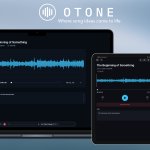
Otone is out. An audio notebook for songwriters: capture the idea, lyric, voice memo, and find and connect them again later. iPhone, iPad and Mac. One-time purchase, and 50% off for launch.

There's a stage in software development where everything technically works, but something still doesn't feel quite right. That's usually the part I enjoy figuring out the most. It's also where my perfectionism is least helpful.
Virtually no one reads all the code in a sufficiently large engineering team and codebase. That's always been the case. Agents don't change that much. However, the trust that /someone/ knows about parts of the code is harder to maintain.


After years of jumping between writing and note apps, I decided to build my own.
And about a year later, it's finally becoming my daily driver.
I'm calling it Memoteo. A workspace for thinking writing, and exploring ideas.


It's very early and I'm still figuring out where to take Memoteo, but I'd love to know if others find it interesting too.
memoteo.com

You'd think at least one of these toggles would enable Google Chrome to access the local network after accidentally clicking deny on the permission prompt.

One of my favorite Otone features: drag an idea out of Otone and drop it straight into your DAW. Tracks are automatically created, ready to go. No exporting stems, no importing, no file shuffling. Just drag and drop.
The idea that vibe coding automatically means lower quality, or "slop", reminds me of the early days of digital photography, when some people didn't consider it "real" photography. Besides, humans have been writing sloppy code since forever.
Sometimes we don't need a reason to create something other than "I want to."
So, here's a Voronoi height field.
The first sales coming in that's not my own test purchase. Makes the morning coffee so much sweeter. Otone is on launch pricing, one-time purchase for Mac and iPhone. Privately synced via iCloud.

I built it because my song ideas were scattered across voice memos, DAWs, notes and the back of my mind. It's a one-time purchase because I'd rather not rent people their own ideas."
It is pretty surreal that we can essentially speak software into existence these days. We’ve come quite far since the “mov ax,13h” days.
For that matter, at what point does GPU architecture move away from a triangle-first pipeline?
What about hardware optimized for points and use generative point/splat renderers? Represent the world semantically by what it is instead of by its vertices.
Do people still write their on git commit messages anymore, or has that all been handed over to coding agents now?
I still write mine, for better or worse.

One of my favorite uses of coding agents is for the parts I don't want to spend time on. Like wiring up ImGuizmo so I can drag things around more easily in my 3D renderer.
