

CS PhD student @DrexelCCI working on formalization in Lean. Maintainer of https://teapaw.org/t.co/waYLdE0QGI. Student Researcher @GoogleDeepMind
Philadelphia, PA
Joined December 2014
- Tweets4.9K
- Following2.7K
- Followers1.1K
- Likes12.8K






Pinned Tweet
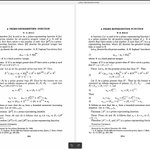
I figured my math followers would especially appreciate this! Just got these, they are originals from 1740 and 1751. Include the original publication of Euler's solution to the Basel problem, among other very cool things. So crazy to have these pieces of history on my bookshelf.


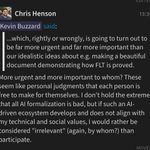
Very sad to see comments like this. Work on the human-curated formalization is certainly not "done". Besides the fact that the proof they're formalizing is a modern version, there is certainly value to investing time in a higher quality of formalization than LLMs can provide.


3
14
666
ICYMI, this part of the Fable 5.2 release has its own report: claude.dev/blog/safely-scali…
This a a second full formalization of FLT, taking fewer tokens, a much more compact formalization, and 1000 agents figuring out on their own what to do without a tool like Prove2me.


Quite refreshing to see the long history of PL explicitly acknowledged by a startup doing AI for formal verification.

Formal methods didn't start with us.
@ClarkBarrett7 on the people and tools &Truth builds on, from Turing, Hoare, and Dijkstra to Lean, Separation Logic, and SMT solvers:
andtruth.com/blog/shoulders-…
Autoformalization is now mature and widespread enough that we need to think closer about the different reasons we formalize and the different degrees of informal/formal proofs being aligned. (Short thread)

For much autoformalization, all we previously cared about was that the top-level statement was faithfully translated into the proof assistant by a human. Projects like FormalConjectures from @GoogleDeepMind or AnnalsChallenge continue to painstickingly curate these.
1
7
425
And what will they do when they get to the nLab page about 1Lab? Formalize all the metatheory of cubical type theory? Port it all? (I'm half joking here, but my point is that nLab pages are notoriously widely varied in scope and specificity)
ncatlab.org/nlab/show/1lab

1
9
494
Is there a coherent, non-slop paper about Bend's type theory/kernel yet? The last paper version I saw was unreadable and so concerning from the perspective being amenable to a lean4lean style formalization. I think this will be table stakes for the next gen proof assistants.

when bend2 launched, some complained about AI usage. in my view, this is only a problem if bugs can occur. the current typescript compiler, for example, has many. I hate it. with well-designed laws, though, that ceases to be a problem. so, for the better or for the worse, bend3 will be 100% AI-written. there is no going back
while I was raising, I left a fleet of agents working on bend3, a small scale version of this vision. this was a huge success, beyond my own expectations. opus 5.5 successfully rewrote all of bend in itself, including its compiler, which is now certified, with zero bugs, and already 2x faster (!!). we now have a model of Bend, C, CUDA and the compiler, all written in Bend itself, and properly formalized. with this, we'll soon start the largest proof-driven compiler self-improvement loop in history
news on Bend have been slow because I was busy raising, but as soon as this is over, expect updates at a breath-taking place. this is the most exciting thing I've ever done and I can't wait for the big run to start
FWIW if you look at the Lean Zulip discussion, you'll see a much more measured conversation about what "gaps" were already known, unpublished work, etc. leanprover.zulipchat.com/#na…

I don’t find this to be true. While the correctness of results will be less in doubt, formalization has now given strong evidence that major results were already very reliable. On the other hand, the influx of capital into the profession has been accompanied by a huge number of claims about significance, applicability etc. that I find much less reliable than most mathematical claims previously.
2
25
2,577
> We also expect the verification of lean4lean... Arthur Adjedj is working on the kernel renovation plan
Beneath the fold is what I consider the most important ongoing work for Lean soundness. Happy to see these projects mentioned in Leo's blog.

Lean v4.35.0 is out, and it ships with verified kernels.
Run `lake check --paranoid` to recheck your project with every bundled kernel.
Blog post: leodemoura.github.io/blog/20…
7
225
I agree, but it's also extremely difficult. Formalization makes many decisions about representation of mathematics that are equivalent, but very non-trivially so. (And then consider tactics!). A principled implementation would be a significant research/engineering effort.

u know what would have prevented this from the get-go? a semantic parity consistency check table of every object in a particular repo in latex and lean.
6
413
Not sure I can imagine a worse target for a "you don't understand anything about math" tweet.


> AI labs that release substantial mathematical output without immediate accompanying human understanding must take responsibility for ensuring that human understanding will follow
Curious to see how OAI interprets/follows through on this, I wish the blog at least hinted at it

On OpenAI’s release of mathematical results. ~ Advisory Group on Mathematics and Artificial Intelligence. proofsandprompts.com/2026/10…
#AI4Math

1
1
480
My wildest AI experience to date: in the middle of a Lean formalization Astra, complete unprompted, finds a Pascal program from the 90s, ports it to C++, then uses this as part of a template for much more efficient versions of numerically heavy proofs.

Very interesting work/discussion about odd properties of models of Lean and possible extensions that are nice in the sense of what independent statements remain.

#MathDay 4. SolidLean. This is my new project I alluded to yesterday. It's a system of axioms that (mostly) extends the 3 standard axioms of Lean, which provide its type theory a valuable metamathetical feature known as solidity.

1
269
As much as I love categorical semantics, I get this feeling a lot. At some point it feels like an arbitrary distinction from the syntax. To me order theory, magmas, relations, etc. are impressive for the ratio of intuitive, limited axioms to the resulting math.

i like the kind of maths where you start with like 3 axioms and get a whole lot cool stuff from it. i dont like the kind of maths where you have to keep adding more and more axioms. just gives me the ick. "this is only true in Foobarian spaces where you assume there is a map that
8
556
I'm at my quota for spicy titles given yesterday's Collatz shenanigans, but this is a very nicely written and level-headed summary of what is missing in Lean compared to Rocq. (Though I hope with increased focus on program verification this changes over the next couple of years!)

🌶️ "Why Rocq is better than Lean for program verification": A write-up on why I don't give in to the hype and switch to Lean for formal verification of programs. joomy.korkutblech.com/posts/…

I think you should thoroughly check your code before unleashing it on the world


Imagine talking about code like they talk about proofs. Posting a GitHub repo is a dick move. You should have checked it thoroughly first before unleashing that slop code on the world. You have an implied warranty that they're going to impose on you. You're in the global stack.
11
999
The judgement that the *statement* of a formalization represents the informal math is inherently informal. Using AI here can perhaps be a heuristic, but it is inherently a point of trust that has to be human verified.

A proof that's formalized doesn't need to be peer-reviewed. The definitions and statement need to be verified, and you have to confirm that there aren't any cheats/axioms, but that's much, much easier, and could be done by AI to a high degree of confidence, far above the standards of any published journal.
12
1,316