

Efficient frontier mentality // Applied AI Engineer @Blockworks // views my own
Joined January 2021
- Tweets3.1K
- Following1.8K
- Followers4.1K
- Likes23.6K




Not surprising
Dennis has consistently stated that multimodal is a key point of emphasis for DeepMind
They are behind in SWE but are betting that understanding of the natural world will provide the bigger payoff in the long run
Better coding means better RSI though

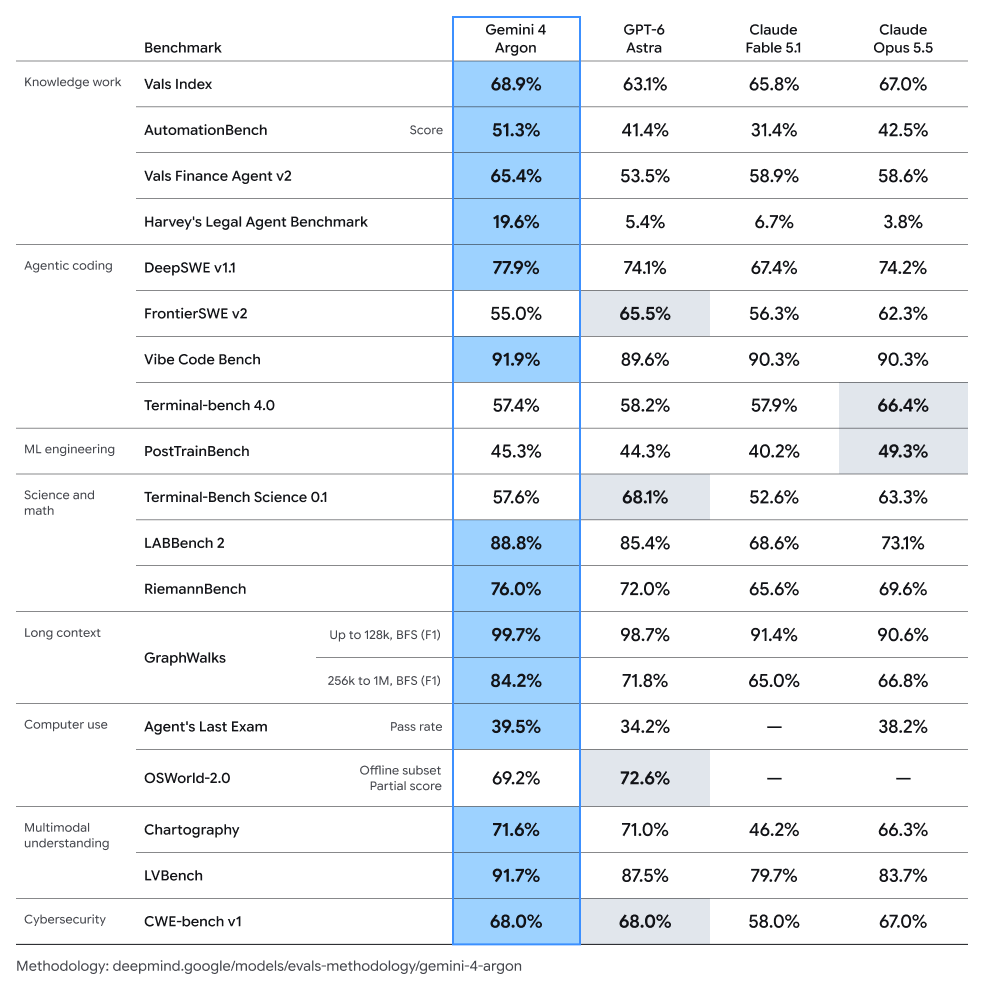
About what I expected for Argon
Great (potentially SotA until Fable 5.5) at knowledge work and multimodal
Still one step behind Astra/Opus 5.5 in coding (SWE 4.0 is the key eval here)
Good enough to add to the toolkit, not good enough to be a daily driver
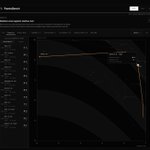
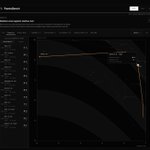
ParetoBench good visual here for how it stacks up
paretobench.vercel.app/


Gemini 4 Argon from @GoogleDeepMind is live on OpenRouter, via Google AI Studio and @googlecloud.
It tops AutomationBench (51.3%) and LVBench (91.7%) and ties for first on CWE-bench v1 (68%).
$2/M input, $10/M output (introductory pricing).
Try it now: openrouter.ai/google/gemini-…

Literally been waiting on this for so long
Absolutely massive


compelling argument by Fishy here

>At their core, blockchains give us a way to take financial activity spread across different databases around the world and unify it in real time under shared rules. The opportunity is to bring the siloed databases of exchanges, banks, and other financial institutions into one shared database, with the blockchain acting as a common API. Assets, collateral, and applications can then operate within the same system.
>The two big questions are who houses this activity and how large it can become. I’ll save the first for another day, but the second is where I think people are dramatically underestimating the opportunity.
It's actually unbelievable that people are still writing a thesis around a blockchain (the one they'd prefer, of course) serving as a "unified ledger" that connects these disparate systems in 2026.
What's actually happening is that "financial activity spread across different databases around the world" is *STILL* being spread across different siloed databases around the world, except, those siloed, databases are now peer-hosted and they're called...a blockchain.
Consider:
Ethereum thinks of itself as the "global settlement layer" because it has the most TVL.
Solana calls itself "Internet Capital Markets" because it has the most spot trading volume of any chain.
Hyperliquid calls itself the "chain to house all of finance" because it has the most open interest among perp DEXes.
XRPL calls itself the "Internet of Value" because it has a cult that can't look up data on DeFiLlama.
LayerZero (ZERO) is launching a high performance chain and it will have Citadel (supposedly) trading on it.
Broadridge's Distributed Ledger Repo (DLR) platform—which runs on the Canton Network—processes over $359 billion in average daily repo transactions and more than $7.5 trillion in monthly repo volume
Avalanche calls itself the blockchain "built for institutions" because it hosts Goldman Sachs' $100B Treasury fund and Progmat's $3B securities book, on its private subnets.
DTCC, which settles $4 quadrillion per year for all US capital markets, is launching their own chain (DTCC Collateral Appchain) in Q1 2027, along with a multichain tokenization service.
SWIFT, which moves the world's GDP every three days, is launching its own chain for its 11,000+ member banks for cross-border payments, which can also evolve into supporting securities, too.
Euroclear (36.8 trillion Euros worth of assets under custody), which is the DTCC of Europe, says that they need to have a **MINIMUM** of one chain for each asset class and that they can't even share a ledger with non-EU citizens/entities.
Countless more banks (JPM, Wells Fargo, etc) and institutions are launching (or already using) their own private, permissioned chains. Even the BIS, which originally coined the vision and term of the "Unified Ledger", conceded that a single shared ledger to host the world's activity will not happen.
The goal of tokenization (or onchain finance or Internet Capital Markets) is to have a consistent state across all chains with real-time data orchestration, automated compliance and atomic DvP/ PvP transactions, enabling T+0 settlement, 24x7 open markets, and regulatory monitoring.
I'll let you decide which protocol will come closest to
"bringing together the siloed databases of exchanges, banks, and other financial institutions into one shared system, so that assets, collateral, and applications can then operate within the same system", but you can take it to the bank that it won't be a blockchain.


insane chart
already well known that quant funds make more revenue per token than the labs do themselves
begs the question if frontier labs are just going to become trading and biotech companies as the cost of intelligence compresses


Smaller models keep getting more useful as they get smarter. More of the work that used to need a flagship model can run fast and cheap.
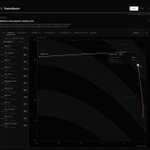
Haiku 5.5 looks like another big push on that Pareto frontier. I’m going to be using this model a ton.
Anthropic goated rn


Anthropic Subscriptions Offer 5x+ More Value Than OpenAI
Limit testing every AI subscription plan from Anthropic, OpenAI, Meta, SpaceXAI, MiniMax, Moonshot, Zdotai, Cursor, and Cognition
newsletter.semianalysis.com/…

Was wondering about this too
Via talking to my dot i learned that it had access to a compute instance with 9 vCPU cores, 16gb of RAM, and 30gb of NVME storage
On AWS EC2 an instance that powerful is around $260/m
Now it’s not YOUR EC2, as your dots artifacts are ephemeral on its computer, which leads me to believe that there is a shared pool of EC2s and they are elastically scaled horizontally as needed
The other component here that could increase costs is the memory of your dot. My guess is it is using more than a small set of md files. I would hope the harness is using a second smaller model to perform search (or the primary model hitting a vectorized db of your chats) for much better recall


Makes sense why they skipped 3.5
Knew they were behind and focused on making 4 an absolute banger
Looks like @GoogleDeepMind cooked on this one

Full video here: youtube.com/watch?v=FUb47LGZ…
Dario, Zuck, Elon, and Sundar all speak

Been using this recently to track events with various fundamental data filters
Incredibly powerful and has helped me catch a few swing trades over the last month as the market has broken out
100% recommend giving it a try, you won’t be disappointed!
Today we're announcing Blockworks Intel, our flagship market intelligence product. We give you a swarm of agents to underwrite and monitor everything onchain.
Screen the whole market, underwrite what you find, and get alerted when something material changes, all under one login.
Here’s what you can do with it:
Daniel Shapiro retweeted

LAUNCH DAY
Tokenization is a supply shock for onchain assets. AI agents are a demand shock for the data.
100 days after acquiring Messari, the two platforms are now one. We give you a swarm of agents to underwrite and monitor everything onchain.
Say hello to Blockworks Intel.
IDK why it took them so long but Opus 5.5 + all these little improvements has Claude Code competitive with Codex again
By the end of the weekend will probably have a solid vibe check for which one i like more

I have been waiting for an API like this long before I worked for Blockworks
I can say, without a doubt, this is the most important API if you are serious about trading and investing in crypto
Honestly feels like Christmas today ngl I’ve been bugging @WestieCapital for this for years
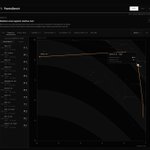
Opus 5.5 is indeed the most 'pareto' model
via paretobench.vercel.app/


Daniel Shapiro retweeted
The plan is quite simple…
Let the agents cook.
Great coverage by Unchained.
cc @laurashin

Real time monitoring is incredibly valuable. I have been playing with this internally and couldn’t be more impressed.
Can build some wild things very quickly when you give claude code or codex access to this, shoot me a DM if you have any questions
NEW: Introducing Agentic Detection, asset monitoring built for the AI era.
Following our acquisition of Messari, we are excited to release our first major product expansion.
Agentic Detection brings real-time alerts to Blockworks Monitoring without waiting for analyst review. Teams get broader coverage of the assets they follow, with findings in seconds instead of minutes.